
UArizona College of Medicine – Tucson Interview
Format, Questions & Prep Tips
UArizona College of Medicine – Tucson medicine interviews for 2027 entry are multiple mini interviews (MMI). UArizona College of Medicine – Tucson describes the format as: Two steps: a first-round recorded video interview (two timed responses), then a virtual MMI of timed stations lasting about 60 minutes. Published figures: Annual MD class size ~120; Applications received ~4,000–6,000 per cycle; Interview format MMI — ~8 stations, 6–8 min each.
- Institution
- University of Arizona College of Medicine – Tucson
- Interview (2027 entry)
- September through February; rolling invitations after secondary review
- Decisions (2027 entry)
- Rolling decisions; most offers by January–February; waitlist movement through May

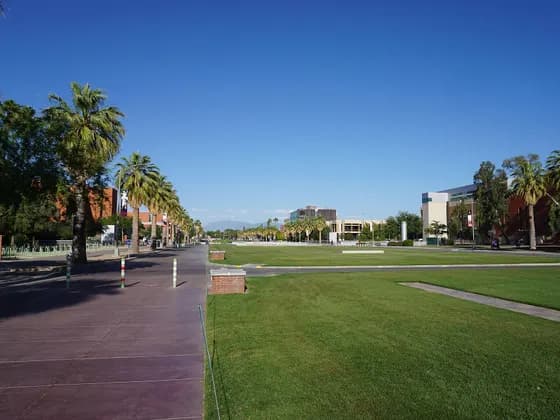
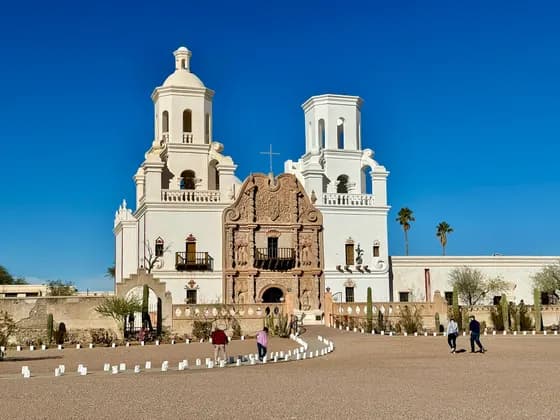
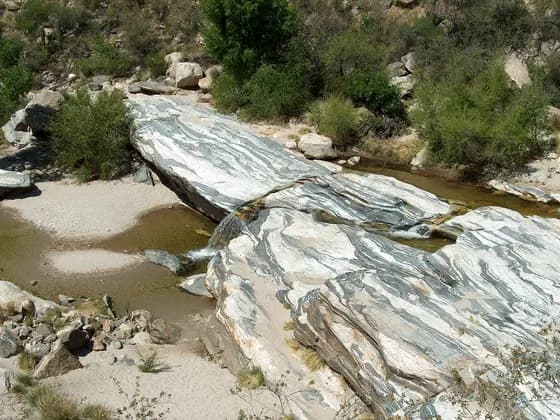
Photo: Michael Barera · CC BY-SA 4.0 · cropped
Photo: Michael Barera · CC BY-SA 4.0 · Photo: w_lemay · CC BY-SA 2.0 · Photo: Scotwriter21 · CC BY-SA 4.0
How to get into UArizona College of Medicine – Tucson (MD) medicine
Step-by-step: entry requirements, admission tests, personal statement, interview format and the key deadlines.
Open the guide →UArizona College of Medicine – Tucson (MD) entry requirements
Admission profile, interview format, decision dates and what makes UArizona College of Medicine – Tucson (MD) different.
See the profile →The UArizona College of Medicine MD program
Integrated + Team-based learning, 4 years, clinical rotations across Tucson and rural and tribal communities across Arizona.
See the program →The UArizona College of Medicine – Tucson (MD) medicine interview
UArizona College of Medicine – Tucson uses a **Multiple Mini Interview (MMI)** format. Applicants rotate through approximately 8 stations of 6–8 minutes each, assessing ethical reasoning, communication, critical thinking, and motivation for medicine in the context of the Southwest’s distinctive health challenges.
As the flagship UArizona campus with a long history in border health and Native American health research, Tucson interviewers expect applicants to understand the specific healthcare landscape of southern Arizona — the US-Mexico border, large Tohono O’odham and Navajo communities, and the rural desert medicine context.
The program values community orientation, cultural humility, and students who want to practice and/or research in the Southwest. Being genuinely prepared to articulate why Tucson — not Phoenix — is the right campus for you is essential.
UArizona College of Medicine – Tucson (MD) interview at a glance (2027 entry)
| Annual MD class size | ~120 |
|---|---|
| Applications received | ~4,000–6,000 per cycle |
| Interview format | MMI — ~8 stations, 6–8 min each |
| In-state preference | Strong (~75% AZ residents) |
| Curriculum | Integrated 4-year MD |
| Application system | AMCAS + secondary |
| Interview window | September–February (rolling) |
Interview format
- MMI format — approximately 8 stations with 2-minute reading period and 6–8 minutes per station.
- Stations cover ethical dilemmas, communication role-play, motivational questions, and community health scenarios.
- Border health, Native American health, and rural medicine themes frequently appear in station prompts.
- Each station is independently scored.
- Program overview, student Q&A, and campus tour of the Tucson clinical campus are included.
- No single application-review session — performance at each station is assessed independently.
Working towards the MCAT score UArizona College of Medicine – Tucson (MD) expects? Build a week-by-week plan from your test date — free for the first two weeks.
Sample interview questions
Why the UArizona Tucson campus specifically — what distinguishes your interest in the Tucson program versus the Phoenix campus?
Reference border health, Native American health, the established research enterprise, rural Arizona medicine, and the Tucson clinical environment. Demonstrate you understand the distinction between the two campuses.
You are working in a rural Tucson-area clinic and a patient who crossed the border recently presents with advanced tuberculosis. They ask you not to report their diagnosis to public health authorities because they fear deportation. How do you respond?
Address mandatory TB reporting (a legal obligation in AZ), the tension between patient confidentiality and public health duty, the use of public health rather than immigration enforcement reporting channels, and compassionate communication of the requirement.
You are a medical student on rounds and notice the attending physician uses a disparaging tone when discussing an Indigenous patient. How do you handle this in the moment and afterwards?
Address the power dynamic, patient dignity, your obligation to speak up, how to do so respectfully in the moment, and whether to escalate through institutional channels if the behavior continues.
Type 2 diabetes disproportionately affects the Tohono O'odham Nation in southern Arizona. What do you know about why this is the case and what would an effective response look like?
Show specific knowledge:
- the Pima/Tohono O'odham diabetes epidemic
- its link to historical land and food sovereignty loss
- the role of traditional diet and exercise
- community-based participatory research
- IHS limitations
A 14-year-old patient comes to the clinic alone and requests testing for an STI. Her parents do not know she is sexually active. Under Arizona law, can you treat her?
Address Arizona's minor consent laws for STI testing and treatment, confidentiality obligations, the physician's duty to the minor's wellbeing, and how you would counsel her about safe sex and follow-up.
You need to inform a Spanish-speaking patient that their biopsy results indicate cancer. A professional interpreter is available by phone. How do you structure this conversation?
Use SPIKES protocol adapted for interpreted communication: check understanding of what’s already known, deliver information in manageable pieces, allow time for emotional response, and use teach-back through the interpreter.
Describe a research or scholarly experience that changed how you think about a medical or health problem.
Be intellectually honest and specific. Interviewers want to see genuine intellectual engagement, not just a list of publications or poster presentations.
Should undocumented immigrants have access to non-emergency Medicaid? Defend your position.
This is particularly salient in Arizona border medicine. Argue a clear position and acknowledge the strongest counter-arguments. Reference public health consequences of delayed care and emergency-only access.
Tell me about a time you successfully navigated a cultural or linguistic barrier with someone you were trying to help.
Cultural humility, not competence. Show genuine reflection on what you learned and what you would do differently. Avoid tokenizing the experience.
What does the term "border health" mean to you, and why does it matter for physicians training in southern Arizona?
Show substantive knowledge:
- infectious disease crossing the border (Chagas, TB, dengue)
- access to care for binational families
- differences in the US and Mexican health systems
- the physician's role in cross-border health partnerships
MMI station: A recently arrived patient with advanced tuberculosis begs you not to report the diagnosis because they fear deportation. Talk with them.
Explain compassionately that TB reporting goes to public health, not immigration enforcement, that it is a legal requirement, and that treatment protects both them and their community. Hold the tension between confidentiality and public-health duty with empathy — a defining Tucson border-health scenario.
MMI station: You are shown data showing dramatically higher Type 2 diabetes prevalence in the Tohono O'odham Nation than in surrounding populations. What do you understand about why, and what would an effective response look like?
Connect it to historical land and food-sovereignty loss, the Pima/Tohono O'odham diabetes epidemic, the role of traditional diet and activity, IHS funding limits, and community-based participatory approaches. Distinguish historical and structural causes from individual choice.
MMI station: On rounds, the attending uses a disparaging tone about an Indigenous patient within earshot of the team. As a student, respond — in the moment and afterwards.
Protect the patient's dignity, navigate the power dynamic respectfully, and decide how to address it in the moment versus escalating through institutional channels if it persists. Tucson's Native American health focus makes this a pointed assessment of professional courage.
MMI station: Describe a scholarly or research experience that genuinely changed how you think about a health problem.
Be intellectually honest and specific. Community-based participatory research, public health, and health-equity projects align especially well with Tucson's mission — show genuine engagement rather than a list of titles.
MMI station: You must tell a Spanish-speaking patient, through a phone interpreter, that their biopsy shows cancer. Structure the conversation.
Use a SPIKES-style approach adapted for interpreted communication: check what they already know, deliver information in small pieces, allow time for emotion, and confirm understanding through the interpreter. Pace and empathy matter as much as accuracy.
Practise the UArizona College of Medicine – Tucson (MD) interview
Rehearse the real format before the day — on demand with our AI interviewers, or live with a tutor.
Sit a mock with photoreal AI interviewers — any time
A timed MMI or panel interview on video — American & international voices — with interviewers who listen, react and press with follow-ups. Rubric-scored feedback and a replay the moment you finish.






Live mocks with a tutor who’s been in the room
A full UArizona College of Medicine – Tucson (MD)-style mock with a medic or dentist tutor — honest scoring against real marking criteria, a station-by-station debrief and a written action plan.
Book a mock interviewHow to prepare for the UArizona College of Medicine – Tucson (MD) interview
Common pitfalls to avoid
UArizona College of Medicine – Tucson (MD) interview — frequently asked questions
Sources & official admissions information
Ready to nail your UArizona College of Medicine – Tucson (MD) interview?
Book a mock interview with a tutor who knows the US interview formats, orpractice unlimited stations from our interview question bank.