
Charles R. Drew University College of Medicine Interview
Format, Questions & Prep Tips
Charles R. Drew University College of Medicine medicine interviews for 2027 entry are a traditional interview. Published figures: Annual MD class size ~40–60; Applications received ~2,000–4,000 per cycle.
- Institution
- Charles R. Drew University of Medicine and Science College of Medicine
- Interview (2027 entry)
- October through February; rolling invitations after secondary review
- Decisions (2027 entry)
- Rolling decisions; most offers by January–February; waitlist movement through May


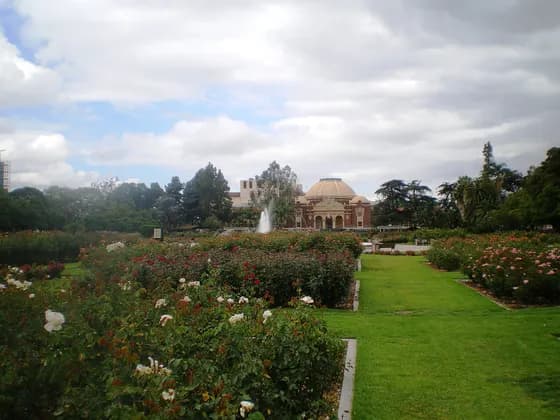

Photo: Levi Clancy · CC BY-SA 4.0 · cropped
Photo: BDS2006 ( talk ) · CC BY 3.0 · Photo: Los Angeles · CC BY-SA 3.0 · Photo: Matthew Field · CC BY 2.5
How to get into Charles R. Drew University College of Medicine (MD) medicine
Step-by-step: entry requirements, admission tests, personal statement, interview format and the key deadlines.
Open the guide →Charles R. Drew University College of Medicine (MD) entry requirements
Admission profile, interview format, decision dates and what makes Charles R. Drew University College of Medicine (MD) different.
See the profile →The Charles R. Drew University College of Medicine MD program
Integrated, 4 years, clinical rotations across South Los Angeles, Long Beach, greater Los Angeles and Sacramento.
See the program →The Charles R. Drew University College of Medicine (MD) medicine interview
Charles R. Drew University College of Medicine uses a combined traditional interview and structured scenario format. Applicants meet with faculty in conversational sessions and may encounter MMI-style stations. The interview strongly emphasizes CDU’s mission of health equity and community service in South Los Angeles — expect frank discussion of structural racism, health disparities, and the physician’s role in systemic change.
CDU is one of only four HBCU-affiliated medical schools in the US. Interviewers seek applicants who are genuinely committed to health equity as a career focus — not those treating CDU as a safety school or a diversity credential. Direct engagement with race, structural injustice, and the social determinants of health is expected and valued.
The school’s location in Watts/Willowbrook, and its affiliations with MLK Community Hospital and LAC+USC, mean the interview culture is grounded in the real challenges of safety-net medicine in one of the most underserved communities in the US.
Charles R. Drew University College of Medicine (MD) interview at a glance (2027 entry)
| Annual MD class size | ~40–60 |
|---|---|
| Applications received | ~2,000–4,000 per cycle |
| Interview format | Traditional + structured scenarios |
| HBCU-affiliated | Yes — one of four HBCU-affiliated MD schools in the US |
| Curriculum emphasis | Health equity and social justice |
| Application system | AMCAS + secondary |
| Interview window | October–February (rolling) |
Interview format
- Combination of traditional one-on-one faculty interviews and structured scenario stations.
- Conversational interviews probe mission alignment, community ties, and health equity commitment.
- Scenario stations may involve ethical dilemmas specifically related to race, poverty, or structural inequality.
- The full interview day includes a program overview and orientation to CDU's South LA community mission.
- Student Q&A panel with current MD students typically included.
- Format specifics may vary by cycle — confirm structure with the admissions office.
Working towards the MCAT score Charles R. Drew University College of Medicine (MD) expects? Build a week-by-week plan from your test date — free for the first two weeks.
Sample interview questions
Why Charles R. Drew University — specifically, what does CDU's mission to serve South Los Angeles mean to you personally?
Be direct and specific. Reference the Watts/Willowbrook community, the history of MLK Community Hospital, the health disparities facing Black and Latino residents of South LA, and your personal or professional connection to this mission.
How has your background — racial, socioeconomic, geographic — shaped your understanding of health inequity?
Post-SCOTUS holistic review. Be honest and specific. CDU actively seeks applicants whose lived experience informs their clinical values. Avoid both self-aggrandisement and minimization of your experience.
Research has shown that Black patients receive less pain medication than White patients with identical injuries. As a physician, what is your responsibility when you discover this pattern in your own institution?
This is a structural racism question — address individual practice, implicit bias training, institutional quality improvement, data collection and monitoring, and your role as an advocate for systemic change.
A patient refuses treatment from a resident because the resident is Black. The patient specifically requests a White physician. How does the hospital handle this?
Address the resident's dignity, patient rights, anti-discrimination obligations, and the hospital's duty to both the patient (care) and the physician (protection from discrimination). Most hospitals have clear policies on this — know the framework.
How would you approach a first visit with a patient who has avoided the healthcare system for 10 years because of previous negative experiences with providers?
Trauma-informed care approach. Acknowledge the history without defensiveness. Start where the patient is, not where the clinical guidelines say they should be. Build trust before building a treatment plan.
South LA has one of the lowest physician-to-population ratios in California. What structural changes — beyond training more physicians — would most effectively address this shortage?
Demonstrate systems-level thinking:
- Medi-Cal reimbursement rates
- FQHC expansion
- loan forgiveness for physicians in underserved areas
- telehealth
- community health workers
- addressing social determinants that drive demand
Tell me about research, community work, or a project that relates directly to health equity or racial disparities. What was your contribution?
CDU expects applicants to have done more than observe disparities — show active engagement in a project, program, or community that addresses them.
A major hospital in LA has proposed closing its maternity ward because it is not financially profitable, even though it serves the only low-income maternity care catchment in the area. What should happen?
Address the Certificate of Need process in California, community benefit obligations of non-profit hospitals, health equity implications of maternal mortality disparities in Black communities, and the physician's advocacy role.
A patient from the Watts community tells you they do not trust doctors because of the Tuskegee experiments. How do you respond?
Validate the historical basis for this distrust — it is rational, not irrational. Acknowledge the harm done by medical institutions to Black communities. Do not be defensive. Focus on what you personally commit to as their physician.
What does Charles Drew's legacy mean to medicine, and how does it inform the type of physician you want to be?
Know Charles R. Drew's story: pioneer in blood banking and transfusion medicine, and his death in circumstances that prompted allegations of racial segregation in hospital care. Connect his legacy to your commitment to equitable medicine.
You are shown county data: Black women in South LA die in childbirth at roughly three times the rate of white women, and the gap persists even after adjusting for income and education. How do you interpret a disparity that income alone does not explain?
Point beyond socioeconomics to structural racism and provider bias — dismissal of Black women's pain and symptoms, differential treatment, chronic stress ('weathering'), and access to high-quality delivery facilities. CDU expects you to name these mechanisms specifically and to discuss data quality and the limits of adjustment, not to retreat to 'it's complicated.'
Role play: You are a student volunteer at an MLK Community Hospital outreach event. A young Black man tells you he avoids clinics because 'they never listen and they treat me like I'm faking.' (The interviewer plays the patient.)
Validate the experience as rational given documented bias, do not get defensive on behalf of medicine, and listen before problem-solving. As a student, your job is to rebuild a sliver of trust and connect him to a specific, low-barrier resource — not to promise the system has changed.
A community elder on a CDU advisory board challenges a student health-education project, saying 'You all come in, do your study, and leave — how is this different?' How do you respond?
This tests humility and the community-partnership ethos central to CDU. Acknowledge the history of extractive research, describe accountability and shared ownership, and ask what the community wants rather than defending the project. Show you understand community-based participatory principles.
CDU is a smaller, mission-focused school rather than a research-intensive academic center. If you are interested in academic medicine or research on health disparities, why train here rather than at a large NIH-funded institution?
Argue that proximity to the affected community and an explicit equity mission can produce more relevant, trusted research than a distant powerhouse. Reference CDU's partnerships and the value of being embedded in South LA, while being honest that you have weighed the infrastructure trade-offs.
For a non-Black applicant: how do you understand your role as a student and future physician at one of only four HBCU-affiliated medical schools in the country?
Honest, humble self-reflection — not tokenism. Demonstrate genuine alignment with the health-equity mission, willingness to learn from and follow the community's lead, and a specific account of what you bring. Avoid framing CDU as an alternative pathway; center service over self-advancement.
Practise the Charles R. Drew University College of Medicine (MD) interview
Rehearse the real format before the day — on demand with our AI interviewers, or live with a tutor.
Sit a mock with photoreal AI interviewers — any time
A timed MMI or panel interview on video — American & international voices — with interviewers who listen, react and press with follow-ups. Rubric-scored feedback and a replay the moment you finish.


Live mocks with a tutor who’s been in the room
A full Charles R. Drew University College of Medicine (MD)-style mock with a medic or dentist tutor — honest scoring against real marking criteria, a station-by-station debrief and a written action plan.
Book a mock interviewHow to prepare for the Charles R. Drew University College of Medicine (MD) interview
Common pitfalls to avoid
Charles R. Drew University College of Medicine (MD) interview — frequently asked questions
Sources & official admissions information
Ready to nail your Charles R. Drew University College of Medicine (MD) interview?
Book a mock interview with a tutor who knows the US interview formats, orpractice unlimited stations from our interview question bank.