
Loma Linda University School of Medicine Interview
Format, Questions & Prep Tips
Loma Linda University School of Medicine medicine interviews for 2027 entry are a traditional interview. Published figures: Annual MD class size ~170–180; Applications received ~5,000–7,000 per cycle; Interview format Traditional one-on-one or small panel, ~30–45 min.
- Institution
- Loma Linda University School of Medicine
- Interview (2027 entry)
- September through February; rolling invitations after secondary review
- Decisions (2027 entry)
- Rolling decisions; most offers by January–February; waitlist movement through May

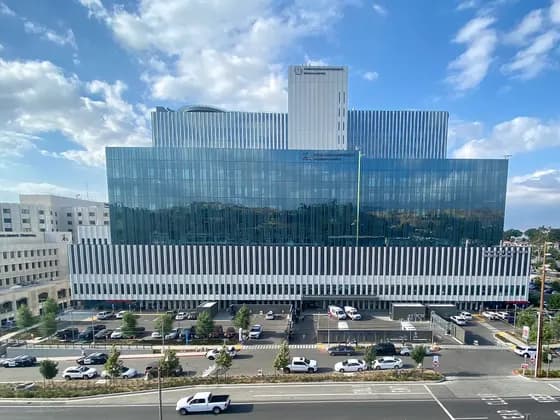
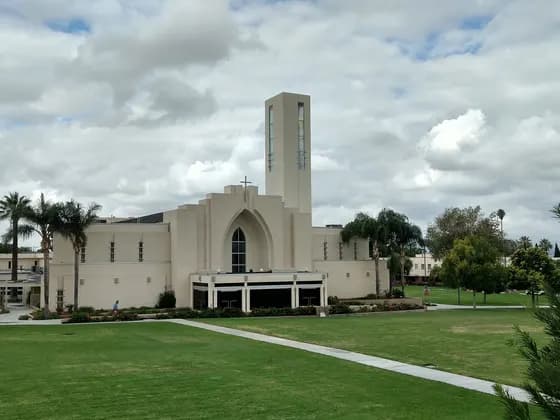
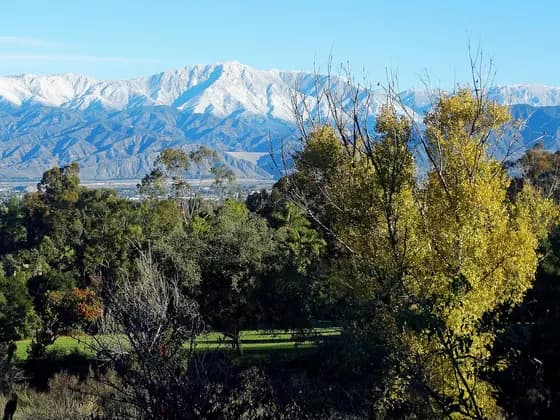
Photo: Pobonana · CC BY-SA 4.0 · cropped
Photo: Lroehlig · CC BY-SA 4.0 · Photo: Soberclass · CC BY-SA 4.0 · Photo: inkknife_2000 (7.5 million views +) · CC BY-SA 2.0
How to get into Loma Linda University School of Medicine (MD) medicine
Step-by-step: entry requirements, admission tests, personal statement, interview format and the key deadlines.
Open the guide →Loma Linda University School of Medicine (MD) entry requirements
Admission profile, interview format, decision dates and what makes Loma Linda University School of Medicine (MD) different.
See the profile →The Loma Linda University School of Medicine MD program
Integrated + Problem-based learning, 4 years, clinical rotations across Southern California, plus regional campuses in Orlando and Dayton.
See the program →The Loma Linda University School of Medicine (MD) medicine interview
Loma Linda University School of Medicine uses a traditional interview format. Applicants meet with faculty physicians or committee members in one-on-one or small-panel sessions of approximately 30–45 minutes. Interviewers read the full application in advance and focus on motivation for medicine, values alignment with the whole-person care mission, and the applicant’s relationship to faith-integrated healthcare.
As a Seventh-day Adventist institution, Loma Linda’s interview culture reflects the school’s spiritual and service foundation. Interviewers are not looking to quiz applicants on theology, but they do expect genuine engagement with the concept of whole-person care — encompassing physical, psychological, and spiritual wellbeing — and a coherent personal narrative about why this model of medicine resonates.
Non-Adventist applicants are welcome and regularly enrolled, but must articulate clear values alignment with the mission rather than simply citing the school’s exceptional surgical and specialty facilities.
Loma Linda University School of Medicine (MD) interview at a glance (2027 entry)
| Annual MD class size | ~170–180 |
|---|---|
| Applications received | ~5,000–7,000 per cycle |
| Interview format | Traditional one-on-one or small panel, ~30–45 min |
| Adventist preference | Yes — Adventist applicants given preference |
| Curriculum | Faith-integrated whole-person care, 4-year MD |
| Application system | AMCAS + secondary |
| Interview window | September–February (rolling) |
Interview format
- Traditional one-on-one or small-panel interview with faculty physicians or committee members.
- Sessions last approximately 30–45 minutes; some applicants have two separate interviews.
- Interviewers read your application — expect questions about your personal statement, clinical experiences, and values.
- Campus tour of Loma Linda University Medical Center, Children's Hospital, and the proton therapy center.
- Program overview and student Q&A panel included.
- Whole-person care philosophy and faith alignment will be discussed — interviewers are not adversarial, but they are thorough.
Working towards the MCAT score Loma Linda University School of Medicine (MD) expects? Build a week-by-week plan from your test date — free for the first two weeks.
Sample interview questions
What does "whole-person care" mean to you, and how does it differ from a biomedical model of medicine?
The foundational question at Loma Linda. Whole-person care addresses spiritual, psychological, and social dimensions of health alongside the physical. Give a concrete clinical example — not just an abstract definition.
How has your faith — or your engagement with values, spirituality, or service — shaped your approach to caring for others?
Be authentic. You do not need to be Adventist, but you do need a genuine answer. Connect your values or faith tradition to the type of physician you want to be. Interviewers look for coherence, not specific religious credentials.
A patient who is a Jehovah's Witness declines a blood transfusion that you believe is life-saving. They are competent and have signed a refusal form. How do you proceed?
Address patient autonomy as the legal and ethical standard for competent adults in the US. Discuss bloodless medicine alternatives (which Loma Linda actually pioneered), the physician's obligation to provide the best possible care within the patient's stated constraints, and your own internal process when patient decisions conflict with clinical judgment.
A terminally ill patient asks you whether you think there is life after death. How do you respond?
This is a whole-person care scenario testing spiritual sensitivity. Do not impose your beliefs. Explore what the patient is seeking — reassurance, connection, an opportunity to express fear — and respond to the underlying emotional need with compassion and professional boundaries.
Tell me about a patient or person in your life whose spiritual or religious beliefs significantly shaped their health decisions. How did you navigate that?
Cultural and spiritual humility. Show respect for the person's framework while maintaining clinical honesty. Demonstrate that you can hold space for beliefs different from your own.
Loma Linda has a world-renowned cardiac surgery program and pioneered bloodless surgery. If you are interested in a primary care specialty, why train at a school known for subspecialty excellence?
Address the holistic value of training at an institution with a broad and deep clinical environment. Connect to mission — the whole-person care philosophy applies in primary care as much as cardiac surgery.
A colleague in your medical school tells you they are struggling with their faith and is questioning whether they belong at Loma Linda. What do you say?
Show compassion and non-judgment. This question tests whether you can hold community and individual struggle in tension. Do not prescribe answers — listen, validate, and acknowledge complexity.
Tell me about a research or service experience that connected your scientific training to a human or community need.
Connect intellectual work to human purpose — this is the whole-person care ethos applied to academic life. Be specific about what the experience taught you about the physician's role beyond diagnosis and treatment.
Should physicians pray with patients who request it? What are the ethical considerations?
Nuanced question at an Adventist institution. Address the patient's autonomy and right to request spiritual support, the physician's freedom to decline if it conflicts with their own beliefs, the risk of coercion in an unequal power relationship, and referral to chaplaincy.
Loma Linda students have access to global health mission opportunities through the Adventist Health System. How does global health fit into your vision for your career?
Be honest — if global health genuinely interests you, say why and what preparation you would bring. If it doesn't, you can acknowledge the opportunity thoughtfully without feigning interest you don't have.
Role play: You are a student volunteer in a Loma Linda clinic. A patient newly diagnosed with a serious illness tearfully tells you, 'I don't know how to tell my family — I feel like I've failed them.' (The interviewer plays the patient.)
Whole-person care in action: respond to the emotional and spiritual distress first, sit with the silence, and do not rush to reassurance or clinical facts. Explore what 'failed them' means to her. As a student, your role is presence and active listening, then connecting her to chaplaincy or her physician — not fixing it.
Loma Linda is one of the world's identified 'Blue Zones,' where residents live measurably longer. You are shown lifestyle and longevity data from the Adventist Health Studies. What can and cannot be concluded from this kind of observational cohort research?
Show research literacy: the Adventist Health Studies are large prospective cohorts, strong for associations (plant-based diet, no smoking/alcohol, community, rest) but limited by confounding, healthy-adherer bias, and the difficulty of separating diet from the whole lifestyle. Distinguish correlation from causation while respecting the genuine signal.
A patient from a different faith tradition than the institution's tells you he feels uneasy being treated at a religious hospital and worries his beliefs won't be respected. How do you respond?
Reassure through respect, not persuasion. Affirm that whole-person care means honoring his framework, ask how he would like his beliefs accommodated, and make clear that care is not contingent on sharing the institution's faith. Demonstrate the inclusivity Loma Linda extends to non-Adventist patients and students alike.
Loma Linda integrates service through global health and disaster-response opportunities. Tell me about a research or scholarly project and how you would connect that intellectual work to service or whole-person care.
Bridge science and human purpose — the Loma Linda ethos. Be specific about your actual project and reflect honestly on how rigorous work serves people, whether through global health, prevention, or community need. Avoid forcing a service angle that isn't genuine.
A competent terminally ill patient asks you about physician aid in dying. Loma Linda's institutional values may differ from California's End of Life Option Act, which is legal in the state. How do you respond?
Hold professional duty and institutional/personal values in tension honestly. In California aid in dying is legal; the physician may conscientiously decline to participate but must not abandon the patient — provide information, ensure access to palliative care, and refer appropriately. Do not impose your beliefs or misstate the law.
Practise the Loma Linda University School of Medicine (MD) interview
Rehearse the real format before the day — on demand with our AI interviewers, or live with a tutor.
Sit a mock with photoreal AI interviewers — any time
A timed MMI or panel interview on video — American & international voices — with interviewers who listen, react and press with follow-ups. Rubric-scored feedback and a replay the moment you finish.






Live mocks with a tutor who’s been in the room
A full Loma Linda University School of Medicine (MD)-style mock with a medic or dentist tutor — honest scoring against real marking criteria, a station-by-station debrief and a written action plan.
Book a mock interviewHow to prepare for the Loma Linda University School of Medicine (MD) interview
Common pitfalls to avoid
Loma Linda University School of Medicine (MD) interview — frequently asked questions
Sources & official admissions information
Ready to nail your Loma Linda University School of Medicine (MD) interview?
Book a mock interview with a tutor who knows the US interview formats, orpractice unlimited stations from our interview question bank.