
Stanford University School of Medicine Interview
Format, Questions & Prep Tips
Stanford University School of Medicine medicine interviews for 2027 entry are multiple mini interviews (MMI). Published figures: Annual MD class size ~90; Tuition (2025–26) ~USD 65,000/year.
- Institution
- Stanford University School of Medicine
- Interview (2027 entry)
- October through February; rolling invitations
- Decisions (2027 entry)
- Decisions released by late March; waitlist movement through May–July

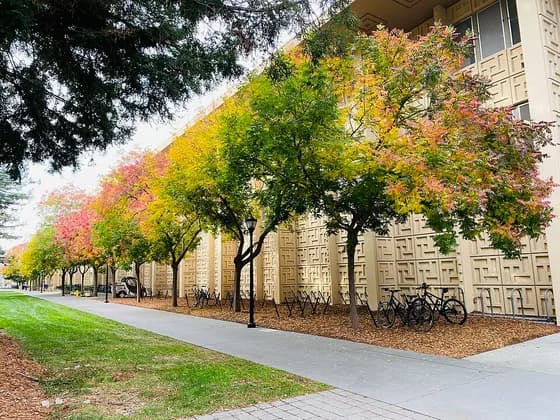
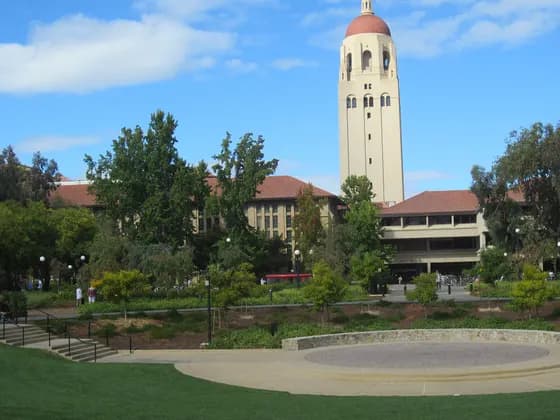

Photo: Jawed · CC BY-SA 4.0 · cropped
Photo: Suiren2022 · CC BY-SA 4.0 · Photo: Another Believer · CC BY-SA 4.0 · Photo: Coolcaesar · CC BY-SA 4.0
How to get into Stanford University School of Medicine (MD) medicine
Step-by-step: entry requirements, admission tests, personal statement, interview format and the key deadlines.
Open the guide →Stanford University School of Medicine (MD) entry requirements
Admission profile, interview format, decision dates and what makes Stanford University School of Medicine (MD) different.
See the profile →The Stanford University School of Medicine MD program
Integrated + Case-based learning, 4 years, clinical rotations across Palo Alto, Santa Clara County and the wider Bay Area.
See the program →The Stanford University School of Medicine (MD) medicine interview
Stanford School of Medicine uses a hybrid interview format combining a virtual Multiple Mini Interview (MMI) of roughly 8–10 short scenario stations with additional traditional faculty and student interviews. The interview day assesses fit with Stanford's research-intensive, innovation-driven culture and commitment to humanism in medicine.
Stanford's Discovery Curriculum shapes interview themes — assessors look for evidence across clinical, research, educational, and innovation pathways. Stanford emphasizes student wellness via the Educators-4-CARE (E4C) faculty-mentor program and broader wellness initiatives.
Stanford was among the first AAMC schools to embed health equity and social determinants of health explicitly into its MD curriculum, so questions probing healthcare access, structural inequity, and advocacy are common.
Stanford University School of Medicine (MD) interview at a glance (2027 entry)
| Annual MD class size | ~90 |
|---|---|
| Interview format | Hybrid — MMI stations plus faculty/student interviews (virtual) |
| Curriculum | Discovery Curriculum |
| Tuition (2025–26) | ~USD 65,000/year |
| Application system | AMCAS + Stanford secondary |
| Interview window | October–February |
Interview format
- Two or three separate sessions — typically one faculty/clinician and one current student, each 30–45 minutes.
- Conversational and open-ended; interviewers follow threads that emerge rather than tick through a fixed list.
- Interview day includes tours, lunch with students, and information sessions on the Discovery Curriculum and wellness programs.
- Includes MMI scenario stations alongside conversational faculty/student interviews.
Working towards the MCAT score Stanford University School of Medicine (MD) expects? Build a week-by-week plan from your test date — free for the first two weeks.
Sample interview questions
Stanford medicine is built around the idea that great physicians are also educators, scientists, and innovators. Which of those roles excites you most, and why?
Reference the Discovery Curriculum directly. Be honest — claiming all equally reads as rehearsed. Substantiate with a specific project or experience.
Why medicine at Stanford rather than a career in biotech, health policy, or public health — fields in which Stanford also has world-leading programs?
This probes whether you genuinely need the MD. Connect your clinical motivation to a gap that only direct patient care fills.
A startup you cofounded during undergrad is developing a diagnostic AI tool. You are now a student and a professor asks you to review the tool for a class project. What ethical issues arise?
What they are listening for:
- Conflict of interest
- intellectual property
- dual-role (student-entrepreneur)
- patient data privacy
- academic integrity
Undocumented immigrants are ineligible for most federal health insurance. A patient without documentation presents to the ED with a chronic condition now in crisis. What systemic issues does this case illustrate?
EMTALA guarantees emergency care; discuss the ACA coverage gap, social determinants of health, and FQHC networks.
Tell me about a time you advocated for someone — a patient, peer, or community — when it would have been easier to stay silent.
AAMC Premed Competencies: Interpersonal Skills, Understanding Others. Stanford values active advocacy. Be specific: what was at stake, what did you do, what changed.
Describe a research finding or clinical observation that genuinely surprised you. What did you do with that surprise?
Intellectual curiosity competency. The surprise is the signal — show how unexpected results changed your thinking or generated a new question.
Stanford has a strong culture of wellness and preventing physician burnout. How do you currently take care of yourself, and do you think that is enough?
Honest self-assessment matters more than a perfect answer. Show self-awareness about stress responses, not just a list of hobbies.
A pharmaceutical company offers your research lab a large unrestricted grant. Your PI wants to accept. You have concerns about the company's pricing practices on a drug your lab is studying. What do you do?
What they are listening for:
- Research integrity
- conflicts of interest
- institutional conflict-of-interest policies
- the obligation to disclose
A close friend who is also a co-founder of your health-tech startup tells you they have been overstating the company's clinical results to investors. You are about to enter medical school. Have that conversation with them.
Integrity over loyalty, handled with care. Name the concern directly, separate the relationship from the misconduct, and insist on correction. Stanford applicants often have startup experience and the school wants to see the judgment that accompanies it.
You are shown a chart where a diagnostic AI tool achieves higher overall accuracy than clinicians but performs noticeably worse on patients from one demographic subgroup. How do you interpret this and what would you recommend?
Address aggregate-vs-subgroup performance, training-data bias, and the equity risk of deploying a tool that widens disparities. Stanford embeds health equity in its curriculum, so a strong answer pairs technical literacy with a justice lens and a human-in-the-loop recommendation.
Explain to a worried parent, in plain language, why their child's mild illness does not need antibiotics — knowing they came in specifically hoping for a prescription.
Validate the concern, explain viral-vs-bacterial in everyday terms, offer a concrete safety-net plan and follow-up, and avoid lecturing. The skill is leaving the parent feeling heard rather than dismissed.
The Discovery Curriculum lets students build a scholarly concentration in research, education, innovation, or global health. Which would you choose, what in your background points to it, and what would you give up by not choosing the others?
Commit to one with evidence rather than hedging across all four. Naming a genuine trade-off signals maturity and that you understand the program is about depth, not a buffet.
Describe a moment when the data you collected did not support the hypothesis you cared about. What did you do?
Intellectual honesty is the point. Show you checked for artifact, considered alternative explanations, and resisted forcing the result — and that a negative finding still taught you something.
California's End of Life Option Act permits medical aid in dying. A terminally ill patient asks you, a student's supervising physician, for information. The attending you are with has a personal objection. How should the situation be handled?
What they are listening for:
- Patient access to a legal option
- the professional duty to provide information or timely referral
- conscientious objection and its limits
- non-abandonment
Keep the patient's autonomy central while respecting the clinician's conscience within bounds.
Tell me about a time you received feedback that genuinely stung. How did you handle it, and what did you do differently afterwards?
Commitment to learning and growth, and resilience. Choose real feedback, show non-defensiveness, and demonstrate a concrete behavior change rather than just emotional acceptance.
Practise the Stanford University School of Medicine (MD) interview
Rehearse the real format before the day — on demand with our AI interviewers, or live with a tutor.
Sit a mock with photoreal AI interviewers — any time
A timed MMI or panel interview on video — American & international voices — with interviewers who listen, react and press with follow-ups. Rubric-scored feedback and a replay the moment you finish.






Live mocks with a tutor who’s been in the room
A full Stanford University School of Medicine (MD)-style mock with a medic or dentist tutor — honest scoring against real marking criteria, a station-by-station debrief and a written action plan.
Book a mock interviewHow to prepare for the Stanford University School of Medicine (MD) interview
Common pitfalls to avoid
Stanford University School of Medicine (MD) interview — frequently asked questions
Sources & official admissions information
Ready to nail your Stanford University School of Medicine (MD) interview?
Book a mock interview with a tutor who knows the US interview formats, orpractice unlimited stations from our interview question bank.