
UC San Diego School of Medicine Interview
Format, Questions & Prep Tips
UC San Diego School of Medicine medicine interviews for 2027 entry are multiple mini interviews (MMI), held October 2026 through February 2027. Published figures: Annual MD class size ~134; Interview format Virtual MMI — 8 stations (2 min read + 8 min each); Tuition (2025–26) ~USD 36,000 (in-state) / USD 48,000 (out-of-state).
- Institution
- UC San Diego School of Medicine
- Interview (2027 entry)
- October through February
- Decisions (2027 entry)
- Regular decisions by late March; waitlist through spring

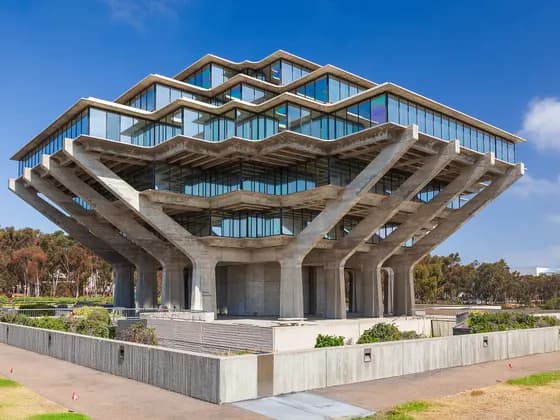
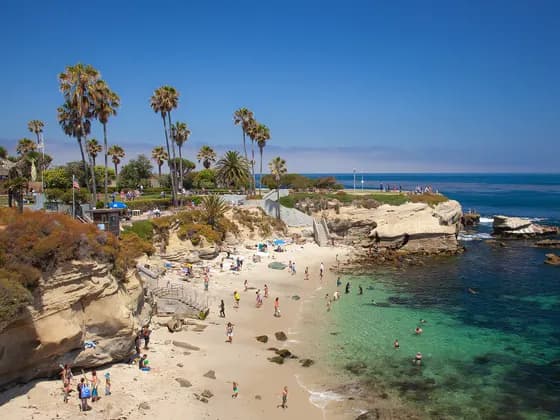
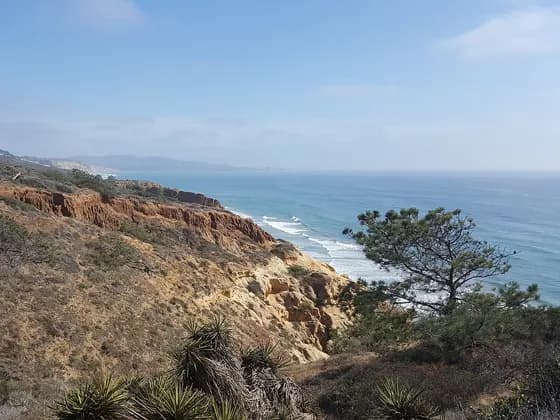
Photo: TritonsRising · CC BY-SA 4.0 · cropped
Photo: Stephen Bay · CC BY 4.0 · Photo: Stephen Bay · CC BY 4.0 · Photo: FeldBum · CC BY-SA 4.0
How to get into UC San Diego School of Medicine (MD) medicine
Step-by-step: entry requirements, admission tests, personal statement, interview format and the key deadlines.
Open the guide →UC San Diego School of Medicine (MD) entry requirements
Admission profile, interview format, decision dates and what makes UC San Diego School of Medicine (MD) different.
See the profile →The UC San Diego School of Medicine MD program
Integrated, 4 years, clinical rotations across La Jolla, Hillcrest and sites around the San Diego region.
See the program →The UC San Diego School of Medicine (MD) medicine interview
UC San Diego School of Medicine uses a **virtual Multiple Mini Interview (MMI) — applicants rotate through 8 stations, reading a vignette for 2 minutes before an 8-minute discussion with an admissions committee member. UCSD is a top-5 school for NIH funding and has a culture of collaborative, non-competitive research** that reflects its La Jolla campus environment. The school's close integration with the Salk Institute, Scripps Research, and the Sanford Burnham Prebys Medical Discovery Institute makes it one of the richest basic science ecosystems in the world.
UCSD is a public institution with a strong commitment to health equity for Southern California's diverse population — the US-Mexico border, San Diego's large Latinx and Filipino communities, and the high rates of uninsured residents in Imperial County all shape training. Interviewers probe commitment to underserved communities.
UCSD uses an integrated organ-system curriculum that weaves clinical and foundational science learning from Year 1, emphasizing active learning, team-based problem solving, and early patient contact.
UC San Diego School of Medicine (MD) interview at a glance (2027 entry)
| Annual MD class size | ~134 |
|---|---|
| Interview format | Virtual MMI — 8 stations (2 min read + 8 min each) |
| Tuition (2025–26) | ~USD 36,000 (in-state) / USD 48,000 (out-of-state) |
| Application system | AMCAS + UCSD secondary |
| Curriculum | Integrated organ-system curriculum |
| Interview window | October–February |
Interview format
- Eight virtual MMI stations — 2 minutes to read, 8 minutes to respond.
- Scenario-based MMI stations, not a file review.
Working towards the MCAT score UC San Diego School of Medicine (MD) expects? Build a week-by-week plan from your test date — free for the first two weeks.
Sample interview questions
UCSD sits beside world-class institutes in La Jolla yet serves communities along the US-Mexico border. Why is that combination the right place for you to train?
Connect your goals to both the research ecosystem and the border-health mission. Show you value UCSD's collaborative, public-mission identity rather than treating it as a generic research school.
UCSD sits near the US-Mexico border. How does that geographic and demographic context shape your vision of practicing medicine in Southern California?
Discuss cross-border care, the health of binational communities, uninsured immigrants, and infectious-disease surveillance. Show genuine engagement with the region rather than abstractions.
Tell us about a time you chose collaboration over competition when you could have stood out individually. What happened?
UCSD prizes a collaborative, non-competitive culture. Use a concrete example showing you lift others and value shared success, which reflects the school's environment.
What experience first made you feel responsible for someone else's wellbeing, and how has that shaped you?
Reveal the human roots of your motivation. Ground the answer in a specific moment and trace its influence on your path rather than offering platitudes.
A patient who has crossed the border for care cannot afford follow-up and may return home before treatment is complete. How do you approach her care?
Consider continuity across borders, the duty to treat regardless of status, realistic care plans, and links to community resources. Border health is central to what makes UCSD distinctive, so engage it concretely.
Imperial County, near San Diego, has very high uninsured rates and limited specialist access. A patient needs care that is simply unavailable locally. What is the physician's responsibility?
Discuss access, referral and transport barriers, telehealth, and advocacy for under-resourced regions. Acknowledge the limits of individual action and the need for systemic solutions.
A basic-science collaborator wants to publish a finding quickly, but you believe the clinical implications are being overstated. How do you handle the disagreement?
Engage scientific integrity, responsible communication of preliminary findings, and respectful disagreement across disciplines. UCSD's tight research integration makes such tensions realistic.
A patient declines a recommended treatment for reasons rooted in cultural or religious belief. How do you respond?
Balance respect for autonomy and cultural humility against your duty to inform. Explore the patient's understanding and values rather than overriding or simply acquiescing without discussion.
Describe a time you communicated across a significant language or cultural barrier. What did you learn?
San Diego's large Latinx and Filipino communities make this central. Emphasize professional interpreter use, humility, and adapting your communication rather than assuming.
Explain a difficult diagnosis to a patient who is frightened and has limited health literacy.
Use plain language, check understanding, and attend to emotion as much as information. The aim is genuine comprehension and trust, not a complete recitation of facts.
UCSD is surrounded by the Salk Institute, Scripps Research, and Sanford Burnham Prebys. If you could pursue one clinical question with any of them, what would it be?
Choose an institute and a question that links basic science to a clinical problem you care about — for example neuroscience, structural biology, or metabolic disease. Specificity signals genuine engagement.
UCSD's curriculum is active and team-based from Year 1. How do you learn best, and how would you contribute in a small problem-solving group?
Show honest self-knowledge about your learning style and readiness for collaborative, self-directed work. Lecture-dependent learners should reflect carefully before claiming this fits them.
Walk me through a research experience. What was your genuine contribution, and what did the result actually show?
Separate independent thinking from supervised tasks and be honest about limitations. UCSD's research-rich setting rewards methodological clarity.
A patient who traveled across the border for care is anxious that immigration concerns could affect her treatment. Speak with her.
Reassure her about confidentiality and the duty to treat, listen to her fears, and build trust before clinical detail. Dignity and safety come first.
Your small group has one member who dominates discussion and another who never speaks. As a peer, address the dynamic.
What they are listening for:
- Foster inclusion without humiliating anyone
- invite quieter voices
- model collaborative norms
UCSD's team-based curriculum makes group dynamics a real skill.
You're shown that Imperial County has markedly worse outcomes for a chronic disease than coastal San Diego. How would you interpret that gap, and what would you investigate?
Consider insurance, specialist access, environmental exposures, and socioeconomic factors. Name the additional data — access measures, demographics, disease prevalence — you would want before concluding.
Practise the UC San Diego School of Medicine (MD) interview
Rehearse the real format before the day — on demand with our AI interviewers, or live with a tutor.
Sit a mock with photoreal AI interviewers — any time
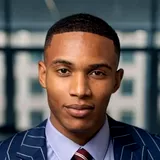
A timed MMI or panel interview on video — American & international voices — with interviewers who listen, react and press with follow-ups. Rubric-scored feedback and a replay the moment you finish.



Live mocks with a tutor who’s been in the room
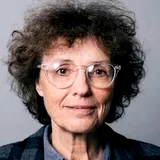
A full UC San Diego School of Medicine (MD)-style mock with a medic or dentist tutor — honest scoring against real marking criteria, a station-by-station debrief and a written action plan.
Book a mock interviewHow to prepare for the UC San Diego School of Medicine (MD) interview
Common pitfalls to avoid
UC San Diego School of Medicine (MD) interview — frequently asked questions
Sources & official admissions information
Ready to nail your UC San Diego School of Medicine (MD) interview?
Book a mock interview with a tutor who knows the US interview formats, orpractice unlimited stations from our interview question bank.