US Medicine · 2027 Entry

UC San Diego School of Medicine (MD) Medical School2027 Entry Requirements & Interview Format

Location La Jolla, CA, United StatesEstablished 1968Interviews (2027 entry) October 2026–February 2027Decisions (2027 entry) March 30, 2027

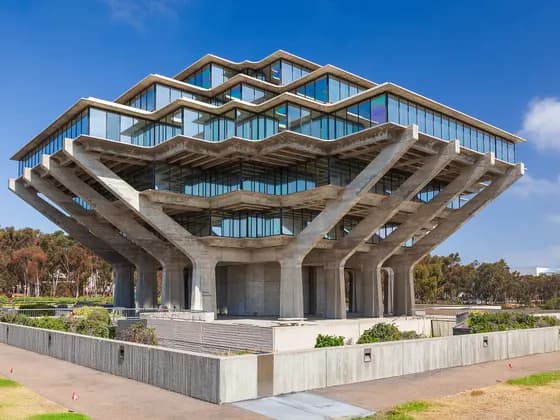
Photo: TritonsRising · CC BY-SA 4.0 · cropped

Start here
Overview

About UC San Diego School of Medicine (MD)

UC San Diego School of Medicine, founded in 1968, is a leading public research medical school located on the UCSD campus in La Jolla, California. The school benefits from proximity to world-class biotech and pharmaceutical companies clustered in the Torrey Pines Mesa corridor.

UCSD is among the top NIH-funded medical schools nationally and has particular strengths in neuroscience, global health, and clinical research.

What makes UC San Diego School of Medicine (MD) different

UCSD's proximity to the Sorrento Valley and Torrey Pines biotech cluster provides unparalleled access to biotech and pharma career pathways. The school's neuroscience program is world-class, benefiting from the adjacent Salk Institute and Scripps Research. San Diego's location on the US-Mexico border creates distinctive global and cross-border health training opportunities.

UC San Diego School of Medicine (MD) course & teaching

Integrated curriculum. 4-year MD. UCSD has tracks in biomedical sciences, clinical research, community medicine, and global health. All students complete a scholarly project. Clinical rotations at UCSD Medical Center, Jacobs Medical Center, VA San Diego, and affiliated community sites. Early exposure to global health opportunities through UCSD's international partnerships.

UC San Diego School of Medicine (MD) research strengths

UC San Diego School of Medicine (MD) is strong in these research areas:

  • Neuroscience and neurodegenerative disease
  • Cancer biology
  • Infectious disease
  • Global health
  • Computational medicine

How the UC San Diego School of Medicine (MD) interview runs

Format: MMI — 8 stations, 2 minutes to read the vignette then 8 minutes discussing it

Applicants rotate through 8 rooms, each a station: 2 minutes to read the vignette, then 8 minutes discussing the situation with the interviewer. MCAT scores are hidden from reviewers during the screening stage. For the 2026-27 cycle UC San Diego accepts MCAT scores from January 2023 through December 2026; 2027 scores will not be considered.

Applications are accepted from US citizens, permanent residents and DACA recipients.

UC San Diego School of Medicine (MD) intake

Approximately 134 students per year.

UC San Diego School of Medicine (MD) at a glance

Founded in 1968. Based in La Jolla, CA.

Programmes offered:

  • Neuroscience
  • Global Health
  • Oncology
  • Biotech Research
  • Primary Care
Entry requirements

What you need to apply to UC San Diego School of Medicine (MD)

Admission overview
Bachelor's degree and MCAT required. California residents receive moderate preference as a UC public school. Research background, community service, and clinical exposure expected. Secondary application required.
MCAT median
514 (range 513–523)
GPA median
3.84 overall / 3.82 science (BCPM)
Acceptance rate
3.8%
Class size
134
In-state preference
Moderate — some OOS consideration
In-state matriculants
74%
CASPer
Not required
AAMC PREview
Not required
Holistic review emphasis
Research, diversity, global health, and public service in a UC public mission.
Notes
MCAT/GPA approximate from UCSD Med class profile. In-state preference reflects UC public mandate.
Specialities offered
Neuroscience, Global Health, Oncology, Biotech Research, Primary Care

MCAT, GPA, acceptance-rate and class-size figures are taken from UC San Diego School of Medicine's published admissions data. Class profiles are republished each year — confirm which entering class these numbers describe before you rely on them.

Working towards the MCAT score UC San Diego School of Medicine (MD) expects? Build a week-by-week plan from your test date — free for the first two weeks.

Interview

How UC San Diego School of Medicine (MD) interviews applicants

Format
MMI — 8 stations, 2 minutes to read the vignette then 8 minutes discussing it
Interview window (2027 entry)
October 2026–February 2027
Decision date (2027 entry)
March 30, 2027
Tutor insight
UCSD's MMI reflects the school's interest in collaborative, community-oriented physicians — prepare scenarios involving team communication, ethical healthcare access issues, and global health themes. As a public UC school, California residents have a meaningful statistical advantage; however, out-of-state applicants with strong research credentials in neuroscience, global health, or biomedical science are regularly admitted. UCSD's connection to the San Diego biotech ecosystem is a genuine career differentiator — express enthusiasm for this if relevant to your career plans.
Practice

Practise for your UC San Diego School of Medicine (MD) interview

PrometheusQuestion Bank621 medicine questions inside

Interview questions matched to UC San Diego School of Medicine (MD)

Two questions our tutors flagged as a strong fit for UC San Diego School of Medicine (MD)’s interview style. Try answering them out loud, then open Prometheus for the model answers and follow-up tips.

MediumPanel · MMIQ1

Holistic Review: First-Generation College Student

You are the first person in your family to attend college and are now applying to medical school. Your parents worked hourly-wage jobs and could not provide the financial support, networking advantages, or pre-medical advising that many peers received. You navigated the application process largely on your own and sought out opportunities -- research, clinical exposure, volunteering -- without guidance.

What strengths has this background given you, and what challenges has it imposed that you believe medical school should understand?

Likely follow-up · How has your socioeconomic background shaped your understanding of the patients you want to serve?

3 expert tips in Prometheus
HardMMIQ2

US Healthcare Ethics: The Coverage Gap and Uncompensated Care

A 42-year-old uninsured construction worker presents to a community health clinic with poorly controlled hypertension and early-stage chronic kidney disease. He lives in a state that has not expanded Medicaid under the ACA, earns too little to qualify for marketplace subsidies, and too much to qualify for his state's existing Medicaid programme — placing him squarely in the coverage gap.

He cannot afford the follow-up nephrology referral or the blood-pressure medications you have recommended. As the future physician in this scenario, how do you approach his immediate care, and how do you think about the systemic forces that created his situation?

Likely follow-up · What resources — local, state, or federal — might exist to help a patient in the coverage gap access medications and specialist care?

3 expert tips in Prometheus
Get support

Apply to UC San Diego School of Medicine (MD) with confidence

We've helped students into UC San Diego School of Medicine (MD) and other US medicine schools — get tailored support for each stage of the application.

Sources

Where UC San Diego School of Medicine (MD)'s figures come from

UC San Diego School of Medicine's official course page was opened and reconciled with this record on 14 August 2026. Figures the school does not publish on that page remain unconfirmed.

FAQ

UC San Diego School of Medicine (MD) — frequently asked questions

UC San Diego School of Medicine (MD) matriculants have a median MCAT of 514. The middle range of matriculants is 513–523. US schools publish medians rather than cut-offs, and committees review holistically — the MCAT is weighed alongside GPA, clinical and research experience, letters of recommendation and secondary essays.

Apply to UC San Diego School of Medicine (MD) with confidence

We've helped students turn their MCAT, personal statement and interview prep into offers from UC San Diego School of Medicine (MD) and other US medicine schools.