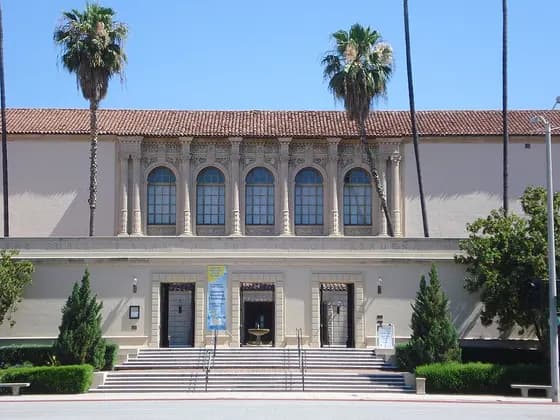
Kaiser Permanente Tyson School of Medicine (MD) Medical School - 2027 Entry Requirements & Interview Format
The Kaiser Permanente Bernard J. Tyson School of Medicine is a tuition-free private MD programme in Pasadena, California, founded by Kaiser Permanente in 2019 and named in honour of its late CEO Bernard J. Tyson. The school trains physicians specifically within the Kaiser Permanente integrated care model — emphasising value-based care, care coordination, population health, and health equity across Kaiser's 12+ million member population. The inaugural class enrolled in 2020.
Entry Requirements
What you need to apply to Kaiser Permanente Tyson School of Medicine (MD).
Admission overview
Bachelor's degree and MCAT required. Applications submitted via AMCAS. The school values applicants aligned with the Kaiser Permanente care model: systems thinkers, collaborative team members, and individuals committed to health equity and population health. Clinical experience and community engagement are valued. Secondary application required.
MCAT median
515 (range 510–520)
GPA median
3.85 overall / 3.82 science (BCPM)
Acceptance rate
2.0%
Class size
50
In-state preference
None
CASPer
Not required
Holistic review emphasis
Integrated care philosophy, team-based medicine, population health, health equity, and systems thinking.
Notes
Estimates from publicly available class profile data; first cohort enrolled 2020 — verify all figures with official KP Tyson admissions office.
Specialities offered
Integrated Care, Value-Based Medicine, Population Health, Health Equity, Care Coordination
Interview Format
How Kaiser Permanente Tyson School of Medicine (MD) interviews applicants.
Format
Multiple Mini Interview (MMI)
Interview window
October–February
Decision date
Rolling; final decisions by March 30
Post-interview chances
Approximately 15–30% post-interview acceptance rate (estimated; highly competitive).
What to expect at a Kaiser Permanente Tyson School of Medicine (MD) interview
Kaiser Permanente Tyson School of Medicine uses an MMI format with stations designed to assess communication, ethical reasoning, systems thinking, and alignment with the Kaiser Permanente integrated care model. Stations reflect the school's emphasis on value-based care, team-based medicine, health equity, and preventive health — themes central to the Kaiser Permanente philosophy. The interview day is held at the Pasadena campus and includes a programme overview, student Q&A, and an orientation to the KP integrated care ecosystem.
What makes Kaiser Permanente Tyson School of Medicine (MD) different
KP Tyson is the only medical school in the US built entirely around a single integrated health system's care model. The tuition-free curriculum eliminates student debt, and students receive exclusive access to Kaiser Permanente's clinical infrastructure, EHR systems, and population health data. The school explicitly does not use traditional letter grades, replacing them with competency-based assessment.
Tutor insight
KP Tyson is one of the most unusual and differentiated MD programmes in the US. Interviewers probe whether applicants genuinely understand and embrace the Kaiser Permanente integrated care philosophy — not just the tuition-free benefit. Be prepared to explain what integrated care means, why value-based medicine improves outcomes, and how population health approaches differ from fee-for-service medicine. The small class and single-system clinical training mean residency match breadth may be narrower; weigh this against the extraordinary tuition-free benefit and distinctive training model. Apply very early — the combination of tuition-free and a nationally recognized institution makes the applicant pool intensely competitive.
PrometheusQuestion Bank
595 medicine questions inside
Interview questions matched to Kaiser Permanente Tyson School of Medicine (MD)
Two questions our tutors flagged as a strong fit for Kaiser Permanente Tyson School of Medicine (MD)’s interview style. Try answering them out loud, then open Prometheus for the model answers and follow-up tips.
Medium·MMIQ1
AAMC Core Competency: Cultural Humility in Mental Health Care
A 35-year-old Somali refugee presents to your primary care clinic with persistent fatigue, headaches, and somatic complaints. Through an interpreter, you learn she has experienced significant trauma and displacement. She is reluctant to engage with mental health referral, stating that mental health problems are 'not talked about in our culture' and that seeing a psychiatrist would bring shame on her family. How do you approach her care?
Likely follow-up · How do Western psychiatric diagnostic categories map onto the experience of trauma in non-Western cultural contexts?
3 expert tips in Prometheus
Easy·MMI · PanelQ2
AAMC Core Competency: Oral Communication
You are shadowing a general internist. She asks you to give a two-minute summary of a patient's case to the afternoon attending who is taking over care. The patient is a 58-year-old man admitted with decompensated heart failure, currently on IV diuretics, with a history of hypertension and prior MI. You have read the chart. How do you structure your presentation, and what do you include?
Likely follow-up · What is the SOAP note structure and when is it appropriate versus the SBAR format?
Apply to Kaiser Permanente Tyson School of Medicine (MD) with confidence
We've helped students get into Kaiser Permanente Tyson School of Medicine (MD) and other US medicine schools. Get tailored support for each stage of the application.
Kaiser Permanente Tyson School of Medicine (MD) - Frequently asked questions
Bachelor's degree and MCAT required. Applications submitted via AMCAS. The school values applicants aligned with the Kaiser Permanente care model: systems thinkers, collaborative team members, and individuals committed to health equity and population health. Clinical experience and community engagement are valued. Secondary application required.
Multiple Mini Interview (MMI). Kaiser Permanente Tyson School of Medicine uses an MMI format with stations designed to assess communication, ethical reasoning, systems thinking, and alignment with the Kaiser Permanente integrated care model. Stations reflect the school's emphasis on value-based care, team-based medicine, health equity, and preventive health — themes central to the Kaiser Permanente philosophy. The interview day is held at the Pasadena campus and includes a programme overview, student Q&A, and an orientation to the KP integrated care ecosystem.
Kaiser Permanente Tyson School of Medicine (MD) typically interviews in October–February.
Decisions are released Rolling; final decisions by March 30.
KP Tyson is the only medical school in the US built entirely around a single integrated health system's care model. The tuition-free curriculum eliminates student debt, and students receive exclusive access to Kaiser Permanente's clinical infrastructure, EHR systems, and population health data. The school explicitly does not use traditional letter grades, replacing them with competency-based assessment.