
The Kaiser Permanente Tyson School of Medicine MD program
What you actually study, and where you will be
Kaiser Permanente Tyson School of Medicine's MD is a 4-year program taught through case-based learning in an integrated curriculum, with patient contact from Year 1 and clinical rotations in greater Los Angeles (Years 1–2), then Southern California and beyond (2027 entry). Your first two years mix small-group patient cases in Pasadena with a half-day a week in a Kaiser Permanente clinic from your first weeks. In Year 2 that clinic time grows into all six core clerkships at one of seven medical centers across greater Los Angeles. Years 3 and 4 bring both USMLE Step exams, three selectives in which you do much of a first-year resident's work, community medicine outside Kaiser Permanente and 16 weeks of electives.
- Degree
- MD
- Length
- 4 years
- Teaching
- Integrated + Case-based learning
- Clinical contact
- Year 1

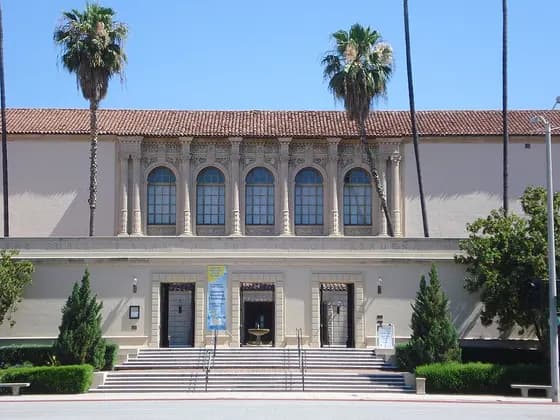
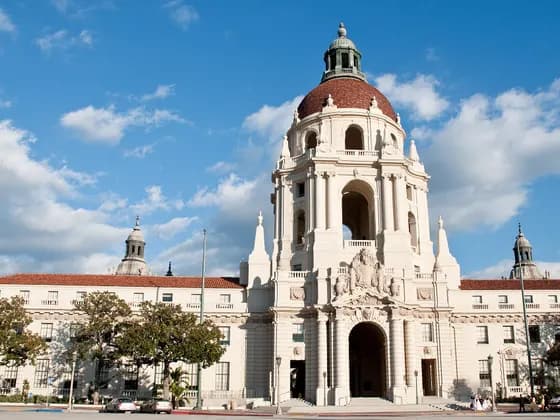

Photo: Coolcaesar · CC BY 4.0 · cropped
Photo: Doctor Doctorstein · CC BY-SA 4.0 · Photo: RBerteig · CC BY 2.0 · Photo: Mike Dillon · CC BY-SA 3.0
The Kaiser Permanente Tyson School of Medicine MD program at a glance (2027 entry)
The Kaiser Permanente Bernard J. Tyson School of Medicine (KPSOM) runs a four-year MD program from its campus in Pasadena, California, about 10 miles from downtown Los Angeles. Kaiser Permanente, an integrated health system that both insures and treats more than 12 million members, created the school, and its first class of 50 began in July 2020. KPSOM is private and nonprofit, not part of a university, and each class has 48 to 50 students.
The curriculum is called INSPIRE, short for Integration, Nurturance, Scholarship, Population Health, Innovation, Resilience and Equity. Rather than the traditional two years of science lectures followed by two clinical years, the school teaches three sciences through all four years. They are biomedical science, clinical science and health systems science, the study of how care teams, hospitals, insurance, communities and policy shape health.
Patients come early. In your first weeks you start a longitudinal integrated clerkship (LIC). Rather than moving through short specialty blocks, you stay at one Kaiser Permanente medical center and, over time, follow the same patients and preceptor, the physician who supervises and teaches you. In Year 1 that means a half-day a week in family medicine or internal medicine. In Year 2 it grows to all six core clerkships, the main clinical rotations, so you finish them before Year 3.
Years 1 and 2 are Phases 1 and 2; Years 3 and 4 form Phase 3. In Year 3 you sit the first two parts of the national licensing exam, the United States Medical Licensing Examination (USMLE) Step 1 and Step 2 CK (Clinical Knowledge). Across Years 3 and 4 come three four-week selectives with intern-like responsibility, community medicine outside Kaiser Permanente, electives and a scholarly project. Selectives are rotations chosen from a set list; electives are open choices. An intern is a doctor in the first year of residency, the specialty training that follows medical school.
| Degree | MD |
|---|---|
| Program length | 4 years; the MD-PhD with Caltech usually takes 8 |
| Class size | 48 to 50 students a year |
| Campus | Pasadena, California |
| Curriculum | INSPIRE: integrated, case-based and spiral (topics return in more depth), in three phases |
| Anatomy | Pre-dissected plastinated cadavers and prosections, plus digital tools |
| First patient contact | First weeks of Year 1, a half-day a week in primary care |
| Clinical sites | Seven Kaiser Permanente medical centers across greater Los Angeles, more in Years 3–4 |
| Step 1 timing | Start of Year 3; deadline December 31 of Year 3 |
| Grading | Year 1 pass/fail; Honors possible in Year 2 clerkships and Year 3 selectives |
What makes the Kaiser Permanente Tyson School of Medicine MD program different
Core clerkships finished in Year 2, with the same patients
Your Year 1 preceptor stays with you in Year 2, so you may follow the same patients for two years. Meanwhile you add emergency medicine, obstetrics and gynecology, pediatrics, psychiatry and surgery at the same center. With the core clerkships done, Years 3 and 4 are free for advanced rotations and electives.
Two years alongside a community health center
In Years 1 and 2 you are assigned to a Federally Qualified Health Center (FQHC), a federally funded community health center, near your LIC site. In Service-Learning, a monthly, nonclinical course co-designed with community partners, your team builds a practicum project with them, from raising preventive screening rates to art-based healing on Skid Row.
Health systems science in every year
Health systems science covers patient safety, quality improvement, population health, health policy and the community factors that shape health. It is part of every Integrated Sciences course and of Service-Learning, and Phase 3 adds two four-week Health Systems Science selectives.
A physician coach for all four years
Through REACH (Reflection, Education, Assessment, Coaching, and Health and well-being) you are paired with a physician coach from the start. You meet one-on-one and in small groups to set goals, reflect on feedback and work on well-being and professional identity, with REACH weeks about once a quarter. Coaches do not assess the students they coach.
Community medicine outside Kaiser Permanente
Every student spends four weeks at a safety-net clinic outside Kaiser Permanente, caring for uninsured and underinsured patients. Options include street medicine with people experiencing homelessness, care in Los Angeles County jails, free clinics and a clinic for people with intellectual and developmental disabilities. Many sites see patients in English and Spanish.
How Kaiser Permanente Tyson School of Medicine teaches medicine
The curriculum rests on three pillars: biomedical science, clinical science and health systems science. The school calls its design spiral: the same core topics come back across the four years, each time in more depth, so your knowledge and clinical skills build together. Ethics is built into every course.
Threads of shared values also run across all four years. The Curriculum page names four: Advocacy and Leadership, Inclusive Practice, Health Promotion and Interprofessional Collaboration. The 2025-26 catalog lists three, without Inclusive Practice.
In Years 1 and 2 the Integrated Sciences courses carry most of the teaching. Each has three parts: Scientific Basis of Healthcare (the biomedical science), Doctoring (clinical skills) and health systems science. Patient cases that unfold over one to two weeks tie them together. Phase 1 works through organ-system units, while in Phase 2 the cases switch organ system from week to week.
In Phase 1, required in-class activities are capped at 26 hours a week, averaged over four weeks, leaving blocks of independent time to prepare cases. When the WASC Senior College and University Commission (WSCUC), the school's institutional accreditor, visited in November 2024, it reported that about 70% of interactive teaching was in person, 25% live online and 5% self-paced.
In Phase 3 most learning happens on four-week rotations. You return to campus for REACH weeks and for Integrated Sciences weeks, where you analyze cases, sharpen clinical skills and cover advanced content for Step 2 CK. Year 4 ends with the Residency Immersive, two weeks of specialty-specific simulations that replicate parts of residency.
The ways you will learn
| Small-group case sessions | You work through each patient case with classmates and a faculty facilitator, asking questions and building up the science behind it, then continue the case in simulation and lab sessions. |
|---|---|
| Doctoring and simulation | You practice interviews and examinations with standardized patients, actors trained to play patients, and physical examination teaching associates. You also manage emergencies on lifelike mannequins, rehearse procedures on part-task trainers, and write notes and order tests in the electronic health record. |
| Interprofessional Collaboration sessions | Sessions where you practice teamwork with students from other health professions. First-year students in 2026-27 have an orientation in September and four sessions. |
A typical week on the Kaiser Permanente Tyson School of Medicine program
The school publishes a sample Phase 1 week, dated March 13, 2026. Mornings hold the structured teaching: Integrated Sciences small groups and labs in Scientific Basis of Healthcare on Monday, Wednesday and Friday, and Doctoring on Tuesday. Thursday morning is your clinic half-day, swapped for Service-Learning once a month.
Tuesday afternoon brings health systems science and monthly Service-Learning debriefs. Monday afternoons host REACH sessions two to three times a semester and Interprofessional Collaboration four to five times a year. The rest of each afternoon is independent study, and weekend activities are generally not required in Phase 1.
For first-year students in 2026-27, classes started on July 27, assessment weeks fall in December and June, and summer break runs from June 28 to August 8, 2027. Required Phase 1 activities, including self-directed study, are capped at 68 hours a week. From Year 2, duty hours are capped at 80 a week including overnight call, and you get one day in seven free; both limits are averaged over four weeks. Overnight call in the hospital comes no more than every fourth night.
How anatomy is taught at Kaiser Permanente Tyson School of Medicine
Anatomy is taught in the Anatomy Resource Center (ARC) in case-based group sessions covering surface, regional and cross-sectional anatomy, embryology, histology and diagnostic imaging. The sample timetable shows it integrated with pathology, radiology and clinical skills such as ultrasound.
The human material is already dissected. The ARC holds pre-dissected cadavers and prosections (specimens dissected in advance to show particular structures), preserved by plastination, which replaces the body's water and fat with plastic. Hand-made reproductions of bones and of disease and trauma add to the collection.
Digital tools include augmented reality, 2D and 3D digital anatomy, virtual microscopy, and ultrasound devices and simulators. Multi-user touch-screen workstations let you explore thousands of real human structures in 3D and in cross-section.
When you first meet patients at Kaiser Permanente Tyson School of Medicine
Your first clinic visit comes during the Early Immersive Experience, the course that opens Year 1. From then on you spend a half-day a week one-on-one with a family medicine or internal medicine preceptor. You care for a panel of patients with the preceptor's team of nurses, pharmacists, social workers and others, and learn to manage patients with electronic health records and data.
In Year 2 you keep the same preceptor and patients and add the other five core specialties, mostly in outpatient clinics. Five one-week Inpatient Immersion blocks take you onto hospital wards with residents and attending physicians, the senior doctors in charge.
Simulation also starts in the first weeks, in a clinical skills area modeled on the design of clinic spaces in Kaiser Permanente medical centers. Outside the curriculum, more than 250 Kaiser Permanente physicians host students for a day of shadowing at the LIC sites. Students also volunteer at a student-run clinic at the Pasadena site of JWCH, a local FQHC, with faculty physicians overseeing.
The Kaiser Permanente Tyson School of Medicine curriculum, year by year
- Year 1 (Phase 1)
Foundations and a weekly primary care clinic
Year 1 runs from late July to late June. It opens with the Early Immersive Experience, then two Integrated Sciences courses in organ-system units, with your weekly clinic, monthly Service-Learning and REACH alongside. Every Phase 1 course is pass/fail, which the school says supports a collaborative, non-competitive class.
- Early Immersive Experience (2 credits): the school's mission, the case-based spiral curriculum, introductions to the three sciences, professional identity, team-building, early clinical skills, and your first LIC and Service-Learning visits. The WSCUC visiting team's November 2024 report describes it as two weeks long.
- Integrated Sciences 1 (fall, 9.5 credits): fundamentals; gastrointestinal, endocrine and metabolic; genitourinary and reproduction.
- Integrated Sciences 2 (spring, 12.5 credits): renal; cardiovascular and pulmonary; hematology, oncology and immunology; infectious disease; musculoskeletal and dermatology; mind and nervous system.
- LIC 1A and 1B: a half-day a week with your family medicine or internal medicine preceptor.
- Service-Learning 1A and 1B at your assigned FQHC, on how social factors affect health and how to work with community partners.
- REACH 1A and 1B: four REACH weeks and several single REACH Mondays.
- Year 2 (Phase 2)
All six core clerkships beside the classroom
For second-year students in 2025-26, Year 2 ran from August 11, 2025 to August 7, 2026. Integrated Sciences continues while the LIC expands to all six core clerkships, each graded Honors/Pass/Fail; Integrated Sciences and REACH stay pass/fail.
- Integrated Sciences 3 (8.5 credits) and 4 (7.5 credits): the same three parts at a higher level of integration, mainly through small-group cases and simulation.
- LIC courses in family medicine/internal medicine, obstetrics and gynecology, pediatrics, surgery, psychiatry and emergency medicine, each spanning both semesters.
- Five one-week Inpatient Immersion blocks.
- Service-Learning 2A and 2B, continuing your team's practicum project, and REACH 2A and 2B, which add a Healer's Art session that extends the well-being curriculum.
- The Comprehensive Basic Sciences Examination, a National Board of Medical Examiners (NBME) exam built to match Step 1. It counts toward no grade, but you must sit it to enter Phase 3.
- Dedicated Step 1 study at the end of the year, continuing into Year 3, according to the curriculum schematic drawn for the class that entered in 2024.
- Year 3 (Phase 3)
Step exams, then intern-level selectives
Year 3 opens with four more weeks of Step 1 study and a two-week break, according to the same 2024 schematic. In 2025-26, third-year students then began Advanced Clinical Knowledge Training (ACKT) on September 15, followed by seven four-week rotation blocks broken up by Integrated Sciences and REACH weeks.
- ACKT (4 weeks): structured and independent study that consolidates clinical knowledge for advanced rotations and Step 2 CK.
- USMLE Step 1 and Step 2 CK, both taken this year.
- Advanced Clinical Selective in family medicine or internal medicine (4 weeks, Honors/Pass/Fail).
- Advanced Clinical Selective in a specialty you choose from more than 20 (4 weeks, Honors/Pass/Fail).
- Critical Care Selective (4 weeks, Honors/Pass/Fail) in emergency medicine or adult, neonatal or pediatric intensive care.
- A two-week required neurology rotation (pass/fail) and a four-week Health Systems Science selective.
- Year 4 (Phase 3)
Electives, community medicine and the move to residency
Year 4 follows straight on from Year 3; in 2025-26 it ran from June 23, 2025 to May 8, 2026, with commencement on May 11. A review by January 15 checks that you are on track to graduate, so the school can certify you for the Match, the national process that pairs graduates with residency programs.
- Community Medicine Rotation (4 weeks, pass/fail) outside Kaiser Permanente. The catalog places it in Year 4; the community engagement page says you choose Year 3 or 4.
- A second four-week Health Systems Science selective.
- Electives and the four-week Scholarly Project block, both of which can fall in Year 3 or Year 4.
- Integrated Sciences 6 and REACH 4 weeks; REACH turns to boundaries, confidentiality and the transition to residency.
- Residency Immersive (2 weeks), the capstone before graduation.
- Eight weeks of floating vacation across Years 3 and 4, on top of winter breaks, according to the same 2024 schematic.
How you are assessed at Kaiser Permanente Tyson School of Medicine
Grades are Honors, Pass, Conditional Pass or Fail. A Conditional Pass means most but not all expectations were met; after successful remediation it is recorded as CP/P. Year 1 is entirely pass/fail, and in Year 2 only the six LIC clerkships can earn Honors. For Phase 3 the sources differ. The Curriculum page says all clinical experiences are tiered, while the 2025-26 catalog shows Honors only in the Advanced Clinical and Critical Care Selectives.
Integrated Sciences courses use exams that faculty build from NBME questions, plus open-ended and essay questions. Each course ends with an Objective Structured Clinical Examination (OSCE): timed encounters with standardized patients or mannequins, some followed by a written note, an oral presentation or a discussion with an assessor.
A Progress OSCE gives your class the same graduation-level cases each year, with the passing standard rising until it matches a student ready for residency. Clinical work is also judged through preceptor ratings, direct observation, expert assessors who watch whole encounters, note reviews and feedback from other health professionals, peers and patients. An e-portfolio gathers the results for promotion reviews at the end of Years 1 and 2 and midway through Year 4.
For MD students, attending a program accredited by the Liaison Committee on Medical Education (LCME) is what makes you eligible to sit the USMLE. The LCME accredits MD programs in the United States; osteopathic (DO) students and international graduates qualify by other routes. Its directory, updated October 14, 2026, lists KPSOM as fully accredited, with 2019 as its initial year and its next survey in 2028-29. The catalog dates preliminary accreditation to February 12, 2019.
You must pass USMLE Step 1 and Step 2 CK to graduate, and pass Step 1 before sitting Step 2 CK. Step 1 tests the sciences basic to medicine and has been reported only as pass or fail since January 26, 2022. Step 2 CK keeps a three-digit score, with a minimum pass of 218 since July 1, 2025. You sit the NBME Comprehensive Clinical Sciences Examination (CCSE) before Step 2 CK.
The school sets deadlines rather than test dates: Step 1 by December 31 and Step 2 CK by March 31 of Year 3. In August 2026 the USMLE program announced a move to designated testing dates from January 2029, with Step exams offered less often each year. A June 2026 notice had named 2028. On the current schedule, a 2027 entrant's deadlines would be December 31, 2029 and March 31, 2030, so both exams would fall under the new system.
- The school encourages Step 1 before ACKT begins and Step 2 CK at the end of or soon after ACKT, if your CCSE and practice exams show readiness. Its Strategic Academic Success team may advise a later date if practice results suggest a risk of failing.
- Phase 3 Integrated Sciences weeks include case-based oral exams, such as the Intern Clinical Judgment Examination. REACH, Service-Learning and the LIC assess reflective writing.
- If you fail a licensing exam you normally retake it within 10 to 12 weeks; failing the same exam twice leads the school to strongly recommend a year-long leave of absence.
Kaiser Permanente Tyson School of Medicine clinical rotations: where you will actually train
For Years 1 and 2 you are based at one of seven Kaiser Permanente medical centers, or their nearby medical offices, for the LIC. The school assigns sites to give each student the patients and experiences needed to graduate, though you can request another with good reason. Your Service-Learning health center is in the same area.
You must be able to travel by car or public transit, and in Phases 1 and 2 the school sends monthly rideshare vouchers for LIC and Service-Learning trips. There is no on-campus housing, so you find your own place.
The catalog's running text names Woodland Hills among the LIC hosts, but its address list, its course descriptions and the website give the Orange County center in Anaheim instead. Elsewhere in the catalog, Woodland Hills appears as a site for Year 3 and 4 rotations.
In Years 3 and 4 your map widens: the website says you gain access to seven more Southern California clinics and dozens nationwide. The Residency Preparedness page says most selectives and electives run at Kaiser Permanente residency and fellowship teaching sites, with affiliated electives at other local institutions.
Both are LIC sites. Los Angeles Medical Center specializes in complex neurosurgery, pediatrics and cancer care and hosts most student's-choice selectives; West Los Angeles lists bariatric surgery, transgender care and urology.
- Kaiser Permanente Los Angeles Medical Center
- Kaiser Permanente West Los Angeles Medical Center
An LIC site and designated Latino Center of Excellence, home to the KPASA Spanish Language Immersion Program; about 70% of its patients are Hispanic. Phase 3 students also come for neurology, emergency medicine and urgent care.
- Kaiser Permanente Downey Medical Center
LIC sites that also host the neurology rotation. South Bay, with 257 licensed beds and a certified primary stroke center, adds dermatology and occupational medicine selectives.
- Kaiser Permanente Panorama City Medical Center
- Kaiser Permanente South Bay Medical Center, Harbor City
An LIC site; Kaiser Permanente Orange County also runs a medical center in Irvine. Phase 3 options include the family medicine selective and addiction medicine, rheumatology and family planning electives.
- Kaiser Permanente Anaheim Medical Center
An LIC site in the Inland Empire with more than 1,100 physicians and several residency programs. It hosts family and internal medicine selectives, emergency medicine, inpatient psychiatry and adult, neonatal and pediatric intensive care.
- Kaiser Permanente Fontana Medical Center
- Canyon Ridge Hospital (psychiatry selective)
Used for selectives and electives, such as anesthesiology at Baldwin Park, internal medicine at Riverside, emergency medicine at San Diego and family medicine at Woodland Hills.
- Baldwin Park Medical Center
- Riverside Medical Center
- San Diego Medical Center
- Woodland Hills Medical Center
Electives outside Kaiser Permanente, from orthopedic trauma at Cedars-Sinai and surgical oncology at City of Hope to pediatric cardiology at Children's Hospital Los Angeles.
- Cedars-Sinai Medical Center
- City of Hope, Duarte
- Keck Medicine of USC and LAC+USC Medical Center
- UCLA David Geffen School of Medicine
- Children's Hospital Los Angeles
Safety-net clinics outside Kaiser Permanente, which the catalog lists at about 11 to 46 miles from campus.
- Free Clinic of Simi Valley
- Healthcare in Action street medicine
- JWCH Institute
- Lestonnac Free Clinic, Orange
- Northeast Valley Health Corporation
- Venice Family Clinic
- Los Angeles County jails
- Valley Community Healthcare
- Achievable Health, Culver City
- AltaMed Medical Group, Santa Ana
- JWCH Center for Community Health
- ParkTree Community Health Center, Ontario
- South Bay Family Health Care/Venice Family Clinic
- UMMA Health
- Valley Community Healthcare
Electives in other Kaiser Permanente regions, such as Oakland, Atlanta and Seattle, plus global health in Kenya and medical Spanish with volunteering in Tijuana.
- Kaiser Permanente Northern California
- Kaiser Permanente Georgia
- Kaiser Permanente Hawaii
- Kaiser Permanente Mid-Atlantic
- Kaiser Permanente Washington
- Moi Teaching and Referral Hospital, Eldoret, Kenya
- Refugee Health Alliance, Tijuana, Mexico
Electives, selectives and away rotations at Kaiser Permanente Tyson School of Medicine
A sub-internship is a rotation in which a senior student takes on much of an intern's work. The catalog's three Year 3 selectives are of this kind, but the school's web pages word it differently. The Curriculum page mentions sub-internships in internal medicine and a specialty of your choice; the Residency Preparedness page says at least three selectives in Year 3 and at least eight weeks of sub-internship experience.
The family medicine selective puts you on an inpatient service at a Kaiser Permanente family medicine residency, with one or two evenings of admissions a week and no overnight call. On internal medicine you join a ward team of an attending, a senior resident and interns, writing orders and daily notes. Student's-choice options run from anesthesiology and dermatology to cardiothoracic surgery, a service without residents where you work one-on-one with attending surgeons.
Across Years 3 and 4 you also take 16 weeks of clinical selectives or electives and 8 more weeks of electives or Health Systems Science selectives. The school says it offers over 140 clinical electives, usually two or four weeks long and pass/fail. They range from LGBTQ+ care and palliative care to Medicine Under Austere Conditions, which trains you as a Wilderness First Responder.
Health Systems Science selectives last four weeks. Some are classroom courses, on topics such as diagnostic error, the US health care system, patient safety or population health. Others place you with groups such as the Los Angeles County Department of Public Health or Planned Parenthood Pasadena and San Gabriel Valley, or let you design a Student Initiated Experience.
Community medicine can be combined with KPasa, a medical Spanish course for students with some Spanish, as an eight-week block: class four mornings a week and clinic five afternoons. KPasa Frontera pairs Spanish classes with Saturday volunteering at immigrant shelters in Tijuana. The global health rotation, after an application with interviews, puts you on the internal medicine or pediatric wards of Moi Teaching and Referral Hospital in Eldoret, Kenya. It runs for four weeks in the fall of Year 4.
Away rotations at off-campus hospitals are approved by the Registrar and the Director of Clinical Affairs or arranged through the Visiting Student Learning Opportunities (VSLO) system.
Dual degrees and research years at Kaiser Permanente Tyson School of Medicine
Every MD student completes a mentored Scholarly Project, except MD-PhD students, who write a dissertation instead. Preparatory work begins in Phases 1 and 2, the project runs through Phase 3, and a four-week block is reserved for it. If your project is nearly done, you can ask to be excused from two or all four weeks.
Projects can be quantitative or qualitative research, quality improvement, implementation science or social science inquiry, and many analyze data already collected for research or clinical care. You can use Kaiser Permanente's electronic health record data, join a mentor's funded study or do lab work through partnerships with local research institutions, then present at the annual Student Scholarship Symposium.
The MD-PhD is run with the California Institute of Technology (Caltech), with up to three places in each class. You complete two years at KPSOM, including all core clerkships. Then comes a PhD in any Caltech research program, usually four years, and the last two years of the MD: about eight years in all. Three four-week summer lab rotations at Caltech, before Year 1 and after Years 1 and 2, help you choose a mentor.
During their Caltech PhD years, MD-PhD students keep seeing patients, about one half-day a month in Kaiser Permanente urgent care. Step 1 comes before the PhD years. Regular MD students can occasionally transfer into the program at the director's discretion.
Master's degrees need separate applications, usually in Year 2 or 3, and typically add a year after Year 3. The 2025-26 catalog and the school's FAQ list two. One is a Master of Public Health (MPH) at the UCLA Fielding School of Public Health; the other is a Master of Health Administration (MHA) at the USC Sol Price School of Public Policy. The live Curriculum page adds an MBA in Pepperdine Graziadio Business School's full-time program in Malibu.
You can also request a leave of absence for an approved research year. An extra year for research or a master's raises the maximum time to finish from six years to seven; for the MD-PhD the limit is ten.
Facilities and support at Kaiser Permanente Tyson School of Medicine
Where you will learn
The Medical Education Building, at Green Street and Los Robles Avenue, is an 83,000-square-foot, four-story building. Flexible classrooms seat 48 to 112 students, and twelve small-group rooms each hold 8 to 10 learners and two faculty. It also has yoga and meditation spaces, a fitness center and a teaching kitchen.
The 8,800-square-foot Simulation Center includes a 6,337-square-foot clinical skills and standardized patient area. It has ten exam rooms for standardized patients, four simulated hospital rooms with a nurses' station, debriefing rooms and a procedural skills center. Audiovisual equipment streams and records sessions for feedback and scoring.
The library's online KPSOM Clinical Library links to about 17,000 Kaiser Permanente clinical resources, more than 12,000 journals and over 9,000 online books, and the librarian supports scholarly projects.
Support while you study
Your REACH physician coach stays with you for four years. The WSCUC visiting team reported in 2024 that students had six to eight required coaching sessions a year, with coaches trained to International Coaching Federation principles. You also keep an individual learning plan that responds to your assessments.
During the Early Immersive Experience you meet the learning specialist who works with you for all four years and helps you prepare for board exams. Academic Support and Advising staff also help with study plans, test anxiety and Step 1 and Step 2 CK schedules, and peer tutoring is available.
You join a learning community when you start: a group of students, staff and faculty that runs social events, a peer mentoring program and friendly competitions. It also houses the Student Council, to which every student belongs.
Student Psychological Services offers short- and long-term therapy, crisis support during and after business hours, and brief Let's Talk check-ins. Every first-year student meets a psychologist once for 20 minutes.
Career advising follows the Association of American Medical Colleges (AAMC) Careers in Medicine program, with required career activities in REACH and yearly advising sessions. Specialty interest groups help you explore. You are not required to do your residency at Kaiser Permanente.
Is the Kaiser Permanente Tyson School of Medicine program right for you?
This program may suit you if
- You want real patients from your first weeks and the same preceptor and patient panel for two years.
- You learn best by talking through patient cases in small groups, with time left for independent study.
- You are curious about how health systems, communities and policy shape health, not only about disease.
- You want your core clerkships done by the end of Year 2, leaving two years for advanced rotations and electives.
- You would value a physician coach and a learning specialist who stay with you for all four years.
Things to think about
- If dissecting a body yourself matters to you, note that the school describes anatomy taught with pre-dissected cadavers and digital tools.
- Clinic days can mean travel across greater Los Angeles, as far as Fontana or Anaheim, and you find your own housing.
- Year 2 combines six graded clerkships, Integrated Sciences courses and five inpatient weeks in a single year.
- Both Step exams come in Year 3, and for a 2027 entrant both deadlines would fall after the USMLE's switch to designated testing dates.
Kaiser Permanente Tyson School of Medicine MD program — frequently asked questions
Applying to Kaiser Permanente Tyson School of Medicine?
How to get into Kaiser Permanente Tyson School of Medicine
Prerequisites, MCAT, AMCAS personal statement, secondaries and interview, step by step.
Open the guide →Kaiser Permanente Tyson School of Medicine admissions profile
MCAT and GPA profile, acceptance rate, interview format and key dates.
See the profile →Compare Kaiser Permanente Tyson School of Medicine with other schools
Put the teaching style, anatomy teaching and clinical sites next to another school.
Open the comparison →Prepare for the Kaiser Permanente Tyson School of Medicine interview
Format breakdown, school-specific sample questions and prep tips from tutors who interviewed here.
Read the guide →Where this Kaiser Permanente Tyson School of Medicine program guide came from
This guide was written from 40 official sources — Kaiser Permanente Bernard J. Tyson School of Medicine's own program pages and curriculum documents, plus the accreditor and the hospitals and health systems the school trains students in where they publish detail — read on 2026-10-15, then checked claim by claim against those sources.
- KPSOM: Curriculum (INSPIRE curriculum, LICs, other degrees, grading)
- KPSOM: Modern, Integrated Medical Education for the Future
- KPSOM Curriculum Schematic: Your four-year journey (drawn for the Class of 2028, as of July 29, 2024)
- KPSOM Sample Phase 1 Weekly Schedule (as of March 13, 2026)
- KPSOM: Academic Calendar 2026-2027 (first-year students)
- KPSOM School Catalog 2025-2026
- KPSOM: Anatomy Beyond Cadavers
- KPSOM: Simulation Center
- KPSOM: Clinical Training Sites
- Kaiser Permanente Downey Medical Center (KPSOM training site)
- Kaiser Permanente Los Angeles Medical Center (KPSOM training site)
- Kaiser Permanente Orange County Medical Center (KPSOM training site)
- Kaiser Permanente Panorama City Medical Center (KPSOM training site)
- Kaiser Permanente San Bernardino County Medical Center (KPSOM training site)
- Kaiser Permanente South Bay Medical Center (KPSOM training site)
- Kaiser Permanente West Los Angeles Medical Center (KPSOM training site)
- KPSOM: Residency Preparedness
- KPSOM: Some Key Features
- KPSOM: Service-Learning
- KPSOM: Research and Scholarship
- KPSOM: MD-PhD Program With Caltech
- KPSOM: Student Engagement and Learning Communities
- KPSOM: Academic Support
- KPSOM: Student Well-Being
- KPSOM: Student Psychological Services
- KPSOM: Career Advising
- KPSOM: Community Engagement
- KPSOM: FAQs
- KPSOM: About
- KPSOM: Our Location
- KPSOM: Accreditation
- WSCUC Visiting Team Report, Seeking Accreditation Visit 2 (November 19-22, 2024)
- LCME: Accredited Programs (updated October 14, 2026)
- LCME: About the LCME
- USMLE: Updated Timeline for Designated Testing Dates, Transition in January 2029 (August 6, 2026)
- USMLE Designated Testing Dates Information Hub
- USMLE Designated Testing Dates FAQs (updated August 6, 2026)
- USMLE: Examination Results and Scoring
- USMLE: Step 1
- USMLE: Step 2 CK
Curricula are restructured between cycles. Anything here that decides your application — how anatomy is taught, a clinical campus assignment, a required research year — should be confirmed against the official page for your entry year.
Applying to Kaiser Permanente Tyson School of Medicine?
We help US applicants with MCAT strategy, the AMCAS personal statement, secondary essays and interview prep — everything you need for a competitive Kaiser Permanente Tyson School of Medicine application.