
The Wake Forest University School of Medicine MD program
What you actually study, and where you will be
Wake Forest University School of Medicine's MD is a 4-year program with an integrated curriculum, with patient contact from Year 1 and clinical rotations in Winston-Salem, Charlotte and affiliated North Carolina sites (2027 entry). You train for four years in Winston-Salem or Charlotte, two campuses that teach the same curriculum differently: lecture-led integrated teaching in Winston-Salem, problem-based small groups in Charlotte. About 18 months of Foundations science end with USMLE Step 1, and core clerkships start around March of your second year. A final Individualization phase of acting internships, critical care and electives runs to graduation.
- Degree
- MD
- Length
- 4 years
- Teaching
- Integrated
- Clinical contact
- Year 1

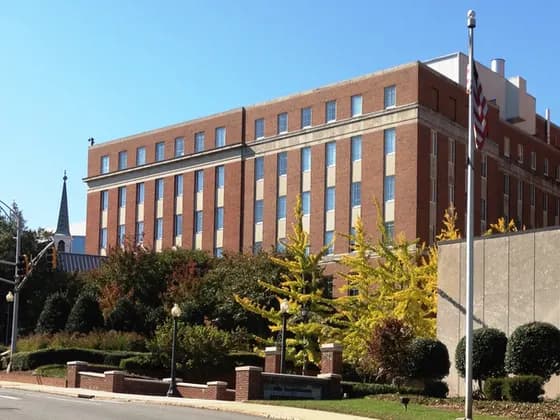
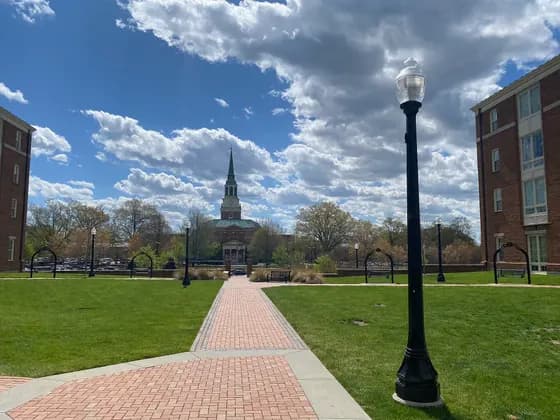

Photo: P. Hughes · CC BY 4.0 · cropped
Photo: Merveilleux · CC BY-SA 3.0 · Photo: Maggiehc23 · CC BY-SA 4.0 · Photo: P. Hughes · CC BY 4.0
The Wake Forest University School of Medicine MD program at a glance (2027 entry)
Wake Forest University School of Medicine's MD is a four-year program taught on two campuses in North Carolina, Winston-Salem and Charlotte. Both teach the Wake Ready curriculum, launched in 2017 and since redesigned, to the same objectives. The school is part of the Advocate Health system, and clinical training centers on Atrium Health Wake Forest Baptist Medical Center in Winston-Salem or Atrium Health Carolinas Medical Center in Charlotte.
Winston-Salem is the larger campus. Charlotte trained third- and fourth-year students for more than a decade before its first four-year class of 49 started in July 2025. The school expects the campus to grow to 100 students per class. Of the 193 students who entered in 2026, the Class of 2030, 145 started in Winston-Salem and 48 in Charlotte.
The campuses differ mainly in the pre-clerkship (pre-clinical) phase, called Foundations, which lasts about 18 months and mixes basic science with clinical skills. Winston-Salem teaches it with lectures applied in small groups; Charlotte uses problem-based learning built on weekly patient cases. On both campuses Foundations carries the same 68 credits.
Foundations ends with Step 1 of the United States Medical Licensing Examination (USMLE), which you must pass to progress to Immersion. Immersion is a year of clerkships, the core clinical rotations in which you work on hospital and clinic teams in each major specialty.
The final phase, Individualization, adds acting internships, where you carry much of the workload of an intern (a first-year resident) under supervision. It also includes critical care, electives you choose and Step 2 CK, the USMLE's clinical knowledge exam, and ends with the Match, the national process that places graduates in residency training.
Pre-clerkship courses are graded pass/fail. You join a House, a learning community with its own advisors and coach, for all four years. Research is optional, with summer projects, scholarly concentrations and three dual degrees for students who want more. The program is accredited by the Liaison Committee on Medical Education (LCME), and one accreditation covers both campuses.
| Degree | MD |
|---|---|
| Program length | 4 years in three phases: Foundations, Immersion, Individualization |
| Class size | 193 entrants in 2026: 145 in Winston-Salem, 48 in Charlotte |
| Campuses | Winston-Salem or Charlotte, North Carolina; preference stated after acceptance |
| Teaching style | Integrated lectures and small groups (Winston-Salem); problem-based learning (Charlotte) |
| Anatomy | Lab with donated bodies (Winston-Salem); plastinated and virtual anatomy (Charlotte) |
| First patient contact | Year 1: clinical skills with patients and week-long clinic experiences with a preceptor |
| Clinical sites | Atrium Health Wake Forest Baptist and Atrium Health Carolinas Medical Center |
| Step 1 timing | Before clerkships; school deadline about mid-February of year 2 |
| Grading | Pass/fail pre-clerkship; numeric grades still set class quartiles |
What makes the Wake Forest University School of Medicine MD program different
Ultrasound from year 1 through the clerkships
In Foundations, each Integrated Ultrasound module pairs 30 to 45 minutes of online teaching with a one-hour lab in which you scan classmates to see the anatomy you are studying. Clerkships include required ultrasound training, and the final phase offers a month-long point-of-care (bedside) ultrasound elective. A school feature says students on it complete over 100 scans on patients.
A procedures curriculum across both clinical years
Basic Clinical Procedures runs through all 48 weeks of Immersion and Advanced Clinical Procedures through 38 weeks of Individualization. For each procedure you study an online module, then observe and take part on rotations, seeking chances to perform it under supervision. The basic course ends with a Procedures OSCE (objective structured clinical examination), where examiners watch you perform selected procedures in simulated settings.
Charlotte's ambulatory medicine with one preceptor all semester
Ambulatory internal medicine is the same two-week, 2-credit clerkship on both campuses. Winston-Salem runs it as a block in several outpatient settings. In Charlotte you spend that time with one community preceptor, a practicing doctor who supervises you in clinic, spread across a 24-week semester alongside other rotations. Charlotte's page says its clerkship year spans acute, chronic and preventive care, with a focus on health equity.
A student-run free clinic in Winston-Salem
Students run the Delivering Equal Access to Care (DEAC) Clinic, a physician-staffed free clinic open on Monday evenings to uninsured residents of five nearby counties. They handle most of each visit, work a hospital would not let them do: check-in, triage, blood draws and lab work, then the examination, care plan and notes. In 2025 DEAC recorded 545 patient visits across its clinics.
How Wake Forest University School of Medicine teaches medicine
In Winston-Salem, Foundations is taught as integrated instruction: large-group sessions present the core science, then small-group courses apply it to cases, alongside simulation. The handbook's course descriptions mention quizzes and case- and problem-based activities in Cardiovascular and Pulmonary, and weekly large- and small-group sessions that stress self-directed learning in Renal. In Winston-Salem, Endocrinology and Reproduction is taught mainly to the whole class in year 2.
Charlotte teaches Foundations through problem-based learning (PBL). A weekly clinical case is the springboard: in a facilitated small group you work out the science behind the patient's problem and the diagnoses to consider, then study independently. Large-group sessions and team-based learning, where you prepare in advance and then solve problems in teams, support the cases. Charlotte also moves hematology into year 1 for earlier case work and splits endocrinology and reproduction across both years.
Several longitudinal courses, which run for months alongside the science courses, are the same on both campuses. LAUNCH, in your first five months, covers study strategies, professionalism, self-awareness, new terms and ideas, careers and healthy living. In year 1, Interpreting and Applying Clinical Evidence (IACE) teaches epidemiology and evidence-based medicine through alternating lectures and small groups. Medicine and Patients in Society (MAPS) uses small-group discussion for ethics, professionalism, behavior and the medical humanities across both years.
From Immersion on, you learn mainly through patient care on clinical teams. A year-long radiology course pairs online pre-learning modules with interactive case conferences on the diseases you meet in each clerkship. In Individualization, acting internships and critical care each include a self-directed learning project on a knowledge gap you identify yourself.
The ways you will learn
| Large-group sessions | The school uses a lecture-capture system for whole-class teaching, though some sessions are not recorded, for example to protect patient privacy. |
|---|---|
| Virtual patient cases (iCRIT) | In Introduction to Clinical Reasoning and Integrative Thinking, a first-year small-group course in Winston-Salem, you reason from virtual patients' complaints and exam findings to a differential diagnosis, a ranked list of possible causes. It teaches quick pattern recognition and slower step-by-step reasoning, and practices exam-style vignette questions. |
| Standardized patients | Actors trained to portray patients, run by the school's Standardized Patient Program. You take histories from them, examine them within set limits and practice difficult conversations, and they give feedback on your communication. |
| Simulation | You practice clinical scenarios on manikins, task trainers and virtual reality simulators, and simulation returns in the emergency medicine clerkship and critical care rotations. |
| Clerkship teaching | On rotations, teaching happens on rounds, in clinic and at conferences. Neurology, for example, adds clinic conferences and weekly grand rounds. |
A typical week on the Wake Forest University School of Medicine program
Two published limits shape the pre-clerkship week. Required class time plus required assignments, such as set reading, videos or online modules, may not exceed 40 hours in any week or average more than 30 hours a week over four weeks. Your own independent study does not count toward these limits.
You must attend small-group sessions and clinical encounters in person, along with any large-group session designated as interactive and required. Other large-group teaching is encouraged but optional. Arriving more than 10 minutes late to a required session counts as an unexcused absence. Missing 10 percent or more of required events in a year leads to a meeting with program leadership.
How anatomy is taught at Wake Forest University School of Medicine
Anatomy is taught in Human Structure and Function (HSF), a system-based introduction to the body's structure, development and function. It links gross and microscopic anatomy and ties both to radiological imaging, the physical exam and common procedures. HSF carries 10 credits on each campus, but the two campuses schedule and teach it differently.
In Winston-Salem, HSF is a 12-week course early in year 1, taught in the anatomy lab at the Bowman Gray Center for Medical Education. The school says the lab was designed for tissue dissection, with group learning bays and monitors that relay the central teaching station. Bodies given through the Whole Body Donation Program support hands-on anatomy learning for first-year students, and a peer-led study group, Anatomy and Physiology Peer-Led Education (APPLE), supports first-years during the course.
Charlotte spreads HSF across years 1 and 2 so that anatomy and imaging line up with each organ-system course. It teaches the course in a plastinated anatomy lab and a virtual anatomy lab. Plastinated specimens are real body parts from consenting donors, preserved so that you can touch and hold them.
Before the campus opened, the school said anatomy and radiology teaching would also use Sectra 3-D virtual dissection tables, ultrasound devices and augmented reality software. On a Sectra table, a touchscreen workstation, you peel back skin and muscle with a virtual knife and see linked radiology images.
When you first meet patients at Wake Forest University School of Medicine
Patient contact starts with Clinical Skills in your first term. In small groups led by clinical faculty, you learn to build rapport, take a history, examine patients and write up findings. You practice on real patients in the medical center and on standardized patients while faculty observe and coach you. Clinical Skills 1 is assessed through performance exams with standardized patients.
Year 1 also includes several one-week clinical practice experiences, each with an assigned outpatient preceptor. In year 2, Applied Clinical Skills moves from basic information-gathering to focused histories, interpreting findings, building a differential diagnosis and making first management decisions.
Before clerkships, the three-week Transition to Patient Care course brings you onto the hospital system as a team member, teaches practical procedures and the electronic medical record, and refreshes earlier skills. Immersion then begins around March of year 2.
Year by year at Wake Forest University School of Medicine
- Year 1
Foundations Phase 1
Year 1 runs from July to early May and moves from anatomy and cell biology through infection to the nervous and digestive systems, with clinical courses alongside. A summer break of nine and a half weeks follows. The 2026-27 handbook lists this structure for the Class of 2029 and later classes. If you start in July 2027 you join the Class of 2031; the later phases below come from the schedules of the Classes of 2028 and 2027, so details may shift.
- LAUNCH, the introductory course, from July to November.
- Human Structure and Function, the anatomy course: a 12-week block in Winston-Salem, continuing into year 2 in Charlotte.
- Metabolism and Defense: biochemistry, genetics, pathology, microbiology, virology and immunology, taught around clinical cases.
- Microbiology and Infectious Diseases: viral, bacterial, protozoal and fungal infections, the immune response, antimicrobial drugs and resistance.
- Neuroscience (6 credits): basic neuroscience with core neurology, psychiatry and nervous-system pharmacology.
- Digestive System and Nutrition: four weeks on the anatomy, physiology, pathology and pharmacology of the digestive system.
- Charlotte only: Hematology and Endocrine and Reproduction I.
- Longitudinal courses: Clinical Skills 1, MAPS 1, IACE, Ultrasound 1 and, in Winston-Salem, iCRIT.
- Year 2, July to March
Foundations Phase 2 and Step 1
The second year covers the remaining organ systems and ends with Step 1. By the end of Foundations you must show competence in entrustable professional activities (EPAs), the core tasks you will be trusted to do on clerkships. The handbook lists these courses for the Class of 2029 and labels the Winston-Salem version its legacy curriculum, so details may change for later classes.
- Cardiovascular (5 credits), Pulmonary, Renal and Rheumatology on both campuses.
- Winston-Salem adds Hematopoietic/Lymphatic, a four-week course, and the full Endocrinology and Reproduction course; Charlotte teaches Endocrinology and Reproduction 2 and finishes Human Structure and Function.
- Clinical Skills 2, MAPS 2 and Ultrasound 2 continue through the fall.
- FOCUS (formerly Foundations to Patient Care), a one-credit course in the weeks before the Step 1 deadline; the older 2025-26 Winston-Salem calendar labeled these weeks Step 1 preparation.
- USMLE Step 1 by the school's mid-February deadline.
- Transition to Patient Care: three weeks from mid-February to early March, preparing you for clerkships.
- Immersion (Year 3)
Core clerkships
Immersion, the school's Year 3, is two 24-week semesters of clerkships running from March to the following March. The rotations below are the Class of 2028's in the 2026-27 handbook, the same on both campuses. Each semester ends with an in-person week the school calls LEAP week, then a remediation week that is vacation if you have no make-up work. The last LEAP week covers advanced cardiac life support (ACLS) training, the final clinical performance exam (CPX) and an OSCE. Its remediation week follows, then a vacation week.
- Inpatient internal medicine (8 weeks): you join a patient-care team, write history-and-physical and daily progress notes, present patients and answer questions on rounds.
- Surgery (8 weeks): operating rooms, the emergency department, intensive care units, wards and clinics, plus basic skills such as removing sutures and staples.
- Pediatrics (6 weeks): inpatient ward work and outpatient clinics, with small-group discussion of case vignettes.
- Obstetrics and gynecology/women's health (6 weeks, though an older school page says seven): inpatient and outpatient care, following high-risk obstetric patients from admission to discharge.
- Family medicine, emergency medicine, psychiatry and neurology (4 weeks each); emergency medicine means ten eight-hour shifts plus simulation labs.
- Anesthesiology (2 weeks): preoperative assessment, intraoperative management, resuscitation skills and pain management.
- Ambulatory internal medicine (the same 2-credit clerkship): a 2-week block in Winston-Salem, or spread across a 24-week semester with one preceptor in Charlotte.
- Radiology and Basic Clinical Procedures run longitudinally through all 48 weeks.
- Clerkship days generally run 7 am to 5 pm unless a clerkship sets other hours. Duty hours may average up to 80 a week over four weeks, with at least four 24-hour periods off.
- Individualization (Year 4)
Acting internships, electives and the Match
The final phase, the school's Year 4, runs in four-week blocks from late March to graduation in mid-May of the following year, about 14 months. The 2026-27 handbook describes it for the Class of 2027.
- Two acting internships (4 weeks each) chosen from 11 specialties, where you manage patients much as an intern would.
- Critical care (4 weeks) in one of eight intensive care units, from medical and cardiovascular to neonatal and trauma, with time in the patient simulation lab.
- Geriatric and Palliative Care (2 weeks): caring for older and dying patients, in clinics and on wards.
- Electives (16 weeks), with Advanced Clinical Procedures running over 38 weeks.
- One four-week block for Step 2 CK preparation and three for residency interviews or courses away from Wake Forest.
- Match Week in mid-March, then Transition to Residency: about 70 hours over three weeks of required sessions, one specialty track, elective workshops and a session on teaching as an intern.
How you are assessed at Wake Forest University School of Medicine
Pre-clerkship courses are graded pass/fail, and the narrative comments faculty write in them stay off your transcript and your Medical Student Performance Evaluation (MSPE), the school's summary letter for residency applications. Numeric grades still count: class quartiles, calculated from pre-clerkship numeric grades and clerkship performance, decide nominations to Alpha Omega Alpha (AOA), the national medical honor society. Some courses and clerkships grade Honors, High Pass, Pass or Fail, by criteria in each syllabus, and after remediation the most you can earn is Pass.
Foundations exams are computer-based multiple-choice tests, some built with the National Board of Medical Examiners (NBME), which runs the USMLE with the Federation of State Medical Boards. Courses of four weeks or more give you formal feedback by their midpoint, often through quizzes. On the 2026-27 calendars you also sit the NBME Comprehensive Basic Science Exam, which schools use to gauge readiness for Step 1, twice in year 1 and once in year 2.
End-of-clerkship assessments include NBME subject exams, often called shelf exams: national multiple-choice tests in each specialty. You get one retake of a failed shelf exam, and scoring below the passing threshold on three, even after retakes, puts you on warning. Clerkships of four weeks or more include a mid-rotation feedback meeting, and the director's final written comments feed into your MSPE.
Step 1 tests the science behind medicine in a one-day exam and has been reported pass/fail since January 26, 2022. You must sit it by the school's deadline (you can ask the learning specialist for a delay), and your pass must post within five weeks of the start of your first clerkship. Otherwise you re-enter at Transition to Patient Care with the next class. For the Class of 2029 the deadline is February 12, 2027, with January 27 recommended.
Step 2 CK tests clinical knowledge and keeps a three-digit score. The Class of 2027 had to take it by August 29, 2026, and you must pass it before submitting your rank order list, your ranked choice of residency programs, for the Match.
In August 2026 the USMLE program announced a move to designated testing dates from January 2029, with Step exams offered less often each year. Its June 2026 notice had set the start for 2028. On the current schedule, a student entering in July 2027 would face the school's Step 1 deadline around February 2029, just as the new model begins. Step 2 CK would follow by about late August 2030, five months into year 4.
- A failing course grade goes to the Student Professionalism and Academic Review Committee (SPARC), which can issue a warning, probation or dismissal, or require you to repeat a course or a year.
- Graduation requires passing all courses plus Step 1, Step 2 CK and the final Immersion clinical performance exam (CPX). You may make at most three attempts at each Step exam, and a third failure means dismissal.
- The 2027-entry dates are worked out from the 2026-27 calendars, the latest the school has published. The USMLE says it will publish each year's testing dates more than a year ahead, and it has urged schools to review rules on when students must test.
- The LCME accredits MD programs in the United States, and its accreditation is what makes students in an MD program like this one eligible to sit the USMLE. The school reports that after a February 2024 visit the LCME continued its full accreditation for eight years; the LCME directory lists the next survey for 2031-32.
Where you will actually train at Wake Forest University School of Medicine
Both campuses are full four-year campuses. In Winston-Salem, classes are at the Bowman Gray Center for Medical Education in the Innovation Quarter, about two miles from Atrium Health Wake Forest Baptist Medical Center. In Charlotte, the Howard R. Levine Center for Education at The Pearl sits a few blocks from Atrium Health Carolinas Medical Center (CMC). CMC is an 874-bed academic hospital and a Level I trauma center, the highest trauma designation, and trains more than 300 residents.
Campus assignment works by preference. After acceptance you choose Charlotte, Winston-Salem or no preference, but your choice is not guaranteed, and you enroll knowing you may be placed at either campus. Swaps between students are not allowed. You can ask to change within five business days of your assignment, or later as a current student, but only for a compelling need such as a medical emergency or family care responsibilities.
Clerkships run on both campuses, mostly in blocks. Some older school pages call Charlotte's longitudinal clerkship family medicine; the 2026-27 handbook and the live Charlotte page say internal medicine. A request to switch clinical campus for the clerkship year must reach the registrar at least eight weeks before the academic year and show a compelling need, and is not guaranteed.
Beyond the two medical centers, electives and rotations use affiliated community hospitals, outpatient centers and Veterans Affairs centers in the region. For primary care rotations away from home, the Northwest Area Health Education Center (AHEC) arranges short-term housing, and South Piedmont AHEC houses students on short rotations around Charlotte.
The medical center, a tertiary (specialist referral) hospital, includes Brenner Children's Hospital, a National Cancer Institute-designated cancer center and stroke and burn centers. Family medicine clerkship students rotate in groups of 10 to 12, mostly in the department's clinic.
- Atrium Health Wake Forest Baptist Medical Center
- Brenner Children's Hospital
- Downtown Health Plaza
- DEAC Clinic
CMC is Atrium Health's flagship hospital and a transplant center for heart, kidney, pancreas and liver. Atrium Health Mercy is one of its facilities.
- Atrium Health Carolinas Medical Center
- Levine Children's Hospital
- Carolinas Rehabilitation
- Atrium Health Mercy
The 2026-27 elective lists include emergency general surgery at Pineville and University City and family medicine in Cabarrus and Union/Monroe. South Piedmont AHEC housing for short rotations is at Eastover Ridge Apartments.
- Pineville
- University City
- Cabarrus
- Union/Monroe
Affiliated sites for electives and rotations. Northwest AHEC housing is shared and co-ed, with a private bedroom, for stays of six weeks or less in towns including Boone, Hickory, Salisbury and Wilkesboro.
- Lexington Medical Center
- Davie Medical Center
- Wilkes Medical Center
- Veterans Affairs centers in Kernersville and Salisbury
Electives, selectives and away rotations at Wake Forest University School of Medicine
Electives fill 16 weeks of Individualization, in four-week blocks, and the school says there are more than 100 elective courses across Charlotte and Winston-Salem. The full fourth-year catalog is on the national Visiting Student Learning Opportunities (VSLO) platform. Popular choices named by the school include diagnostic radiology, anatomic and clinical pathology, neuroradiology, clinical dermatology, global health care, genetics, nephrology and infectious diseases.
The public 2026-27 lists of electives open to visiting students show the range on each campus. Winston-Salem's include burn, transplant and trauma surgery, forensic pathology, refugee and immigrant healthcare and a stroke acting internship. Charlotte's run from medical toxicology and spinal cord injury medicine to a rural medicine experience and urban underserved family medicine.
Elective pages show how hands-on the final year is. On Charlotte's emergency medicine acting internship, for example, you work as an intern and present patients directly to the attending (senior) physicians on most shifts. About a third of your shifts are in the children's emergency department, and you spend a day visiting community resources on housing insecurity. The rotation ends with a self-directed project rather than a shelf exam.
Away rotations, electives at other institutions, can preview a residency program, offer experiences not available at Wake Forest, support research or introduce you to program directors. Interview absences are capped at two days on an acting internship or critical care rotation and three on other four-week electives. Global health electives last at least a month and are arranged through the Office of Global Health; the medical center has formal affiliations with universities in Japan, Norway, Korea and Austria.
Dual degrees and research years at Wake Forest University School of Medicine
Research is optional, but there are several routes in. The Medical Student Research Program (MSRP) is a competitive nine-week, full-time summer project between years 1 and 2. You work 40 hours a week with a faculty mentor on basic, clinical or community research, attend a research ethics workshop and lecture series, and receive a modest stipend. Every participant presents a poster at Medical Student Research Day each October, held on both campuses.
Programs of Distinction let you go deeper alongside the curriculum. You can complete one Scholarly Concentration, which appears on your transcript, and join as many Scholarly Programs as you like. Concentrations as of spring 2026 are Global Health (a 20-month curriculum with a mentored capstone project), Community Health and Advocacy, Interprofessional Medical Education, MAESTRO (medical Spanish) and, in Winston-Salem, Wilderness Medicine.
Scholarly Programs are often campus-specific. Examples include point-of-care ultrasound, rural medicine, radiology and pathology scholars and culinary medicine. Charlotte also has a 15-month research literacy program, Students Pursuing Advancement in Research (SPAR), and a 50-hour Surgery Scholars program. In year 4 you can take research electives, and research or advanced-degree leave lets students in good standing step out for a project or another degree.
The MD/PhD, run with the Graduate School of Arts and Sciences, typically takes seven years and comes with tuition scholarships. You choose from eight graduate programs, including neuroscience, cancer biology and biomedical engineering, and defend the PhD before returning to clinical training. You keep up clinical skills in an outpatient clinic during the PhD years. The program's published timeline still follows an older version of the MD calendar.
The MD/MS in Translational and Health System Science trains clinical researchers. Most students take a leave after year 3, start the master's in late August at the Innovation Quarter and finish about a year later, with a capstone built on grant-writing skills. Two shorter certificates suit students who do not want the full MS. The MD/MA in Bioethics adds one year, August to August, taken after third-year clerkships or early fourth-year rotations.
Facilities and support at Wake Forest University School of Medicine
Where you will learn
The Bowman Gray Center for Medical Education is the Winston-Salem base, built for in-person and remote learning. It holds the anatomy lab, a clinical skills lab, patient simulation suites, a tiered classroom and study spaces, with the Houses and student lockers on the third floor. The Coy C. Carpenter Library has study space in each campus's teaching building and assigns each student group a dedicated librarian.
In Charlotte, the 14-story Howard R. Levine Center for Education at The Pearl also houses Carolinas College of Health Sciences, so medical, nursing and allied health students train in one building. It includes an advanced clinical skills lab, a virtual anatomy lab and a plastinated anatomy lab, with the Charlotte Houses, lockers and a student health clinic on the sixth floor.
Simulation runs through the Center for Experiential and Applied Learning (CEAL). Its rooms replicate an emergency room, trauma room, operating room and inpatient and outpatient rooms, with recording equipment and debriefing rooms. High-fidelity manikins have breath sounds, a heartbeat, a pulse and live monitor readings, and allow procedures such as intubation, defibrillation and chest tube placement. Charlotte's simulation center lets learners practice procedures and the care of acutely ill patients.
Support while you study
At matriculation you are randomly assigned to a House, a learning community you stay in for all four years. Winston-Salem has four (Blue, Green, Red and Yellow) and Charlotte two (Green and Yellow), each with its own space for studying and relaxing. Houses mix students from every class year, plan their own events and competitions, and are the base for advising and mentoring.
Each House has a Personal and Professional Development (PPD) coach from the Center for Personal and Professional Development, who stays with you from orientation to graduation. Coaching covers academic success, career exploration, wellbeing and community, with at least four meetings in year 1, one-on-one and in House meetings, and two in year 2. Coaches' offices sit beside the Houses, and you can book or walk in.
You are also paired with a faculty advisor assigned through your House. Advisors meet their group of four students at least once a semester, start career exploration early and guide you through the residency application, with meetings required as you begin Individualization. Workshops in years 3 and 4 cover CVs, personal statements, the MSPE, interviews and the Match.
For academics, the Academic Support team builds individual study plans, coaches study strategy and time management, and runs preparation programs for Step 1 and Step 2 CK. Trained second- to fourth-year students offer free one-on-one and group tutoring, and a peer group, Dedicated Deacs, pairs third-years with second-years during Step 1 study. Wake Forest University's Center for Learning, Access, and Student Success (CLASS) handles disability accommodations and academic coaching.
Counseling and Well-Being Services offers free, confidential counseling on weekdays from 8:30 am to 5 pm, in person or virtually on both campuses, plus a 24/7 emergency helpline. Chaplains offer spiritual care on each campus.
Is the Wake Forest University School of Medicine program right for you?
This program may suit you if
- You know whether you learn best from lectures applied in small groups or from case-driven problem-based learning, since the two campuses split along those lines.
- You want ultrasound taught through the pre-clerkship courses and the clerkships, plus a required two-course procedures curriculum across both clinical years.
- You would like to start clerkships around March of year 2, leaving more than a year for acting internships, electives and away rotations.
- You value a steady support team: a House for all four years, a coach who stays to graduation and an advisor group of four.
- You would welcome one community preceptor across a semester in Charlotte, or a student-run free clinic in Winston-Salem.
Things to think about
- Your campus is not guaranteed and swaps are not allowed, so be sure you would be content in either Winston-Salem or Charlotte before you enroll.
- Pre-clerkship courses are pass/fail, but numeric grades still feed class quartiles and AOA nominations.
- Step 1 comes before clerkships. On the current calendar, the school deadline for 2027 entrants would fall around February 2029, just as the USMLE's designated testing dates begin.
- Charlotte's four-year program began in 2025, so its pre-clerkship teaching is new, and some older school pages still describe the campus before it opened.
- Anatomy differs by campus: Charlotte teaches in plastinated and virtual anatomy labs, while Winston-Salem uses a lab with donated bodies.
Wake Forest University School of Medicine MD program — frequently asked questions
Applying to Wake Forest University School of Medicine?
How to get into Wake Forest University School of Medicine
Prerequisites, MCAT, AMCAS personal statement, secondaries and interview, step by step.
Open the guide →Wake Forest University School of Medicine admissions profile
MCAT and GPA profile, acceptance rate, interview format and key dates.
See the profile →Compare Wake Forest University School of Medicine with other schools
Put the teaching style, anatomy teaching and clinical sites next to another school.
Open the comparison →Prepare for the Wake Forest University School of Medicine interview
Format breakdown, school-specific sample questions and prep tips from tutors who interviewed here.
Read the guide →Where this Wake Forest University School of Medicine program guide came from
This guide was written from 62 official sources — Wake Forest University School of Medicine's own program pages and curriculum documents, plus the accreditor and the hospitals and health systems the school trains students in where they publish detail — read on 2026-10-14, then checked claim by claim against those sources.
- Wake Forest University School of Medicine: Doctor of Medicine (MD) Program
- MD Program: Curriculum Overview
- MD Program, Charlotte Campus
- Charlotte Campus
- Charlotte Campus Opens for Medical Students (2025 feature)
- Shaping the Future: profile of the Charlotte pre-clerkship curriculum lead (written before the campus opened)
- MD Class Profile
- Class of 2030 Begins Medical Journey (campus split of the 2026 entering class)
- MD Program Student Handbook 2026-2027
- Student Policy and Compliance Companion 2026-2027 (MD program policies)
- Academic Calendar 2026-2027, Winston-Salem
- Academic Calendar 2026-2027, Charlotte
- Academic Calendar 2025-2026, Foundations 2, Class of 2028, Winston-Salem (older)
- Medical Student Course Descriptions: third-year clerkships (older page for preceptors)
- Programs of Distinction: Scholarly Concentrations and Programs
- Joint Degree Programs
- MD/PhD Dual Degree Program
- MD/MS in Translational and Health System Science
- The Graduate Bulletin 2026-2027, Biomedical Graduate Programs (PhD/MD and MS/MD)
- Wake Forest University Academic Bulletin: MD/PhD
- Wake Forest University Academic Bulletin: Bioethics, MD/MA
- Medical Student Research Program (MSRP)
- Global Health Education and Training
- Houses: MD Program Learning Communities
- Faculty Advising and Academic Support Services
- Center for Personal and Professional Development (PPD coaches)
- Health, Wellness and Counseling
- Student Involvement: organizations and interest groups
- Delivering Equal Access to Care (DEAC) Clinic
- Learning Spaces: facilities and clinical sites
- Bowman Gray Center for Medical Education
- Bowman Gray Center for Medical Education: virtual tour
- Wake Forest University School of Medicine in Charlotte (older pre-opening page)
- CEAL: Anatomical Resources
- Whole Body Donation Program
- CEAL: Patient Simulation
- CEAL: Standardized Patient Program
- The Anatomy Cup Debuts at The Pearl (Charlotte Human Structure and Function feature)
- Ultrasound Course Prepares Students to Save Lives (point-of-care ultrasound elective feature)
- Visiting Medical Students: 2026-2027 elective lists and Year 4 blocks
- Charlotte Internal Medicine Rotation (Carolinas Medical Center)
- Charlotte Family Medicine Rotation
- Charlotte Emergency Medicine Acting Internship
- Charlotte General Surgery and Surgical Trauma ICU Rotations
- Charlotte Psychiatry Rotation
- Charlotte Physical Medicine and Rehabilitation Rotation (Carolinas Rehabilitation)
- Winston-Salem Family and Community Medicine Clerkship
- Northwest AHEC Student Services and housing
- Atrium Health Wake Forest Baptist: About Us
- Atrium Health Carolinas Medical Center
- Academic Accreditation (LCME status of the MD program)
- LCME: About the School Directory (multi-campus accreditation and USMLE eligibility)
- LCME Accredited Programs list (Wake Forest entry: Full accreditation, next survey 2031-32)
- NBME Clinical Science Subject Exams (shelf exams)
- NBME Comprehensive Subject Exams
- USMLE: Updated Timeline for Designated Testing Dates, January 2029 (August 6, 2026)
- USMLE Designated Testing Dates Information Hub
- USMLE: Transition to Limited Testing Dates Starting in 2028 (June 23, 2026, superseded)
- USMLE Designated Testing Dates FAQs (updated August 6, 2026)
- USMLE Step 1
- USMLE Step 2 CK
- USMLE Examination Results and Scoring
Curricula are restructured between cycles. Anything here that decides your application — how anatomy is taught, a clinical campus assignment, a required research year — should be confirmed against the official page for your entry year.
Applying to Wake Forest University School of Medicine?
We help US applicants with MCAT strategy, the AMCAS personal statement, secondary essays and interview prep — everything you need for a competitive Wake Forest University School of Medicine application.