
The Mayo Clinic Alix School of Medicine MD program
What you actually study, and where you will be
Mayo Clinic Alix School of Medicine's M.D. is a 4-year program with an integrated curriculum, with patient contact from Year 1 and clinical rotations in Rochester, Minnesota; Phoenix/Scottsdale, Arizona; and Jacksonville, Florida (2027 entry). Mayo's M.D. is taught by one school across Mayo Clinic campuses in Rochester, Minnesota, and Phoenix/Scottsdale, Arizona, with Florida tracks that move students to Jacksonville for their clinical years. An 18-month Pre-Clerkship phase pairs science blocks with clinic sessions, the eight core clerkships begin about halfway through year two, and the final 12 months hold a subinternship, electives and residency preparation. Short selectives in every year let you explore specialties, research and service at any Mayo campus or beyond.
- Degree
- M.D.
- Length
- 4 years
- Teaching
- Integrated
- Clinical contact
- Year 1

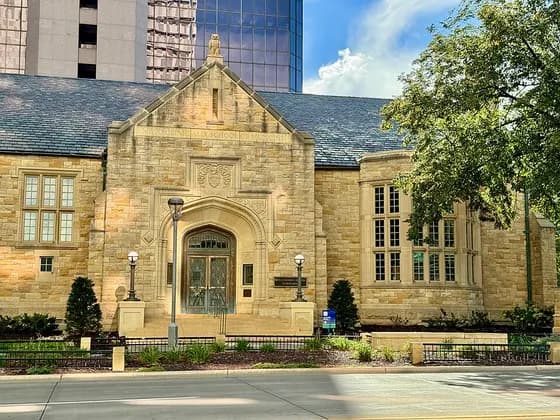
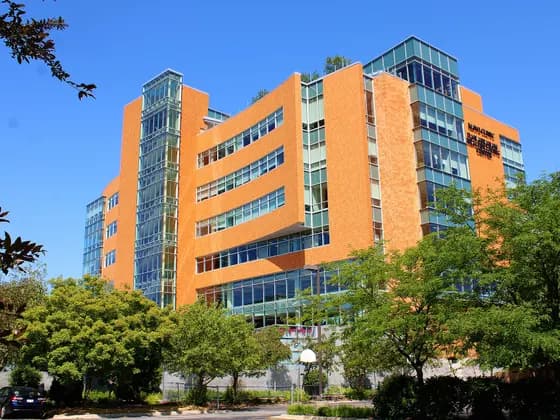

Photo: w_lemay · CC BY-SA 2.0 · cropped
Photo: w_lemay · CC BY-SA 2.0 · Photo: Farragutful · CC BY-SA 4.0 · Photo: Jonathunder · CC BY-SA 3.0
The Mayo Clinic Alix School of Medicine MD program at a glance (2027 entry)
Mayo Clinic Alix School of Medicine's M.D. is a four-year program taught inside Mayo Clinic, by physicians and scientists who also see patients and run research there. It is one national school with campuses at Mayo's sites in Rochester, Minnesota; Phoenix/Scottsdale, Arizona; and Jacksonville, Florida. The Liaison Committee on Medical Education (LCME), which accredits M.D. programs in the US, lists it as a single school based in Rochester.
The school opened in 1972 with 40 students, added a four-year campus in Arizona in 2017 and created its Florida tracks in 2018, according to a 2022 school news story. Today you join one of four campus tracks: two keep you in Arizona or Minnesota throughout, and two move you to Jacksonville for clinical training. For the class entering in 2027, orientation begins on July 12, 2027.
The program runs in three phases. The Pre-Clerkship, or pre-clinical, phase fills the first 18 months with classroom science alongside clinical skills. The Clerkship phase, the next 18 months, starts about halfway through year two. Clerkships are the core clinical rotations, in which you care for patients as part of hospital and clinic teams.
The final 12 months, the Post-Clerkship phase, bring electives and courses that prepare you for residency, the specialty training doctors complete after medical school. They also include a subinternship, in which you take on much of a first-year resident's work under supervision.
Woven through all four years are academic enrichments: selectives, research, global health, service learning and dual degrees. Selectives are short blocks, most one or two weeks long, in which you explore a specialty, serve a community or try research.
| Degree | M.D. |
|---|---|
| Program length | 4 years: 18 months pre-clerkship, 18 months clerkship, 12 months post-clerkship |
| Campuses | Rochester, Minnesota, and Phoenix/Scottsdale, Arizona; Florida tracks finish in Jacksonville |
| First-year class, 2026 | 50 in Phoenix/Scottsdale, 55 in Rochester, including M.D.-Ph.D. students (class profile) |
| Teaching style | Lectures with active learning, organ-system courses, and clinic time linked to the blocks |
| Anatomy | Prosections (donors dissected by experts), per a 2025 Mayo Clinic Alumni article |
| First patient contact | Year 1: clinical skills from matriculation, with supervised patient care |
| USMLE Step 1 (first licensing exam) | Dedicated study time during the final six months of year two |
| Grading | Pass/fail per a 2026 school page; a 2020 transcript key shows tiered clerkship grades |
| Accreditation | LCME, fully accredited; last full survey 2019, valid through 2027 |
What makes the Mayo Clinic Alix School of Medicine MD program different
Clerkships start about halfway through year two
The Pre-Clerkship phase lasts 18 months. The Clerkship phase lasts 18 months too, and its eight core clerkships total 43 weeks. That leaves a full Post-Clerkship year for a subinternship, 16 weeks of clinical electives and residency preparation, with time set aside for residency interviews and vacation.
Florida tracks that move you to Jacksonville
The Arizona/Florida and Minnesota/Florida tracks, with up to 12 places a year, move you to Mayo Clinic in Jacksonville for your clerkships and final year.
Selectives in every year, chosen or self-designed
Selectives run through all four years, and you can propose your own as well as choose from Mayo's catalog. Options range from street medicine and medical Spanish to wilderness and aerospace medicine, on any campus or beyond. A themed series can earn a Distinction Track designation, a recognized concentration in one field.
Health systems science and AI in the core curriculum
Health systems science, how care is organized and improved, is taught in pre-clerkship alongside an Artificial Intelligence in Healthcare course, and again in a final-year integration course. Through Arizona State University (ASU), students earn a certificate. The Choosing Mayo Clinic page calls it a certificate in the science of healthcare delivery; the ASU Alliance page calls it one in health systems science.
A 12-week community apprenticeship in year four
The optional Community Physician Apprenticeship Program (CPAP) places fourth-year students interested in rural primary care in a Mayo Clinic Health System community outside Rochester for 12 weeks.
How Mayo Clinic Alix School of Medicine teaches medicine
Pre-clerkship teaching is organized into blocks, the school's name for its courses. The first six cover the foundational sciences. The organ-system courses that follow integrate anatomy, physiology and pathology, so you learn how an organ is built, works and fails in the same course. Faculty combine lectures with active learning. The M.D.-Ph.D. program's account of this shared curriculum says it aims to cut lecture time in favor of laboratory, small-group and problem-based work, while keeping some required lectures.
Formats vary by course. A typical immunology day pairs a micro-lecture with a board-question session and worksheets, while the renal course mixes lectures with small-group teaching, small-group reflections and bedside teaching.
The ways you will learn
| Lectures | Lectures introduce new topics and link the science to clinical problems. |
|---|---|
| Small-group case discussions | Small groups apply lecture material to patient cases, as in hematology, endocrinology and gastroenterology. Psychiatry adds small-group patient interviews to help you develop your own interviewing style. |
| Laboratory sessions | Histology is mostly lab-based, combining virtual microscopy with team activities to train observation and interpretation. Pathology labs pair clinical case histories with images from microscope slides. |
| Anatomy lab | A hybrid mix of live remote teaching, recorded sessions and guided, self-directed time in the lab, built around team-based active learning. |
| Clinical skills and simulation | You work with standardized patients, actors trained to play patients, for example in the neuroscience course, and with simulators such as the Harvey cardiac manikin. |
| Preceptor clinics | You evaluate patients under a preceptor, a practicing physician who supervises you, in internal medicine, in pediatrics and in clinics linked to the block you are studying. |
How anatomy is taught at Mayo Clinic Alix School of Medicine
Anatomy is one of the foundational science courses in the first six blocks, and the Mayo Clinic Libraries list it as a first-year course. The school designs it around active, team-based learning on a hybrid platform: live remote teaching, pre-recorded sessions, and guided, self-directed sessions in the lab. The M.D.-Ph.D. program's Arizona page says the medical curriculum is the same on the Arizona and Minnesota campuses.
A June 2025 Mayo Clinic Alumni magazine article describes how the course works now. Mayo no longer uses novice-led dissection, in which beginners dissect a donor body themselves over a few weeks. Instead, first-year anatomy is learner-driven and based on prosections: donor bodies already dissected by experts, so the structures are ready to study.
In the clinical anatomy studio, instructors teach and dissect while camera specialists project close-up views onto large screens, so every student sees the same structures. Sessions are recorded to rewatch or to view in a virtual reality headset, and the department also teaches with ultrasound and 3D-printed models.
After the first-year course, the article says, you can take an anatomy selective using prosected donors, and students heading for specialties that rely on anatomy can take a fourth-year elective focused on their field. Students who want more dissection can serve as teaching assistants.
The school's current enrichment catalog offers hands-on cadaveric dissection as a Minnesota selective, Anatomy Dissection: A Hands-on Team Based Approach, for students who have completed the year 1 anatomy course. It lasts one to two weeks. In Arizona, the catalog's Advanced Clinical Anatomy selective has students work through clinical cases by self-directed learning and peer teaching. Arizona's campus pages, written for all its learners including residents and fellows, say the 1,600-square-foot gross anatomy lab in the Scottsdale school building supports hands-on anatomy and dissection training.
When you first meet patients at Mayo Clinic Alix School of Medicine
Clinical training starts as soon as you matriculate. Longitudinal clinical skills courses teach interviewing, history taking and physical examination across the Pre-Clerkship phase. You also evaluate patients under a preceptor in internal medicine and pediatrics, and the faculty page says you work with patients in a clinical setting from day one.
Clinic time follows the classroom. For example, you see dialysis patients while learning about the renal system, and during the circulation block you practice cardiac assessment on Harvey at the Mayo Clinic Multidisciplinary Simulation Centers. The M.D.-Ph.D. program describes several half-days a week in the shared curriculum spent seeing patients in the specialty of the current organ block.
Some courses bring patients into the teaching too: hematology can include patient interactions after a lecture, and the renal course includes bedside teaching. Service starts early as well. First-year students are introduced to local community organizations, and second-year students work in community health clinics.
Year by year at Mayo Clinic Alix School of Medicine
- First 18 months
Pre-Clerkship: foundational sciences, then organ systems
The Pre-Clerkship phase builds your medical knowledge through blocks. The first six cover the foundational sciences, and the systems courses that follow teach each organ system in health and disease. Clinical skills, preceptor clinics, health systems topics and dedicated enrichment weeks run alongside.
- Foundational sciences: anatomy, biochemistry and genetics, histology, immunology, microbiology, pathology and pharmacology. Microbiology runs from bacteria and viruses to fungi, with an emphasis on vaccination and real outbreaks, and pathology focuses on how cells and tissues react to abnormal stimuli.
- Systems courses: the nervous system and neurosciences, psychiatry, renal, cardiovascular, respiratory, hematology, musculoskeletal medicine and rheumatology, reproductive and urinary health, endocrinology, and gastroenterology and nutrition.
- The Mayo Clinic Libraries' course guides place neuroscience, psychiatry, cardiology and pulmonology in year 1, and musculoskeletal medicine, nephrology, gastroenterology, endocrinology and hematology in year 2.
- In neuroscience you complete a neurology-focused history and physical examination on a standardized patient. Psychiatry builds on neuroscience and a course called Disruptions in Development.
- Artificial Intelligence in Healthcare: how AI tools are evaluated and where they fall short, and their use in imaging, digital pathology and decision support. It also covers bias, privacy and responsible use of generative AI.
- Longitudinal clinical skills and preceptor clinics, plus teaching in health equity, policy and economics, population health, bioethics and healthcare delivery administration.
- The Libraries' guides list FRAMES (Foundations of Reasoning and Application in Medicine and Science) in both years, with physical examination and differential diagnosis books as its reading.
- Selectives between blocks, plus dedicated enrichment weeks for career exploration, scholarship, or degree and certificate programs.
- Second 18 months
Clerkship: a transition course, then eight core rotations
The Clerkship phase begins during the last six months of year two. You apply your science to patient care across the core disciplines, starting with a course that prepares you for clinical work. The school's clerkship page lists eight required clerkships, three to eight weeks long and 43 weeks in all. The M.D.-Ph.D. program's curriculum page mentions a third-year schedule lottery in which clerkships are selected.
- Transition to Clerkship: hospital survival skills, common presentations from ophthalmology to neurology, reading ECGs (heart tracings), the musculoskeletal exam, evidence-based medicine, procedural and communication skills, innovation and working in interdisciplinary teams.
- Internal medicine, 8 weeks: you move from gathering information to interpreting it, and learn shared decision-making for patients with several conditions.
- Surgery, 8 weeks: you interview, examine and write up patients, join their daily care and scrub in for their operations.
- Pediatrics, 6 weeks: inpatient and outpatient care of children from birth through early adulthood.
- Obstetrics and gynecology, 6 weeks: an active part in caring for obstetric and gynecologic patients.
- Family medicine, 4 weeks: focused histories, patients' expectations for a visit, and the psychosocial context of their illness.
- Psychiatry, 4 weeks: centered on inpatient psychiatry, with acute mental health assessment, outpatient experience and an extensive program of teaching sessions.
- Neurology, 3 weeks: evaluating and managing neurological disorders and the neurological effects of diseases elsewhere in the body.
- Emergency medicine, 4 weeks: patients of all ages and levels of acuity, recognizing who is seriously ill, and triage. The Mayo Clinic Libraries' course guides file emergency medicine under the post-clerkship year instead.
- Final 12 months
Post-Clerkship: subinternship, electives and residency preparation
The last year prepares you to start residency. It combines a subinternship, clinical electives and short required courses, with time set aside for residency program interviews and vacation.
- A four-week subinternship.
- Four four-week clinical electives, 16 weeks in all.
- A one-week Social Medicine rotation, held virtually.
- A two-week Health Systems Science Integration course.
- A three-week Transition to Residency course.
- A one-week Internship Boot Camp at the Simulation Center.
How you are assessed at Mayo Clinic Alix School of Medicine
The Choosing Mayo Clinic page, updated in June 2026, describes the programs as non-competitive and pass/fail, which the school says lets students focus on their well-being rather than class rank. Mayo's transcript key, revised in October 2020 and still online, differs for clerkships. It grades years 1 and 2 Pass, Pass with Remediation or Fail, but required clerkships in years 3 and 4 Honors, High Pass, Pass, Pass with Remediation or Fail. The key labels grades by years 1-2 and 3-4, a split that predates the current 18-month pre-clerkship phase.
The United States Medical Licensing Examination (USMLE) is the national licensing exam series. Students and graduates of LCME-accredited M.D. programs are among those eligible to take it. Step 1 tests the sciences basic to medicine, and results have been reported only as pass or fail for exams taken from January 26, 2022. The pre-clerkship page says the school provides dedicated study time for Step 1 during the final six months of year two.
Step 2 CK (Clinical Knowledge) tests how you apply clinical knowledge to patient care under supervision. The school's academic progress policy, effective October 2025, lists passing both Step 1 and Step 2 CK among the things it monitors, under a separate school policy on the exams. In August 2026 the USMLE program announced a move to designated testing dates from January 2029, with Step exams offered less often each year. On the current schedule, students entering in 2027 would sit Step 1 and Step 2 CK under that model, so the school's timing may change.
The M.D.-Ph.D. program's curriculum page, which describes the M.D. clerkships its students also take, says you must pass a shelf exam after a clerkship. Shelf exams are subject exams from the National Board of Medical Examiners (NBME), which says they are typically used at the end of third-year clerkships.
A committee called SPARC, the Student Promotion and Assessment Review Committee, reviews every student's progress twice a year and as needed. The school monitors grades, performance assessments, timely completion of longitudinal requirements and professional behavior. The academic progress policy expects you to finish in four years, with up to two extra years for personal or medical leave, six in total. Time for an academic leave, such as a dual degree, needs separate approval.
In Arizona, the school building has six rooms dedicated to Objective Structured Clinical Examinations (OSCEs). These are timed clinical skills exams in which you rotate through stations, each testing one task, often with a standardized patient. Arizona's Simulation Exam Suites also host clinical examinations and patient simulations.
Where you will actually train at Mayo Clinic Alix School of Medicine
Where you train depends on your campus track. On the four-year tracks, Arizona or Minnesota is your home base for the whole program. On the Arizona/Florida and Minnesota/Florida tracks, you complete pre-clerkship coursework in Arizona or Minnesota, then do your clerkships and post-clerkship year in Jacksonville. When you apply, you rank the tracks you want, and an offer can be for any track you selected.
The Training Locations page lists up to 50 places a year in each four-year program and up to 12 on the Florida campus. The class profile says the first-year class that started in 2026 had 50 students in Phoenix/Scottsdale and 55 in Rochester, counting M.D.-Ph.D. and Florida-track students. Twelve of them will move to Jacksonville after about a year and a half.
The campuses are linked. The Training Locations page says students can choose where to complete certain parts of the curriculum, from selectives and clinical electives to core clerkship rotations and research. It encourages every student to use all three campuses.
Getting around differs by campus. Rochester's downtown buildings are linked by pedestrian subways and skyways, with a free shuttle to Saint Marys, 10 blocks west. In Arizona, Mayo's Scottsdale and Phoenix sites are 14 miles apart, joined by a weekday shuttle every half hour, and students get free Valley Metro bus and light rail access. In Jacksonville most people drive.
Housing is your own arrangement. The Rochester, Arizona and Jacksonville campus pages say the college has no student housing, though each offers help with finding somewhere to live.
Methodist, downtown, has 794 beds and 37 operating rooms, with transplant, obstetrics and gynecology and surgical specialties. Saint Marys has 1,265 beds, 70 operating rooms, 10 intensive care units and a Level 1 Trauma Center, the highest level of trauma care.
- Mayo Clinic downtown campus
- Mayo Clinic Hospital, Methodist Campus
- Mayo Clinic Hospital, Saint Marys Campus
- Mayo Eugenio Litta Children's Hospital (Saint Marys)
- Mayo Clinic Psychiatric Hospital (Saint Marys)
Offers students extra clinical training, particularly in rural medicine, including the optional 12-week CPAP in year four.
- 16 hospitals and 53 multispecialty clinics in southern Minnesota, northeastern Iowa and western Wisconsin
- A mobile health clinic serving rural communities
The Phoenix hospital has 268 beds, 21 operating rooms and an emergency department. The Scottsdale building has 240 exam and procedure rooms and an outpatient surgery center. The Training Locations page says the Arizona campus focuses on adult specialty and surgical care.
- Mayo Clinic Hospital, Phoenix
- Mayo Clinic Building, Scottsdale
- Mayo Clinic Cancer Center, Phoenix
Arizona lists these as places where its medical students, residents and fellows train or serve. It names Winslow and Whiteriver for medical student rotations in Native health.
- Arizona Native Health Program
- Carl T. Hayden Veterans' Administration Medical Center
- Indian Health Service - Whiteriver Indian Hospital
- Maricopa County Public Health STD Clinic
- OrthoArizona Pinnacle Pain
- Phoenix Children's Hospital
- Phoenix Indian Health Service
- Refugee Education and Clinic Team (REACT) Clinic
- St. Vincent de Paul
- Street Medicine Phoenix with the University of Arizona
- Tuba City Regional Health Care Corporation
- Wesley Community Health Center
- Winslow Indian Health Care Center
- Valleywise Health
The hospital, opened in 2008, has 304 beds, 22 operating rooms, transplant and epilepsy units and an emergency department. Students often rotate at downtown hospitals about 17 miles away. Florida selectives use UF Health Jacksonville for trauma surgery, and Nemours Children's Clinic and Wolfson Children's Hospital for pediatric neurology and orthopedics. The campus page says nearby partners add pediatric specialties.
- Mayo Clinic Hospital, Jacksonville
- Affiliated hospitals in downtown Jacksonville
Electives, selectives and away rotations at Mayo Clinic Alix School of Medicine
Selectives are self-directed blocks. Most entries in the online catalog run one to two weeks; others last three to eight weeks or run longitudinally alongside your courses. You can use them to explore careers, work with underserved communities, start research or build clinical skills, choosing from Mayo's list or proposing your own.
Selectives can take place on any Mayo campus, in Mayo Clinic Health System or at other US and international centers, and the catalog differs by campus. Arizona lists Native health service at the Chinle Service Unit and Phoenix Indian Medical Center, Street Medicine Phoenix and space medicine. Minnesota lists Street Medicine, Rural Medicine, a student-run free clinic and emergency medical technician (EMT) training. Florida lists trauma surgery, transplant and Northeast Florida Community Medicine.
Distinction tracks, which the school calls less demanding than certificate programs, let you concentrate in one field. The catalog lists tracks in Biomedical Ethics, Applied Medical and Health Humanities, and Medical Spanish for advanced or native speakers, plus the Global Health Equity Scholars Program.
For global health, the Mayo Clinic Global Health Scholars program, formerly the Mayo International Health Program, arranges mentored rotations with underserved populations abroad. The catalog also lists medical and surgical trips to the Dominican Republic and rotations in women's health and primary care at the University of Oxford. Karolinska Institutet in Sweden and Paracelsus Medical University in Austria offer research or clinical stays of three weeks or more.
In the final year you take 16 weeks of clinical electives on any Mayo campus or at other US and international centers; electives at another institution are known as away rotations. The published lists span surgical fields, pediatrics, internal medicine subspecialties and general options such as aerospace medicine, dermatology and radiology. The school says many students choose an international or underserved-population elective.
The Community Physician Apprenticeship Program (CPAP) is an optional 12-week fourth-year elective for students interested in rural primary care, run with Mayo Clinic's Department of Family Medicine in Rochester and Mayo Clinic Health System. It places you in a Health System community outside Rochester, working in its clinics and hospital with a physician mentor. You follow patients through their care with a team of physicians, nurse practitioners, physician assistants, therapists, social workers and nurses, and complete a community health project. Its 12 weeks count for 12 of the 16 required elective weeks.
Dual degrees and research years at Mayo Clinic Alix School of Medicine
Dual degrees are taken during the M.D., and all applications are made after you enroll. Students who have completed two or three years of the program in good standing are eligible for a degree-granting enrichment. Partners include the Mayo Clinic Graduate School of Biomedical Sciences and ASU, and the academic progress policy allows time away for an approved academic leave of absence.
The lists differ by page. The enrichment catalog names master's options in Artificial Intelligence in Health Care, Biochemistry and Molecular Biology, Clinical and Translational Science, Immunology, Molecular Pharmacology and Experimental Therapeutics, and Virology and Gene Therapy. It also lists Health Care Administration and Policy, Health Informatics, Mass Communication and a J.D., the US law degree. The Academic Enrichments page features a Health System Science (M.S.) and the J.D. from ASU's Sandra Day O'Connor College of Law.
The Mayo Clinic ASU Alliance page lists six ASU pairings with the M.D.: health care administration and policy, health informatics, biomedical diagnostics, mass communication, business administration and law. It says the M.D./M.B.A. is structured to be completed in five years. In flyers from 2020, the M.D./J.D. could be completed in six years, with two years at ASU Law, and the informatics and diagnostics master's were taken online in a third year.
The M.D.-Ph.D. program, for future physician-scientists, has its own admission. Its pages say it admits up to nine students a year in Minnesota, where it began in 1986 and has been a National Institutes of Health-funded Medical Scientist Training Program (MSTP) since 2003. They give two a year in Arizona, where the first class enrolled in 2021.
M.D.-Ph.D. students start with a month-long lab rotation the summer before medical school, then complete the Pre-Clerkship phase. Depending on the plan, they move straight to Ph.D. research, take one or two clerkships first, or finish three years of medical school first. Research runs in one of eight graduate tracks, and a re-entry program then eases students into about 18 months of clinical training. The program reports an average of 8.06 years to both degrees.
Within the M.D., the enrichment page sets out a research route. If you take this route, you learn hypothesis-driven methods and statistics, review the literature, write a proposal, complete the study under a Mayo investigator, present it at a meeting and write a paper. Students can draw on more than 6 million medical histories and research core facilities. The M.D. program page says more than 80% of students graduate with a published article in a peer-reviewed journal.
Facilities and support at Mayo Clinic Alix School of Medicine
Where you will learn
In Rochester, the school is based in the Mitchell Student Center, with study space and resources for medical students. The Siebens Building houses the Venables Health Sciences Library, and the historic Plummer Building holds the Plummer Library. Simulation training runs at the Multidisciplinary Simulation Center in the Stabile Building and at the Procedural Skills Mastery Lab at Saint Marys; the center's 2022 page describes about 100 standardized patient actors.
Arizona's school building in Scottsdale, opened in 2017, holds the gross anatomy lab, breakout rooms, a student lounge and study space, plus academic success counselors and mental health clinicians. In Phoenix, Mayo Clinic Hospital houses the Multidisciplinary Simulation Center, with SimMan 3G and Hal patient simulators. The campus also lists the Ayarza Laparoscopic Skills Lab, open 24/7, a Sectra digital anatomy table and virtual reality headsets.
In Jacksonville, the Stabile Buildings hold a library, student lounge space and the J. Wayne and Delores Barr Weaver Simulation Center, accredited by the Society for Simulation in Healthcare. Its 2024 page describes replica clinical rooms, a standardized patient program and equipment including an Anatomage virtual dissection table, a Harvey simulator and a da Vinci robotic virtual reality trainer.
Support while you study
Mentoring starts in your first week, when you join a MedSib family: one medical student from each year plus a faculty member. Students turn to them for study tips, what to expect in a course and time management. You are also paired with a faculty mentor from day one, and every first-year student is matched with a specialty career adviser who guides career planning through all four years. The school reports more than 800 full-time faculty, about three for every student.
Academic Learning Specialists help with learning strategies, time management, test-taking and board exam preparation, one-to-one, in small groups or in workshops, for students on every campus. Peer tutoring is free and covers subjects such as anatomy, biochemistry, histology, microbiology and USMLE Step 1. Disability Access Services arranges reasonable academic accommodations.
All learners can see licensed Mayo Clinic counselors through the Office of Wellness and Academic Support, or use WellConnect, an external learner assistance program available 24/7. A Student-initiated Wellness Activity grant funds events students organize, from a kickball league to a painting night.
Is the Mayo Clinic Alix School of Medicine program right for you?
This program may suit you if
- You want a say in your setting: you rank Rochester, Phoenix/Scottsdale and two Florida tracks that move you to Jacksonville for clinical training.
- You want clerkships to start in the second half of year two, with a full final year to prepare for residency.
- You like shaping your own program through selectives in every year, self-proposed options, distinction tracks and research with Mayo investigators.
- You are interested in how health care is organized: health systems science is taught in pre-clerkship and the final year, and pre-clerkship adds an AI in Healthcare course. ASU offers dual degrees in law, business and informatics.
- You want community or rural experience, such as CPAP in Mayo Clinic Health System or Native health rotations in Arizona.
Things to think about
- First-year anatomy is prosection-based, per a 2025 alumni article, so dissecting yourself means a selective or a teaching-assistant role.
- Your clinical sites depend on your track. Florida-track students relocate after about 18 months, and none of the three campuses has student housing.
- Step 1 study time and the start of clerkships both fall in the second half of year two.
- Grading sources differ: a 2026 school page says pass/fail, while a 2020 transcript key graded core clerkships from Honors to Fail. Ask which applies to your class.
Mayo Clinic Alix School of Medicine MD program — frequently asked questions
Applying to Mayo Clinic Alix School of Medicine?
How to get into Mayo Clinic Alix School of Medicine
Prerequisites, MCAT, AMCAS personal statement, secondaries and interview, step by step.
Open the guide →Mayo Clinic Alix School of Medicine admissions profile
MCAT and GPA profile, acceptance rate, interview format and key dates.
See the profile →Compare Mayo Clinic Alix School of Medicine with other schools
Put the teaching style, anatomy teaching and clinical sites next to another school.
Open the comparison →Prepare for the Mayo Clinic Alix School of Medicine interview
Format breakdown, school-specific sample questions and prep tips from tutors who interviewed here.
Read the guide →Where this Mayo Clinic Alix School of Medicine program guide came from
This guide was written from 53 official sources — Mayo Clinic Alix School of Medicine's own program pages and curriculum documents, plus the accreditor and the hospitals and health systems the school trains students in where they publish detail — read on 2026-10-10, then checked claim by claim against those sources.
- Mayo Clinic Alix School of Medicine: M.D. Program overview
- M.D. Program: Curriculum at a glance
- M.D. Program: Pre-Clerkship phase
- M.D. Program: Clerkship phase
- M.D. Program: Post-Clerkship phase
- M.D. Program: Academic Enrichments
- Academic Enrichment Search: catalog of selectives, distinction tracks and dual degrees
- Mayo Clinic Alix School of Medicine: Training Locations and campus tracks
- M.D. Program: Admissions and Application Process (campus tracks and orientation date)
- M.D. Program: Class Profile (training locations)
- M.D. Program: Student Life
- M.D. Program: Faculty and specialty career advisers
- Choosing Mayo Clinic Alix School of Medicine
- Mayo Clinic Alix School of Medicine: Accreditation
- Mayo Clinic College of Medicine and Science: Professional Licensure Disclosures
- Satisfactory Academic Progress Policy, effective October 16, 2025
- Transcript Grade Explanations MC0852-08, revised October 2020
- Mayo Clinic Alumni magazine: Anatomy reimagined, June 26, 2025
- Mayo Clinic M.D.-Ph.D. Program overview
- M.D.-Ph.D. Program: Curriculum plans
- M.D.-Ph.D. Program: Curriculum timeline
- M.D.-Ph.D. Program, Arizona campus
- Medical Scientist Training Program, Minnesota campus
- Mayo Clinic ASU Alliance: Dual Degrees
- MD/JD dual-degree flyer, 2020 (archived copy)
- MD/MAS Health Informatics dual-degree flyer, 2020 (archived copy)
- MD/MS Biomedical Diagnostics dual-degree flyer, 2020 (archived copy)
- Mayo Clinic College of Medicine and Science news, March 2022: the school's history and Florida tracks
- Rochester, Minnesota campus: getting around and housing
- Rochester, Minnesota: campus, hospitals and facilities
- Mayo Clinic Health System: community and rural training
- Phoenix/Scottsdale, Arizona campus overview
- Arizona campus locations and getting around
- Arizona student life: rotations, affiliations and simulation
- Jacksonville, Florida: campus, hospital and getting around
- Simulation Centers: Minnesota facilities
- Simulation Centers: Arizona facilities
- Simulation Centers: Florida facilities
- Advising and Tutoring: Academic Learning Specialists and peer tutoring
- Mayo Clinic Libraries: MCASOM pre-clerkship year 1 course guide
- Mayo Clinic Libraries: MCASOM pre-clerkship year 2 course guide
- Mayo Clinic Libraries: MCASOM clerkship course guide
- Mayo Clinic Libraries: MCASOM post-clerkship course guide
- Mayo Clinic Libraries: FRAMES course guide
- LCME: About the School Directory
- LCME Directory of Accredited Programs (updated July 22, 2026)
- USMLE: Step 1 transition to pass/fail only score reporting
- USMLE: Step 1 overview
- USMLE: Step 2 CK overview
- NBME: Subject Examinations
- USMLE: Updated Timeline for Designated Testing Dates, Transition in January 2029 (August 2026)
- USMLE Bulletin of Information: Eligibility
- USMLE: Designated Testing Dates information hub (dates the January 2029 timeline announcement August 6, 2026)
Curricula are restructured between cycles. Anything here that decides your application — how anatomy is taught, a clinical campus assignment, a required research year — should be confirmed against the official page for your entry year.
Applying to Mayo Clinic Alix School of Medicine?
We help US applicants with MCAT strategy, the AMCAS personal statement, secondary essays and interview prep — everything you need for a competitive Mayo Clinic Alix School of Medicine application.