
Mayo Clinic Alix School of Medicine Interview
Format, Questions & Prep Tips
Mayo Clinic Alix School of Medicine medicine interviews for 2027 entry are a traditional interview. Mayo Clinic Alix School of Medicine describes the format as: Two one-on-one 30-minute virtual interviews, plus a welcome session, a virtual campus tour, time with students and a Q&A. Published figures: Annual MD class size 109 (58 Rochester + 51 Arizona; 2025 entering class); Tuition (2025–26) ~USD 67,900/year.
- Institution
- Mayo Clinic Alix School of Medicine
- Interview (2027 entry)
- September through February; aim for complete secondary by late August
- Decisions (2027 entry)
- Rolling decisions; early applicants often receive offers by November

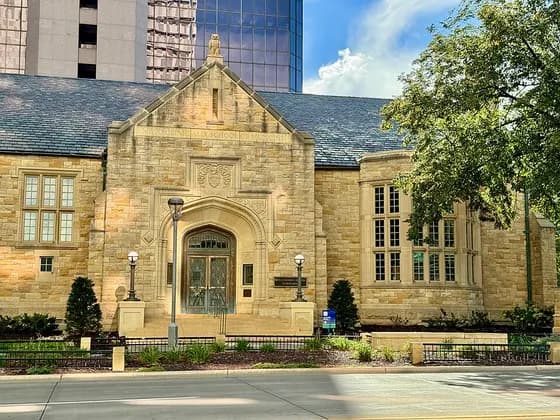


Photo: w_lemay · CC BY-SA 2.0 · cropped
Photo: w_lemay · CC BY-SA 2.0 · Photo: Farragutful · CC BY-SA 4.0 · Photo: Jonathunder · CC BY-SA 3.0
How to get into Mayo Clinic Alix School of Medicine (MD) medicine
Step-by-step: entry requirements, admission tests, personal statement, interview format and the key deadlines.
Open the guide →Mayo Clinic Alix School of Medicine (MD) entry requirements
Admission profile, interview format, decision dates and what makes Mayo Clinic Alix School of Medicine (MD) different.
See the profile →The Mayo Clinic Alix School of Medicine MD program
Integrated, 4 years, clinical rotations across Rochester, Minnesota; Phoenix/Scottsdale, Arizona; and Jacksonville, Florida.
See the program →The Mayo Clinic Alix School of Medicine (MD) medicine interview
Mayo Clinic Alix School of Medicine uses a traditional panel interview with two separate one-on-one sessions. The interview day is tightly integrated into the Mayo Clinic campus experience — applicants tour the renowned Rochester clinic and often shadow current students.
Mayo's culture is defined by its foundational 'needs of the patient come first' philosophy and legendary team-based care model. Interviewers probe whether applicants genuinely embrace collaborative, team-centered medicine.
Mayo offers merit- and need-based scholarships (with substantial endowment support); tuition for 2025–26 is approximately USD 67,900/year. The school's distinctive features are its multi-site clinical training (Rochester, Scottsdale) and integration with the Mayo Clinic health system.
Mayo Clinic Alix School of Medicine (MD) interview at a glance (2027 entry)
| Annual MD class size | 109 (58 Rochester + 51 Arizona; 2025 entering class) |
|---|---|
| Tuition (2025–26) | ~USD 67,900/year |
| Interview format | Traditional panel — two one-on-one sessions |
| Campus options | Rochester MN, Scottsdale AZ, Jacksonville FL |
| Application system | AMCAS + Mayo secondary |
| Interview window | September–February |
Interview format
- Two one-on-one sessions — typically one physician faculty and one current MD student.
- Open-file format; both interviewers have reviewed your application.
- Interview day includes campus tour, clinical shadowing opportunities, and lunch with students.
- No MMI; conversational and values-focused.
Working towards the MCAT score Mayo Clinic Alix School of Medicine (MD) expects? Build a week-by-week plan from your test date — free for the first two weeks.
Sample interview questions
Mayo's founding philosophy is 'the needs of the patient come first.' How have you demonstrated that value in your own experiences — not in medicine specifically, but in how you live?
Mayo interviewers look for service orientation that predates medical-school ambition. Community service, caregiving, teaching, or advocacy experiences all count when they show genuine other-centeredness.
Mayo trains students across Rochester and Scottsdale, with clinical experiences at multiple sites within the Mayo Clinic system. How does training within an integrated multi-site health system shape the kind of physician you expect to become?
Mayo's multi-site, system-integrated model is central to its identity. Show you understand how training within the Mayo Clinic health system — rather than a single stand-alone hospital — creates a distinctive clinical environment.
Of the Mayo campuses — Rochester, Scottsdale, and the Jacksonville clinical site — which draws you and why?
Have a genuine, reasoned preference. Saying 'any campus is fine' signals a lack of engagement; tie your choice to patient populations, programs, or lifestyle fit.
Why Mayo over other strong programs? What about its culture specifically fits you?
Name the team-based care model and the patient-first philosophy, and connect them to how you actually work with others. Avoid reciting Mayo's reputation.
A colleague tells you privately they have been struggling with depression and drinking more than usual. They have not sought help. What do you do?
What they are listening for:
- Physician wellness and impairment
- confidentiality versus duty to protect patients
- Physician Health Program resources
Lead with care and support, not punishment, while keeping patient safety in view.
A patient wants every possible aggressive intervention at the end of life, but the care team believes further treatment will only prolong suffering. How do you navigate it?
What they are listening for:
- Goals-of-care conversations
- distinguishing patient wishes from family pressure
- the role of palliative care
Mayo's team-based model means this is resolved collaboratively, not by one clinician alone.
During a procedure, you notice a senior team member made a minor error they did not acknowledge. No harm reached the patient. What do you do?
Discuss a culture of safety, transparency, and graded escalation. Mayo's collaborative culture prizes speaking up constructively over either silence or public confrontation.
A patient declines a recommended treatment for reasons rooted in their religious beliefs. How do you respond?
Capacity, informed consent, and respect for values you may not share. Explore the reasons and offer alternatives without abandoning or pressuring the patient.
Describe a time you were part of a high-performing team. What made the team work, and what was your specific contribution?
Mayo's team-based care model is central. Focus on how you enabled others and contributed to a shared result, not just your individual performance.
A patient is overwhelmed after a complex diagnosis and cannot take in the plan. How do you communicate so they leave understanding the next step?
What they are listening for:
- Chunk information
- check understanding
- prioritize one or two actionable points
- offer written or follow-up support
Compassion and clarity matter as much as accuracy.
Tell me about a research or scholarly project. What did you actually contribute, and what were its limitations?
Mayo is a major research institution. Show methodological understanding and honesty about limitations rather than overstating your role or the findings.
Mayo values continuous innovation in care. Describe a problem in a system you have worked in and how you would test a way to improve it.
Think in terms of measurement, a small pilot, and iteration. This connects to Mayo's quality-improvement and innovation culture; structured reasoning matters more than a perfect plan.
You are on a multidisciplinary team and a nurse raises a concern about your plan that you initially disagree with. Respond to them.
What they are listening for:
- Listen genuinely
- treat the concern as valuable input
- reason it through together
Mayo's team model depends on flattening hierarchy when patient safety is at stake.
A long-standing patient is anxious before a major procedure and asks you to promise nothing will go wrong. Talk to them.
Offer honest reassurance about preparation and the team without making promises you cannot keep. Balance truthfulness with comfort and presence.
You are shown outcome data suggesting one treatment pathway has better results but is more expensive. How do you think about whether to adopt it?
Weigh effect size, certainty, cost, and patient values. A patient-first lens asks what genuinely benefits patients, not simply what the headline number says.
Tell me about a time you received difficult feedback. How did you respond, and what changed afterward?
Show openness, non-defensiveness, and concrete behavior change. Mayo values clinicians who grow through feedback within a supportive team culture.
Practise the Mayo Clinic Alix School of Medicine (MD) interview
Rehearse the real format before the day — on demand with our AI interviewers, or live with a tutor.
Sit a mock with photoreal AI interviewers — any time
A timed MMI or panel interview on video — American & international voices — with interviewers who listen, react and press with follow-ups. Rubric-scored feedback and a replay the moment you finish.






Live mocks with a tutor who’s been in the room
A full Mayo Clinic Alix School of Medicine (MD)-style mock with a medic or dentist tutor — honest scoring against real marking criteria, a station-by-station debrief and a written action plan.
Book a mock interviewHow to prepare for the Mayo Clinic Alix School of Medicine (MD) interview
Common pitfalls to avoid
Mayo Clinic Alix School of Medicine (MD) interview — frequently asked questions
Sources & official admissions information
Ready to nail your Mayo Clinic Alix School of Medicine (MD) interview?
Book a mock interview with a tutor who knows the US interview formats, orpractice unlimited stations from our interview question bank.