
University of Minnesota Medical School Interview
Format, Questions & Prep Tips
University of Minnesota Medical School medicine interviews for 2027 entry are a traditional interview. University of Minnesota Medical School describes the format as: Virtual (Zoom): one 30-minute mission-specific interview, plus a welcome presentation and a conversation with Admissions Ambassadors. Published figures: Annual MD class size ~230 across both campuses; Interview format MMI — ~8 min stations, in person or virtual by campus.
- Institution
- University of Minnesota Medical School
- Interview (2027 entry)
- October through February; rolling invitations after secondary and PREview review
- Decisions (2027 entry)
- Rolling decisions; final offers by late March; campus placement confirmed after admission

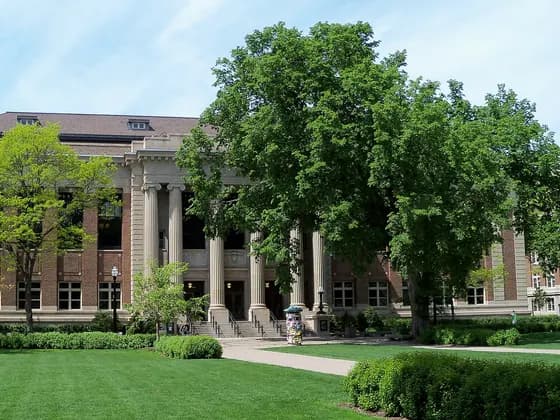

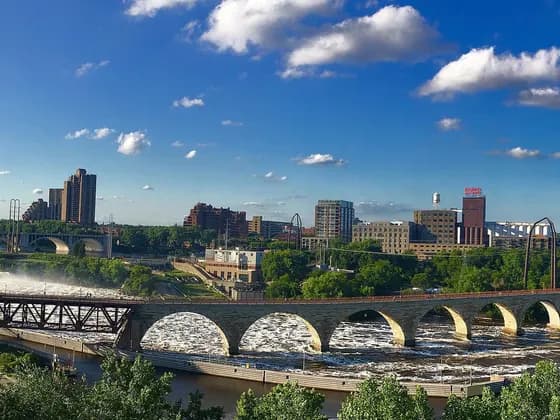
Photo: A Gude · CC BY-SA 2.0 · cropped
Photo: Jon Platek · CC BY-SA 3.0 · Photo: Tony Webster · CC BY-SA 4.0 · Photo: Darb02 · CC BY-SA 4.0
How to get into University of Minnesota Medical School (MD) medicine
Step-by-step: entry requirements, admission tests, personal statement, interview format and the key deadlines.
Open the guide →University of Minnesota Medical School (MD) entry requirements
Admission profile, interview format, decision dates and what makes University of Minnesota Medical School (MD) different.
See the profile →The University of Minnesota Medical School (MD) medicine interview
The University of Minnesota Medical School uses an **MMI (Multiple Mini-Interview)** format for both its Minneapolis and Duluth campuses, with sessions of approximately 8 minutes per station. The Minneapolis campus focuses on research-intensive training in a major academic medical center, while the Duluth campus was founded explicitly to train rural physicians for Minnesota and the Upper Midwest.
Expect MMI stations that probe the AAMC Premed Competencies, with strong emphasis on community orientation, health equity, and collaborative reasoning. The AAMC PREview exam is required (Casper is not), so prepare for written situational-judgment scenarios in addition to the in-person or virtual MMI.
With two distinct campuses and missions, applicants should be clear about which campus they prefer and why — interviewers will probe campus-specific fit. Minnesota residents and Upper Midwest applicants are favored at both campuses.
University of Minnesota Medical School (MD) interview at a glance (2027 entry)
| Annual MD class size | ~230 across both campuses |
|---|---|
| Interview format | MMI — ~8 min stations, in person or virtual by campus |
| Application system | AMCAS + UMN secondary |
| Interview window | October–February |
| Campuses | Minneapolis (research) and Duluth (rural medicine) |
| CASPer required | No |
Interview format
- MMI with approximately 8 stations; each approximately 8 minutes; brief preparation time at each station door.
- Station types: ethical dilemma, communication role-play, critical thinking, and personal reflection.
- Minneapolis interviews held at the Medical School campus adjacent to M Health Fairview; Duluth interviews at UMD campus.
- Interview day: campus tour, student panel, admissions briefing, and informal student interaction.
- The AAMC PREview exam must be completed in advance — scores are reviewed before interview invitations.
- Campus-specific mission fit (research vs. rural) is assessed throughout the day.
Working towards the MCAT score University of Minnesota Medical School (MD) expects? Build a week-by-week plan from your test date — free for the first two weeks.
Sample interview questions
University of Minnesota has two campuses with fundamentally different missions. Which campus are you applying to, and why does that mission resonate with your goals?
Be specific about the campus (Minneapolis research vs. Duluth rural). If Minneapolis: reference research enterprise, M Health Fairview, Mayo collaboration. If Duluth: name specific rural Minnesota communities or Upper Midwest health challenges.
Minnesota faces a significant rural physician shortage, particularly in the Iron Range, the Arrowhead, and greater Minnesota. How do you see yourself contributing to solving this?
Duluth-focused but relevant for both campuses. Name specific geographic areas. Show awareness of "grow your own" pipeline programs and rural practice incentives (loan repayment, J-1 visa waiver).
A patient from a rural Minnesota community has been traveling four hours round-trip for specialty care that could be provided by telemedicine. But they prefer in-person visits. What factors do you weigh?
What they are listening for:
- Patient preferences
- access barriers
- quality of telemedicine evidence
- transportation costs
- the physician's responsibility to optimize care within patient-defined constraints
Minnesota has a large Somali and Hmong immigrant population with distinct healthcare needs and cultural health beliefs. How should medical education prepare physicians to serve these communities?
Cultural humility, interpreter services, community health worker models, and curricula specifically addressing the Twin Cities' immigrant population health needs.
Role play: A patient with newly diagnosed cancer is asking you (as the medical student) to tell them what the prognosis is. You do not have this information. How do you respond?
Do not fabricate. Validate the patient's need. Offer to involve the attending immediately. Demonstrate that professional role clarity is not dismissiveness.
Minnesota has a large Native American population with significantly higher rates of diabetes, cardiovascular disease, and suicide than the general state population. What structural factors drive these disparities?
What they are listening for:
- Historical trauma
- Indian Health Service resource limitations
- social determinants (poverty, housing, food insecurity)
- sovereignty implications for healthcare delivery on tribal lands
A medical student on their Duluth rural rotation is asked by the solo clinic physician to perform a procedure the student has observed but never performed independently. How should the student respond?
Patient safety trumps training opportunity. The student should be honest about their level of experience, ask for supervision, and not perform procedures independently without appropriate oversight.
Tell me about a time you had to work with someone whose values or approach differed significantly from yours. What did you learn?
STAR. Emphasize curiosity about the other person's perspective, collaborative problem-solving, and what you adapted in your own approach.
The University of Minnesota has a long-standing collaboration with Mayo Clinic. How might that relationship shape your training and career trajectory?
Shows school-specific research. Reference Mayo's Rochester campus proximity, research partnerships, and the distinctive physician culture of both institutions.
Should the United States adopt a single-payer healthcare system? Defend your position and acknowledge the strongest counter-argument.
Policy question with genuine complexity. Argue a position, acknowledge economic and political counter-arguments, and reference countries with single-payer systems (Canada, UK, Taiwan) for comparative evidence.
Station: you are shown data showing markedly higher rates of diabetes, cardiovascular disease, and suicide among Minnesota's Native American population than the state average. In your station time, interpret what structural factors this points to and what you would caution against concluding.
Be concise for the 8-minute station: name historical trauma, Indian Health Service underfunding, and social determinants, while cautioning against treating the groups as monolithic or implying individual blame. Connect to UMN's health-equity emphasis.
Station role play: a Somali patient declines a recommended treatment because it conflicts with a family or community health belief, and the professional interpreter has conveyed this clearly. You are the medical student. How do you proceed?
Demonstrate cultural humility live. Explore the belief respectfully, seek common ground, involve community or family appropriately, and avoid overriding autonomy. Reflects the Twin Cities' large immigrant population and UMN's cultural-competence focus.
Station: telemedicine is often proposed as the fix for Minnesota's rural access gaps, especially on the Iron Range and the Arrowhead. How would you reason about where telemedicine genuinely helps and where it falls short?
Thinking & Reasoning. Weigh the evidence and limits — broadband access, the need for hands-on exams, patient preference, and continuity — showing nuanced reasoning rather than treating telehealth as a universal solution.
Station role play: a colleague on your team has made a visible error during a case discussion and is clearly embarrassed. You have a few minutes before moving on. How do you respond in a way that helps both the patient's care and your colleague?
Demonstrate live the balance of correcting the error for patient safety while supporting the colleague. Tests the AAMC professional competencies in a realistic MMI station.
Station: UMN's Minneapolis and Duluth campuses pull in almost opposite directions — research-intensive academic medicine versus rural workforce training. Which pull is genuinely stronger for you, and what evidence from your own life supports that?
Authenticity and decisiveness. Interviewers at both campuses expect a clear, evidence-backed campus preference; hedging or treating Duluth as a smaller Minneapolis is a known pitfall.
Practise the University of Minnesota Medical School (MD) interview
Rehearse the real format before the day — on demand with our AI interviewers, or live with a tutor.
Sit a mock with photoreal AI interviewers — any time
A timed MMI or panel interview on video — American & international voices — with interviewers who listen, react and press with follow-ups. Rubric-scored feedback and a replay the moment you finish.






Live mocks with a tutor who’s been in the room
A full University of Minnesota Medical School (MD)-style mock with a medic or dentist tutor — honest scoring against real marking criteria, a station-by-station debrief and a written action plan.
Book a mock interviewHow to prepare for the University of Minnesota Medical School (MD) interview
Common pitfalls to avoid
University of Minnesota Medical School (MD) interview — frequently asked questions
Sources & official admissions information
Ready to nail your University of Minnesota Medical School (MD) interview?
Book a mock interview with a tutor who knows the US interview formats, orpractice unlimited stations from our interview question bank.