
Spencer Fox Eccles School of Medicine, University of Utah Interview
Format, Questions & Prep Tips
Spencer Fox Eccles School of Medicine, University of Utah medicine interviews for 2027 entry are a traditional interview. Spencer Fox Eccles School of Medicine, University of Utah describes the format as: In person in Salt Lake City: two 30-minute one-on-one traditional interviews plus one small-group assessment. Published figures: Annual MD class size ~102; Applications received ~2,500–3,500 per cycle; Interview format MMI — 6–8 stations, in-person.
- Institution
- Spencer Fox Eccles School of Medicine at the University of Utah
- Interview (2027 entry)
- October through February; rolling invitations issued after secondary review
- Decisions (2027 entry)
- Primary decisions by late February to March 30; waitlist movement through May–August

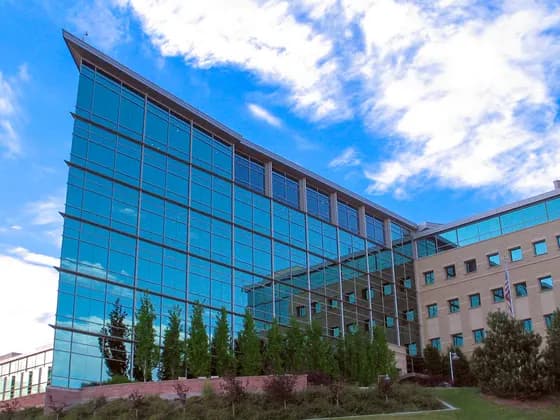
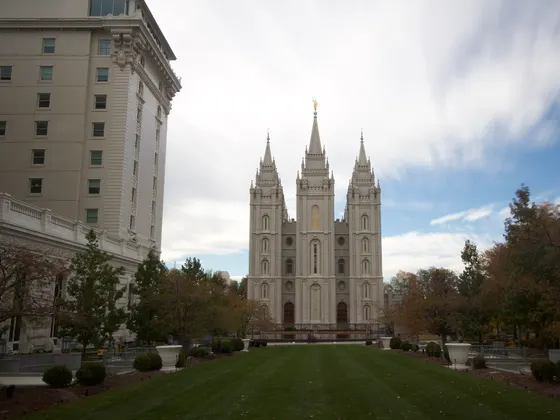
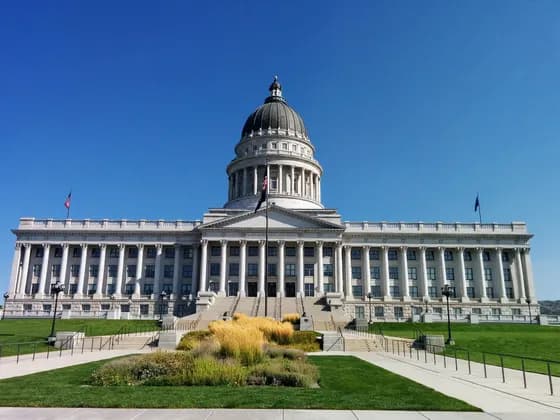
Photo: MrSchmidt · CC BY-SA 4.0 · cropped
Photo: Klubbit · Public domain · Photo: Jonmallard · CC BY-SA 4.0 · Photo: Javier Leiva from Vic, Barcelona · CC BY 2.0
How to get into Spencer Fox Eccles School of Medicine, University of Utah (MD) medicine
Step-by-step: entry requirements, admission tests, personal statement, interview format and the key deadlines.
Open the guide →Spencer Fox Eccles School of Medicine, University of Utah (MD) entry requirements
Admission profile, interview format, decision dates and what makes Spencer Fox Eccles School of Medicine, University of Utah (MD) different.
See the profile →The Spencer Fox Eccles School of Medicine, University of Utah (MD) medicine interview
The Spencer Fox Eccles School of Medicine at the University of Utah uses an **MMI (Multiple Mini Interview) format with six to eight timed stations assessing ethical reasoning, communication, collaboration, and clinical thinking. The school is Utah’s sole MD-granting institution and serves as the academic medical hub for a five-state intermountain region** (Utah, Wyoming, Montana, Idaho, and Nevada).
Interviewers are looking for applicants who understand what it means to practice medicine in geographically isolated, frontier, and rural environments alongside urban tertiary care. The school’s research strengths in genetics, oncology, and cardiovascular medicine are also reflected in some station scenarios.
Applications are submitted via AMCAS; Utah residents receive strong preference, but out-of-state candidates with compelling regional or rural medicine narratives are considered.
Spencer Fox Eccles School of Medicine, University of Utah (MD) interview at a glance (2027 entry)
| Annual MD class size | ~102 |
|---|---|
| Applications received | ~2,500–3,500 per cycle |
| Interview format | MMI — 6–8 stations, in-person |
| Curriculum | Integrated organ-system with rural health track |
| Application system | AMCAS (Utah residents preferred) |
| Interview window | October–February |
| Established | 1905 |
Interview format
- MMI format: typically 6–8 stations, each with ~2 minutes reading time and ~8 minutes response time.
- Stations cover ethical scenarios, collaborative tasks, communication role-plays, and critical thinking problems.
- Interviewers score each station independently; no single assessor sees your full day.
- Full interview day includes orientation, campus and hospital tour, and informal lunch with current students.
- In-person format; held at the University of Utah Health campus in Salt Lake City.
- Dress professionally; the day is semi-formal with some outdoor walking on campus.
Working towards the MCAT score Spencer Fox Eccles School of Medicine, University of Utah (MD) expects? Build a week-by-week plan from your test date — free for the first two weeks.
Sample interview questions
Why the Spencer Fox Eccles School of Medicine? What specifically draws you to training in a school that serves a five-state regional catchment?
Reference the rural and frontier medicine track, the five-state service region, and specific clinical affiliates (University of Utah Health, Huntsman Cancer). Avoid generic "excellent research" answers.
Many of your classmates will practice in rural Utah or neighboring states with limited specialist access. How do you feel about that possibility for your own career?
Authenticity matters. If rural medicine is genuinely appealing, explain why with specific experiences. If it's not your plan, show you understand the mission and can articulate what you will contribute to the regional healthcare system.
You are the only physician in a small rural Utah town. A patient needs a procedure you are not trained to perform. The nearest specialist is four hours away. How do you proceed?
Address scope of practice, tele-health consultation, emergency transfer logistics (HIPAA-compliant), and patient informed consent. This scenario is realistic for many Utah graduates — show you take it seriously.
A patient declines a blood transfusion for religious reasons. She is an adult, competent, and her decision will likely result in death without the transfusion. What do you do?
Classic Jehovah's Witness scenario with Utah-specific cultural relevance. Center patient autonomy and informed refusal of care. Discuss documentation, ethics consultation, and ensuring the decision is truly informed and free from coercion.
You are counseling a family in rural Wyoming whose elderly parent has been diagnosed with late-stage lung cancer. They are asking whether to pursue aggressive treatment. How do you approach this conversation?
Apply goals-of-care communication principles. Explore values and priorities first; don't lead with statistics. Discuss palliative care as complementary, address practical access issues (travel, caregiver burden), and center the patient's voice.
Utah has one of the most significant genetic research programs in the world, linked to genealogical database resources. What excites you about genetic medicine and what concerns you?
Reference the Utah Population Database, the potential for precision medicine, and the ethical concerns: genetic privacy, insurance discrimination, incidental findings, and informed consent for biobank participation.
A Latter-day Saint patient asks you not to inform his bishop about his mental health treatment, which you understand is contrary to cultural expectations. How do you respond?
HIPAA protections are clear: confidentiality is the default. Acknowledge the cultural dimension sensitively without reinforcing stereotypes. Discuss with whom health information can be shared and the process for authorized disclosures.
Describe a time you worked in a resource-limited environment — clinical, research, or community. What did you adapt, and what did you wish you'd had?
Resource-limited adaptability is core to intermountain medicine. Show creative problem-solving and pragmatic prioritization. The reflection on "what you wished you'd had" reveals health systems thinking.
A patient who recently moved to the US from a country with limited healthcare infrastructure is skeptical of the treatment you are recommending. How do you build trust?
Explore the patient's prior experiences and concerns without condescension. Use cultural humility principles, provide clear explanations in plain language, offer interpreter support if needed, and involve the patient actively in decisions.
Should opioid manufacturers bear legal and financial responsibility for the opioid epidemic? Justify your position.
The opioid epidemic hit mountain west and rural communities especially hard. Reference the landmark settlement, the tort liability framework, policy responses (prescription monitoring programs, naloxone access), and the balance between corporate accountability and innovation incentives.
Role-play: I am a patient from a small town in rural Wyoming. You have recommended I travel to Salt Lake City for specialist treatment, and I am telling you that a four-hour drive each way, repeatedly, is not realistic for me. The assessor will play the patient — work through this with me.
Take the geographic barrier seriously rather than restating the referral. Explore telehealth, co-management with local providers, air-medical or travel-assistance resources, and what is genuinely feasible. Utah's five-state frontier catchment makes this a realistic encounter; assessors reward collaborative problem-solving over rote advice.
You are shown data from the Utah Population Database linking a genealogical record to elevated familial risk for a specific cancer across several generations. What makes this resource scientifically powerful, and what are its limitations and privacy concerns?
Explain how multigenerational linkage enables heritability and gene-discovery research unavailable elsewhere. Then address limits — population homogeneity reducing generalisability — and privacy and consent concerns around using genealogical and medical records. Utah's genetics research identity makes critical engagement with this resource especially apt.
Utah has pioneered air-medical and telehealth networks to reach its remote intermountain population. What is the evidence that these systems improve outcomes, and what trade-offs do they carry?
Discuss time-to-care benefits for trauma and acute illness in frontier regions against cost, weather dependence, over-triage, and sustainability. Note what outcome data would justify investment. Demonstrates engagement with how Utah actually delivers specialist access across a vast, sparsely populated region.
A research team wants to recruit members of a tight-knit Utah religious community for a genetic study because their genealogy is unusually well documented. What ethical considerations arise around studying an identifiable community?
Address group consent and community engagement, the risk of stigmatizing an identifiable population, individual privacy within a community where members are interrelated, and benefit-sharing. Balance scientific value against the duty not to expose a community to harm. Connects Utah's genetics strength to research ethics.
A Latter-day Saint patient facing a serious diagnosis tells you they want to make decisions in consultation with their faith and family before agreeing to treatment. How do you support this while ensuring timely care?
Respect the patient's values and decision-making process without stereotyping, clarify any genuine time-sensitivity, offer to involve family or clergy if the patient wishes, and keep the patient's autonomy central. Cultural sensitivity toward Utah's predominant faith community is explicitly valued.
Practise the Spencer Fox Eccles School of Medicine, University of Utah (MD) interview
Rehearse the real format before the day — on demand with our AI interviewers, or live with a tutor.
Sit a mock with photoreal AI interviewers — any time
A timed MMI or panel interview on video — American & international voices — with interviewers who listen, react and press with follow-ups. Rubric-scored feedback and a replay the moment you finish.






Live mocks with a tutor who’s been in the room
A full Spencer Fox Eccles School of Medicine, University of Utah (MD)-style mock with a medic or dentist tutor — honest scoring against real marking criteria, a station-by-station debrief and a written action plan.
Book a mock interviewHow to prepare for the Spencer Fox Eccles School of Medicine, University of Utah (MD) interview
Common pitfalls to avoid
Spencer Fox Eccles School of Medicine, University of Utah (MD) interview — frequently asked questions
Sources & official admissions information
Ready to nail your Spencer Fox Eccles School of Medicine, University of Utah (MD) interview?
Book a mock interview with a tutor who knows the US interview formats, orpractice unlimited stations from our interview question bank.