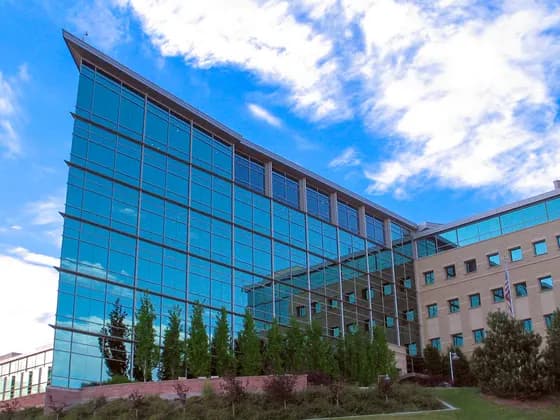
Spencer Fox Eccles School of Medicine, University of Utah (MD)
Salt Lake City, UT, US
Salt Lake City, UT, US•Est. 1905
Spencer Fox Eccles School of Medicine, University of Utah (MD) Medical School - 2027 Entry Requirements & Interview Format
The Spencer Fox Eccles School of Medicine at the University of Utah, founded in 1905, is the state's only MD-granting institution and the medical anchor for a geographically vast intermountain region. Located in Salt Lake City, the school offers a 4-year MD curriculum emphasising both cutting-edge research and community-centred care. Affiliated clinical sites span from the level-1 trauma centre at University of Utah Health to critical access hospitals across rural Utah and neighbouring states. A strong research enterprise encompasses genetics, cardiology, and cancer biology.
Entry Requirements
What you need to apply to Spencer Fox Eccles School of Medicine, University of Utah (MD).
Admission overview
Bachelor's degree and MCAT required. Applied via AMCAS. Utah residency preferred; the school admits a modest number of out-of-state students with a strong regional or rural medicine focus. No specific major required; strong preparation in biology, chemistry, physics, and mathematics expected.
MCAT median
514 (range 509–519)
GPA median
3.77 overall / 3.72 science (BCPM)
Acceptance rate
4.0%
Class size
102
In-state preference
Strong — primarily in-state
In-state matriculants
80%
CASPer
Not required
Holistic review emphasis
Regional mission fit, rural health interest, research experience, and community service.
Notes
Estimates from public AAMC FACTS / class-profile data; verify current cycle. AMCAS application; strong Utah resident preference.
How Spencer Fox Eccles School of Medicine, University of Utah (MD) interviews applicants.
Format
MMI (multiple stations, in-person)
Interview window
October–February
Decision date
March 30 (AAMC standard)
Post-interview chances
Post-interview acceptance estimated at 20–30%; Utah residency and regional/rural medicine commitment are positive factors.
What to expect at a Spencer Fox Eccles School of Medicine, University of Utah (MD) interview
The Spencer Fox Eccles School of Medicine uses an MMI format with typically six to eight timed stations assessing ethical reasoning, communication, collaboration, and critical thinking. Each station runs approximately eight minutes with two minutes of prep time. The interview day includes an orientation session, campus tour, and informal lunch with current students. Interviewers rotate independently across stations; scores are aggregated after all stations are complete.
What makes Spencer Fox Eccles School of Medicine, University of Utah (MD) different
The school serves as the sole academic medical centre for a vast five-state region (Utah, Wyoming, Montana, Idaho, Nevada), giving students extraordinary breadth of clinical exposure from tertiary trauma care to frontier rural medicine. The University of Utah Health network is nationally recognised for clinical quality. The school has a particularly strong rural and wilderness medicine programme.
Tutor insight
Utah's five-state regional mission is a genuine identity, not marketing — interviewers respond well to applicants who understand the scale of frontier medicine in the intermountain region and can articulate interest in rural or underserved practice. The MMI stations often include scenarios involving resource-limited or geographically isolated care. Prepare for questions about the opioid epidemic's impact on mountain west communities, wilderness and altitude medicine, and LDS community health dynamics. Genetics is a research powerhouse at Utah; if you have any genomics interest, develop that narrative.
PrometheusQuestion Bank
595 medicine questions inside
Interview questions matched to Spencer Fox Eccles School of Medicine, University of Utah (MD)
Two questions our tutors flagged as a strong fit for Spencer Fox Eccles School of Medicine, University of Utah (MD)’s interview style. Try answering them out loud, then open Prometheus for the model answers and follow-up tips.
Medium·MMIQ1
AAMC Core Competency: Social Skills and Empathic Communication
You are shadowing a family medicine physician when a patient in her 70s begins to cry while discussing her diagnosis of early-stage Alzheimer's disease. The physician steps out to take an urgent call, leaving you alone with the patient. You are a pre-medical student with no clinical training. How do you respond in this moment, and what does this situation reveal about what patients need from all healthcare team members?
Likely follow-up · What are the limits of emotional support that a non-clinician or pre-clinical student should offer?
3 expert tips in Prometheus
Hard·Panel · MMIQ2
US Healthcare Ethics: Transgender Patient Care and State Law
Several US states have enacted laws restricting or prohibiting gender-affirming care, including hormone therapy and surgical interventions, for minors and in some cases for adults. You are a physician in one of these states. A 17-year-old patient has been receiving hormone therapy for two years, has parental consent, and is stable and flourishing by all clinical measures. The law now prohibits continuation of the treatment. How do you navigate your legal obligations, your clinical duty to this patient, and your ethical convictions?
Likely follow-up · What does the evidence say about the mental health outcomes of gender-affirming care for transgender adolescents?
Apply to Spencer Fox Eccles School of Medicine, University of Utah (MD) with confidence
We've helped students get into Spencer Fox Eccles School of Medicine, University of Utah (MD) and other US medicine schools. Get tailored support for each stage of the application.
Spencer Fox Eccles School of Medicine, University of Utah (MD) - Frequently asked questions
Bachelor's degree and MCAT required. Applied via AMCAS. Utah residency preferred; the school admits a modest number of out-of-state students with a strong regional or rural medicine focus. No specific major required; strong preparation in biology, chemistry, physics, and mathematics expected.
MMI (multiple stations, in-person). The Spencer Fox Eccles School of Medicine uses an MMI format with typically six to eight timed stations assessing ethical reasoning, communication, collaboration, and critical thinking. Each station runs approximately eight minutes with two minutes of prep time. The interview day includes an orientation session, campus tour, and informal lunch with current students. Interviewers rotate independently across stations; scores are aggregated after all stations are complete.
Spencer Fox Eccles School of Medicine, University of Utah (MD) typically interviews in October–February.
Decisions are released March 30 (AAMC standard).
The school serves as the sole academic medical centre for a vast five-state region (Utah, Wyoming, Montana, Idaho, Nevada), giving students extraordinary breadth of clinical exposure from tertiary trauma care to frontier rural medicine. The University of Utah Health network is nationally recognised for clinical quality. The school has a particularly strong rural and wilderness medicine programme.