Washington, DC, USEst. 1868

Howard University College of Medicine (MD) Medical School - 2027 Entry Requirements & Interview Format

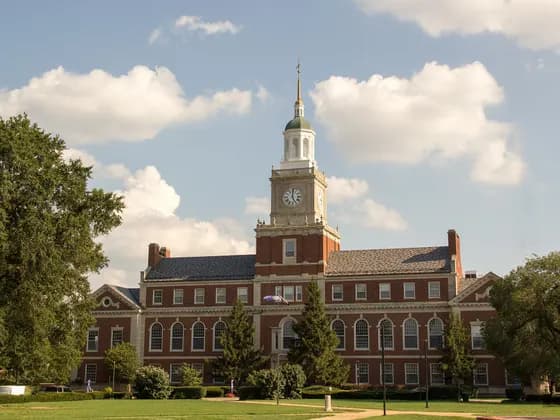
Howard University College of Medicine, founded in 1868, is one of the most historically significant medical schools in the United States. As a Historically Black College and University (HBCU) medical school, Howard has produced more Black physicians and specialists than any other institution in the country over its 150-year history. The school's mission is centred on training physicians committed to serving underserved and underrepresented communities, eliminating health disparities, and advancing health equity. Howard is located on the historic Howard University campus in Washington, DC.

Entry Requirements

What you need to apply to Howard University College of Medicine (MD).

Admission overview
Bachelor's degree and MCAT required. No specific major required. Strong commitment to health equity, underserved community care, and social justice in medicine valued. Applications via AMCAS; secondary required.
MCAT median
505 (range 503–515)
GPA median
3.67 overall / 3.46 science (BCPM)
Acceptance rate
5.0%
Class size
130
In-state preference
None
CASPer
Not required
Holistic review emphasis
Health equity mission, underrepresented background, community service, social justice, and commitment to eliminating health disparities.
Notes
Estimates from public AAMC FACTS / AACOMAS / ADEA AADSAS / class-profile; verify current cycle.
Specialities offered
Health Equity, Internal Medicine, Community Medicine, Surgery, Paediatrics

Interview Format

How Howard University College of Medicine (MD) interviews applicants.

Format
Traditional interview (faculty, physician, and/or student interviewers)
Interview window
October–March
Decision date
Rolling (AAMC standard latest March 30)

What to expect at a Howard University College of Medicine (MD) interview

Howard College of Medicine uses a traditional interview format, typically consisting of one or two one-on-one sessions of approximately 30–40 minutes each with faculty and/or current students. Interviews are conversational and probe motivation for medicine, commitment to health equity and the care of underserved communities, and understanding of the structural and historical factors driving health disparities faced by Black Americans and other marginalised communities. The interview day includes a campus tour at the Howard University campus in Northeast DC, an informational session, and time with current students.

What makes Howard University College of Medicine (MD) different

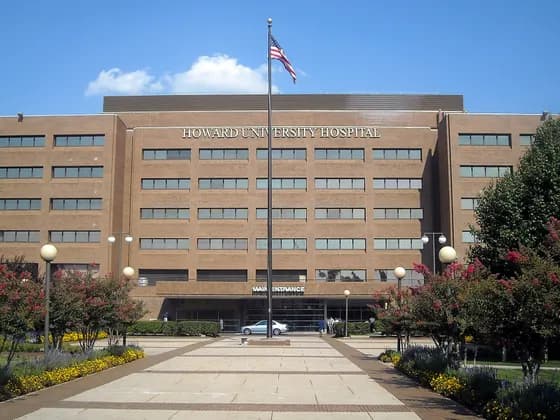
Howard College of Medicine is the largest and most historically significant HBCU medical school in the United States. It has trained the majority of the Black surgeons, physicians, and specialists in the country — including Charles Drew (blood banking pioneer) and many other historically significant figures. The school's patient population at Howard University Hospital is among the most underserved in the DC metropolitan area, providing training that directly confronts health equity challenges. Howard welcomes applicants of all backgrounds who are committed to its mission.

Tutor insight

Howard College of Medicine is a mission-driven institution — if your primary motivation is academic prestige or research at a major academic centre, Howard may not be the best fit. If you are genuinely committed to health equity, underserved community medicine, and the historical legacy of Howard, this school offers training that no other institution can replicate. Howard actively recruits students from all racial backgrounds who share its mission. In your interview, demonstrate specific knowledge of health disparities affecting Black Americans and other underserved communities, and articulate a concrete vision for your career in community medicine.
Prometheus
595 medicine questions inside

Interview questions matched to Howard University College of Medicine (MD)

Two questions our tutors flagged as a strong fit for Howard University College of Medicine (MD)’s interview style. Try answering them out loud, then open Prometheus for the model answers and follow-up tips.

MediumPanelQ1

Holistic Review: Research Experience and the MD-PhD Path

You have spent three years in a laboratory studying the molecular basis of antibiotic resistance, co-authored a paper, and presented at a national conference. You are applying to MD-only programmes, not MD-PhD. An interviewer asks why you chose not to pursue the MD-PhD route. How do you explain that choice in a way that is honest and that still demonstrates deep commitment to scientific inquiry?

Likely follow-up · How do you plan to sustain a research identity through the clinical years of medical school when laboratory time becomes scarce?

3 expert tips in Prometheus
MediumPanelQ2

MCAT: Connecting Behavioural Science to Clinical Practice

The MCAT includes a Psychological, Social, and Biological Foundations of Behaviour section — a relatively recent addition (2015) that reflects a deliberate shift in how the AAMC defines scientific preparation for medicine. Describe a concept from your MCAT behavioural science preparation — psychology, sociology, or health behaviour — that you now see as directly relevant to the kind of physician you want to be. Why does that concept matter clinically?

Likely follow-up · How did studying behavioural science for the MCAT change how you think about the causes of illness or the barriers to healthy behaviour?

3 expert tips in Prometheus

Ready to practise Howard University College of Medicine (MD)?

Book a school-specific mock interview with Howard University College of Medicine (MD) preselected.

Book a Howard University College of Medicine (MD) mock

Howard University College of Medicine (MD) - Frequently asked questions

Bachelor's degree and MCAT required. No specific major required. Strong commitment to health equity, underserved community care, and social justice in medicine valued. Applications via AMCAS; secondary required.

Traditional interview (faculty, physician, and/or student interviewers). Howard College of Medicine uses a traditional interview format, typically consisting of one or two one-on-one sessions of approximately 30–40 minutes each with faculty and/or current students. Interviews are conversational and probe motivation for medicine, commitment to health equity and the care of underserved communities, and understanding of the structural and historical factors driving health disparities faced by Black Americans and other marginalised communities. The interview day includes a campus tour at the Howard University campus in Northeast DC, an informational session, and time with current students.

Howard University College of Medicine (MD) typically interviews in October–March.

Decisions are released Rolling (AAMC standard latest March 30).

Howard College of Medicine is the largest and most historically significant HBCU medical school in the United States. It has trained the majority of the Black surgeons, physicians, and specialists in the country — including Charles Drew (blood banking pioneer) and many other historically significant figures. The school's patient population at Howard University Hospital is among the most underserved in the DC metropolitan area, providing training that directly confronts health equity challenges. Howard welcomes applicants of all backgrounds who are committed to its mission.
Reviewed by Isaac Butler-King, medical student at the University of Glasgow. Last reviewed: 6 June 2026 · NextGen MedPrep editorial team
Howard University College of Medicine (MD) | MCAT median 505, GPA & Interview Format | NGMP