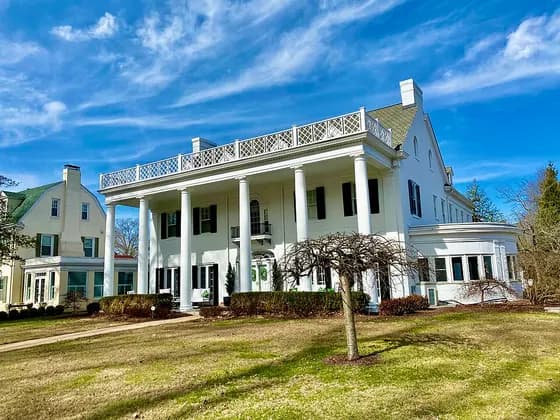
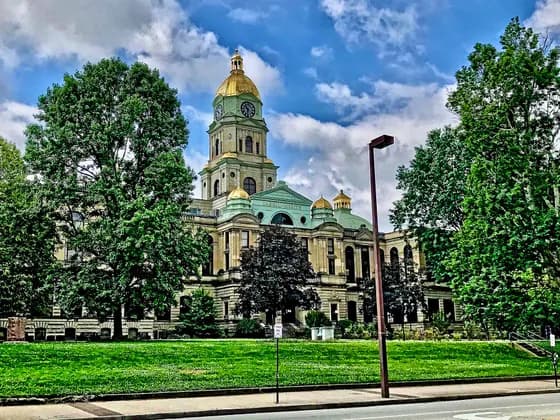
Huntington, WV, USEst. 1977

Marshall University Joan C. Edwards School of Medicine (MD) Medical School - 2027 Entry Requirements & Interview Format

Marshall University Joan C. Edwards School of Medicine, founded in 1977, is located in Huntington, West Virginia, in the heart of the Appalachian coalfields. The school trains physicians for the underserved communities of West Virginia and the surrounding region, with particular emphasis on addiction medicine, primary care, and rural health. Marshall JCESOM is affiliated with Cabell Huntington Hospital, St. Mary's Medical Center, and the Huntington VA Medical Center. Huntington's history as the epicentre of the US opioid epidemic has shaped the school's curriculum and community-engaged research programmes.

Entry Requirements

What you need to apply to Marshall University Joan C. Edwards School of Medicine (MD).

Admission overview
Bachelor's degree and MCAT required. Applied via AMCAS. West Virginia residency strongly preferred; the school fills most seats with WV residents. No specific major; strong science preparation and demonstrated commitment to West Virginia or Appalachian communities expected.
MCAT median
506 (range 501–511)
GPA median
3.81 overall / 3.75 science (BCPM)
Acceptance rate
3.0%
Class size
82
In-state preference
Strong — primarily in-state
In-state matriculants
57%
CASPer
Not required
Holistic review emphasis
West Virginia residency, Appalachian health mission commitment, primary care and addiction medicine orientation, and community engagement.
Notes
Estimates from public AAMC FACTS / class-profile data; verify current cycle. AMCAS application; strong West Virginia resident preference.
Specialities offered
Addiction Medicine, Primary Care, Rural and Appalachian Health, Internal Medicine, Community Health

Interview Format

How Marshall University Joan C. Edwards School of Medicine (MD) interviews applicants.

Format
Traditional one-on-one interviews (in-person)
Interview window
October–February
Decision date
March 30 (AAMC standard)
Post-interview chances
Post-interview acceptance estimated at 20–35%; West Virginia residency and Appalachian health mission commitment are the primary selection factors.

What to expect at a Marshall University Joan C. Edwards School of Medicine (MD) interview

Marshall JCESOM uses traditional one-on-one interviews with faculty or clinical staff. Typically two sessions of approximately 30 minutes each. The interview day is held on the Huntington campus and includes orientation, a tour of the clinical facilities, and informal sessions with current students. Interviewers have reviewed the application and ask both motivational and behavioural questions, with a particular emphasis on commitment to West Virginia and Appalachian health needs.

What makes Marshall University Joan C. Edwards School of Medicine (MD) different

Marshall JCESOM is located in Huntington, a city that gained national attention during the opioid epidemic as one of the hardest-hit cities in the United States. The school has a distinctive focus on addiction medicine, rural Appalachian health, and community-engaged research. Students train in one of the country's most challenging public health environments, which provides both a sobering context for training and meaningful clinical exposure.

Tutor insight

Marshall JCESOM's opioid epidemic context is not incidental to its training environment — it is the defining clinical reality for students in Huntington. Prepare to discuss addiction medicine with genuine knowledge, including harm reduction frameworks, MAT evidence, and the social determinants driving Appalachian substance use. West Virginia residency is a near-essential advantage; out-of-state applicants need very compelling Appalachian or rural medicine narratives. The school is looking for physicians who will stay in West Virginia, not use it as a stepping stone to prestigious residencies elsewhere.
Prometheus
595 medicine questions inside

Interview questions matched to Marshall University Joan C. Edwards School of Medicine (MD)

Two questions our tutors flagged as a strong fit for Marshall University Joan C. Edwards School of Medicine (MD)’s interview style. Try answering them out loud, then open Prometheus for the model answers and follow-up tips.

HardMMI · PanelQ1

US Healthcare Ethics: The Coverage Gap

Millions of low-income adults in non-Medicaid-expansion states fall into a coverage gap: their income is too high to qualify for Medicaid under their state's rules but too low to receive marketplace subsidies under the ACA. A patient in your clinic is one of them -- she has Type 2 diabetes, cannot afford insulin, and is rationing doses. Her state has not expanded Medicaid. What are the ethical obligations of her physician, and what practical options exist?

Likely follow-up · What is the difference between a physician's duty to an individual patient and a physician's duty to advocate for systemic change?

3 expert tips in Prometheus
MediumPanelQ2

MCAT Preparation: Balancing Rigor, Burnout, and Identity

The MCAT is widely considered one of the most demanding standardised tests in US higher education. Many applicants retake it one or more times, and average scores for matriculants at highly competitive programmes have climbed steadily. Describe your MCAT experience — including how you prepared, how the result felt in the context of your overall application, and what the process revealed about how you handle high-stakes setbacks or disappointments.

Likely follow-up · If your MCAT score was lower than you hoped, how did you decide whether to retake it versus building other parts of your application?

3 expert tips in Prometheus

Ready to practise Marshall University Joan C. Edwards School of Medicine (MD)?

Book a school-specific mock interview with Marshall University Joan C. Edwards School of Medicine (MD) preselected.

Book a Marshall University Joan C. Edwards School of Medicine (MD) mock

Marshall University Joan C. Edwards School of Medicine (MD) - Frequently asked questions

Bachelor's degree and MCAT required. Applied via AMCAS. West Virginia residency strongly preferred; the school fills most seats with WV residents. No specific major; strong science preparation and demonstrated commitment to West Virginia or Appalachian communities expected.

Traditional one-on-one interviews (in-person). Marshall JCESOM uses traditional one-on-one interviews with faculty or clinical staff. Typically two sessions of approximately 30 minutes each. The interview day is held on the Huntington campus and includes orientation, a tour of the clinical facilities, and informal sessions with current students. Interviewers have reviewed the application and ask both motivational and behavioural questions, with a particular emphasis on commitment to West Virginia and Appalachian health needs.

Marshall University Joan C. Edwards School of Medicine (MD) typically interviews in October–February.

Decisions are released March 30 (AAMC standard).

Marshall JCESOM is located in Huntington, a city that gained national attention during the opioid epidemic as one of the hardest-hit cities in the United States. The school has a distinctive focus on addiction medicine, rural Appalachian health, and community-engaged research. Students train in one of the country's most challenging public health environments, which provides both a sobering context for training and meaningful clinical exposure.
Reviewed by Isaac Butler-King, medical student at the University of Glasgow. Last reviewed: 6 June 2026 · NextGen MedPrep editorial team
Marshall University Joan C. Edwards School of Medicine (MD) | MCAT median 506, GPA & Interview Format | NGMP