
Marshall University Joan C. Edwards School of Medicine Interview
Format, Questions & Prep Tips
Marshall University Joan C. Edwards School of Medicine medicine interviews for 2027 entry are a traditional interview. Marshall University Joan C. Edwards School of Medicine describes the format as: Live virtual (Zoom) interview of about 40 minutes with two interviewers who alternate questions, plus a required virtual student session. Published figures: Annual MD class size ~80–85; Applications received ~2,500–4,000 per cycle; Interview format Traditional — two one-on-one interviews, ~30 min each.
- Institution
- Marshall University Joan C. Edwards School of Medicine
- Interview (2027 entry)
- October through February; rolling invitations issued after secondary review
- Decisions (2027 entry)
- Primary decisions by late February; final decisions by March 30. Waitlist movement through May–August

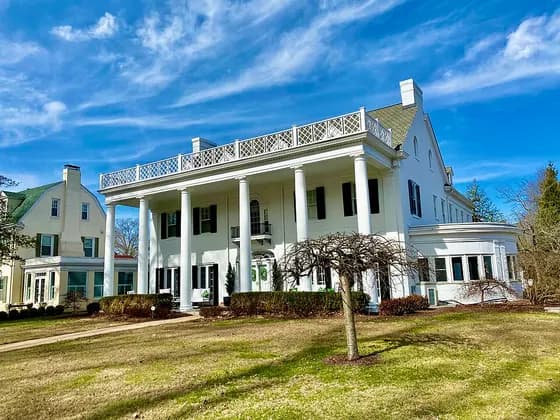
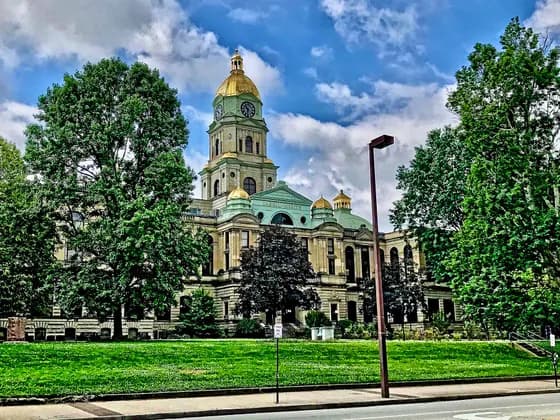

Photo: Youngamerican · CC BY-SA 3.0 · cropped
Photo: Wv funnyman · CC BY-SA 4.0 · Photo: Wv funnyman · CC BY-SA 4.0 · Photo: Wvfunnyman · CC BY-SA 3.0
How to get into Marshall University Joan C. Edwards School of Medicine (MD) medicine
Step-by-step: entry requirements, admission tests, personal statement, interview format and the key deadlines.
Open the guide →Marshall University Joan C. Edwards School of Medicine (MD) entry requirements
Admission profile, interview format, decision dates and what makes Marshall University Joan C. Edwards School of Medicine (MD) different.
See the profile →The Marshall University Joan C. Edwards School of Medicine (MD) medicine interview
Marshall University Joan C. Edwards School of Medicine uses a traditional interview format — typically two one-on-one sessions with faculty or clinical staff, each approximately 30 minutes. Located in Huntington, West Virginia, Marshall JCESOM trains physicians for the Appalachian coalfields region, where the opioid epidemic, rural health disparities, and limited specialist access define the clinical landscape.
Huntington became national news as the US city most severely affected by the opioid epidemic. The school’s curriculum includes a distinctive addiction medicine thread and community-engaged research programs directly responding to regional health challenges. Interview conversations frequently probe understanding of Appalachian health, addiction medicine, and commitment to staying in West Virginia.
Applications via AMCAS; West Virginia residents fill approximately 80–90% of seats. Out-of-state applicants need compelling Appalachian or rural medicine narratives to be competitive.
Marshall University Joan C. Edwards School of Medicine (MD) interview at a glance (2027 entry)
| Annual MD class size | ~80–85 |
|---|---|
| Applications received | ~2,500–4,000 per cycle |
| Interview format | Traditional — two one-on-one interviews, ~30 min each |
| Curriculum | Integrated with addiction medicine and Appalachian health thread |
| Application system | AMCAS (West Virginia residents strongly preferred) |
| Interview window | October–February |
| Established | 1977 |
Interview format
- Traditional format: two separate one-on-one sessions with faculty or clinical staff, each ~30 minutes.
- Interviewers have reviewed the full application; expect specific questions about West Virginia ties, clinical experiences, and motivations.
- Both behavioral ("tell me about a time…") and motivational ("why Marshall / why West Virginia") questions are common.
- The interview day includes orientation, clinical campus tour (Cabell Huntington Hospital, St. Mary's), and informal student sessions.
- In-person at the Huntington, WV campus; professional dress expected.
Working towards the MCAT score Marshall University Joan C. Edwards School of Medicine (MD) expects? Build a week-by-week plan from your test date — free for the first two weeks.
Sample interview questions
Why Marshall JCESOM? What draws you to training in Huntington and to practicing medicine in West Virginia?
Reference the Appalachian health mission, the opioid epidemic context, the clinical training environment at Cabell Huntington Hospital and St. Mary's, and your personal connection to West Virginia or Appalachian communities. Interviewers immediately distinguish genuine fit from strategic application.
West Virginia has the highest per-capita opioid overdose mortality rate in the US. How has the opioid epidemic shaped your understanding of what medicine can and cannot do?
Show genuine engagement: medicine alone cannot fix structural causes (poverty, economic displacement, physical injury from coal industry). Discuss the role of MAT, harm reduction, social determinants, and the limits of the biomedical model in addressing an epidemic driven by despair.
A patient who is actively using heroin comes to your clinic requesting buprenorphine for opioid use disorder. Your clinic director says you should not prescribe to "active users." What do you do?
Reference the evidence base: buprenorphine induction does not require confirmed abstinence. Discuss the low-barrier MAT model endorsed by SAMHSA, the legal authority to prescribe (post-DATA 2000 DEA integration), patient autonomy, and how to navigate institutional policy that contradicts evidence-based practice.
A coal miner with black lung disease (coal workers' pneumoconiosis) asks you to support his federal disability claim. His employer contests the diagnosis. What are your obligations?
Black lung disease is an Appalachian occupational health issue of significant political magnitude. Your clinical obligation is to accurate documentation of your findings. Discuss the Federal Black Lung Program claims process, the role of the treating physician vs. independent medical examiner, and how to advocate for your patient within proper legal channels.
A patient's family member asks you to prescribe opioids to their parent who is in pain, but the patient's chart shows a history of opioid misuse and recent naloxone reversal. How do you navigate this conversation?
Apply a structured framework: address the pain (it is real), discuss the patient's history and the clinical risk of opioid re-initiation, explore alternative pain management, and involve the patient directly rather than conducting proxy prescribing conversations. Show empathy for the family's distress without compromising care.
West Virginia has persistently high rates of diabetes, heart disease, and cancer. What social and economic factors explain this, and what role do physicians play in addressing root causes?
Reference: poverty, food deserts, physical inactivity due to terrain and economic conditions, coal industry environmental exposures, tobacco use, and lack of healthcare access. Physicians as advocates: screening, community health education, policy testimony, and participating in community-based participatory research.
A pharmaceutical sales representative offers your clinic a sponsored lunch to present information about a new opioid formulation. Do you accept? Why or why not?
Conflict of interest in the context of the opioid epidemic — an especially charged question at Marshall JCESOM. Reference industry-funded education bias data, AMSA's PharmFree position, institutional policies on industry relationships, and the heightened responsibility given the opioid crisis context.
Many Marshall graduates leave West Virginia for residencies and fellowships and never return to practice. What would keep you in West Virginia after training?
Authentic self-reflection required. Loan repayment programs (NHSC, WV RHAP), community ties, the meaningful work of underserved practice, and the intellectual challenge of generalist medicine all legitimately motivate retention. Avoid fabricating commitments you don't genuinely hold — interviewers read this immediately.
A patient tells you she has stopped taking her antidepressants because she "doesn't want to become addicted" and her church community discourages psychiatric medication. How do you respond?
What they are listening for:
- Distinguish pharmacological dependence from addiction
- the clinical risk of abrupt discontinuation
- the evidence for antidepressant efficacy
Acknowledge the patient's values and community context without dismissing them. Explore what support structures she has and whether a referral to a mental health provider with cultural competence in religious communities would be helpful.
Should West Virginia expand Medicaid to a broader population beyond current eligibility? (West Virginia expanded Medicaid under the ACA but coverage gaps remain.) What is the physician's role in this policy debate?
Reference West Virginia's Medicaid expansion experience (one of the most significant insurance coverage gains in the state's history), remaining gaps (immigration status exclusions, dental/vision gaps), and the evidence that Medicaid expansion improved health outcomes. The physician role: testimony, advocacy organizations, data collection on uninsured patients.
Role-play: I am a patient in recovery from opioid use disorder, and I have just told you I relapsed after a relative's funeral last week. I am ashamed and convinced you will give up on me. The assessor will play the patient — respond to me.
Lead with compassion and the message that relapse does not end care. Explore the trigger, reaffirm the treatment plan, and connect to support. Avoid lecturing about buprenorphine pharmacology — meet the shame first. Marshall's addiction-medicine thread and Huntington's history make this a defining clinical encounter.
You are shown data from Cabell County showing that emergency naloxone administrations dropped substantially in the years after a coordinated community response (including a Quick Response Team) was launched. Before attributing the drop to the program, what would you consider?
Discuss confounders — changes in the drug supply, reporting practices, other concurrent interventions, and regression to the mean — and what data (linkage-to-treatment rates, mortality) would strengthen a causal claim. Project HOPE and the QRT model are central to Marshall's identity, so critical interpretation matters.
Coal workers' pneumoconiosis (black lung) has resurged in central Appalachia, including in younger miners. What explains this resurgence, and what is the physician's role in detection?
Reference increased silica exposure as thinner coal seams are mined, longer hours, and gaps in dust control, producing severe disease at younger ages. Discuss screening (chest imaging, surveillance programs), exposure history, and the Federal Black Lung Program. Black lung is a real occupational-health reality in Marshall's training environment.
A pharmaceutical company offers Marshall's addiction-medicine program funding for an educational symposium on a new pain product. Given Huntington's history with the opioid epidemic, should the program accept?
Engage with conflict of interest in the specific context of a community devastated by opioid marketing. Discuss the evidence on industry-funded education and prescribing, institutional COI policies, and the heightened ethical responsibility here. Take a clear position rather than hedging.
A patient's adult daughter pulls you aside, distraught, asking you to involuntarily commit her father for his substance use because 'he will die otherwise.' He is currently competent and declining treatment. How do you respond to her?
Acknowledge her fear and love, explain the legal limits of involuntary commitment for a competent adult, and redirect toward what can help — harm reduction, naloxone for the family, low-barrier treatment when he is ready, and family support resources. Balance compassion for the family with respect for patient autonomy.
Practise the Marshall University Joan C. Edwards School of Medicine (MD) interview
Rehearse the real format before the day — on demand with our AI interviewers, or live with a tutor.
Sit a mock with photoreal AI interviewers — any time
A timed MMI or panel interview on video — American & international voices — with interviewers who listen, react and press with follow-ups. Rubric-scored feedback and a replay the moment you finish.





Live mocks with a tutor who’s been in the room
A full Marshall University Joan C. Edwards School of Medicine (MD)-style mock with a medic or dentist tutor — honest scoring against real marking criteria, a station-by-station debrief and a written action plan.
Book a mock interviewHow to prepare for the Marshall University Joan C. Edwards School of Medicine (MD) interview
Common pitfalls to avoid
Marshall University Joan C. Edwards School of Medicine (MD) interview — frequently asked questions
Sources & official admissions information
Ready to nail your Marshall University Joan C. Edwards School of Medicine (MD) interview?
Book a mock interview with a tutor who knows the US interview formats, orpractice unlimited stations from our interview question bank.