Rutgers New Jersey Medical School (MD) Medical School - 2027 Entry Requirements & Interview Format
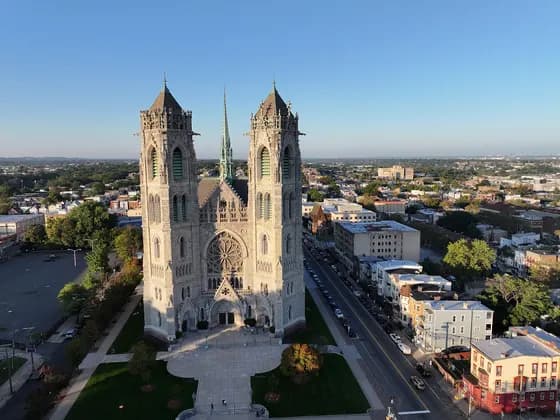
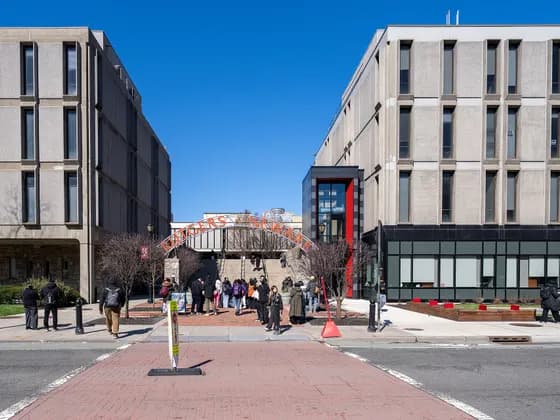
Rutgers New Jersey Medical School (NJMS), founded in 1954 (originally Seton Hall College of Medicine and Dentistry), is the oldest of Rutgers University's two medical schools and one of the largest allopathic schools in the Northeast. Located in the heart of Newark, NJMS trains physicians in a high-acuity, highly diverse clinical environment anchored by University Hospital. The school has a strong tradition of producing physicians who serve urban and underserved communities, with particular strengths in infectious disease, trauma, and primary care.
Entry Requirements
What you need to apply to Rutgers New Jersey Medical School (MD).
Admission overview
Bachelor's degree and MCAT required. Strong preference for New Jersey residents. Prerequisites include biology, general and organic chemistry, biochemistry, physics, English, and statistics. Applications via AMCAS; secondary required. NJMS values community service, leadership, and commitment to Newark and urban health.
MCAT median
513 (range 508–518)
GPA median
3.77 overall / 3.72 science (BCPM)
Acceptance rate
2.5%
Class size
170
In-state preference
Strong — primarily in-state
In-state matriculants
82%
CASPer
Not required
Holistic review emphasis
NJ residency, urban health commitment, diversity, service, MCAT/GPA.
Notes
Estimates from public AAMC FACTS / AACOMAS / ADEA AADSAS / class-profile; verify current cycle.
How Rutgers New Jersey Medical School (MD) interviews applicants.
Format
Traditional panel interview (faculty and/or student, ~30 min sessions)
Interview window
September–March
Decision date
Rolling; most decisions by March 30
Post-interview chances
Estimated 35–50% of interviewed NJ-resident candidates receive an offer; out-of-state conversion significantly lower. Estimates approximate — verify with NJMS admissions.
What to expect at a Rutgers New Jersey Medical School (MD) interview
Rutgers NJMS uses traditional one-on-one or two-on-one interviews lasting approximately 30 minutes per session. Interviewers review the application file in advance and focus on motivation for medicine, urban health experiences, ethical reasoning, and the applicant's vision for their career in the context of Newark's diverse population. The interview day includes an orientation session, campus and hospital tour of University Hospital, lunch with current students, and a financial aid overview. Interactions throughout the day with current students and staff contribute to the holistic evaluation.
What makes Rutgers New Jersey Medical School (MD) different
One of the largest public medical schools in the Northeast; located in Newark, NJ — a majority-minority city and historically underserved urban centre. University Hospital (a Level I trauma centre and safety-net hospital) is the primary teaching hospital. Home to the Global Tuberculosis Institute. One of the most racially and socioeconomically diverse medical school classes in the US.
Tutor insight
NJMS's Newark location is central to its identity — applicants who understand and embrace urban health challenges will resonate strongly with the committee. The large class (~170) means the school is slightly less holistic-heavy than smaller programmes, but service record and NJ ties still matter considerably. University Hospital is a genuine high-acuity, high-diversity clinical training environment — mention specific clinical experiences in similar settings when relevant. The traditional interview rewards clear storytelling and a direct answer to "why NJMS and why Newark."
PrometheusQuestion Bank
595 medicine questions inside
Interview questions matched to Rutgers New Jersey Medical School (MD)
Two questions our tutors flagged as a strong fit for Rutgers New Jersey Medical School (MD)’s interview style. Try answering them out loud, then open Prometheus for the model answers and follow-up tips.
Medium·PanelQ1
Service Orientation: Global Health and Domestic Priorities
You completed a global health elective in sub-Saharan Africa during your gap year, providing basic care in an under-resourced clinic. Some classmates have questioned whether global health experiences are ethically sound given domestic unmet need and the 'voluntourism' critique. How do you defend the value of your experience, and how do you answer critics who argue that the same effort should go toward underserved communities in the United States?
Likely follow-up · What is the voluntourism critique, and what distinguishes ethically designed global health programmes from harmful ones?
3 expert tips in Prometheus
Medium·Panel · MMIQ2
AAMC Core Competency: Service Orientation in Underserved Communities
The AAMC lists Service Orientation as a core competency, describing it as a desire to help others that extends beyond self-interest. You have spent two summers volunteering at a free clinic in a rural community where nearly 30% of residents are uninsured. A classmate argues that pre-medical volunteering is largely performative — a box to tick for applications — and does not reflect genuine service commitment. How do you respond to this critique, and how have your own experiences shaped your understanding of what service orientation actually means for a physician?
Likely follow-up · How do you distinguish genuine service orientation from voluntourism or resume-padding in your own reflection and in evaluating others?
Apply to Rutgers New Jersey Medical School (MD) with confidence
We've helped students get into Rutgers New Jersey Medical School (MD) and other US medicine schools. Get tailored support for each stage of the application.
Rutgers New Jersey Medical School (MD) - Frequently asked questions
Bachelor's degree and MCAT required. Strong preference for New Jersey residents. Prerequisites include biology, general and organic chemistry, biochemistry, physics, English, and statistics. Applications via AMCAS; secondary required. NJMS values community service, leadership, and commitment to Newark and urban health.
Traditional panel interview (faculty and/or student, ~30 min sessions). Rutgers NJMS uses traditional one-on-one or two-on-one interviews lasting approximately 30 minutes per session. Interviewers review the application file in advance and focus on motivation for medicine, urban health experiences, ethical reasoning, and the applicant's vision for their career in the context of Newark's diverse population. The interview day includes an orientation session, campus and hospital tour of University Hospital, lunch with current students, and a financial aid overview. Interactions throughout the day with current students and staff contribute to the holistic evaluation.
Rutgers New Jersey Medical School (MD) typically interviews in September–March.
Decisions are released Rolling; most decisions by March 30.
One of the largest public medical schools in the Northeast; located in Newark, NJ — a majority-minority city and historically underserved urban centre. University Hospital (a Level I trauma centre and safety-net hospital) is the primary teaching hospital. Home to the Global Tuberculosis Institute. One of the most racially and socioeconomically diverse medical school classes in the US.