John A. Burns School of Medicine University of Hawaii at Manoa (MD)
Honolulu, HI, US
Honolulu, HI, US•Est. 1967
John A. Burns School of Medicine University of Hawaii at Manoa (MD) Medical School - 2027 Entry Requirements & Interview Format
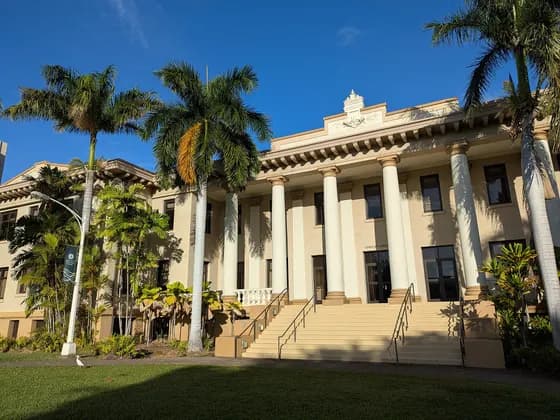
The John A. Burns School of Medicine at the University of Hawaii at Manoa, located in the Kaka'ako district of Honolulu, is Hawaii's only medical school and a national pioneer of Problem-Based Learning in medical education. JABSOM trains physicians for service across Hawaii and the Pacific basin, with particular emphasis on Native Hawaiian health, health equity, and the unique cultural and epidemiological challenges of island communities. The school's small class size and island location create a close-knit, community-oriented academic culture.
Entry Requirements
What you need to apply to John A. Burns School of Medicine University of Hawaii at Manoa (MD).
Admission overview
Bachelor's degree and MCAT required. Applications via AMCAS; secondary application required. JABSOM gives strong preference to Hawaii residents and applicants with demonstrated ties to Native Hawaiian or Pacific Islander communities. Out-of-state applicants are considered but face strong in-state competition. The curriculum uses PBL exclusively; applicants should demonstrate comfort with self-directed learning.
MCAT median
512 (range 507–517)
GPA median
3.70 overall / 3.65 science (BCPM)
Acceptance rate
6.0%
Class size
77
In-state preference
Strong — primarily in-state
In-state matriculants
80%
CASPer
Not required
Holistic review emphasis
Hawaii residency, Native Hawaiian and Pacific Islander community ties, PBL learning style fit, primary care commitment.
Notes
Estimates from public AAMC FACTS / AACOMAS / ADEA AADSAS / class-profile; verify current cycle.
Specialities offered
Primary Care, Native Hawaiian and Pacific Islander Health, Community Medicine, Internal Medicine, Pediatrics
Interview Format
How John A. Burns School of Medicine University of Hawaii at Manoa (MD) interviews applicants.
Format
Traditional one-on-one or panel interviews with faculty and community members
Interview window
October–February
Decision date
March 30 (AAMC standard)
Post-interview chances
Estimated post-interview acceptance rate approximately 30–40% for Hawaii residents; significantly lower for out-of-state applicants. Mission and community ties are primary differentiators.
What to expect at a John A. Burns School of Medicine University of Hawaii at Manoa (MD) interview
JABSOM conducts traditional interviews on the Kaka'ako campus in Honolulu. Applicants typically participate in two individual or panel interviews of 30–40 minutes each, with faculty members and often community representatives. Interviewers probe commitment to Native Hawaiian and Pacific Islander health, experience with Hawaii's unique multicultural patient population, and motivation to practise in the Pacific region. The day includes a campus tour of the Kaka'ako Health Sciences complex, an overview of the Problem-Based Learning curriculum, and informal time with current students. JABSOM's mission to serve Hawaii and the Pacific basin permeates every aspect of interview evaluation.
What makes John A. Burns School of Medicine University of Hawaii at Manoa (MD) different
JABSOM is the only MD-granting medical school in Hawaii and serves as the primary training institution for physicians serving Hawaii, Guam, Micronesia, and the wider Pacific basin. The school has a longstanding commitment to Native Hawaiian health and Pacific Islander communities. JABSOM developed and pioneered the Problem-Based Learning (PBL) curriculum model that was widely adopted across US medical schools. Its location in Kaka'ako places students in one of the most ethnically diverse clinical environments in the United States.
Tutor insight
JABSOM's PBL curriculum is genuine and demanding — if you prefer lecture-based learning, be honest with yourself before applying. In your interview, demonstrate specific knowledge of Native Hawaiian and Pacific Islander health disparities (cardiovascular disease, diabetes, cancer rates) and any direct experience with these communities. Hawaii residency gives a meaningful advantage; out-of-state applicants should demonstrate compelling Pacific ties or a very strong academic profile. The small class size means everyone knows each other — emphasise your collaborative approach and comfort with community-based learning.
PrometheusQuestion Bank
595 medicine questions inside
Interview questions matched to John A. Burns School of Medicine University of Hawaii at Manoa (MD)
Two questions our tutors flagged as a strong fit for John A. Burns School of Medicine University of Hawaii at Manoa (MD)’s interview style. Try answering them out loud, then open Prometheus for the model answers and follow-up tips.
Hard·Panel · MMIQ1
Holistic Review: Race, Lived Experience, and Post-SCOTUS Admissions
Following the 2023 Supreme Court decision in Students for Fair Admissions v. Harvard and UNC, medical schools may no longer use race as a factor in admissions decisions. However, the ruling explicitly allows applicants to describe how race has shaped their lived experience in their personal statements or interviews. You are a first-generation Dominican-American applicant whose experience with racial discrimination in accessing healthcare directly motivated your decision to pursue medicine. How do you convey the meaning of that experience in your application without violating the spirit or the letter of the ruling?
Likely follow-up · How does the AAMC's holistic review framework guide schools in evaluating an applicant's experience without treating race as a checkbox?
3 expert tips in Prometheus
Hard·MMI · PanelQ2
US Healthcare Ethics: Informed Consent and Capacity Assessment
A 60-year-old man with moderate depression and poorly controlled diabetes presents for an elective leg amputation recommended by his vascular surgeon to prevent death from gangrene. He tells you he refuses the operation: 'I would rather die than live without my leg.' His wife insists he is 'not in his right mind' due to his depression and demands that you proceed with the surgery. What is your ethical and clinical obligation?
Likely follow-up · What is the legal standard for decision-making capacity in the US, and how does depression affect it?
Apply to John A. Burns School of Medicine University of Hawaii at Manoa (MD) with confidence
We've helped students get into John A. Burns School of Medicine University of Hawaii at Manoa (MD) and other US medicine schools. Get tailored support for each stage of the application.
John A. Burns School of Medicine University of Hawaii at Manoa (MD) - Frequently asked questions
Bachelor's degree and MCAT required. Applications via AMCAS; secondary application required. JABSOM gives strong preference to Hawaii residents and applicants with demonstrated ties to Native Hawaiian or Pacific Islander communities. Out-of-state applicants are considered but face strong in-state competition. The curriculum uses PBL exclusively; applicants should demonstrate comfort with self-directed learning.
Traditional one-on-one or panel interviews with faculty and community members. JABSOM conducts traditional interviews on the Kaka'ako campus in Honolulu. Applicants typically participate in two individual or panel interviews of 30–40 minutes each, with faculty members and often community representatives. Interviewers probe commitment to Native Hawaiian and Pacific Islander health, experience with Hawaii's unique multicultural patient population, and motivation to practise in the Pacific region. The day includes a campus tour of the Kaka'ako Health Sciences complex, an overview of the Problem-Based Learning curriculum, and informal time with current students. JABSOM's mission to serve Hawaii and the Pacific basin permeates every aspect of interview evaluation.
John A. Burns School of Medicine University of Hawaii at Manoa (MD) typically interviews in October–February.
Decisions are released March 30 (AAMC standard).
JABSOM is the only MD-granting medical school in Hawaii and serves as the primary training institution for physicians serving Hawaii, Guam, Micronesia, and the wider Pacific basin. The school has a longstanding commitment to Native Hawaiian health and Pacific Islander communities. JABSOM developed and pioneered the Problem-Based Learning (PBL) curriculum model that was widely adopted across US medical schools. Its location in Kaka'ako places students in one of the most ethnically diverse clinical environments in the United States.