
John A. Burns School of Medicine University of Hawaii at Manoa Interview
Format, Questions & Prep Tips
John A. Burns School of Medicine University of Hawaii at Manoa medicine interviews for 2027 entry are a traditional interview. Published figures: Annual MD class size ~77; Interview format Traditional — 2 interviews, ~30–40 min each; Curriculum Full PBL — 4-year MD.
- Institution
- John A. Burns School of Medicine University of Hawaii at Manoa
- Interview (2027 entry)
- October through February; invitations issued on a rolling basis
- Decisions (2027 entry)
- Rolling decisions; final decisions by March 30; waitlist movement through summer

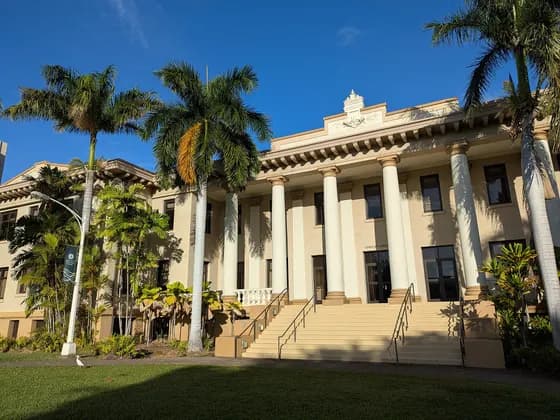
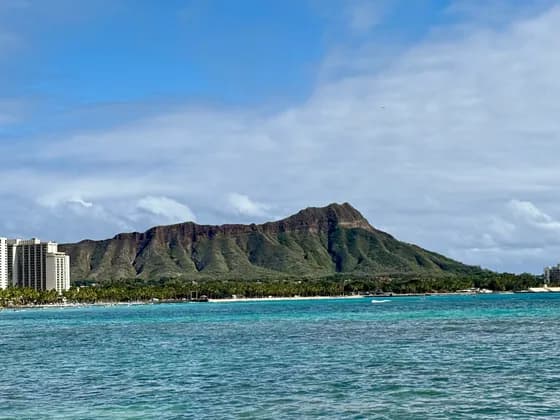
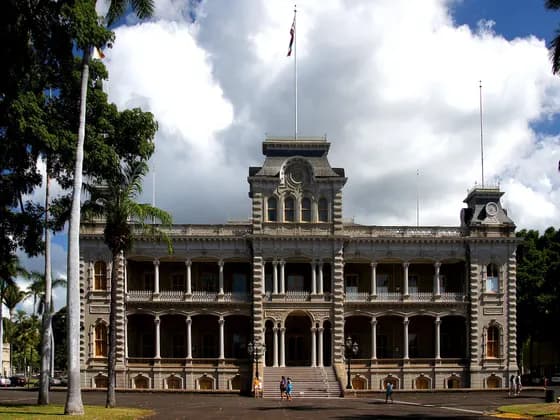
Photo: Scott Dahlem (Wikimedia user Lavishluau) · Public domain · cropped
Photo: Sdkb · CC BY-SA 4.0 · Photo: Farragutful · CC BY-SA 4.0 · Photo: Bernard Spragg. NZ from Christchurch, New Zealand · CC0
How to get into John A. Burns School of Medicine University of Hawaii at Manoa (MD) medicine
Step-by-step: entry requirements, admission tests, personal statement, interview format and the key deadlines.
Open the guide →John A. Burns School of Medicine University of Hawaii at Manoa (MD) entry requirements
Admission profile, interview format, decision dates and what makes John A. Burns School of Medicine University of Hawaii at Manoa (MD) different.
See the profile →The John A. Burns School of Medicine University of Hawaii at Manoa (MD) medicine interview
The John A. Burns School of Medicine (JABSOM) at the University of Hawaii at Manoa uses a traditional interview format on the Kaka’ako campus in Honolulu. Applicants participate in two individual or panel interviews with faculty and community representatives, each approximately 30–40 minutes. The entire day reflects JABSOM’s dual identity as a PBL pioneer and a Pacific community health institution.
JABSOM was one of the first US medical schools to adopt Problem-Based Learning and has refined the PBL model over five decades. The school’s mission extends beyond Hawaii to serve Guam, Micronesia, and Pacific Island communities — interviewers evaluate whether candidates genuinely understand and connect to this Pacific-basin identity.
The AAMC groups its 17 Premed Competencies into three categories: professional, science, and thinking and reasoning. JABSOM interviewers weight the professional competencies especially highly. That reflects the close-knit small-cohort environment and the community-centered care model the school trains for.
John A. Burns School of Medicine University of Hawaii at Manoa (MD) interview at a glance (2027 entry)
| Annual MD class size | ~77 |
|---|---|
| Interview format | Traditional — 2 interviews, ~30–40 min each |
| Application system | AMCAS |
| Curriculum | Full PBL — 4-year MD |
| In-state preference | Strong — ~80% Hawaii residents |
| Interview window | October–February |
| Location | Kaka’ako, Honolulu, HI |
Interview format
- Two traditional one-on-one or panel interviews: one with a faculty physician, one with a community member or student.
- Each interview approximately 30–40 minutes; interviewers have reviewed the full application.
- Community member interview reflects JABSOM’s deep ties to Native Hawaiian and Pacific Islander communities.
- Tour of the Kaka’ako Health Sciences complex and affiliated clinical sites.
- Overview of the PBL curriculum structure and the Neighbor Island clinical rotation options.
- Informal interactions with current students throughout the day.
Working towards the MCAT score John A. Burns School of Medicine University of Hawaii at Manoa (MD) expects? Build a week-by-week plan from your test date — free for the first two weeks.
Sample interview questions
Why JABSOM and Hawaii — what draws you to training in the Pacific context and what do you know about the specific health challenges facing Native Hawaiian and Pacific Islander communities?
Name specific conditions:
- cardiovascular disease
- diabetes
- obesity
- cancer disparities in Native Hawaiian populations
Reference JABSOM’s Pacific Rim mission. If you have personal ties to Hawaii or the Pacific, make them explicit.
JABSOM uses a full Problem-Based Learning curriculum. Describe your experience with self-directed or small-group learning, and how you perform when there is no traditional lecture structure.
PBL requires intrinsic motivation, comfort with ambiguity, and collaborative learning. Describe specific PBL-like academic experiences — research, independent study, team-based problem solving. Be honest about challenges.
A Native Hawaiian patient refuses a recommended procedure because it conflicts with cultural and spiritual beliefs about the body and healing. How do you approach this?
What they are listening for:
- Patient autonomy
- cultural humility
- informed consent in a cultural context
- the physician’s obligation to understand rather than override patients’ cultural frameworks
Show knowledge of Native Hawaiian health perspectives.
Describe an experience working with a patient or community member whose cultural background was significantly different from your own. What did you learn about your own assumptions?
What they are listening for:
- Cultural humility
- self-reflection
- the limits of cultural competency as a fixed skill set
STAR structure; end with a genuine insight about how you changed your approach, not a formulaic conclusion.
Hawaii’s Neighbor Island communities — Maui, the Big Island, Kauai — have significantly less access to specialist care than Oahu. How should the healthcare system address this gap, and what is the individual physician’s role?
What they are listening for:
- Rural and island access challenges
- telemedicine
- locum opportunities on Neighbor Islands
- JABSOM’s distributed clinical training
- the physician workforce’s obligations to underserved geographic areas
JABSOM trains physicians for a Pacific-basin region that extends from Hawaii to Micronesia. Are you prepared to consider practice in these communities, and what draws you to them?
Authentic engagement with Pacific communities is valued. If you have direct experience, use it. If you are new to the Pacific context, demonstrate genuine curiosity and research — reference specific Pacific Island health statistics or programs.
Pharmaceutical pricing in Hawaii is significantly higher than on the mainland due to import costs. A patient cannot afford a medication that is standard of care. How do you proceed?
Hawaii-specific cost context. Address medication assistance programs, formulary alternatives, advocacy, and the structural healthcare cost disparities facing island communities.
In a PBL small group, one member consistently arrives under-prepared and contributes minimally. How do you handle this over the course of the module?
PBL team dynamics and peer accountability. Show you can address the issue directly but supportively, involve facilitators appropriately, and maintain a collaborative rather than punitive framing.
JABSOM pioneered PBL in the United States. What do you understand about the educational philosophy behind PBL, and how does it prepare physicians differently from lecture-based training?
Demonstrate genuine understanding of PBL pedagogy: self-directed learning, intrinsic motivation, clinical reasoning from first principles, and the evidence base for PBL’s outcomes in medical education.
Tourism and development pressures are reshaping Hawaiian communities and affecting local residents’ health and wellbeing. As a physician in Hawaii, how do you see the intersection of environmental, economic, and health justice?
Hawaii-specific social determinants context. Show awareness of housing costs, displacement, environmental health, and the broader social determinants framework in a unique island community context.
Role-play: You are a student at a JABSOM-affiliated clinic. The actor is a Native Hawaiian patient whose family prefers to incorporate traditional healing practices alongside the treatment you have recommended, and they are guarded about whether you will respect that. Begin the conversation.
Lead with cultural humility and genuine curiosity about their practices; look for integration rather than opposition. Demonstrate respect for Native Hawaiian healing frameworks while ensuring safety — JABSOM's interviewers assess listening and partnership, not persuasion.
An interviewer shows you that Native Hawaiian and Pacific Islander populations have substantially higher rates of type 2 diabetes and cardiovascular disease than the state average. What might explain this, and how should JABSOM's mission respond?
Discuss the interplay of social determinants, historical and structural factors, diet and environment, and access — avoid attributing disparities to individual behavior alone. Connect to JABSOM's community-centered, Pacific-basin mission and culturally grounded prevention.
You are facilitating part of a PBL session and a quieter group member from a different cultural background has not spoken, while two others dominate. How do you create space for everyone without singling anyone out?
Show inclusive facilitation that respects different communication styles. JABSOM's small, close-knit PBL cohorts make equitable group participation a genuine and assessed skill.
JABSOM trains physicians for a Pacific-basin region extending from Hawaii to Micronesia. Describe any experience that connects you to these communities, or — if you are new to the Pacific — what concrete steps you have taken to understand them.
Authenticity is paramount. If you have ties, make them concrete; if not, show genuine, researched engagement (specific programs, statistics, or relationships) rather than lifestyle-motivated interest, which JABSOM treats as a red flag.
A patient on a Neighbor Island needs specialist care available only on Oahu but cannot afford the travel and time away from family and work. As their physician, how do you proceed?
Address island access inequity, telemedicine and travel-assistance resources, coordination with Oahu specialists, and creative problem-solving within real constraints — the everyday reality of JABSOM's distributed clinical training.
Practise the John A. Burns School of Medicine University of Hawaii at Manoa (MD) interview
Rehearse the real format before the day — on demand with our AI interviewers, or live with a tutor.
Sit a mock with photoreal AI interviewers — any time
A timed MMI or panel interview on video — American & international voices — with interviewers who listen, react and press with follow-ups. Rubric-scored feedback and a replay the moment you finish.





Live mocks with a tutor who’s been in the room
A full John A. Burns School of Medicine University of Hawaii at Manoa (MD)-style mock with a medic or dentist tutor — honest scoring against real marking criteria, a station-by-station debrief and a written action plan.
Book a mock interviewHow to prepare for the John A. Burns School of Medicine University of Hawaii at Manoa (MD) interview
Common pitfalls to avoid
John A. Burns School of Medicine University of Hawaii at Manoa (MD) interview — frequently asked questions
Sources & official admissions information
Ready to nail your John A. Burns School of Medicine University of Hawaii at Manoa (MD) interview?
Book a mock interview with a tutor who knows the US interview formats, orpractice unlimited stations from our interview question bank.