
Brody School of Medicine at East Carolina University Interview
Format, Questions & Prep Tips
Brody School of Medicine at East Carolina University medicine interviews for 2027 entry are a traditional interview. Published figures: Annual MD class size ~90; Applications received ~3,000–5,000 per cycle; Interview format Traditional — faculty + student, ~30–45 min each.
- Institution
- Brody School of Medicine at East Carolina University
- Interview (2027 entry)
- September through March; rolling invitations; North Carolina resident applicants given priority consideration
- Decisions (2027 entry)
- Rolling decisions from November; most offers by late March; waitlist movement through summer

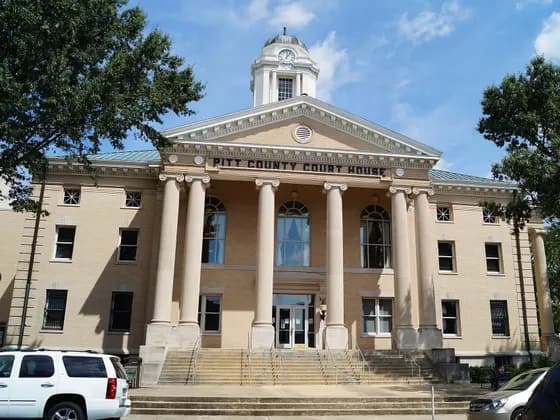
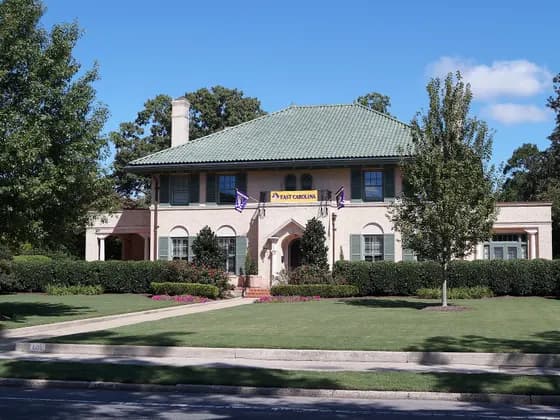
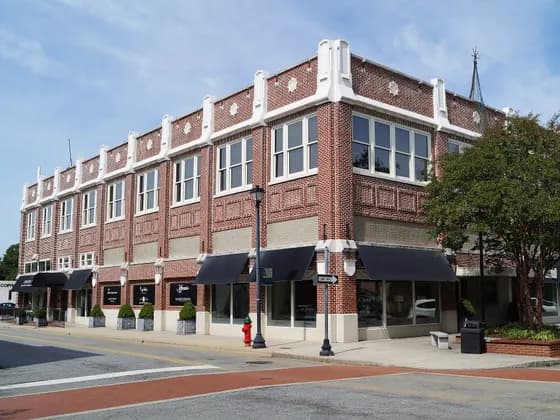
Photo: Brent Hoard · CC BY 2.0 · cropped
Photo: Tradewinds · CC BY-SA 3.0 · Photo: Tradewinds · CC BY-SA 3.0 · Photo: Tradewinds · CC BY-SA 3.0
How to get into Brody School of Medicine at East Carolina University (MD) medicine
Step-by-step: entry requirements, admission tests, personal statement, interview format and the key deadlines.
Open the guide →Brody School of Medicine at East Carolina University (MD) entry requirements
Admission profile, interview format, decision dates and what makes Brody School of Medicine at East Carolina University (MD) different.
See the profile →The Brody School of Medicine at East Carolina University (MD) medicine interview
Brody School of Medicine at ECU uses a traditional panel interview format — separate one-on-one sessions with faculty clinicians and a current medical student. Interviewers read the full application in advance.
Brody has one of the most explicit rural primary care missions of any US allopathic school. Interview questions are heavily oriented toward commitment to Eastern North Carolina, rural medicine, and primary care — candidates without genuine engagement with these themes are unlikely to advance.
Expect questions that probe the AAMC Premed Competencies, which fall into three categories: Professional, Science, and Thinking and Reasoning.
Brody School of Medicine at East Carolina University (MD) interview at a glance (2027 entry)
| Annual MD class size | ~90 |
|---|---|
| Applications received | ~3,000–5,000 per cycle |
| Interview format | Traditional — faculty + student, ~30–45 min each |
| Curriculum | Traditional organ-system; AHEC rural rotation network |
| Tuition (in-state, 2025–26) | ~USD 25,000–32,000/year |
| Application system | AMCAS |
| Interview window | September–March |
Interview format
- Traditional one-on-one sessions with one faculty clinician and one current student.
- Each session approximately 30–45 minutes; interviewers have read the full application.
- Open-ended motivational and behavioral questions; rural health and primary care themes are central.
- Interview day includes admissions presentation, lunch with students, and tour of ECU Health Medical Center.
- Commitment to Eastern North Carolina — not just North Carolina broadly — is a key evaluative criterion.
Working towards the MCAT score Brody School of Medicine at East Carolina University (MD) expects? Build a week-by-week plan from your test date — free for the first two weeks.
Sample interview questions
Why Brody School of Medicine — and why Eastern North Carolina specifically? What experiences connect you to this region and its healthcare challenges?
The central Brody question. Be specific about Eastern NC: its rural geography, high rates of poverty, cardiovascular and diabetes burden, and the role of ECU Health Medical Center as the only Level I Trauma Center for 29 counties. Vague "I want to serve underserved communities" answers without regional specificity fall flat.
Brody's mission is to train primary care physicians. Why primary care — and what experiences have deepened your commitment to this field over subspecialty medicine?
Be specific and genuine. Discuss longitudinal patient relationships, preventive medicine, chronic disease management, and the role of primary care in population health. Avoid "I want to keep my options open" — this disqualifies at Brody.
A patient with uncontrolled hypertension in rural Eastern NC tells you they cannot afford their medications and drive 45 minutes each way to the nearest pharmacy. What do you do?
Rural medicine ethics:
- patient assistance programs (manufacturer PAPs)
- 340B discount pharmacies
- generic substitution
- telemedicine for follow-up
- community health worker involvement
Show you understand structural barriers rather than attributing non-adherence to patient failure.
A farming community patient is reluctant to take time away from the harvest season to come in for a follow-up for a concerning test result. How do you handle this?
Rural context — agricultural work is the family's livelihood. Use motivational interviewing, acknowledge the real-world constraint, explore telemedicine options, and ensure the patient has the clinical information they need to make an informed decision about delay.
What is the AHEC network and how would you use it during your training at Brody?
Demonstrates you have researched the school. AHEC (Area Health Education Centers) provides rural and community rotation sites. Discuss specific rural or underserved placements you would seek, and how those would build skills for your career vision.
You are working in a rural clinic and discover that a patient has been using a traditional healing practice that could interact dangerously with their prescription medications. How do you approach this?
Cultural humility and safety: do not dismiss or condemn the traditional practice. Explore what it means to the patient, explain the specific pharmacological interaction, and work collaboratively to find a safe solution that respects the patient's cultural identity.
Where do you see yourself practicing 15 years from now — what does a successful career look like to you as a Brody graduate?
Brody measures its mission success by where graduates practice. Describe a career anchored in a rural or underserved NC community — a practice in a small town, an FQHC, or a regional hospital. Responses indicating plans to leave North Carolina are a poor fit signal.
A patient with serious mental illness in your rural community refuses psychiatric hospitalization. There are limited inpatient beds even if you wanted to admit them. What do you do?
Rural mental health scarcity is a real crisis. Discuss safety assessment, outpatient treatment intensification, involving the patient's family and community support with consent, crisis hotlines, and the limits of what primary care can manage alone. Show awareness of the rural mental health desert.
How would you explain the importance of colorectal cancer screening to a 50-year-old male patient who "feels fine" and doesn't see the point?
Patient health literacy and motivational interviewing. Use the "Ask-Tell-Ask" approach; explain the asymptomatic nature of early colorectal cancer, the colonoscopy process, and explore what would make it feasible for the patient (timing, cost, a trusted person to drive them).
What do you think the medical profession owes to rural communities that have chronically lacked physician access?
Show ethical and civic engagement. Discuss the social contract of medicine, the role of public funding of medical education in creating obligations, and what the profession collectively (not just individual physicians) can do to address geographic maldistribution of physicians.
Role-play: You are a family physician in rural Eastern North Carolina and must tell a patient (played by the interviewer) that they need a procedure only available at the academic center in Greenville, a long drive away, and they are worried about missing work and arranging transport. Begin.
Acknowledge the genuine logistical and financial burden, problem-solve transport and timing collaboratively, and ensure the patient understands the stakes without being pressured. This captures the rural-access reality Brody trains for — empathy plus practical resourcefulness.
You are shown county-level data for Brody's 29-county catchment showing diabetes and cardiovascular mortality well above state and national averages, concentrated in the most rural counties. What drives this clustering, and what can a physician realistically influence?
Discuss food access, poverty, limited primary-care and specialist supply, and delayed presentation, then distinguish what one physician can affect (continuity, prevention, panel management) from what needs systemic and policy action. Shows population-level reasoning grounded in Brody's region.
A small Eastern NC hospital can keep either its labor-and-delivery unit or its dialysis service open, but not both, given staffing. As a physician on the medical staff, how would you reason about that choice?
Surface the competing harms — obstetric deserts versus interrupted dialysis access — and discuss data on local need, regional alternatives, and advocacy for sustainable funding. Avoid a glib answer; rural service-line closures are a real and painful dilemma in this region.
You are leading a health session at a rural church and an older resident says he has 'gotten by fine without doctors' his whole life and does not trust preventive screening. How do you engage him?
Respect the autonomy and self-reliance, avoid condescension, use trusted-messenger framing and concrete relevance to his life, and listen for the real concern (cost, distrust, fear). Faith communities are central to rural Eastern NC outreach — meet him where he is.
Brody is intentionally a primary-care and community-focused school rather than a research powerhouse. Why might that focus be a feature rather than a limitation for its mission?
Argue that a tightly focused mission concentrates resources, faculty, and culture on producing rural primary-care physicians who stay in-region — its explicit measure of success. Acknowledge research has value, but frame focus as alignment, not deficiency. Shows you understand and value Brody's identity.
Practise the Brody School of Medicine at East Carolina University (MD) interview
Rehearse the real format before the day — on demand with our AI interviewers, or live with a tutor.
Sit a mock with photoreal AI interviewers — any time
A timed MMI or panel interview on video — American & international voices — with interviewers who listen, react and press with follow-ups. Rubric-scored feedback and a replay the moment you finish.




Live mocks with a tutor who’s been in the room
A full Brody School of Medicine at East Carolina University (MD)-style mock with a medic or dentist tutor — honest scoring against real marking criteria, a station-by-station debrief and a written action plan.
Book a mock interviewHow to prepare for the Brody School of Medicine at East Carolina University (MD) interview
Common pitfalls to avoid
Brody School of Medicine at East Carolina University (MD) interview — frequently asked questions
Sources & official admissions information
Ready to nail your Brody School of Medicine at East Carolina University (MD) interview?
Book a mock interview with a tutor who knows the US interview formats, orpractice unlimited stations from our interview question bank.