
Brown Alpert Medical School Interview
Format, Questions & Prep Tips
Brown Alpert Medical School medicine interviews for 2027 entry are a traditional interview. Published figures: Annual MD class size ~144 (incl. PLME track); Interview format Traditional — 1 faculty session + 1 student session, ~30 min each; MCAT median (est.) ~516.
- Institution
- The Warren Alpert Medical School of Brown University
- Interview (2027 entry)
- October through February; rolling invitations after secondary review
- Decisions (2027 entry)
- Primary decisions by late March; waitlist movement through May–August

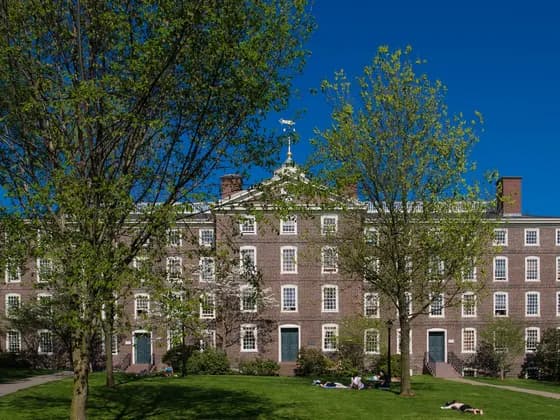
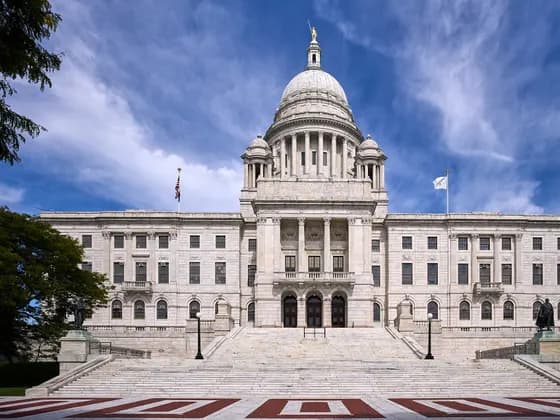

Photo: Kenneth C. Zirkel · CC BY-SA 4.0 · cropped
Photo: Kenneth C. Zirkel · CC BY-SA 3.0 · Photo: Frank Schulenburg · CC BY-SA 4.0 · Photo: Beyond My Ken · CC BY-SA 4.0
How to get into Brown Alpert Medical School (MD) medicine
Step-by-step: entry requirements, admission tests, personal statement, interview format and the key deadlines.
Open the guide →Brown Alpert Medical School (MD) entry requirements
Admission profile, interview format, decision dates and what makes Brown Alpert Medical School (MD) different.
See the profile →The Brown Alpert Medical School (MD) medicine interview
The Warren Alpert Medical School of Brown University uses a traditional two-interview format — applicants meet individually with a faculty member or physician (30 minutes) and a current medical student (30 minutes), both of whom have read the full application. There are no MMI stations; both sessions are conversational and application-aware.
Brown Alpert is built around a humanistic philosophy of medicine: Pass/No Credit pre-clinical grading, early patient contact from Week 1 via the *Doctoring* course, and a student culture that prizes curiosity over competition. Interviewers are evaluating whether you genuinely embrace this philosophy — not just whether you scored well enough to be here.
Expect questions that probe the AAMC Premed Competencies, with particular emphasis on the professional competencies and evidence of authentic intrinsic motivation.
Brown Alpert Medical School (MD) interview at a glance (2027 entry)
| Annual MD class size | ~144 (incl. PLME track) |
|---|---|
| Interview format | Traditional — 1 faculty session + 1 student session, ~30 min each |
| Pre-clinical grading | Pass / No Credit |
| Application system | AMCAS |
| Interview window | October–February |
| MCAT median (est.) | ~516 |
Interview format
- Two separate 30-minute individual interviews: one faculty/physician, one current medical student.
- Both interviewers have reviewed the full application — expect specific follow-up on experiences, research, and secondary essays.
- Full interview day includes Rhode Island Hospital tour, admissions group session, and student lunch.
- No MMI, no standardized scenarios — purely conversational.
- Student interviewer session is informal but evaluations are submitted to the admissions committee.
Working towards the MCAT score Brown Alpert Medical School (MD) expects? Build a week-by-week plan from your test date — free for the first two weeks.
Sample interview questions
Why Brown Alpert specifically — what is it about the Doctoring curriculum and Pass/No Credit philosophy that resonates with how you learn?
Show genuine alignment with intrinsic motivation and the patient-from-Week-1 model. Reference specific Doctoring sequences, the physician-patient relationship focus, and why you prefer this over rank-based systems.
What would you be doing if not medicine, and what does that alternative tell us about who you are?
Brown values intellectual breadth — a thoughtful alternative path (writing, public health, law, science) demonstrates sustainable curiosity beyond career ambition. Avoid saying you could only ever be a physician.
A patient with a terminal diagnosis says they want to stop all curative treatment and focus on quality of life. Their family strongly disagrees. How do you navigate this?
Address patient autonomy, informed consent, goals-of-care conversations, family dynamics, palliative care introduction, and the importance of not abandoning the patient regardless of outcome.
Should medical school be free, subsidized by the government? Defend your position.
Argue a position while acknowledging counterarguments. Reference physician workforce distribution effects, loan forgiveness (NHSC, PSLF), international models (UK, Canada), and how tuition affects specialty choice.
Tell me about a moment in a clinical or community setting that challenged your assumptions about a patient. How did you respond?
Show genuine reflection on bias and cultural humility — not just a crisis averted. Brown places high value on the physician's inner life and self-awareness.
Describe the most intellectually challenging idea you have grappled with — in any field. What made it difficult, and what did the struggle teach you?
This is a liberal-arts question in a medical school interview. Show genuine curiosity and comfort with uncertainty. The field doesn't need to be medical.
Social media platforms have enabled widespread medical misinformation. What responsibility do physicians have to engage publicly to correct it?
Discuss physician advocacy, risks of individual social media engagement (liability, misinterpretation), institutional communication channels, and media training in medical education.
How has your background shaped the kind of physician you want to become?
Post-SCOTUS holistic review. Be specific — Brown values authentic personal narrative. Connect lived experience to a concrete vision of your clinical practice.
Describe a time you had a significant disagreement with someone you respected. How was it resolved?
Show mature conflict resolution — active listening, seeking to understand before being understood, willingness to update your view. Avoid "I was right and convinced them" narratives.
AI is beginning to generate clinical notes and diagnosis suggestions. Should physicians be required to disclose to patients when AI contributed to their care?
Address informed consent principles, transparency, accountability, liability, and what "contributed" means across a spectrum of AI involvement from autocomplete to diagnostic decision support.
Your student interviewer mentions that a peer in their small-group Doctoring session keeps dominating discussion and shutting down quieter classmates. Talk through how you, as a new student, would help rebalance the group.
Brown's pedagogy is small-group and collaborative. Show you would address it constructively — model inclusive facilitation, speak to the peer privately and without blame, and raise it with the facilitator if it persisted. Avoid framing yourself as the hero who fixes the group.
You read that a new screening test has 95% sensitivity and 95% specificity, but the condition affects only 1 in 1,000 people. A patient tests positive and is terrified. How do you interpret and explain this?
Reason through positive predictive value with low prevalence — most positives will be false positives. Brown values quantitative literacy and the ability to translate it humanely: convey the number that matters to the patient, recommend confirmatory testing, and manage the fear without dismissing it.
A faculty interviewer asks you to teach them something you understand deeply that has nothing to do with medicine. Pick a topic and explain it.
This tests intellectual range and the ability to make ideas accessible — exactly the curiosity Brown's liberal-arts identity prizes. Choose something you genuinely love, build from first principles, gauge their engagement, and convey delight rather than recitation.
A close friend in your class confides that they fabricated part of a research result that is about to be submitted for publication with both your names on it. What do you do?
Research integrity is non-negotiable. Address your own name on the work, the duty to correct the record before publication, a direct conversation with the friend, and escalation to the PI if they refuse. Acknowledge the personal cost while holding the ethical line.
Pass/No Credit removes the external reward of grades. Tell us about a time you pursued something hard with no grade, ranking, or external recognition attached. What sustained you?
This directly probes the intrinsic motivation Brown selects for. Show genuine internal drive — a self-taught skill, a long project, an unrewarded service commitment — and reflect honestly on what kept you going when no one was scoring you.
Practise the Brown Alpert Medical School (MD) interview
Rehearse the real format before the day — on demand with our AI interviewers, or live with a tutor.
Sit a mock with photoreal AI interviewers — any time
A timed MMI or panel interview on video — American & international voices — with interviewers who listen, react and press with follow-ups. Rubric-scored feedback and a replay the moment you finish.






Live mocks with a tutor who’s been in the room
A full Brown Alpert Medical School (MD)-style mock with a medic or dentist tutor — honest scoring against real marking criteria, a station-by-station debrief and a written action plan.
Book a mock interviewHow to prepare for the Brown Alpert Medical School (MD) interview
Common pitfalls to avoid
Brown Alpert Medical School (MD) interview — frequently asked questions
Sources & official admissions information
Ready to nail your Brown Alpert Medical School (MD) interview?
Book a mock interview with a tutor who knows the US interview formats, orpractice unlimited stations from our interview question bank.