US Medicine · 2027 Entry

Brown Alpert Medical School (MD) Medical School2027 Entry Requirements & Interview Format

Location Providence, RI, United StatesEstablished 1975Interviews October–FebruaryDecisions March 30 (AAMC standard)

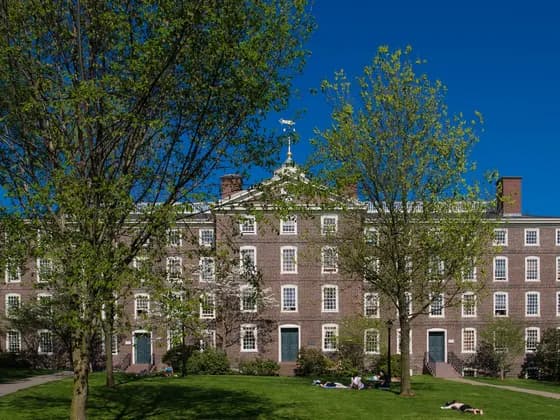
Photo: Kenneth C. Zirkel · CC BY-SA 4.0

Start here
Overview

About Brown Alpert Medical School (MD)

The Warren Alpert Medical School of Brown University, founded in 1975 (with roots in Brown's integrated undergraduate medical program dating to 1963), is a private medical school located in Providence, Rhode Island. It is closely associated with Brown University's liberal arts tradition and is known for its PLME 8-year combined program, its Pass/No Credit pre-clinical grading philosophy, and an early clinical curriculum called Doctoring. The school is affiliated with Rhode Island Hospital, The Miriam Hospital, and other Lifespan and Care New England hospitals providing comprehensive clinical training across specialties.

What makes it different

Brown Alpert is best known for its 8-year Program in Liberal Medical Education (PLME), a combined BA/ScB/MD track for undergraduates that produces ~50 of each ~144-student class. The school operates on a Pass/No Credit grading system for pre-clinical years, emphasizing intrinsic motivation over rank-based competition. The Doctoring curriculum integrates early patient contact from the first week of medical school. Affiliation with Rhode Island Hospital and Lifespan Health System provides strong clinical training.

Course & teaching

Integrated curriculum. 4-year MD (standard track) or 8-year PLME combined program. Years 1–2: pre-clinical Doctoring curriculum with patient contact from Week 1; Pass/No Credit grading. Years 3–4: clinical rotations at Rhode Island Hospital, Miriam Hospital, Women & Infants Hospital, and other Lifespan/Care New England sites. Strong emphasis on the physician-patient relationship throughout.

Research strengths

Brown Alpert Medical School (MD) has notable research strength in Global health, Cancer biology, Neuroscience, Health equity, Social determinants of health.

Interview

Brown Alpert Medical School (MD) interviews via Traditional one-on-one interviews — typically two separate sessions with faculty and a current student. Brown Alpert interview day is held in Providence and includes two individual 30-minute interviews — one with a faculty member or physician and one with a current medical student. Interviewers read the full application in advance and probe motivation for medicine, understanding of the Alpert curriculum and its Doctoring philosophy, and personal values around equity and service. Applicants tour Rhode Island Hospital and the medical school building, attend a group session with the admissions office, and have lunch with students. The PLME (Program in Liberal Medical Education) combined 8-year track attracts a distinctly motivated applicant; standard MD applicants should demonstrate genuine alignment with Brown's non-traditional, student-centered learning philosophy.

Intake

Approximately 144 students per year (including PLME and standard MD tracks).

At a glance

Founded in 1975, based in Providence, RI. Programmes offered: Primary Care, Global Health, Neuroscience, Public Health, Biomedical Research.

Entry requirements

What you need to apply to Brown Alpert Medical School (MD)

Admission overview
Bachelor's degree and MCAT required for standard MD track; PLME applicants apply during high school. Applications via AMCAS. No specific prerequisite major; liberal arts backgrounds are valued. Brown values intellectual curiosity, community commitment, and alignment with a humanistic philosophy of medicine. Secondary application required.
MCAT median
516 (range 514–524)
GPA median
3.84 overall / 3.83 science (BCPM)
Acceptance rate
3.3%
Class size
144
In-state preference
None
CASPer
Not required
AAMC PREview
Not required
Holistic review emphasis
Intellectual curiosity; alignment with humanistic Pass/No Credit philosophy; early clinical engagement (Doctoring); global health and equity commitment.
Notes
Estimates from public AAMC FACTS / Alpert class profile; verify current cycle.
Specialities offered
Primary Care, Global Health, Neuroscience, Public Health, Biomedical Research
Interview

How Brown Alpert Medical School (MD) interviews applicants

Format
Traditional one-on-one interviews — typically two separate sessions with faculty and a current student
Interview window
October–February
Decision date
March 30 (AAMC standard)
Post-interview chances
Estimated post-interview acceptance rate approximately 20–30%; the interview pool is highly competitive and already filtered for academic excellence and mission alignment.
Tutor insight
Brown Alpert's Pass/No Credit philosophy and PLME track signal a particular culture — interviewers are looking for intrinsically motivated applicants who embrace learning for its own sake, not rank-chasers. The "Doctoring" course begins Week 1 with real patient interaction, so be able to articulate why early patient contact excites you. If you are a standard MD applicant (not PLME), be explicit about why you chose not to go through PLME and what the 4-year track offers you at this stage. The school has strong global health infrastructure — if this is a genuine interest, leverage it. Rhode Island's small size creates a tight-knit class community, so demonstrate awareness of this in your "why Brown" framing.
Practice

Practise for your Brown Alpert Medical School (MD) interview

PrometheusQuestion Bank621 medicine questions inside

Interview questions matched to Brown Alpert Medical School (MD)

Two questions our tutors flagged as a strong fit for Brown Alpert Medical School (MD)’s interview style. Try answering them out loud, then open Prometheus for the model answers and follow-up tips.

MediumMMI · PanelQ1

Motivation: Why Medicine and Not Another Health Profession

You clearly value patient care, but nurses, physician assistants, and nurse practitioners all care for patients — and several of those paths are shorter and less expensive than the MD or DO route. Why medicine specifically, rather than one of these other health careers?

Likely follow-up · What did you observe about the physician's role, versus the PA's or NP's, that made you choose the longer path?

3 expert tips in Prometheus
HardMMI · PanelQ2

US Healthcare Ethics: The Coverage Gap

Millions of low-income adults in non-Medicaid-expansion states fall into a coverage gap: their income is too high to qualify for Medicaid under their state's rules but too low to receive marketplace subsidies under the ACA. A patient in your clinic is one of them -- she has Type 2 diabetes, cannot afford insulin, and is rationing doses. Her state has not expanded Medicaid. What are the ethical obligations of her physician, and what practical options exist?

Likely follow-up · What is the difference between a physician's duty to an individual patient and a physician's duty to advocate for systemic change?

3 expert tips in Prometheus
Get support

Apply to Brown Alpert Medical School (MD) with confidence

We've helped students into Brown Alpert Medical School (MD) and other US medicine schools — get tailored support for each stage of the application.

FAQ

Brown Alpert Medical School (MD) — frequently asked questions

Apply to Brown Alpert Medical School (MD) with confidence

We've helped students turn their MCAT, personal statement and interview prep into offers from Brown Alpert Medical School (MD) and other US medicine schools.