
Oakland University William Beaumont School of Medicine Interview
Format, Questions & Prep Tips
Oakland University William Beaumont School of Medicine medicine interviews for 2027 entry are a traditional interview. Published figures: Annual MD class size ~125; Tuition Private school rates (~USD 63,000–65,000/year; verify).
- Institution
- Oakland University William Beaumont School of Medicine
- Interview (2027 entry)
- October through February; rolling invitations after secondary review
- Decisions (2027 entry)
- Rolling decisions; final offers by late March; waitlist activity through summer

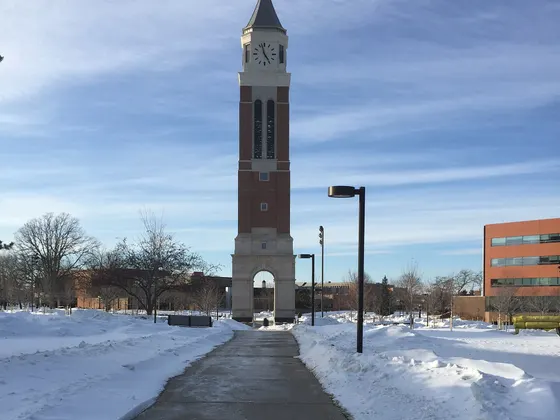
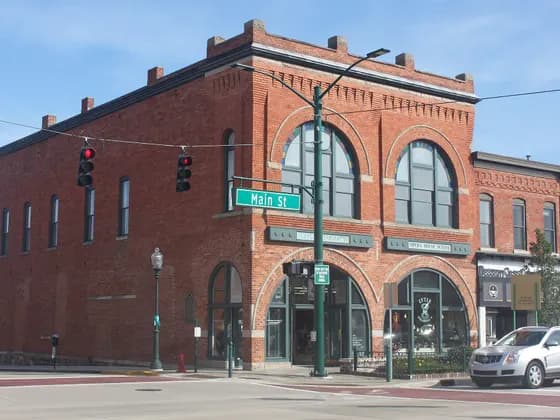
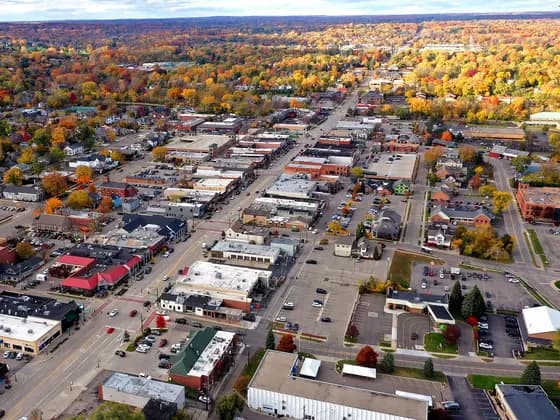
Photo: Kelocyde · CC BY-SA 4.0 · cropped
Photo: Local hero · CC BY-SA 4.0 · Photo: Darren56brown · CC BY-SA 4.0 · Photo: Lrgjr72 · CC BY-SA 4.0
How to get into Oakland University William Beaumont School of Medicine (MD) medicine
Step-by-step: entry requirements, admission tests, personal statement, interview format and the key deadlines.
Open the guide →Oakland University William Beaumont School of Medicine (MD) entry requirements
Admission profile, interview format, decision dates and what makes Oakland University William Beaumont School of Medicine (MD) different.
See the profile →The Oakland University William Beaumont School of Medicine (MD) medicine interview
OUWB's virtual interview day comprises three separate short semi-blinded mini-interviews (with a student, staff or faculty member, or alumnus) plus one longer one-on-one interview with a faculty physician. It is not a station-based MMI.
Expect MMI stations that probe the AAMC Premed Competencies, with emphasis on team-based reasoning, professionalism, and communication under pressure — skills directly relevant to the high-acuity Corewell clinical environment. Interviewers include faculty physicians, community clinicians, and standardized patients.
Because OUWB is private despite its public university affiliation, tuition is at full private-school rates, and interviewers may probe applicant commitment and financial awareness. The school’s simulation-heavy pre-clerkship curriculum is a distinctive feature — candidates should be prepared to discuss how they learn best.
Oakland University William Beaumont School of Medicine (MD) interview at a glance (2027 entry)
| Annual MD class size | ~125 |
|---|---|
| Interview format | Three short semi-blinded mini-interviews + one faculty one-on-one (virtual) |
| Application system | AMCAS + OUWB secondary |
| Interview window | October–February |
| Clinical training | Corewell Health (formerly Beaumont) hospital system, Southeast Michigan |
| Tuition | Private school rates (~USD 63,000–65,000/year; verify) |
Interview format
- Three short semi-blinded interviews with a student, staff/faculty member, or alumnus.
- One longer one-on-one interview with a faculty physician.
- Semi-blinded means some interviewers see limited application details — introduce yourself fully each time.
Working towards the MCAT score Oakland University William Beaumont School of Medicine (MD) expects? Build a week-by-week plan from your test date — free for the first two weeks.
Sample interview questions
OUWB is a private medical school affiliated with Oakland University — a public institution. Why did you choose OUWB specifically, and what does the Corewell Health partnership mean to your training goals?
Demonstrate research into Corewell Health's system (Royal Oak, Troy, Dearborn facilities), OUWB's simulation-based pre-clerkship, and the Southeast Michigan clinical environment.
You are a third-year student and you observe your resident ordering a test you believe is medically unnecessary for the patient. What do you do?
Navigate hierarchy vs. patient advocacy. Ask the resident for their reasoning first (you may be wrong). If unconvinced, escalate to attending through the chain of command.
Role play: A post-operative patient is anxious and refusing to ambulate as ordered. You are the medical student. How do you engage with them?
Listen, validate, explain clinical rationale, and problem-solve (pain management, assistance options). Do not demand compliance. Shows patient-centered communication.
AI diagnostic tools can now detect certain cancers earlier than experienced radiologists. Should hospitals be required to use AI as a first-read tool? What responsibilities do physicians retain?
Address AI accuracy, liability, informed consent for AI-assisted care, edge-case failures, and the physician's irreplaceable interpretive and patient-communication role.
Southeast Michigan has faced significant industrial decline and its communities have disproportionately high rates of chronic disease. How should the healthcare system respond?
Reference Detroit/Flint post-industrial health context. Apply social determinants framework: employment, environment, housing. Discuss community health worker models and Federally Qualified Health Centers.
OUWB uses a simulation-heavy pre-clerkship curriculum. How do you learn best, and how does simulation-based learning fit your learning style?
Be honest and specific. If you have prior simulation experience (standardized patients, OSCEs, procedure labs), reference it. Demonstrate that you understand why simulation complements lecture-based learning.
A hospital administrator pressures you to discharge a patient earlier than you believe is medically safe, citing bed capacity needs. How do you respond?
Patient safety is non-negotiable. Address the chain of command, documentation of the clinical decision, and the concept of premature discharge as a patient safety event.
Tell me about a time you made a mistake in a professional or academic setting. How did you handle it, and what did you learn?
Do not minimize or blame others. Show self-awareness, accountability, corrective action, and what you did differently as a result.
What quality do you have that you think will make you an exceptional team-based clinician in a high-volume health system?
Be specific and give an example. High-volume health system medicine requires communication, reliability, and the ability to hand off cleanly — demonstrate those qualities.
Should physicians be mandated reporters of child abuse even when doing so may prevent future trust-based disclosure from patients in similar situations?
Address mandatory reporting laws, the duty to protect, the child's safety as paramount, and the long-term physician-patient trust question. Both sides have validity — reason through them.
Station: you are shown validation data for an AI mammography tool reporting higher sensitivity than radiologists but a higher false-positive rate, tested mostly on one demographic group. In your station time, interpret whether this supports deploying it as a first-read tool.
Be concise for the 8-minute station: weigh the sensitivity gain against false-positive harms (biopsies, anxiety) and flag the external-validity problem of a narrow validation population. Connect to OUWB's interest in technology in the high-volume Corewell environment.
Station role play: a patient scheduled for a procedure is distressed because the consent form mentions an AI tool will help interpret their imaging, and they say they 'don't want a computer deciding' their care. You are the medical student. How do you respond?
Demonstrate the encounter live. Clarify the physician's retained role, address the autonomy and consent concern honestly, and avoid dismissing the worry. Tests communication about emerging technology, a recurring OUWB theme.
Station: OUWB's pre-clerkship is simulation-heavy. How do you turn a simulated encounter — where the stakes are artificial — into genuine learning that transfers to real high-volume Corewell wards?
Thinking & Reasoning and metacognition. Show you take simulation seriously, use debriefs and feedback deliberately, and understand why simulation complements rather than replaces real clinical exposure.
Station role play: during a simulated team-based task, a teammate confidently proposes a plan you believe is wrong, and the clock is running. How do you raise your concern without derailing the team?
Demonstrate assertive, respectful communication live. Model speaking up for patient safety, inviting the teammate's reasoning, and keeping the team functional — directly relevant to OUWB's team-based station design.
Station: OUWB is private, at full private-school tuition, despite its public-university name. Knowing the cost, what makes the OUWB and Corewell training environment worth that investment for you specifically?
Show financial awareness without dwelling on it. Anchor the answer in the simulation curriculum, the high-volume Corewell clinical exposure, and Southeast Michigan's patient population rather than treating OUWB as a public-school backup.
Practise the Oakland University William Beaumont School of Medicine (MD) interview
Rehearse the real format before the day — on demand with our AI interviewers, or live with a tutor.
Sit a mock with photoreal AI interviewers — any time
A timed MMI or panel interview on video — American & international voices — with interviewers who listen, react and press with follow-ups. Rubric-scored feedback and a replay the moment you finish.






Live mocks with a tutor who’s been in the room
A full Oakland University William Beaumont School of Medicine (MD)-style mock with a medic or dentist tutor — honest scoring against real marking criteria, a station-by-station debrief and a written action plan.
Book a mock interviewHow to prepare for the Oakland University William Beaumont School of Medicine (MD) interview
Common pitfalls to avoid
Oakland University William Beaumont School of Medicine (MD) interview — frequently asked questions
Sources & official admissions information
Ready to nail your Oakland University William Beaumont School of Medicine (MD) interview?
Book a mock interview with a tutor who knows the US interview formats, orpractice unlimited stations from our interview question bank.