
CMU College of Medicine Interview
Format, Questions & Prep Tips
CMU College of Medicine medicine interviews for 2027 entry are multiple mini interviews (MMI). Published figures: Annual MD class size ~100; Interview format Traditional panel — faculty + student, ~30–45 min each; First graduating class 2017.
- Institution
- Covenant HealthCare College of Medicine at Central Michigan University
- Interview (2027 entry)
- October through February; rolling invitations
- Decisions (2027 entry)
- Rolling decisions; final offers by late March; waitlist activity through summer

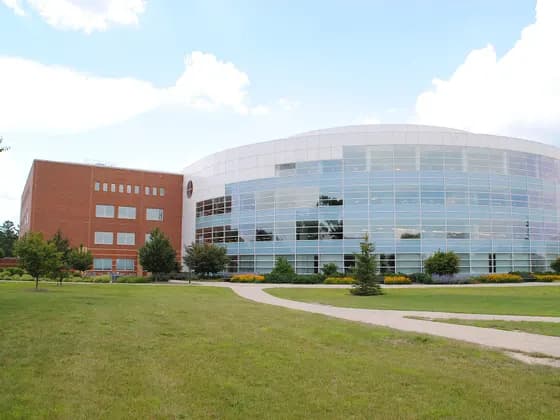
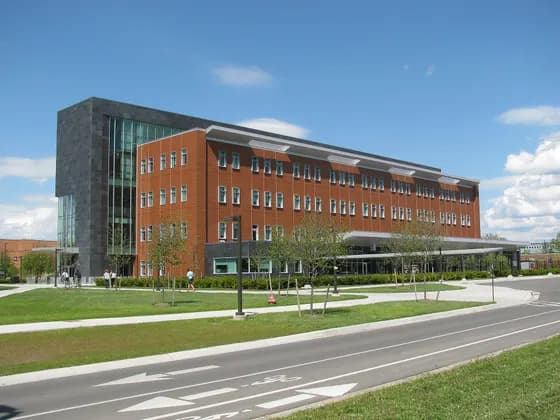
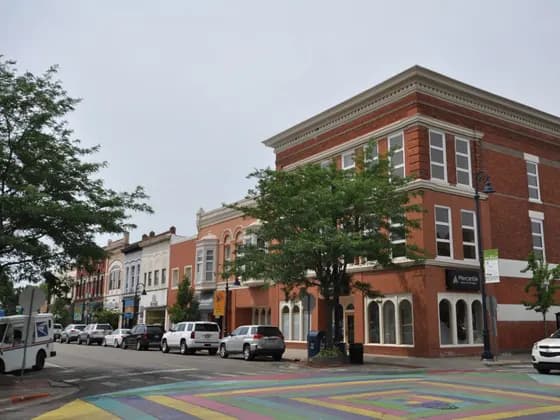
Photo: Cjh1452000 · Public domain · cropped
Photo: Cjh1452000 · Public domain · Photo: cjh1452000 · Public domain · Photo: Magicpiano · CC BY-SA 4.0
How to get into CMU College of Medicine (MD) medicine
Step-by-step: entry requirements, admission tests, personal statement, interview format and the key deadlines.
Open the guide →CMU College of Medicine (MD) entry requirements
Admission profile, interview format, decision dates and what makes CMU College of Medicine (MD) different.
See the profile →The CMU College of Medicine (MD) medicine interview
The Covenant HealthCare College of Medicine at Central Michigan University uses a traditional panel interview format, with faculty physicians and a medical student evaluating candidates in a conversational setting. As one of the newest MD programs in the United States (first graduating class 2017), CMU Med is still building its national reputation but has a well-defined mission: producing physicians who practice in rural and underserved Michigan communities.
Expect questions that probe the AAMC Premed Competencies, with particular emphasis on interpersonal communication, community commitment, and resilience — qualities valued in rural primary care physicians. Because the class is small (~100 students), every candidate is assessed carefully for holistic fit with the school’s community-based distributed training model.
Applicants should be prepared for frank questions about their commitment to Michigan medicine and their openness to community-based distributed clinical training across the state.
CMU College of Medicine (MD) interview at a glance (2027 entry)
| Annual MD class size | ~100 |
|---|---|
| Interview format | Traditional panel — faculty + student, ~30–45 min each |
| Application system | AMCAS + CMU secondary |
| Interview window | October–February |
| Clinical training | Distributed across rural and semi-rural Michigan sites |
| First graduating class | 2017 |
Interview format
- Traditional one-on-one panel interview: one faculty physician and one medical student, each in a separate session.
- Sessions are approximately 30–45 minutes; conversational and open-ended.
- Interviewers have read the full application in advance.
- Interview day includes campus tour (Mount Pleasant), Covenant HealthCare facility visit in Saginaw, admissions briefing, and student Q&A.
- No MMI stations; evaluation is holistic and competency-weighted.
- Candidates may be asked about their willingness to train and practice at distributed Michigan sites.
Working towards the MCAT score CMU College of Medicine (MD) expects? Build a week-by-week plan from your test date — free for the first two weeks.
Sample interview questions
CMU Med was established specifically to train rural Michigan physicians. Why does that mission resonate with you?
Be specific about rural Michigan communities, personal ties, or clinical experiences in underserved settings. Generic "I want to help people" answers are screened out here.
Why did you choose CMU Med over more established Michigan medical schools like Wayne State or MSU?
Demonstrate genuine research into the distributed community training model, Covenant HealthCare partnership, and primary care focus. Do not answer with "lower competition."
A rural patient in a small community requests a specific treatment that you believe is not medically indicated. How do you approach the conversation?
Respect patient autonomy while maintaining evidence-based practice. Address the unique dynamics of small-community medicine — where physician-patient relationships are long-term and personal.
You discover that a colleague in a small-town practice is prescribing opioids more liberally than guidelines recommend. What do you do?
Balance loyalty to a colleague, patient safety, professional reporting duties, and the real-world isolation of rural practice. Identify the escalation pathway.
Tell me about a time you worked effectively in a team where you were not the leader. What was your contribution?
STAR. Emphasize collaborative skills and supporting others — key traits for community-based distributed clinical teams.
What are the most significant health challenges facing rural Saginaw Valley and mid-Michigan communities, and how might a physician address them?
What they are listening for:
- Research Saginaw's opioid epidemic
- Flint water crisis legacy health effects
- rural hospital closures
- primary care shortages
Shows genuine regional awareness.
How do you feel about the prospect of clinical training at distributed community sites across Michigan rather than a single academic medical center?
Show openness and flexibility. Community-based distributed training is the school's defining feature — resistance to it is a red flag.
Should rural hospitals be required to maintain obstetric units even when they are not financially viable? What is the physician's responsibility in this debate?
Address maternal health in rural Michigan (the state has significant rural maternity deserts), healthcare economics, and physician advocacy roles.
Describe a time you had to deliver disappointing news to someone. How did you manage their reaction and maintain the relationship?
STAR. Rural physicians often maintain long-term relationships with patients — show you can manage difficult conversations with emotional intelligence.
Where do you see yourself practicing in ten years, and how does CMU Med fit into that vision?
Name a specific Michigan community or region. Vague answers ("somewhere rural") are less convincing than specific ("I want to practice family medicine in the Thumb or Northern Lower Peninsula").
You are shown data showing that several rural mid-Michigan counties have lost their hospital obstetric units over the past decade, alongside a map of rising travel distances to the nearest delivery hospital. How would you interpret the likely consequences, and what would you want to confirm before drawing conclusions?
Demonstrate appraisal: consider maternal and neonatal outcomes, the difference between unit closures and total access loss, and confounders like declining birth rates. Connect to Michigan's rural maternity deserts and CMU's primary care mission without overstating figures.
Role play: you are a student in a small-town clinic where the physician knows nearly every patient. A patient you have just met asks you, as 'the new young doctor,' to weigh in on a treatment her regular physician — who is also her neighbor — recommended, which she is unsure about. Begin the conversation.
Demonstrate the encounter live, navigating small-community dynamics. Avoid undermining the other physician, explore her specific concern, and model how to handle overlapping personal and professional relationships in rural practice.
CMU Med's distributed model means you may learn a procedure or workup at one small site and then apply it at another with different resources. How do you make sure your clinical reasoning travels well between very different settings?
Thinking & Reasoning and adaptability. Show a transferable approach — focusing on underlying principles rather than site-specific routines — that fits the community-based distributed curriculum.
Tell me about a time you had to build trust quickly with a group or community that did not know you, in order to be effective. What did you do?
Interpersonal competency relevant to rotating through multiple distributed Michigan communities. Emphasize listening, reliability, and demonstrating respect for local knowledge early.
Rural practice can mean professional isolation, a broad scope, and being one of few physicians for miles. Knowing the hard parts, what is it about that life that genuinely appeals to you?
Authenticity. CMU screens hard for genuine rural commitment; engaging honestly with the difficulties while affirming the appeal reads far better than an idealized picture.
Practise the CMU College of Medicine (MD) interview
Rehearse the real format before the day — on demand with our AI interviewers, or live with a tutor.
Sit a mock with photoreal AI interviewers — any time
A timed MMI or panel interview on video — American & international voices — with interviewers who listen, react and press with follow-ups. Rubric-scored feedback and a replay the moment you finish.





Live mocks with a tutor who’s been in the room
A full CMU College of Medicine (MD)-style mock with a medic or dentist tutor — honest scoring against real marking criteria, a station-by-station debrief and a written action plan.
Book a mock interviewHow to prepare for the CMU College of Medicine (MD) interview
Common pitfalls to avoid
CMU College of Medicine (MD) interview — frequently asked questions
Sources & official admissions information
Ready to nail your CMU College of Medicine (MD) interview?
Book a mock interview with a tutor who knows the US interview formats, orpractice unlimited stations from our interview question bank.