
Wayne State University School of Medicine Interview
Format, Questions & Prep Tips
Wayne State University School of Medicine medicine interviews for 2027 entry are multiple mini interviews (MMI). Published figures: Annual MD class size ~290–300; Interview format Traditional — faculty ± student, ~45 min.
- Institution
- Wayne State University School of Medicine
- Interview (2027 entry)
- September through February; earlier in the cycle than most Michigan schools
- Decisions (2027 entry)
- Rolling decisions; final offers by late March; waitlist activity through summer
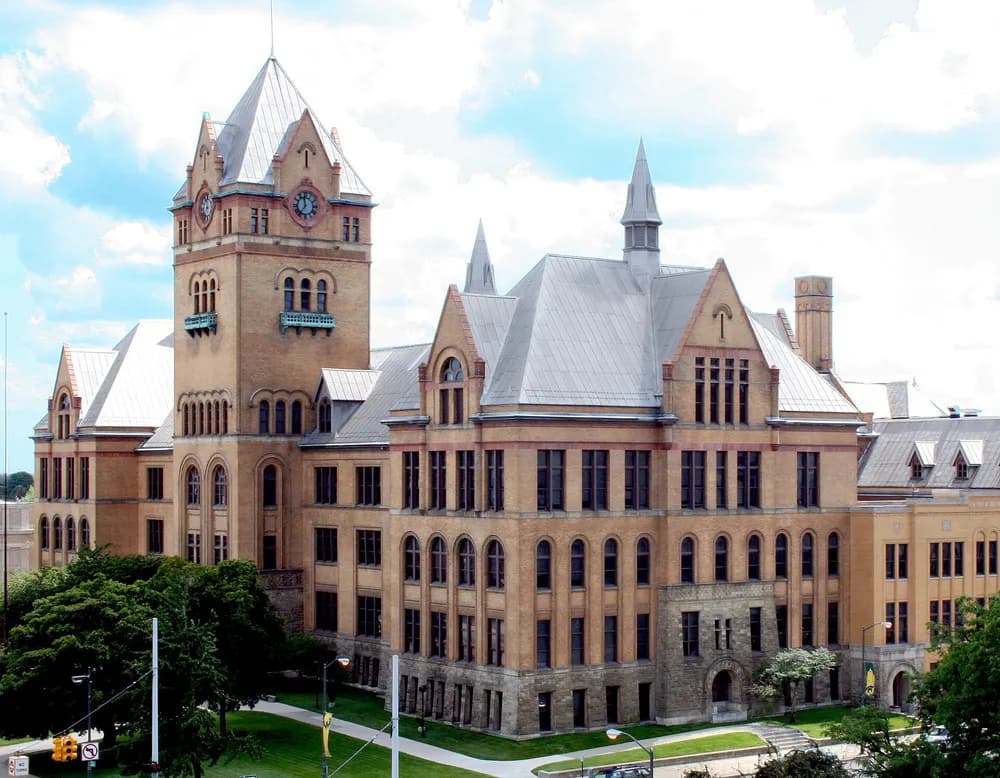

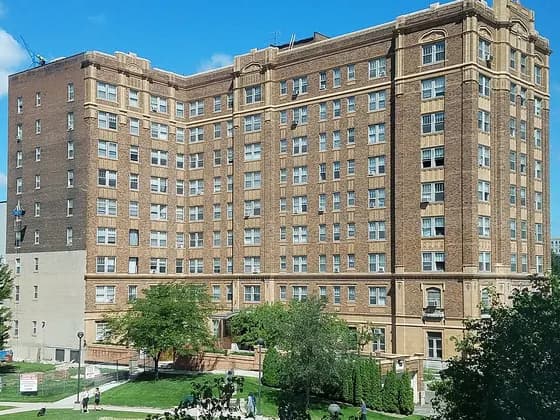
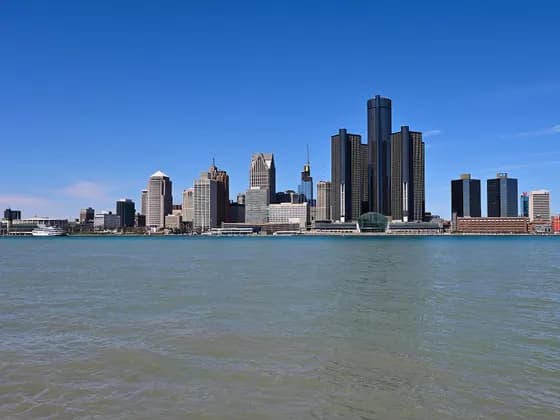
Photo: Del arte at English Wikipedia · CC BY-SA 3.0 · cropped
Photo: Matt Joseph · CC BY-SA 4.0 · Photo: Koen Kleine · CC BY-SA 4.0 · Photo: Andrew Heneen · CC BY 4.0
How to get into Wayne State University School of Medicine (MD) medicine
Step-by-step: entry requirements, admission tests, personal statement, interview format and the key deadlines.
Open the guide →Wayne State University School of Medicine (MD) entry requirements
Admission profile, interview format, decision dates and what makes Wayne State University School of Medicine (MD) different.
See the profile →The Wayne State University School of Medicine (MD) medicine interview
Wayne State University School of Medicine uses a traditional interview format with one-on-one sessions with a faculty physician and/or medical student of approximately 45 minutes each. As Michigan’s largest MD program — and one of the most ethnically diverse medical schools in the United States — Wayne State’s interview culture is shaped by its location in Detroit’s Midtown Medical District and its affiliation with the Detroit Medical Center.
Expect questions that probe the AAMC Premed Competencies, with particular emphasis on service orientation, resilience, and commitment to Detroit’s urban and underserved patient population. Because the school has historically produced more Black and African American physicians than any other Michigan institution, diversity, equity, and inclusion are embedded in the admissions ethos.
Candidates interviewing at Wayne State should be prepared for frank questions about why they want to practice urban medicine in Detroit, and should demonstrate familiarity with the unique health challenges of the city and its surrounding communities.
Wayne State University School of Medicine (MD) interview at a glance (2027 entry)
| Annual MD class size | ~290–300 |
|---|---|
| Interview format | Traditional — faculty ± student, ~45 min |
| Application system | AMCAS + WSU secondary |
| Interview window | September–February |
| Clinical training | Detroit Medical Center (DMC) and affiliated community hospitals |
| Diversity | One of the most ethnically diverse MD programs in the US |
Interview format
- Traditional one-on-one or two-person panel interview with a faculty physician and/or current medical student.
- Sessions approximately 45 minutes; open-ended and conversational.
- Interviewers have read the full application in advance.
- Interview day: tour of DMC and Wayne State campus, admissions briefing, student Q&A panel.
- No MMI format; holistic evaluation emphasizes mission alignment and interpersonal maturity.
- Detroit Medical Center clinical environment is discussed as part of the program overview.
Working towards the MCAT score Wayne State University School of Medicine (MD) expects? Build a week-by-week plan from your test date — free for the first two weeks.
Sample interview questions
Wayne State is Michigan's largest and most diverse medical school, embedded in Detroit. Why are you specifically drawn to training and potentially practicing in Detroit?
Be concrete: name Detroit's specific health challenges (lead exposure, cardiovascular disease, uninsured population), specific DMC facilities (Harper-Hutzel, Children's Hospital of Michigan), and why urban Level I trauma training appeals to you.
Wayne State has produced more Black and African American physicians than any other institution in Michigan. What does training in that environment mean to you as a future physician?
This question tests whether you have a thoughtful perspective on medical education diversity, not just whether you are a minority applicant. Focus on the value of diverse cohorts for all students and patients.
A patient in the ED refuses to disclose whether they have been using drugs because they fear arrest. How do you handle the clinical encounter?
Address confidentiality limitations in clinical settings, trauma-informed care, harm reduction approaches, and the tension between law enforcement information-sharing and patient safety.
You are on overnight call and your attending instructs you to sign off on a note documenting findings you did not observe. What do you do?
Non-negotiable documentation integrity issue. Decline clearly, document what you actually observed, report to program director. Address the power dynamics without capitulating.
Tell me about a time you worked with a patient or person from a different cultural background and had to adapt your communication approach.
STAR. Emphasize cultural humility, using interpreters appropriately, checking assumptions, and adjusting your approach based on feedback.
Detroit has one of the highest rates of childhood asthma in the United States. What are the root causes, and what role should physicians play beyond clinical treatment?
Environmental justice:
- legacy industrial pollution
- housing quality
- I-75 highway diesel exposure
Physician roles in policy advocacy, community partnerships, and social prescribing.
Should health systems in high-poverty urban areas receive higher federal reimbursement rates than suburban hospitals? Argue your position.
Equity-based healthcare financing argument. Reference Disproportionate Share Hospital (DSH) payments, safety-net hospital economics, and the consequences of underfunding urban trauma centers.
You are presenting a patient case and you realize you have forgotten a key piece of the history. Your attending is waiting. What do you do?
Acknowledge the gap honestly and in real time. Offer to follow up. Do not fabricate or deflect. Intellectual honesty in clinical presentations is critical.
What experience in your background best prepared you for the challenges of training in a high-volume urban trauma and safety-net health system?
STAR. Concrete example of working in a high-stress, resource-constrained, or diverse clinical environment. Resilience and adaptability are the key themes.
A terminally ill patient asks you to help them die sooner to avoid suffering. How do you respond, and what options do you explore with them?
Medical aid in dying is not legal in Michigan. Address palliative care, hospice, symptom management, and psychological/spiritual support. Acknowledge the patient's suffering as real and deserving of a response.
You are shown childhood-asthma hospitalization data for Detroit by neighborhood, overlaid with a map of proximity to major freeways and industrial sites. How would you interpret the pattern, and what would you caution against concluding from a map like this?
Demonstrate appraisal: the spatial correlation suggests environmental contribution but does not prove causation at the individual level; consider housing quality, healthcare access, and the ecological fallacy. Connect to Detroit's documented environmental-justice burden without overstating figures.
Role play: you are a student in the Detroit Receiving ED. A patient who has come in repeatedly for uncontrolled diabetes is frustrated and says the doctors 'never listen and just blame me.' Begin the conversation.
Demonstrate the encounter live. Acknowledge his frustration, ask what has not been working from his perspective, and explore structural barriers before any management talk. Tests communication and humility in a safety-net setting.
Detroit's safety-net environment means seeing advanced, under-treated disease alongside acute trauma. How would you reason through prioritizing care for a patient whose multiple chronic problems all feel urgent in a single, time-limited visit?
Thinking & Reasoning under resource constraints. Show structured prioritization, shared agenda-setting with the patient, and realistic follow-up planning rather than attempting to solve everything at once.
Wayne State's cohort is one of the most diverse in the country. Tell me about a time being in a genuinely diverse group changed how you understood a problem you thought you already understood.
Interpersonal competency and intellectual humility. Emphasize a concrete shift in your own thinking, reflecting that Wayne State treats diversity as an active educational asset, not a passive feature.
Urban safety-net medicine in Detroit can be exhausting and the structural problems can feel intractable. What will sustain you in that work over a long career, and how do you know?
Self-awareness. Wayne State weights resilience and genuine commitment heavily; a credible answer draws on real prior experience in demanding, under-resourced settings rather than untested idealism.
Practise the Wayne State University School of Medicine (MD) interview
Rehearse the real format before the day — on demand with our AI interviewers, or live with a tutor.
Sit a mock with photoreal AI interviewers — any time
A timed MMI or panel interview on video — American & international voices — with interviewers who listen, react and press with follow-ups. Rubric-scored feedback and a replay the moment you finish.






Live mocks with a tutor who’s been in the room
A full Wayne State University School of Medicine (MD)-style mock with a medic or dentist tutor — honest scoring against real marking criteria, a station-by-station debrief and a written action plan.
Book a mock interviewHow to prepare for the Wayne State University School of Medicine (MD) interview
Common pitfalls to avoid
Wayne State University School of Medicine (MD) interview — frequently asked questions
Sources & official admissions information
Ready to nail your Wayne State University School of Medicine (MD) interview?
Book a mock interview with a tutor who knows the US interview formats, orpractice unlimited stations from our interview question bank.