
WMed — Homer Stryker School of Medicine Interview
Format, Questions & Prep Tips
WMed medicine interviews for 2027 entry are multiple mini interviews (MMI). Published figures: Annual MD class size ~86; Interview format MMI — 8 stations, ~8 min each, in person.
- Institution
- Western Michigan University Homer Stryker M.D. School of Medicine
- Interview (2027 entry)
- October through February; rolling invitations after secondary review
- Decisions (2027 entry)
- Rolling decisions; final offers by late March; waitlist activity through summer

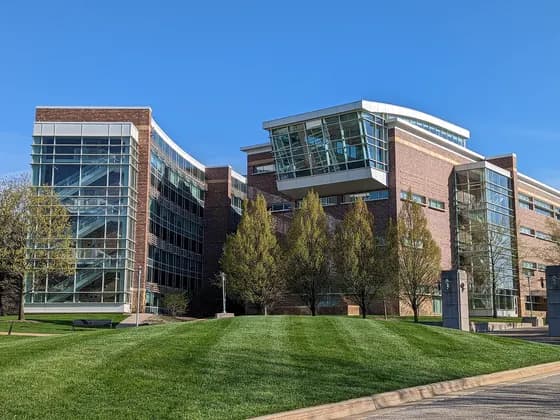
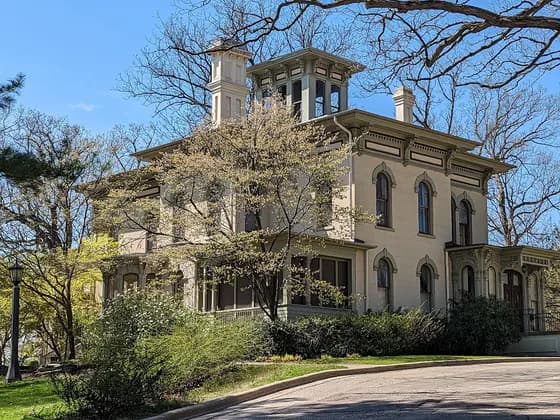
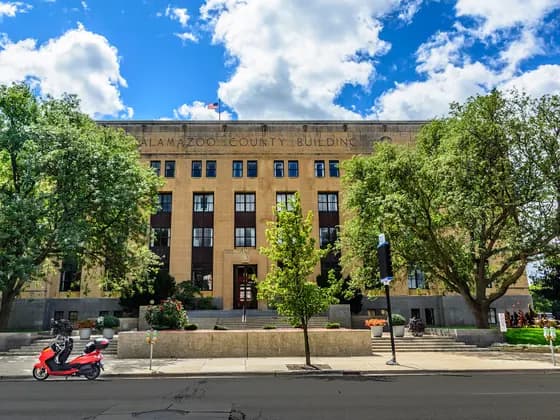
Photo: MSwierenga · CC BY-SA 4.0 · cropped
Photo: MSwierenga · CC BY-SA 4.0 · Photo: MSwierenga · CC BY-SA 4.0 · Photo: Charles W. Chapman · CC BY-SA 4.0
How to get into WMed — Homer Stryker School of Medicine (MD) medicine
Step-by-step: entry requirements, admission tests, personal statement, interview format and the key deadlines.
Open the guide →WMed — Homer Stryker School of Medicine (MD) entry requirements
Admission profile, interview format, decision dates and what makes WMed — Homer Stryker School of Medicine (MD) different.
See the profile →The WMed — Homer Stryker School of Medicine (MD) medicine interview
Western Michigan University Homer Stryker M.D. School of Medicine (WMed) uses an **MMI (Multiple Mini-Interview) format with 8 stations of approximately 8 minutes each, held in person at the purpose-built WMed Education Center in downtown Kalamazoo. WMed is one of the best-funded new US medical schools — endowed by a \$100 million Stryker family gift — and uses a fully problem-based learning (PBL) curriculum** with no traditional lectures in the pre-clerkship phase.
The MMI is the centerpiece of an admissions process that explicitly screens for self-directed learners. Expect questions that probe the AAMC Premed Competencies, but the PBL-fit screen runs through every station — candidates who describe themselves as passive lecture-dependent learners will struggle here.
With a small class of approximately 60 students, WMed is one of Michigan’s most selective schools on a per-seat basis. Every applicant who reaches the interview stage is scrutinized carefully for intellectual depth, self-motivation, and genuine fit with a small-cohort PBL environment.
WMed — Homer Stryker School of Medicine (MD) interview at a glance (2027 entry)
| Annual MD class size | ~86 |
|---|---|
| Interview format | MMI — 8 stations, ~8 min each, in person |
| Application system | AMCAS + WMed secondary |
| Interview window | October–February |
| Curriculum | Fully PBL — no traditional lectures in pre-clerkship |
| Clinical training | Bronson Methodist Hospital and Ascension Borgess Hospital, Kalamazoo |
Interview format
- MMI with 8 stations; each approximately 8 minutes; brief preparation time at each station door.
- Station types: ethical dilemma, communication role-play, collaborative reasoning, and personal/professional reflection.
- Interviewers include faculty physicians, community clinicians, and standardized patients; some stations use non-physician community evaluators.
- Interview day: WMed Education Center tour (purpose-built downtown Kalamazoo facility), student panel, admissions briefing.
- PBL self-direction aptitude is assessed implicitly across multiple stations.
- Small cohort environment — composure and interpersonal attunement are highly visible.
Working towards the MCAT score WMed — Homer Stryker School of Medicine (MD) expects? Build a week-by-week plan from your test date — free for the first two weeks.
Sample interview questions
WMed uses a fully problem-based learning curriculum with no traditional lectures. How does that learning model align with how you have learned most effectively in the past?
Be honest and specific. Describe a self-directed learning experience — not just a class where you "taught yourself." PBL fit is the primary screen.
WMed was endowed by the Stryker family — Homer Stryker was an orthopedic surgeon and inventor. How does that legacy of innovation and craftsmanship shape your view of medicine?
Shows school-specific research. Discuss physician-innovator identity, the craft of medicine, and Stryker Corporation's orthopedic legacy as a connection point.
In a small-group PBL session, one of your group members consistently dominates discussion and dismisses others' contributions. How do you handle this?
PBL-specific interpersonal scenario. Address group dynamics, the educational value of diverse perspectives, and the appropriate escalation to a facilitator vs. peer-level resolution.
You discover a factual error in the case materials your PBL group has been working from. The error led the group to a wrong differential. What do you do?
What they are listening for:
- Intellectual integrity
- correction in the group learning environment
- whether to report the case error to the faculty
Also a signal about how you handle mistakes in group learning.
You are working with a standardized patient and you do not know the answer to a clinical question they ask. How do you respond in the moment?
Demonstrate intellectual honesty, professional communication, and the ability to not pretend competence you do not have. "I will find out" is a professional answer — followed through on.
Kalamazoo has historically had significant health disparities despite being home to a major pharmaceutical industry base. What do you know about this, and what role might a community-based physician play?
What they are listening for:
- Research Kalamazoo's pharmaceutical history (Pharmacia/Pfizer/Upjohn legacy)
- the southwest Michigan opioid epidemic
- rural healthcare access
Shows genuine local knowledge.
WMed is a small school with approximately 60 students per class. What do you gain from a small cohort environment, and what challenges do you anticipate?
Small cohort means deeper relationships but also less anonymity. Discuss collaborative learning, accountability, peer mentorship, and the psychological challenges of a highly visible program.
A pharmaceutical representative offers to provide free educational lunch-and-learn sessions for your PBL group. The content is accurate but promotional. Should your group accept?
Medical education industry relationships and conflict of interest. Most academic medical centers restrict or prohibit pharma-sponsored events — discuss the reasoning and alternatives.
Tell me about a project you pursued independently — outside of required coursework — because you were genuinely curious about the topic.
Self-directed inquiry is the hallmark of a PBL learner. The project does not need to be medical — intellectual curiosity and independence are the signal.
Should hospitals be required to treat patients regardless of ability to pay? Who bears the cost of uncompensated care?
What they are listening for:
- EMTALA
- safety-net funding mechanisms
- the economics of uncompensated care
Engage with both the ethical obligation and the structural funding challenge.
Station: in your PBL group you are handed a study abstract reporting that a new treatment 'significantly improved outcomes,' but the absolute risk reduction is small and the number needed to treat is high. In your station time, explain how you would help your group interpret this.
Be concise for the 8-minute station: distinguish statistical significance from clinical significance, explain NNT plainly, and model the self-directed appraisal mindset WMed's PBL curriculum demands. Show reasoning, not just a verdict.
Station role play: a member of your small PBL group has clearly not done the preparation again, and the group's learning is suffering, but confronting people makes you uncomfortable. The facilitator is not present. How do you address it?
Demonstrate the conversation live. Address the behavior and its impact on shared learning directly but respectfully, attempt peer-level resolution before escalating, and preserve the working relationship — a quintessential PBL interpersonal scenario.
Station: WMed's PBL model expects you to identify your own knowledge gaps and fill them without lectures. Walk me through a time you genuinely did not understand something important and had to teach it to yourself.
Thinking & Reasoning and self-direction — WMed's central screen. Describe identifying the gap, finding and appraising sources, and verifying your understanding, rather than claiming you simply 'studied independently.'
Station role play: you are working with a standardized patient who keeps steering the conversation away from the clinical issue toward an unrelated worry. With limited time, how do you balance their concern with the task you need to complete?
Demonstrate live the skill of acknowledging a concern, gently redirecting, and not steamrolling the patient. Tests patient-centered communication and time management in an MMI station.
Station: WMed's identity is tied to Homer Stryker, a physician-inventor, and to a small 60-student cohort. Which of those — the innovator ethos or the intimate cohort — matters more to your decision to come here, and why?
Clarity of purpose grounded in WMed's distinctive context. A genuine answer engages with the physician-inventor culture and the realities of a small, highly visible cohort rather than offering generic enthusiasm for the school.
Practise the WMed — Homer Stryker School of Medicine (MD) interview
Rehearse the real format before the day — on demand with our AI interviewers, or live with a tutor.
Sit a mock with photoreal AI interviewers — any time
A timed MMI or panel interview on video — American & international voices — with interviewers who listen, react and press with follow-ups. Rubric-scored feedback and a replay the moment you finish.






Live mocks with a tutor who’s been in the room
A full WMed — Homer Stryker School of Medicine (MD)-style mock with a medic or dentist tutor — honest scoring against real marking criteria, a station-by-station debrief and a written action plan.
Book a mock interviewHow to prepare for the WMed — Homer Stryker School of Medicine (MD) interview
Common pitfalls to avoid
WMed — Homer Stryker School of Medicine (MD) interview — frequently asked questions
Sources & official admissions information
Ready to nail your WMed — Homer Stryker School of Medicine (MD) interview?
Book a mock interview with a tutor who knows the US interview formats, orpractice unlimited stations from our interview question bank.