WMed — Homer Stryker School of Medicine (MD) Medical School - 2027 Entry Requirements & Interview Format
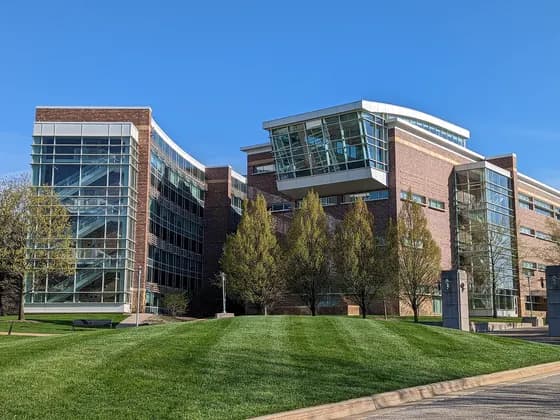
Western Michigan University Homer Stryker M.D. School of Medicine (WMed), established in 2012 in Kalamazoo, Michigan, was created through a landmark $100 million gift from the family of Homer Stryker, the orthopaedic surgeon who founded Stryker Corporation. The school uses a fully problem-based learning (PBL) curriculum and is housed in a purpose-built education and biomedical research complex in downtown Kalamazoo. Clinical training occurs at Bronson Methodist Hospital, Ascension Borgess Hospital, and a network of community sites. WMed emphasises self-directed learning, interprofessional education, and physician advocacy.
Entry Requirements
What you need to apply to WMed — Homer Stryker School of Medicine (MD).
Admission overview
Bachelor's degree and MCAT required. Michigan residents preferred; national applicants considered. Strong academic record, evidence of self-directed learning, clinical and research experience valued. Application via AMCAS; secondary required.
MCAT median
513 (range 508–518)
GPA median
3.76 overall / 3.70 science (BCPM)
Acceptance rate
2.0%
Class size
86
In-state preference
Moderate — some OOS consideration
In-state matriculants
49%
CASPer
Not required
Holistic review emphasis
Self-directed learning mindset, PBL aptitude, clinical and research experience, community commitment.
Notes
Estimates from public AAMC FACTS / AACOMAS / ADEA AADSAS / class-profile; verify current cycle.
Specialities offered
Primary Care, Internal Medicine, Orthopaedic Surgery, Rural Health, Biomedical Research
Interview Format
How WMed — Homer Stryker School of Medicine (MD) interviews applicants.
Format
MMI (multiple mini-interview, 8 stations, in person)
Interview window
October–February
Decision date
March 30 (AAMC standard)
Post-interview chances
Estimated 15–25% of interviewees receive an offer; PBL fit and self-directed learning mindset are key screening criteria.
What to expect at a WMed — Homer Stryker School of Medicine (MD) interview
WMed uses an 8-station MMI with stations of approximately 8 minutes each, assessing ethical reasoning, communication, critical thinking, and self-awareness. The interview day is held at the WMed Education Center in downtown Kalamazoo and includes a tour of the facility, a student panel discussion, and an overview of the school's unique problem-based learning curriculum. WMed MMI stations frequently test ability to handle ambiguity and incomplete information — consistent with the school's PBL philosophy. Interviewers are faculty physicians, community clinicians, and standardised patients.
What makes WMed — Homer Stryker School of Medicine (MD) different
Endowed by a $100 million gift from the Stryker family, WMed is one of the best-funded new US medical schools. It uses a fully problem-based learning curriculum and a highly selective interview model. The downtown Kalamazoo Education Center is purpose-built with advanced simulation and standardised patient facilities.
Tutor insight
WMed's MMI and entire admissions process screens for self-directed learners — arrive ready to describe how you have independently pursued intellectual goals outside structured coursework. The relatively small class size (~86) means every candidate is assessed with high attention; generic answers will be visible. Research the Kalamazoo health ecosystem and the PBL curriculum specifics (no lectures, small-group cases) and be prepared to explain why that learning model suits you. The Homer Stryker legacy and orthopaedic innovation history are points of pride — referencing them shows genuine school-specific research.
PrometheusQuestion Bank
595 medicine questions inside
Interview questions matched to WMed — Homer Stryker School of Medicine (MD)
Two questions our tutors flagged as a strong fit for WMed — Homer Stryker School of Medicine (MD)’s interview style. Try answering them out loud, then open Prometheus for the model answers and follow-up tips.
Hard·MMI · PanelQ1
Holistic Review: Post-SCOTUS 2023 and Race-Conscious Admissions
In 2023, the US Supreme Court ruled in SFFA v. Harvard and SFFA v. UNC that race-conscious admissions programmes at universities were unconstitutional. The Court noted, however, that applicants may still discuss how race affected their lives, including through discrimination. How should medical schools approach diversity in admissions in this new legal landscape, and why does physician workforce diversity matter for patient outcomes?
Likely follow-up · What is the difference between using race as a category in admissions decisions versus considering an applicant's lived experience of race as a biographical fact?
3 expert tips in Prometheus
Medium·MMI · PanelQ2
AAMC Core Competency: Ethical Responsibility to Self and Others
The AAMC identifies Ethical Responsibility to Self and Others as a core competency, which includes maintaining personal integrity, managing one's own wellbeing, and upholding the welfare of patients and colleagues. A fellow pre-medical student — a close friend — confides that he has been using a prescription stimulant without a prescription to manage the demands of organic chemistry and MCAT preparation. He asks you not to tell anyone. How do you respond?
Likely follow-up · How does unprescribed stimulant use among pre-medical students connect to the broader culture of performance pressure in medical training?
Apply to WMed — Homer Stryker School of Medicine (MD) with confidence
We've helped students get into WMed — Homer Stryker School of Medicine (MD) and other US medicine schools. Get tailored support for each stage of the application.
WMed — Homer Stryker School of Medicine (MD) - Frequently asked questions
Bachelor's degree and MCAT required. Michigan residents preferred; national applicants considered. Strong academic record, evidence of self-directed learning, clinical and research experience valued. Application via AMCAS; secondary required.
MMI (multiple mini-interview, 8 stations, in person). WMed uses an 8-station MMI with stations of approximately 8 minutes each, assessing ethical reasoning, communication, critical thinking, and self-awareness. The interview day is held at the WMed Education Center in downtown Kalamazoo and includes a tour of the facility, a student panel discussion, and an overview of the school's unique problem-based learning curriculum. WMed MMI stations frequently test ability to handle ambiguity and incomplete information — consistent with the school's PBL philosophy. Interviewers are faculty physicians, community clinicians, and standardised patients.
WMed — Homer Stryker School of Medicine (MD) typically interviews in October–February.
Decisions are released March 30 (AAMC standard).
Endowed by a $100 million gift from the Stryker family, WMed is one of the best-funded new US medical schools. It uses a fully problem-based learning curriculum and a highly selective interview model. The downtown Kalamazoo Education Center is purpose-built with advanced simulation and standardised patient facilities.