
University of Michigan Medical School Interview
Format, Questions & Prep Tips
University of Michigan Medical School medicine interviews for 2027 entry are multiple mini interviews (MMI), held October 2026 through February 2027. University of Michigan Medical School describes the format as: Virtual hybrid: two 30-minute interviews with Admissions Committee members plus six 6-minute short-form interviews at interaction stations. Published figures: Annual MD class size ~170; Tuition (2025–26) ~USD 37,000 (in-state) / USD 62,000 (out-of-state).
- Institution
- University of Michigan Medical School
- Interview (2027 entry)
- October through February
- Decisions (2027 entry)
- Regular decisions by late March; waitlist through spring

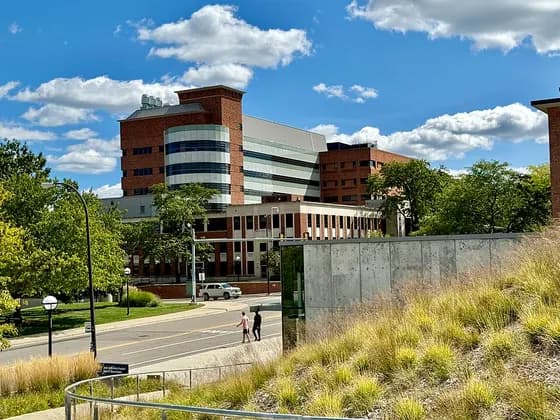
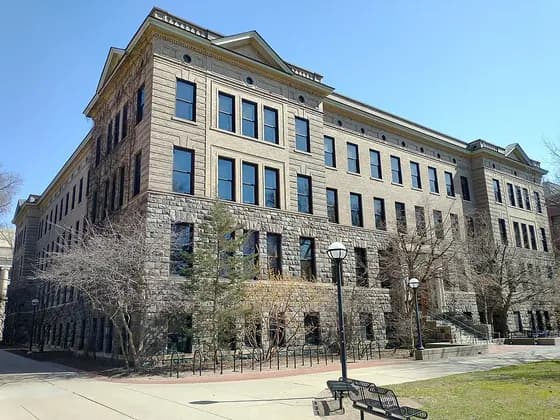

Photo: Dwight Burdette · CC BY 3.0 · cropped
Photo: w_lemay · CC BY-SA 2.0 · Photo: Astrophobe · CC BY-SA 4.0 · Photo: Dwight Burdette · CC BY 3.0
How to get into University of Michigan Medical School (MD) medicine
Step-by-step: entry requirements, admission tests, personal statement, interview format and the key deadlines.
Open the guide →University of Michigan Medical School (MD) entry requirements
Admission profile, interview format, decision dates and what makes University of Michigan Medical School (MD) different.
See the profile →The University of Michigan Medical School (MD) medicine interview
University of Michigan Medical School uses a hybrid interview day — two ~30-minute open-file interviews with admissions committee members, plus six short (~6-minute) MMI-style stations with members of the medical school community. Michigan is a large public research institution with strong health disparities research, commitment to underserved communities in Michigan and across the Midwest, and collaboration with the School of Nursing and School of Public Health.
Michigan's Preclerkship Curriculum (Foundations + Discovery) incorporates early patient exposure and interprofessional education. Interviewers probe readiness for active-learning and problem-based models.
Given Michigan's Midwest location and state-funded mission, interviewers often probe interest in primary care, rural health, and Medicaid-insured populations.
University of Michigan Medical School (MD) interview at a glance (2027 entry)
| Annual MD class size | ~170 |
|---|---|
| Interview format | Hybrid — two open-file interviews plus six short MMI-style stations |
| Tuition (2025–26) | ~USD 37,000 (in-state) / USD 62,000 (out-of-state) |
| Application system | AMCAS + Michigan secondary |
| Interview window | October–February |
Interview format
- Two ~30-minute open-file interviews with admissions committee members.
- Plus six short (~6-minute) MMI-style interaction stations.
Working towards the MCAT score University of Michigan Medical School (MD) expects? Build a week-by-week plan from your test date — free for the first two weeks.
Sample interview questions
Michigan trains many physicians who practice in underserved communities across the Midwest. Does that mission resonate with you, and how does your background connect to it?
Public-school identity and Midwest service mission are important. Demonstrate awareness of rural and urban health disparities specific to Michigan rather than generic service language.
Why the University of Michigan specifically? What about its curriculum or community fits you?
Name the Foundations and Discovery preclerkship curriculum, early patient exposure, or the public-research mission. Avoid framing Michigan as a backup to private schools — faculty notice.
Tell me about a time you committed to a community over a sustained period rather than a one-off experience. What kept you coming back?
Michigan values durable service, not resume-building. Show genuine relationships and what you learned from staying long enough to see complexity.
Michigan emphasizes active, problem-based learning. Describe how you learn best and why this model suits you.
Connect to concrete experiences of learning by doing or in teams. The school wants students ready for self-directed, case-based work, not passive lecture consumers.
Michigan's Upper Peninsula has severe primary-care shortages and high rates of opioid misuse. What structural changes would most improve healthcare access there?
What they are listening for:
- HPSA designations
- J-1 visa-waiver physicians
- telehealth expansion
- scope-of-practice for advanced-practice providers
- FQHCs
Reason about systems, not just individual heroics.
A patient with Type 2 diabetes cannot afford insulin and is rationing doses, leading to repeated hospitalizations. What is the physician's obligation?
What they are listening for:
- Manufacturer patient-assistance programs
- 340B pricing
- community-health-worker referral
- policy advocacy
Address both the immediate clinical fix and the upstream cause.
The Flint water crisis was a public-health failure with deep equity dimensions. What does it teach future physicians about their responsibilities beyond the clinic?
What they are listening for:
- Environmental justice
- the duty to listen to communities raising alarms
- physicians as advocates and credible witnesses
Show awareness of this Michigan-specific history.
You suspect a patient is not taking a medication because of cost but they are too embarrassed to say so. How do you find out and respond?
Normalize cost as a routine clinical factor, ask non-judgmentally, and adjust the plan to what the patient can actually afford. Adherence problems are often system problems.
Describe a time you worked in an interprofessional team — with nurses, pharmacists, social workers, or other non-physician providers. What did you learn from them?
Interprofessional education is built into Michigan's curriculum. Show genuine respect for non-physician expertise and a concrete instance where it changed an outcome.
A patient from a rural community is skeptical of 'big-city doctors' and reluctant to follow your recommendation. How do you build trust?
Listen to the source of the skepticism, avoid condescension, and meet the patient on their terms. Trust is earned through respect for their knowledge and constraints.
Describe a research or scholarly project you contributed to. What was your role, and what was its main limitation?
Show methodological understanding and intellectual honesty. Naming limitations and next steps signals more maturity than overselling results.
How would you investigate why one Michigan county has much higher infant mortality than a neighboring one?
Discuss data sources, confounders, access to prenatal care, and structural factors. Strong answers reason systematically and resist jumping to a single cause.
What makes evidence strong enough that you would change how you practice based on it?
What they are listening for:
- Study design
- replication
- effect size
- applicability to your patients
Balance scientific rigor with the reality that clinical decisions cannot wait for certainty.
A classmate in your problem-based-learning group is consistently unprepared and the rest of the group is frustrated. As a peer, address it with them.
Speak privately, be specific and non-accusatory, and focus on the shared goal. Michigan's collaborative curriculum depends on functional small groups.
A patient at a free clinic is upset about a long wait and says no one respects people on Medicaid. Respond to them.
Acknowledge the frustration and its legitimacy before anything else, take ownership where you can, and de-escalate. Show the patient they have been heard.
You are shown county-level data showing cardiovascular mortality in Detroit far exceeds wealthier suburbs nearby. What questions do you ask before concluding why?
What they are listening for:
- Probe access to care
- insurance
- food and pharmacy availability
- environmental exposures
- data quality
Connect the gap to structural determinants rather than individual behavior.
Practise the University of Michigan Medical School (MD) interview
Rehearse the real format before the day — on demand with our AI interviewers, or live with a tutor.
Sit a mock with photoreal AI interviewers — any time
A timed MMI or panel interview on video — American & international voices — with interviewers who listen, react and press with follow-ups. Rubric-scored feedback and a replay the moment you finish.






Live mocks with a tutor who’s been in the room
A full University of Michigan Medical School (MD)-style mock with a medic or dentist tutor — honest scoring against real marking criteria, a station-by-station debrief and a written action plan.
Book a mock interviewHow to prepare for the University of Michigan Medical School (MD) interview
Common pitfalls to avoid
University of Michigan Medical School (MD) interview — frequently asked questions
Sources & official admissions information
Ready to nail your University of Michigan Medical School (MD) interview?
Book a mock interview with a tutor who knows the US interview formats, orpractice unlimited stations from our interview question bank.