
University of Puerto Rico School of Medicine Interview
Format, Questions & Prep Tips
University of Puerto Rico School of Medicine medicine interviews for 2027 entry are a traditional interview. Published figures: Annual MD class size ~115; Interview format Traditional individual or panel — 1–2 sessions, ~25–35 min each; MCAT median (est.) ~509.
- Institution
- University of Puerto Rico School of Medicine
- Interview (2027 entry)
- October through February; rolling invitations after secondary review
- Decisions (2027 entry)
- Rolling decisions through late March; waitlist movement through summer

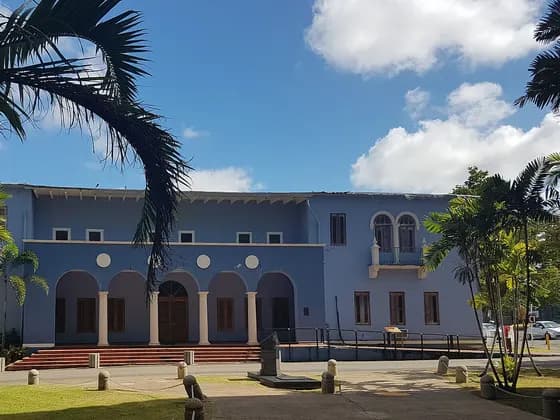
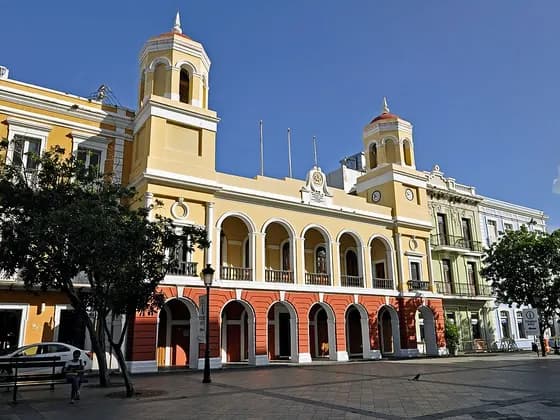
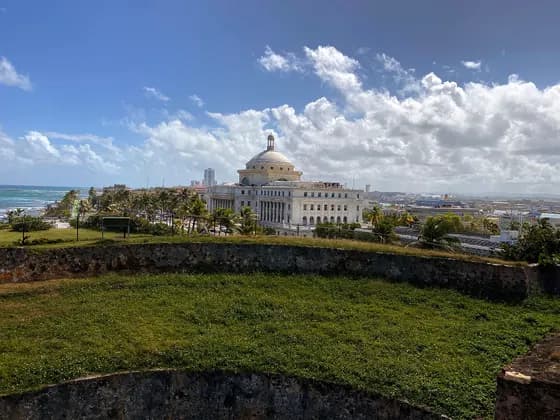
Photo: Moebiusuibeom-en · CC BY-SA 4.0 · cropped
Photo: Justinegv · CC BY-SA 4.0 · Photo: P. Hughes · CC BY-SA 4.0 · Photo: Steam Pipe Trunk Distribution Venue · CC BY 2.0
How to get into University of Puerto Rico School of Medicine (MD) medicine
Step-by-step: entry requirements, admission tests, personal statement, interview format and the key deadlines.
Open the guide →University of Puerto Rico School of Medicine (MD) entry requirements
Admission profile, interview format, decision dates and what makes University of Puerto Rico School of Medicine (MD) different.
See the profile →The University of Puerto Rico School of Medicine (MD) medicine interview
University of Puerto Rico School of Medicine uses a traditional individual or panel interview format held on the Medical Sciences Campus in San Juan. Faculty interviewers have reviewed each applicant’s full file and conduct conversational sessions focused on mission fit, bilingual competence, and academic preparation.
As Puerto Rico’s only public medical school — with a mandate to staff the island’s public health system — UPR Med selects almost exclusively Puerto Rican residents. Interviewers probe the depth of each applicant’s ties to the island, their understanding of Puerto Rico’s public health challenges, and their commitment to remaining in the territory after training.
Expect questions that probe the AAMC Premed Competencies; Service Orientation and Understanding Others are weighted especially heavily given the school’s public mission.
University of Puerto Rico School of Medicine (MD) interview at a glance (2027 entry)
| Annual MD class size | ~115 |
|---|---|
| Interview format | Traditional individual or panel — 1–2 sessions, ~25–35 min each |
| Curriculum language | Bilingual Spanish/English |
| Application system | AMCAS |
| Interview window | October–February |
| MCAT median (est.) | ~509 |
Interview format
- Traditional conversational interviews with faculty; 1–2 sessions of 25–35 minutes each.
- Full day on the Medical Sciences Campus includes tour of PRMC hospital complex and campus facilities.
- Interviewers are application-aware; expect in-depth follow-up on community service and clinical experiences.
- Bilingual environment — Spanish competence assessed throughout the day.
- Group information session with admissions office and informal student Q&A included.
Working towards the MCAT score University of Puerto Rico School of Medicine (MD) expects? Build a week-by-week plan from your test date — free for the first two weeks.
Sample interview questions
What is your vision of Puerto Rico's healthcare system in 20 years, and what role do you see yourself playing in building it?
Show depth of knowledge about PR's healthcare challenges — physician workforce gaps, Medicaid funding, hurricane recovery, chronic disease burden. Be specific and optimistic without ignoring real constraints.
Why UPR Med specifically? What does training at the Medical Sciences Campus and Puerto Rico Medical Center offer that you cannot get elsewhere?
Reference the PRMC hospital complex's high-acuity volume, inter-professional campus, public health school collaboration, and the school's role as the backbone of PR's physician workforce.
A patient presents to your community health center with a condition that requires expensive medication their insurance does not cover. What do you do?
Discuss patient advocacy, pharmaceutical assistance programs, formulary alternatives, social worker involvement, and systemic advocacy — not just "refer to specialist".
Puerto Rico's physician-to-population ratio has declined significantly due to out-migration. What ethical obligations does a UPR-trained physician have toward the island?
Acknowledge personal autonomy while discussing the public benefit of the medical education you receive. Reference service obligation discussions, rural/underserved incentives (loan forgiveness, NHSC), and your personal commitment.
Describe a time you communicated a complex message to a non-expert audience. What strategies did you use?
STAR structure. Show iterative communication — checking comprehension, adjusting language, using analogies. Connect to the daily challenge of bilingual patient communication.
What public health or epidemiological challenge facing Puerto Rico would you most want to study, and why?
Reference specific PR challenges: high diabetes/hypertension rates, cancer disparities, Zika legacy, leptospirosis after hurricane flooding, or the opioid crisis in urban areas. Show genuine intellectual curiosity.
A member of your team consistently dismisses patient concerns using language that feels culturally disrespectful. You are a medical student. How do you respond?
Address power dynamics honestly. Discuss private direct conversation, consulting a senior student or resident mentor, and formal reporting if behavior is harmful — while managing your own professional standing.
Tell me about the most significant community service experience you have had. How did it prepare you to be a public health physician?
Be specific about the population served and what you learned about structural barriers. Connect to UPR's public mission — not just clinical skill development.
A patient who speaks only Spanish and has low health literacy needs to understand a new diabetes diagnosis. Walk me through how you would conduct this conversation.
Demonstrate teach-back technique, plain language, culturally appropriate dietary examples from Puerto Rican cuisine, involve family appropriately, and address fear and stigma.
Should UPR School of Medicine require graduates to practice in Puerto Rico for a minimum number of years? Defend your answer.
Engage honestly with both sides: forced service vs. voluntary commitment, precedent in National Health Service Corps, brain drain risk vs. physician autonomy. Show nuanced policy thinking.
Role-play: a middle-aged man at your community clinic in San Juan has just been told he has hypertension and needs to start daily medication, but he says 'me siento bien, no necesito pastillas.' Talk him through it.
Show culturally grounded teach-back: explain silent disease in plain Spanish-inflected terms, connect to family and longevity, address cost and side-effect fears, and agree a concrete first step. Demonstrate the bilingual, relationship-centered care UPR's mission demands.
Puerto Rico's diabetes prevalence is markedly higher than the US mainland average. If you were handed clinic-level data showing your patients' average HbA1c is rising year over year, how would you investigate why?
Reason like a population-health physician: disaggregate by neighborhood, access to medication, post-hurricane disruption, diet, and follow-up gaps before blaming patient non-adherence. Show you read data to find system causes, not to assign individual fault.
How do you think Puerto Rico's experience with Hurricanes Irma and Maria should change the way physicians here are trained?
Connect disaster preparedness, dialysis and oxygen-dependent patient continuity, supply-chain fragility, and mental-health aftermath to concrete curriculum implications. Ground it in PR's lived reality rather than abstract emergency-medicine theory.
You need to obtain informed consent from an elderly patient for a procedure, but her adult daughter keeps answering every question on her behalf. How do you handle this respectfully?
Honor familismo while protecting the patient's autonomy and capacity. Show you would gently center the patient, address the daughter's good intentions, and ensure consent is genuinely the patient's — a daily reality in Puerto Rican family-centered care.
A pharmaceutical shortage means you have enough of a critical medication for only some of the patients who need it this week. How do you decide who receives it?
Apply transparent allocation principles — clinical urgency, likelihood of benefit, consistency — and reject favoritism or first-come-first-served alone. Note PR's real vulnerability to supply disruptions, and the duty to advocate up the system for resupply.
Practise the University of Puerto Rico School of Medicine (MD) interview
Rehearse the real format before the day — on demand with our AI interviewers, or live with a tutor.
Sit a mock with photoreal AI interviewers — any time
A timed MMI or panel interview on video — American & international voices — with interviewers who listen, react and press with follow-ups. Rubric-scored feedback and a replay the moment you finish.





Live mocks with a tutor who’s been in the room
A full University of Puerto Rico School of Medicine (MD)-style mock with a medic or dentist tutor — honest scoring against real marking criteria, a station-by-station debrief and a written action plan.
Book a mock interviewHow to prepare for the University of Puerto Rico School of Medicine (MD) interview
Common pitfalls to avoid
University of Puerto Rico School of Medicine (MD) interview — frequently asked questions
Sources & official admissions information
Ready to nail your University of Puerto Rico School of Medicine (MD) interview?
Book a mock interview with a tutor who knows the US interview formats, orpractice unlimited stations from our interview question bank.