US Medicine · 2027 Entry

University of Puerto Rico School of Medicine (MD) Medical School2027 Entry Requirements & Interview Format

Location San Juan, PR, United StatesEstablished 1950Interviews October–FebruaryDecisions March 30 (AAMC standard)

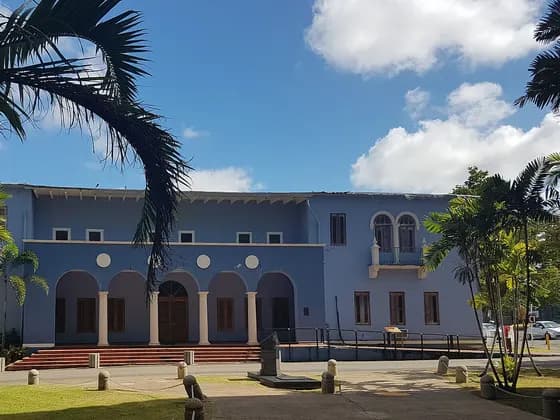
Photo: Moebiusuibeom-en · CC BY-SA 4.0

Start here
Overview

About University of Puerto Rico School of Medicine (MD)

University of Puerto Rico School of Medicine, founded in 1950 and situated on the Medical Sciences Campus in Rio Piedras (San Juan), is the only public medical school in Puerto Rico and the oldest medical school on the island. It is the primary training ground for Puerto Rico's physician workforce, with a strong primary care and community health mission reinforced by its public university mandate. The school is affiliated with major public hospitals including the Puerto Rico Medical Center complex, providing students with high-acuity clinical exposure.

What makes it different

As the only public medical school in Puerto Rico, UPR Med offers the lowest in-state tuition of any PR medical school and has a formal mandate to train physicians for Puerto Rico's public health needs. It is part of the University of Puerto Rico Medical Sciences Campus, which also houses schools of pharmacy, dentistry, public health, and nursing — enabling unique inter-professional training. UPR Med graduates have historically comprised the backbone of Puerto Rico's physician workforce.

Course & teaching

Integrated curriculum. 4-year MD. Years 1–2 at the Medical Sciences Campus in San Juan; clinical rotations Years 3–4 at Puerto Rico Medical Center hospitals and affiliated community sites. Bilingual instruction throughout; public health and community medicine are integrated from Year 1.

Research strengths

University of Puerto Rico School of Medicine (MD) has notable research strength in Cancer epidemiology in Puerto Rico, Cardiovascular disease, HIV/AIDS, Health disparities, Tropical and infectious disease.

Interview

University of Puerto Rico School of Medicine (MD) interviews via Traditional individual faculty interviews; panel format for some applicants. UPR Med interview day is held on the Medical Sciences Campus in San Juan and typically includes one to two individual faculty or panel interviews of 25–35 minutes each. As the sole public medical school in Puerto Rico, UPR Med selects predominantly Puerto Rican residents; interviewers probe depth of ties to the island, Spanish fluency, motivation for community service, and academic preparedness. The day includes an admissions information session, campus and UPR-affiliated hospital tours, and informal interaction with current students. Applicants are expected to demonstrate strong command of both English and Spanish and to articulate how they will contribute to Puerto Rico's healthcare workforce.

Intake

Approximately 105 students per year.

At a glance

Founded in 1950, based in San Juan, PR. Programmes offered: Primary Care, Internal Medicine, Pediatrics, Family Medicine, Public Health.

Entry requirements

What you need to apply to University of Puerto Rico School of Medicine (MD)

Admission overview
Bachelor's degree and MCAT required. Applications via AMCAS. Puerto Rico residency is effectively required — the school's mandate is to train physicians for Puerto Rico's public health system, and non-residents are rarely accepted. Spanish proficiency is required. Strong academic preparation and community service background are expected. Secondary application required.
MCAT median
505 (range 504–515)
GPA median
3.80 overall / 3.58 science (BCPM)
Acceptance rate
12.0%
Class size
105
In-state preference
Strong — primarily in-state
In-state matriculants
98%
CASPer
Not required
AAMC PREview
Not required
Holistic review emphasis
Puerto Rico residency; commitment to island's public health workforce; bilingual proficiency; community service background.
Notes
Estimates from public AAMC FACTS / class-profile data; verify current cycle. Acceptance rate reflects near-exclusive PR resident admissions.
Specialities offered
Primary Care, Internal Medicine, Pediatrics, Family Medicine, Public Health
Interview

How University of Puerto Rico School of Medicine (MD) interviews applicants

Format
Traditional individual faculty interviews; panel format for some applicants
Interview window
October–February
Decision date
March 30 (AAMC standard)
Post-interview chances
Estimated post-interview acceptance rate approximately 40–55% given strong in-state preference and large class size relative to PR applicant pool. Puerto Rico residency and mission fit are the primary determinants.
Tutor insight
UPR Med is effectively reserved for Puerto Rico residents — non-residents face an extremely steep path regardless of academic credentials. For island residents, it represents exceptional value: lower tuition, the largest PR class, and affiliation with high-volume public hospitals that provide broad clinical exposure. In your interview, demonstrate deep engagement with Puerto Rico's public health challenges — not just generic medicine motivation. Spanish proficiency is non-negotiable; your clinical training will be bilingual from Year 3. The Puerto Rico Medical Center complex provides exposure to a high-acuity patient population that rivals many mainland academic medical centers, which is an underappreciated strength to highlight in essays.
Practice

Practise for your University of Puerto Rico School of Medicine (MD) interview

PrometheusQuestion Bank621 medicine questions inside

Interview questions matched to University of Puerto Rico School of Medicine (MD)

Two questions our tutors flagged as a strong fit for University of Puerto Rico School of Medicine (MD)’s interview style. Try answering them out loud, then open Prometheus for the model answers and follow-up tips.

MediumMMI · PanelQ1

AAMC Core Competency: Cultural Humility in Clinical Practice

An attending physician you are shadowing tells a patient, a recent Haitian immigrant, that she needs to stop drinking herbal teas prepared by a community healer and switch entirely to her prescribed blood pressure medications. The patient agrees in the office but the attending later tells you she probably will not be adherent. What do you think went wrong in this interaction, and how would you approach the conversation differently?

Likely follow-up · What is the difference between cultural competence and cultural humility, and why does the distinction matter clinically?

3 expert tips in Prometheus
MediumPanelQ2

US Healthcare Ethics: Climate Change as a Public Health Crisis

"The WHO describes climate change as the single biggest health threat facing humanity, and major US medical associations, including the AMA, have adopted policy declaring it a public health crisis." Rising temperatures increase cardiovascular and respiratory mortality, expand the geographic range of vector-borne diseases, worsen food and water insecurity, and disproportionately affect low-income communities and communities of colour. How does climate change fit within the physician's clinical and advocacy obligations, and what specific role can medical professionals play in the response?

Likely follow-up · What is the clinical evidence linking extreme heat events to cardiovascular and respiratory mortality in vulnerable populations?

3 expert tips in Prometheus
Get support

Apply to University of Puerto Rico School of Medicine (MD) with confidence

We've helped students into University of Puerto Rico School of Medicine (MD) and other US medicine schools — get tailored support for each stage of the application.

FAQ

University of Puerto Rico School of Medicine (MD) — frequently asked questions

Apply to University of Puerto Rico School of Medicine (MD) with confidence

We've helped students turn their MCAT, personal statement and interview prep into offers from University of Puerto Rico School of Medicine (MD) and other US medicine schools.