
UCC Bayamon School of Medicine Interview
Format, Questions & Prep Tips
UCC Bayamon School of Medicine medicine interviews for 2027 entry are a traditional interview. Published figures: Annual MD class size ~60–70; Interview format Traditional individual or panel — 1–2 sessions, ~20–30 min each; MCAT median (est.) ~499.
- Institution
- Universidad Central del Caribe School of Medicine
- Interview (2027 entry)
- October through February; rolling invitations after secondary review
- Decisions (2027 entry)
- Rolling decisions through late March; waitlist movement through summer
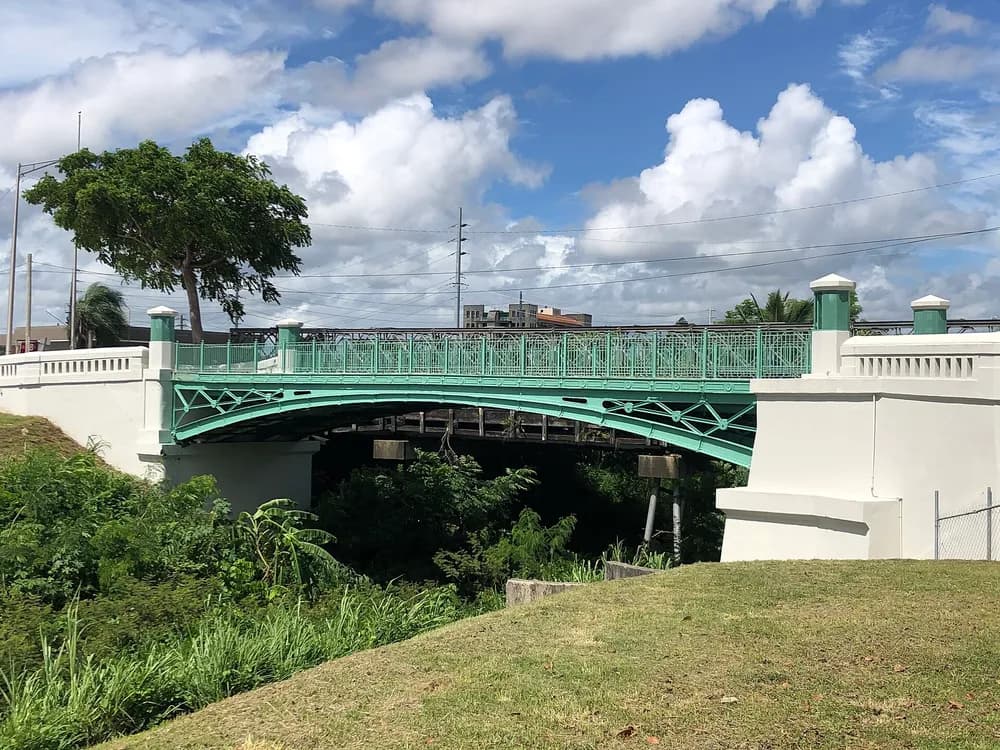

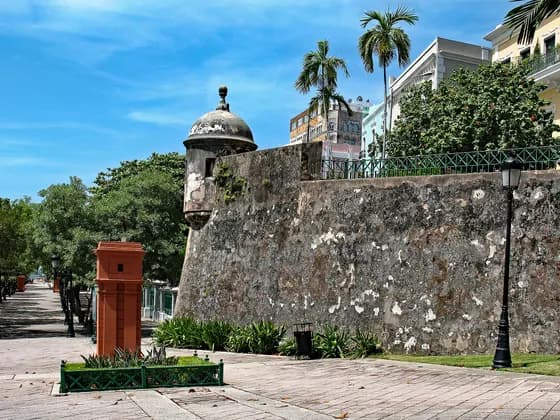
Photo: Osvaldo Ocasio · CC BY-SA 4.0 · cropped
Photo: Ligocsicnarf89 · CC BY 4.0 · Photo: Thank You (23 Millions+) views · CC BY 2.0 · Photo: P. Hughes · CC BY-SA 4.0
How to get into UCC Bayamon School of Medicine (MD) medicine
Step-by-step: entry requirements, admission tests, personal statement, interview format and the key deadlines.
Open the guide →UCC Bayamon School of Medicine (MD) entry requirements
Admission profile, interview format, decision dates and what makes UCC Bayamon School of Medicine (MD) different.
See the profile →The UCC Bayamon School of Medicine (MD) medicine interview
Universidad Central del Caribe School of Medicine uses a traditional individual or small-panel interview format held on campus in Bayamon, Puerto Rico. Faculty and admissions committee members conduct conversational interviews having reviewed each applicant’s full materials.
UCC blends a biomedical sciences research mission with a community health focus, and interviewers probe both intellectual depth in the sciences and genuine commitment to serving Puerto Rico’s diverse urban and suburban patient population.
The bilingual (Spanish/English) environment means language is part of the evaluation. Expect questions that probe the AAMC Premed Competencies, with particular attention to thinking and reasoning (given the research focus) and interpersonal skills.
UCC Bayamon School of Medicine (MD) interview at a glance (2027 entry)
| Annual MD class size | ~60–70 |
|---|---|
| Interview format | Traditional individual or panel — 1–2 sessions, ~20–30 min each |
| Curriculum language | Bilingual Spanish/English |
| Application system | AMCAS |
| Interview window | October–February |
| MCAT median (est.) | ~499 |
Interview format
- Traditional conversational interviews with faculty or admissions committee members; 1–2 sessions of 20–30 minutes each.
- Full interview day in Bayamon includes simulation center and campus tour.
- Interviewers are application-aware — expect detailed questions about research, clinical, and community experiences.
- Informal bilingual assessment during interaction with faculty and students throughout the day.
- Information session with admissions staff and informal student Q&A included.
Working towards the MCAT score UCC Bayamon School of Medicine (MD) expects? Build a week-by-week plan from your test date — free for the first two weeks.
Sample interview questions
Why UCC and why Puerto Rico? What specifically about the Bayamon/San Juan healthcare environment shapes your interest in training here?
Reference the northern PR metro area's specific health challenges (chronic disease, urban poverty, hurricane recovery) and the school's biomedical research infrastructure. Avoid generic Puerto Rico language.
Describe a research project you worked on. What was the scientific question, and what would you pursue at UCC's biomedical research centers?
Show scientific ownership and curiosity — not just lab hours. Reference UCC's research areas (cancer, cardiovascular, tropical disease) and connect to your interests.
You discover a clinical colleague is cutting corners on patient documentation to save time. How do you address this?
Address patient safety first. Discuss direct collegial approach, then escalation pathways if behavior continues. Balance professionalism with accountability.
Describe an experience that revealed a healthcare disparity. How did it change your understanding of the physician's role?
STAR structure with systemic reflection. Show that you understand root causes (social determinants, policy gaps) — not just the clinical surface of the disparity.
How do you build rapport quickly with a new patient from a cultural background different from your own?
Demonstrate cultural humility — active listening, asking about preferences, using interpreters when needed, avoiding assumptions. Avoid performative diversity language.
A terminally ill patient asks you to help them die quickly. How do you respond?
Address medical aid in dying legality in PR/US context, palliative care alternatives, patient autonomy, physician moral distress, and the importance of not abandoning the patient.
What do you see as the most important unsolved problem in medicine, and what role do you want to play in addressing it?
Be specific and authentic. Connect to a genuine intellectual interest and show awareness of current research frontiers. Avoid vague "cure cancer" answers.
Puerto Rico's healthcare system has been significantly affected by the debt crisis and hurricane recovery. As a physician, what systemic responsibility do you have to advocate for change?
Acknowledge the real structural challenges. Discuss physician advocacy roles — professional societies, policy engagement, community health leadership — and their limits.
Tell me about a time you had to deliver difficult news. What did you do and what would you do differently?
Use a SPIKES or similar framework. Show empathy, honest communication, and the importance of silence and follow-up — not just the mechanics of disclosure.
Where do you see yourself practicing medicine in fifteen years, and why?
Be honest and specific — a community health setting in Puerto Rico, the mainland Hispanic community, or academic medicine with a Caribbean health focus all fit UCC's mission. Show a coherent narrative.
Role-play: you are a medical student and a patient at the Bayamon clinic tells you, in Spanish, that she has been buying her relative's leftover antibiotics instead of seeing a doctor because money is tight. Respond to her.
Avoid lecturing. Acknowledge the financial pressure, explain the real risks (resistance, wrong drug/dose) in accessible terms, and pivot to practical help — sliding-scale clinic access, generics, assistance programs. Show the cultural humility UCC emphasizes.
You are reading a study claiming a new drug 'halves the risk' of a cardiovascular event. What questions do you ask before trusting that headline?
Probe relative vs. absolute risk reduction, baseline event rate, sample size, who was studied, conflicts of interest, and clinical vs. statistical significance. UCC's biomedical-research identity rewards genuine critical appraisal over accepting a topline figure.
Tell me about a time you had to explain your scientific or research work to family members or friends with no science background. How did you adapt?
STAR structure. Show you can strip jargon, use analogy, and check understanding without condescension — the same skill needed to explain a research-informed diagnosis to a low-health-literacy patient in northern Puerto Rico.
Describe a research or academic failure — an experiment that didn't work, a hypothesis that was wrong. How did you respond, and what did it change about how you work?
UCC values scientific maturity. Show resilience and intellectual honesty: how you diagnosed the failure, what you learned methodologically, and how it sharpened rather than discouraged your curiosity.
You are a student on a research team and notice the consent form for a study is written in dense English that the predominantly Spanish-speaking participants likely cannot fully understand. What do you do?
Address the core of informed consent — comprehension, not just a signature. Raise it with the PI, advocate for a properly translated and plain-language form and interpreter support, and frame it as protecting both participants and the study's integrity.
Practise the UCC Bayamon School of Medicine (MD) interview
Rehearse the real format before the day — on demand with our AI interviewers, or live with a tutor.
Sit a mock with photoreal AI interviewers — any time
A timed MMI or panel interview on video — American & international voices — with interviewers who listen, react and press with follow-ups. Rubric-scored feedback and a replay the moment you finish.


Live mocks with a tutor who’s been in the room
A full UCC Bayamon School of Medicine (MD)-style mock with a medic or dentist tutor — honest scoring against real marking criteria, a station-by-station debrief and a written action plan.
Book a mock interviewHow to prepare for the UCC Bayamon School of Medicine (MD) interview
Common pitfalls to avoid
UCC Bayamon School of Medicine (MD) interview — frequently asked questions
Sources & official admissions information
Ready to nail your UCC Bayamon School of Medicine (MD) interview?
Book a mock interview with a tutor who knows the US interview formats, orpractice unlimited stations from our interview question bank.