
Ponce Health Sciences University School of Medicine Interview
Format, Questions & Prep Tips
Ponce Health Sciences University School of Medicine medicine interviews for 2027 entry are a traditional interview. Published figures: Annual MD class size ~60–70; Interview format Traditional individual — 1–2 faculty sessions, ~20–30 min each; MCAT median (est.) ~499 (2025–26 matriculants).
- Institution
- Ponce Health Sciences University School of Medicine
- Interview (2027 entry)
- October through February; rolling invitations after secondary review
- Decisions (2027 entry)
- Decisions released on a rolling basis through late March; waitlist movement continues through summer
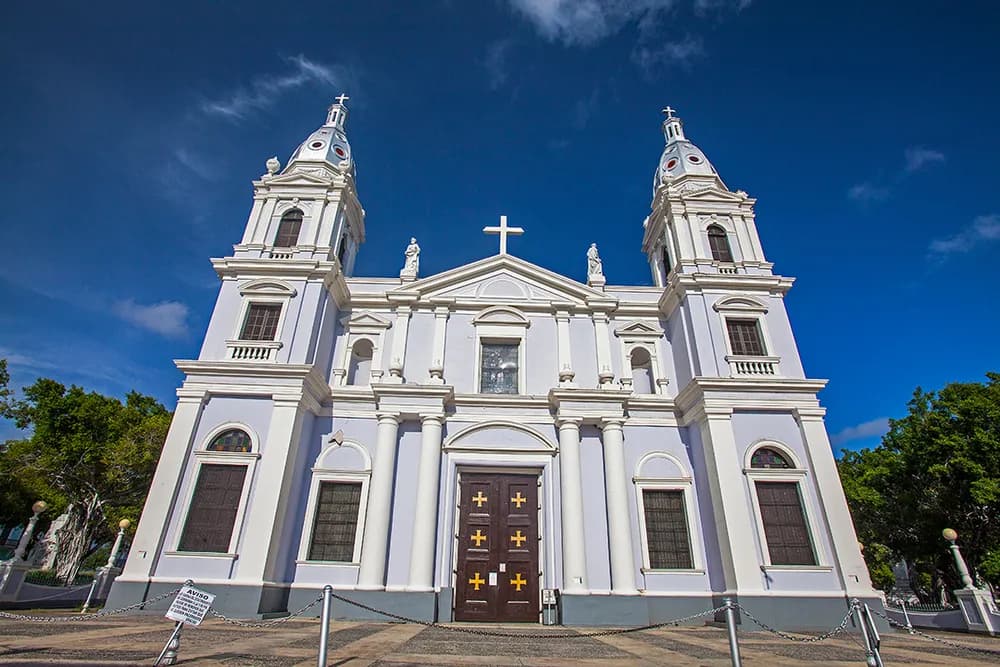
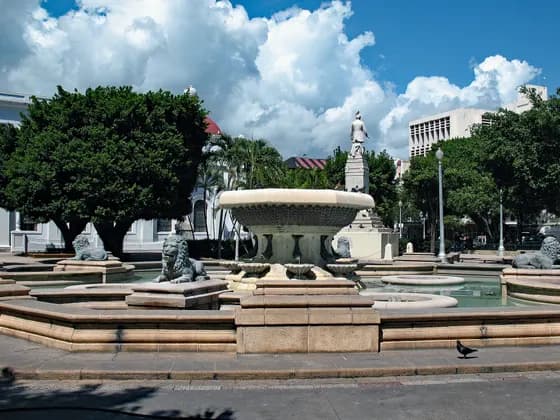
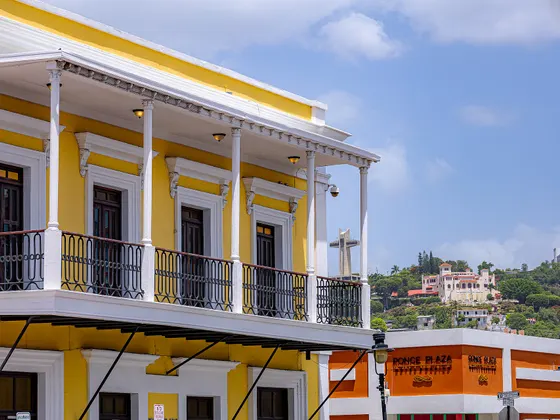

Photo: Rafyrodriguez · CC BY-SA 4.0 · cropped
Photo: P. Hughes · CC BY-SA 4.0 · Photo: Ligocsicnarf89 · CC BY 4.0 · Photo: Ligocsicnarf89 · CC BY 4.0
How to get into Ponce Health Sciences University School of Medicine (MD) medicine
Step-by-step: entry requirements, admission tests, personal statement, interview format and the key deadlines.
Open the guide →Ponce Health Sciences University School of Medicine (MD) entry requirements
Admission profile, interview format, decision dates and what makes Ponce Health Sciences University School of Medicine (MD) different.
See the profile →The Ponce Health Sciences University School of Medicine (MD) medicine interview
Ponce Health Sciences University School of Medicine uses a traditional individual interview format — applicants meet one-on-one or in small panels with faculty members and admissions committee representatives on campus in Ponce, Puerto Rico. There are no MMI stations; interviews are conversational and application-aware.
The school is bilingual (Spanish/English) and serves a deeply community-oriented mission focused on Puerto Rico and the Caribbean. Interviewers probe Spanish proficiency, cultural competency, and genuine commitment to underserved populations — not merely academic achievement.
Expect questions that probe the AAMC Premed Competencies, with particular emphasis on the professional competencies given the school’s community health focus.
Ponce Health Sciences University School of Medicine (MD) interview at a glance (2027 entry)
| Annual MD class size | ~60–70 |
|---|---|
| Interview format | Traditional individual — 1–2 faculty sessions, ~20–30 min each |
| Curriculum language | Bilingual Spanish/English |
| Application system | AMCAS |
| Interview window | October–February |
| MCAT median (est.) | ~499 (2025–26 matriculants) |
Interview format
- Traditional conversational interviews with faculty or admissions committee members; typically 1–2 sessions of 20–30 minutes each.
- Full interview day in Ponce includes facility tour and informal student interaction.
- Interviewers review application materials in advance — expect specific follow-up on experiences and essays.
- Bilingual environment; Spanish proficiency may be tested informally in conversation.
- Group information session with admissions dean typically concludes the day.
Working towards the MCAT score Ponce Health Sciences University School of Medicine (MD) expects? Build a week-by-week plan from your test date — free for the first two weeks.
Sample interview questions
Why do you want to train as a physician in Puerto Rico, and how does Ponce HSU's bilingual mission align with your goals?
Be specific about Puerto Rico's healthcare challenges (physician shortages, post-hurricane recovery, chronic disease burden) and your personal connection. Avoid vague island-setting answers.
Describe a patient interaction or community health experience that solidified your commitment to medicine in an underserved setting.
STAR structure. Emphasize what you observed about healthcare gaps and how you responded — not just what you did procedurally.
A patient in your clinic speaks limited English. A family member offers to translate. What are your considerations in accepting or declining their offer?
Discuss HIPAA, accuracy of lay interpreters, patient autonomy and dignity, the availability of professional medical interpreters, and when family translation is appropriate vs. not.
Puerto Rico faces significant healthcare access disparities compared to the US mainland. As a physician, what obligation do you have to advocate for systemic change beyond individual patient care?
Reference Medicaid equity gaps in Puerto Rico, physician advocacy roles (PAFP, AMA), community health outreach, and the limits and risks of physician advocacy overreach.
Tell me about a time you worked effectively with someone from a very different cultural or linguistic background. What did you learn?
STAR structure. Show cultural humility — focus on learning and adapting rather than having all the answers.
Describe a research or academic project you are proud of. What would you contribute to research at Ponce HSU?
Reference the school's NIH-funded biomedical research areas (cancer, cardiovascular, infectious disease). Articulate a genuine intellectual interest, not just lab hours.
A colleague makes a culturally insensitive comment about a patient in front of the care team. How do you respond?
Address the incident promptly but constructively — focus on patient safety and team culture, not confrontation. Mention escalation pathways if the behavior continues.
What does bilingual medical education mean to you, and how will you use both languages in your career?
Show concrete plans — treating Spanish-speaking patients on the mainland, working in Caribbean communities, or returning to Puerto Rico. Avoid abstract cultural sensitivity language.
How would you explain diabetes management to a newly diagnosed patient who has low health literacy and speaks primarily Spanish?
Demonstrate teach-back technique, plain language, culturally appropriate analogies, and awareness of social determinants (food access, cost of medication) in the Puerto Rican context.
Should Puerto Rico have the same Medicaid funding formula as US states? Defend your view.
Know the current inequitable per-capita cap structure. Argue a position while acknowledging the fiscal and political complexity. Show awareness of how this affects healthcare delivery on the island.
[Role-play] You are a Ponce HSU student in a clinic in southern Puerto Rico. An older patient with several chronic conditions has run out of one medication because the nearest pharmacy was closed after a power outage, and is anxious about their blood pressure. Respond to the patient.
Lead with empathy and acknowledge the very real infrastructure challenges in Puerto Rico (power reliability, pharmacy access post-hurricane). Triage urgency, discuss interim options and follow-up, and reassure the patient in a culturally attuned, bilingual-aware manner.
An interviewer shows you per-capita federal Medicaid funding for Puerto Rico compared with US states. How do you interpret the gap, and what would you want to understand before drawing conclusions about its effect on care?
Explain the capped block-grant structure versus the open-ended state matching formula. Distinguish funding inputs from outcomes and name confounders (cost of living, physician supply, out-migration). Connect honestly to access on the island without over-claiming.
A patient is far more comfortable in Spanish, while a visiting colleague on your team speaks only English. How do you make sure the patient is fully included in a conversation about their care?
Center the patient, not the convenience of the team; use professional interpretation rather than rushing, and check understanding both ways. Bilingual competence is a genuine differentiator at Ponce HSU — show you would never let a patient become a bystander in their own care.
Tell me about a time you had to learn something difficult in a second language or unfamiliar setting. How did you adapt?
Ponce HSU is bilingual; this probes adaptability and resilience relevant to learning medicine across two languages. Use a concrete example and reflect on the strategies that worked, connecting it to the demands of bilingual medical education.
After a major hurricane, your clinic has limited supplies and more patients than it can see in a day. How do you think about prioritizing who is seen first, and how do you communicate those decisions?
Disaster-context triage:
- balancing urgency
- fairness
- transparency under scarcity
Discuss clear criteria, honest communication with waiting patients, and the emotional toll — grounded in Puerto Rico's real experience of post-disaster healthcare strain.
Practise the Ponce Health Sciences University School of Medicine (MD) interview
Rehearse the real format before the day — on demand with our AI interviewers, or live with a tutor.
Sit a mock with photoreal AI interviewers — any time
A timed MMI or panel interview on video — American & international voices — with interviewers who listen, react and press with follow-ups. Rubric-scored feedback and a replay the moment you finish.






Live mocks with a tutor who’s been in the room
A full Ponce Health Sciences University School of Medicine (MD)-style mock with a medic or dentist tutor — honest scoring against real marking criteria, a station-by-station debrief and a written action plan.
Book a mock interviewHow to prepare for the Ponce Health Sciences University School of Medicine (MD) interview
Common pitfalls to avoid
Ponce Health Sciences University School of Medicine (MD) interview — frequently asked questions
Sources & official admissions information
Ready to nail your Ponce Health Sciences University School of Medicine (MD) interview?
Book a mock interview with a tutor who knows the US interview formats, orpractice unlimited stations from our interview question bank.