
Rush Medical College of Rush University Medical Center Interview
Format, Questions & Prep Tips
Rush Medical College of Rush University Medical Center medicine interviews for 2027 entry are a traditional interview. Published figures: Annual MD class size ~130–140; Interview format Traditional — 2 interviews, ~30–45 min each; Curriculum Integrated 4-year MD; interprofessional education throughout.
- Institution
- Rush Medical College of Rush University Medical Center
- Interview (2027 entry)
- October through February; invitations issued on a rolling basis
- Decisions (2027 entry)
- Rolling decisions; final decisions by March 30; waitlist movement through summer



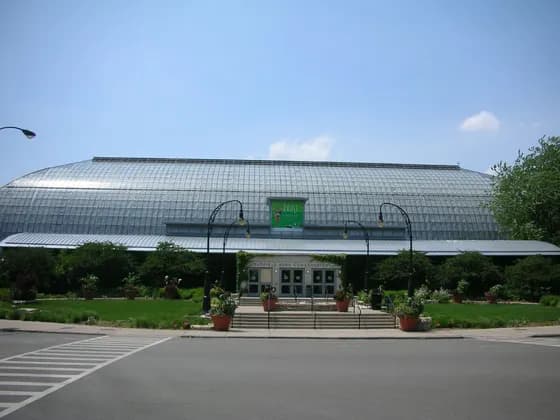
Photo: Nathan Hicks · CC BY 3.0 · cropped
Photo: Paul Sableman · CC BY 2.0 · Photo: An Errant Knight · CC BY-SA 4.0 · Photo: Richie D. · CC BY 2.0
How to get into Rush Medical College of Rush University Medical Center (MD) medicine
Step-by-step: entry requirements, admission tests, personal statement, interview format and the key deadlines.
Open the guide →Rush Medical College of Rush University Medical Center (MD) entry requirements
Admission profile, interview format, decision dates and what makes Rush Medical College of Rush University Medical Center (MD) different.
See the profile →The Rush Medical College of Rush University Medical Center (MD) medicine interview
Rush Medical College at Rush University Medical Center uses a traditional interview format on its Near West Side Chicago campus, embedded within the Illinois Medical District — one of the most concentrated hospital clusters in the United States. Applicants participate in two individual or panel interviews with faculty physicians and current students, each approximately 30–45 minutes.
Rush is one of the oldest medical schools in the United States (founded 1837) and one of Chicago’s major academic medical centers, consistently ranked among the nation’s top hospitals. The interview reflects both the school’s urban Chicago identity and its strengths in orthopedics, oncology, cardiovascular medicine, and patient-centered care.
The AAMC groups its 17 Premed Competencies into three categories: professional, science, and thinking and reasoning. Rush interviewers weight all three categories fairly evenly. That is consistent with a major academic medical center training physicians across a broad range of specialties. Rush expects high performance in clinical, research, and communication dimensions alike.
Rush Medical College of Rush University Medical Center (MD) interview at a glance (2027 entry)
| Annual MD class size | ~130–140 |
|---|---|
| Interview format | Traditional — 2 interviews, ~30–45 min each |
| Application system | AMCAS |
| Curriculum | Integrated 4-year MD; interprofessional education throughout |
| In-state preference | Low — national applicant pool |
| Interview window | October–February |
| Location | Near West Side, Chicago, IL (Illinois Medical District) |
Interview format
- Two traditional one-on-one or panel interviews: one with a faculty physician, one with a current student.
- Each interview approximately 30–45 minutes; full application reviewed beforehand.
- Questions focus on clinical experience, research, urban community health, and personal narrative.
- Tour of Rush University Medical Center and the Illinois Medical District complex.
- Informal interactions with current students throughout the day.
- Financial aid and curriculum overview session included.
Working towards the MCAT score Rush Medical College of Rush University Medical Center (MD) expects? Build a week-by-week plan from your test date — free for the first two weeks.
Sample interview questions
Why Rush Medical College — what specific aspects of Rush University Medical Center and the Illinois Medical District draw you to train here?
Reference specific clinical strengths: Rush’s orthopedics rankings, the Rush Copley network, the Illinois Medical District cluster. Connect to your specialty interest or urban community health focus rather than just noting academic reputation.
Describe the clinical experience that most shaped your understanding of patient-centered care. What did you observe, and how did it change how you think about the physician-patient relationship?
Rush emphasizes patient-centered care. Use a specific patient encounter, not a general principle. Focus on what the patient’s perspective taught you rather than what the clinical finding was.
A patient who is homeless arrives at the emergency department for the third time in a month with the same acute presentation. What is the physician’s obligation in this situation?
Urban health and housing as social determinants. Address immediate clinical needs, social work involvement, care coordination, harm reduction approaches, and the systemic failures that produce revolving-door emergency department use.
You are on a team-based care rotation and the nurse practitioner on the team has more experience with a particular patient than the attending. How do you navigate the hierarchy to ensure the NP’s clinical knowledge is appropriately used?
Interprofessional respect and patient safety in hierarchical teams. Show you can facilitate knowledge exchange upward in a team hierarchy without undermining the attending’s authority.
Rush is both an academic medical center and a major employer in a historically under-resourced Near West Side neighborhood. Does the hospital have an obligation to the surrounding community beyond its clinical mission?
Anchor institution responsibility, community benefit agreements, local hiring, and the tension between healthcare economics and community obligation. Chicago-specific context is directly relevant.
Describe a research project or independent academic project you have worked on. What was the question, what was your contribution, and what would you do differently?
Rush is a research-active medical center. Show intellectual ownership rather than task completion. The 'what would you do differently' signals scientific maturity and self-critical thinking.
A wealthy patient asks you to expedite their diagnostic workup and pushes for faster specialist access than your other patients receive. How do you respond?
What they are listening for:
- Equity in clinical practice
- two-tiered care concerns
- the physician’s obligation to maintain consistent standards
Show you can decline preferential treatment diplomatically while maintaining the therapeutic relationship.
You discover that a patient you have been seeing for several months has been going to multiple providers to receive duplicate opioid prescriptions. How do you handle this?
Opioid diversion, prescription drug monitoring programs (PDMP), patient trust, non-punitive approach to substance use disorder, and the physician’s legal obligations. Balance compassion with clinical and legal responsibilities.
Rush was founded in 1837 and has operated continuously through every major public health crisis since. What does this history mean to you as someone entering medicine today?
Institutional identity and professional tradition. Connect Rush’s historical continuity to present-day challenges — COVID-19, urban gun violence, health equity. Show you have thought about what it means to train at an institution with deep roots.
Chicago has one of the highest rates of urban gun violence in the US. Rush University Medical Center treats many gunshot wound victims. What is the physician’s role in addressing gun violence as a public health issue?
Physician as public health advocate. Address the clinical reality (trauma care at Rush), physician testimony in policy processes, hospital violence intervention programs (like HEAL Chicago), and the distinction between physician expertise and political advocacy.
Role-play: You are a student in the Rush emergency department. The actor is a patient experiencing homelessness who has returned for the third time this month, is exhausted and defensive, and expects to be dismissed again. Begin the conversation.
Treat the patient with dignity, address the immediate clinical need, and explore the social drivers (housing, food, follow-up) with social work in mind. Rush's Near West Side, safety-net context makes compassionate, systems-aware care of frequent ED users a core skill.
An interviewer presents data showing a large life-expectancy gap of more than a decade between affluent and under-resourced Chicago neighborhoods only miles apart. What does this tell you, and what is the responsibility of an anchor institution like Rush?
Interpret the gap as a marker of structural inequity (the social determinants of health) rather than individual behavior. Discuss anchor-institution strategies — local hiring, community investment, partnerships — alongside clinical care.
You are presenting a patient on rounds and the attending interrupts to correct a clinical detail you are confident is actually right, in front of the team. How do you handle the moment?
Balance respect for hierarchy with patient safety and intellectual honesty. Show how you can advocate for the correct information diplomatically and follow up privately if needed — a communication maturity Rush's broad-competency assessment values.
Rush is research-active across orthopedics, oncology, and neurosciences. Take a research project you have worked on and explain not just what you did, but what you would do differently with hindsight.
Demonstrate intellectual ownership and self-critical scientific maturity. The 'what would you do differently' framing distinguishes genuine engagement from task completion — exactly what Rush faculty interviewers probe.
The Illinois Medical District places Rush within blocks of Stroger, UI Health, and the Jesse Brown VA. How does training inside one of the densest hospital clusters in the country shape what you would gain — and what draws you to that specifically?
Show you understand the district as a defining feature of training, not just a location: patient volume and diversity, cross-institution collaboration, and exposure to safety-net, academic, and veteran populations side by side.
Practise the Rush Medical College of Rush University Medical Center (MD) interview
Rehearse the real format before the day — on demand with our AI interviewers, or live with a tutor.
Sit a mock with photoreal AI interviewers — any time
A timed MMI or panel interview on video — American & international voices — with interviewers who listen, react and press with follow-ups. Rubric-scored feedback and a replay the moment you finish.






Live mocks with a tutor who’s been in the room
A full Rush Medical College of Rush University Medical Center (MD)-style mock with a medic or dentist tutor — honest scoring against real marking criteria, a station-by-station debrief and a written action plan.
Book a mock interviewHow to prepare for the Rush Medical College of Rush University Medical Center (MD) interview
Common pitfalls to avoid
Rush Medical College of Rush University Medical Center (MD) interview — frequently asked questions
Sources & official admissions information
Ready to nail your Rush Medical College of Rush University Medical Center (MD) interview?
Book a mock interview with a tutor who knows the US interview formats, orpractice unlimited stations from our interview question bank.