
Carle Illinois College of Medicine Interview
Format, Questions & Prep Tips
Carle Illinois College of Medicine medicine interviews for 2027 entry are an asynchronous video assessment. Published figures: Annual MD class size 64 (2024–2026 cohorts; 32 at 2018 founding).
- Institution
- Carle Illinois College of Medicine
- Interview (2027 entry)
- October through March; invitations issued on a rolling basis
- Decisions (2027 entry)
- Rolling decisions; final decisions by March 30; waitlist movement through summer

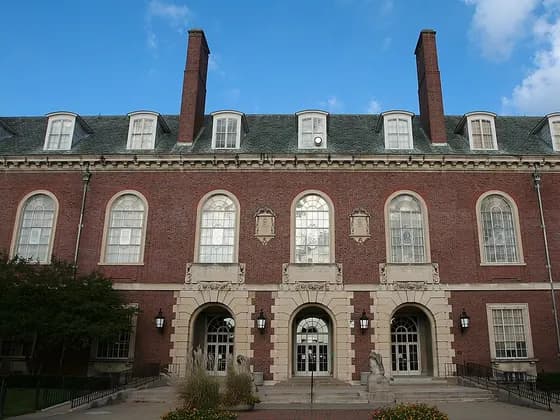
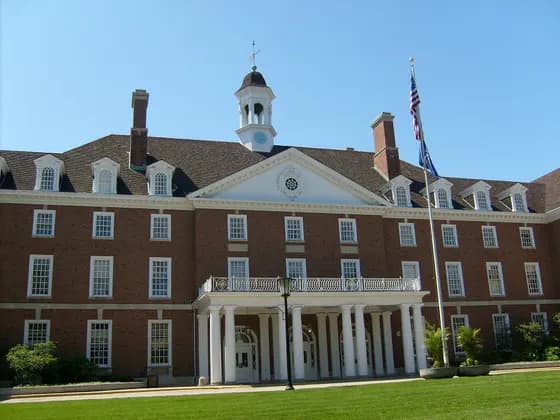

Photo: Beyond My Ken · CC BY-SA 4.0 · cropped
Photo: Dori · CC BY-SA 3.0 us · Photo: Raymond Cunningham · CC BY 2.0 · Photo: Dori · CC BY 2.0
How to get into Carle Illinois College of Medicine (MD) medicine
Step-by-step: entry requirements, admission tests, personal statement, interview format and the key deadlines.
Open the guide →Carle Illinois College of Medicine (MD) entry requirements
Admission profile, interview format, decision dates and what makes Carle Illinois College of Medicine (MD) different.
See the profile →The Carle Illinois College of Medicine (MD) medicine interview
Carle Illinois College of Medicine — the world's first engineering-based medical school — does not hold live admissions interviews. Evaluation runs on a portfolio-based secondary application plus asynchronous recorded video responses; invitation-only applicant events are explicitly non-evaluative.
Founded in 2018 as a partnership between the University of Illinois Urbana-Champaign and Carle Health, the school trains physician-innovators who combine clinical medicine with engineering, data science, and design thinking. All graduates receive the Health Innovation Professorship designation alongside their MD.
Because there is no live interview, your recorded video responses and written portfolio carry the weight an interview would elsewhere — the preparation below focuses on performing to camera and building a specific engineering-medicine narrative.
Carle Illinois College of Medicine (MD) interview at a glance (2027 entry)
| Annual MD class size | 64 (2024–2026 cohorts; 32 at 2018 founding) |
|---|---|
| Interview format | No live interview — portfolio secondary + asynchronous video responses |
| Application system | AMCAS |
| Curriculum | Integrated MD + engineering/innovation modules; optional joint MD-MS |
| In-state preference | Low — national applicant pool |
| Interview window | October–March |
| Location | Urbana-Champaign, IL (UIUC campus) |
Interview format
- No live interview: evaluation is via the portfolio-based secondary application and asynchronous recorded video responses.
- Invitation-only applicant events (visits, Q&A sessions) are explicitly non-evaluative.
- Your recorded responses carry the weight a live interview would elsewhere — rehearse structured answers to camera under a timer.
- There is no interviewer rapport or follow-up to lean on: every answer must stand alone.
Working towards the MCAT score Carle Illinois College of Medicine (MD) expects? Build a week-by-week plan from your test date — free for the first two weeks.
Sample interview questions
Why Carle Illinois — and what specific healthcare technology or design challenge would you pursue during your MD if given the opportunity?
Vague 'combining medicine and technology' interest is unconvincing at this school. Prepare a specific healthcare problem, an engineering or data-science approach you find promising, and why an MD is the right training to pursue it.
Design a simple intervention to reduce medication errors in a hospital setting. You have 5 minutes to sketch it out. Walk me through your thinking.
Design thinking challenge common at Carle Illinois. Use a structured approach: define the problem, identify root causes, brainstorm solutions, select one, sketch it, name tradeoffs. Process is evaluated more than the specific solution.
An AI diagnostic algorithm performs significantly better on white male patients than on Black female patients. The hospital is considering deploying it system-wide. What should the physician’s role be in this decision?
What they are listening for:
- Algorithm bias
- health equity
- physician governance of technology adoption
Discuss disparate impact, the technical remediation options, informed consent for AI-assisted diagnosis, and institutional accountability.
You are on an interdisciplinary team with a mechanical engineer and a data scientist developing a medical device. The engineer dismisses the clinical validity concerns you raise. How do you proceed?
Interprofessional communication in engineering-medicine contexts. Show you can bridge technical and clinical expertise languages, build credibility with non-physicians, and escalate appropriately when patient safety is at stake.
A startup company founded by a UIUC engineering alumnus offers to fund your research in exchange for naming rights and first licensing opportunity on any patents produced. What do you do?
What they are listening for:
- Research commercialization
- academic independence
- COI disclosure
- the balance between translational research incentives and ethical oversight
Relevant to UIUC’s active startup ecosystem.
Many Carle Illinois graduates will have both engineering/technology expertise and a clinical MD. Where do you see the tension between these two identities, and how do you navigate it?
Authentic self-reflection about the physician-innovator identity. Address the risk of over-medicalizing engineering problems or under-valuing clinical judgment in favor of data. Show intellectual honesty about the tensions.
A wearable device you helped design collects continuous patient health data. A hospital system wants to sell anonymized data to a health insurance company. What are the ethical considerations?
Data privacy, informed consent for secondary data use, patient trust, commercial incentives in health tech, and the limits of 'anonymization’ for health data. HIPAA context and the emerging role of digital health data governance.
You have been asked to present your capstone innovation project to a panel that includes both senior engineers and community health workers with no engineering background. How do you structure the presentation?
Audience awareness and code-switching. Show you can move between technical precision for engineers and accessible plain language for community health workers without condescending to either audience.
What is the most important unsolved problem in healthcare, in your view, and what engineering or technology approach would you bring to it?
Open-ended innovation question. Choose a problem you genuinely know — diagnostic delays, medication adherence, surgical complications, mental health access. Be specific about the technology approach and why it is promising now.
Precision medicine often requires large genomic datasets. These datasets are disproportionately composed of European-ancestry individuals. As a physician-scientist, what is your responsibility in addressing this gap?
What they are listening for:
- Genomic equity
- research design responsibilities
- community engagement in dataset building
- the clinical implications of genomic tools that perform poorly in diverse populations
Role-play: You are presenting a prototype medical device to a panel. The actor is a community health worker with no engineering background who feels the project ignores the realities of the patients they serve and is becoming frustrated. Engage with them.
What they are listening for:
- Code-switch into plain language
- take the frustration seriously
- treat the community health worker's frontline knowledge as essential design input
Carle Illinois prizes physician-innovators who can bridge technical and community perspectives without condescension.
An interviewer shows you that an AI sepsis-prediction model has high overall accuracy but a much higher false-negative rate in one demographic subgroup. The hospital wants to deploy it now. Walk through how you read this data and what you recommend.
Distinguish aggregate accuracy from subgroup performance, explain why a higher false-negative rate is dangerous, and recommend remediation or staged deployment with monitoring. Carle Illinois expects physician governance of algorithmic bias, not deference to headline metrics.
On an interdisciplinary capstone team, a data scientist and a clinician on the team are talking past each other and the project is stalling because each thinks the other does not understand the problem. As the physician-in-training, how do you bridge them?
Demonstrate translation between technical and clinical languages, establishing shared definitions and goals. Bridging disciplines is the defining interprofessional competency Carle Illinois trains for.
Carle Illinois is small and selective, and most graduates carry both clinical and innovation identities. Tell me about a time your problem-solving instinct actually got in the way — when the right move was to step back rather than build a solution.
Show intellectual honesty about the risk of over-engineering or over-medicalizing problems. Self-awareness about when not to innovate signals the mature physician-innovator judgment the school seeks.
Design challenge: You have five minutes to sketch a low-cost intervention to improve medication adherence for a rural patient with limited broadband. Walk me through your reasoning.
Use a structured design process: define the user and constraints, identify root causes, ideate, choose one, and name trade-offs. At Carle Illinois the reasoning process is scored more heavily than the specific solution — and the broadband constraint should shape your choice.
Planning around Carle Illinois College of Medicine (MD)
Carle Illinois College of Medicine (MD) selects without an interview in its standard entry routes, so there is no interview here to rehearse. Put the effort into where else you apply.
Build the rest of your list
Carle Illinois College of Medicine (MD) ranks applicants without an interview, so your other choices carry the interview practice. Get a shortlist matched to your scores.
Plan where to applyTalk your choices through with an adviser
A 1-to-1 call on where Carle Illinois College of Medicine (MD) fits in your application and which schools to pair it with.
Book a strategy callHow to prepare for the Carle Illinois College of Medicine (MD) interview
Common pitfalls to avoid
Carle Illinois College of Medicine (MD) interview — frequently asked questions
Sources & official admissions information
Ready to nail your Carle Illinois College of Medicine (MD) interview?
Book a mock interview with a tutor who knows the US interview formats, orpractice unlimited stations from our interview question bank.