
Pritzker School of Medicine, UChicago Interview
Format, Questions & Prep Tips
Pritzker School of Medicine, UChicago medicine interviews for 2027 entry are a traditional interview, held October 2026 through February 2027. Published figures: Annual MD class size ~88; Tuition (2025–26) ~USD 65,000/year.
- Institution
- Pritzker School of Medicine (University of Chicago)
- Interview (2027 entry)
- October through February
- Decisions (2027 entry)
- Regular decisions by late March; waitlist through spring

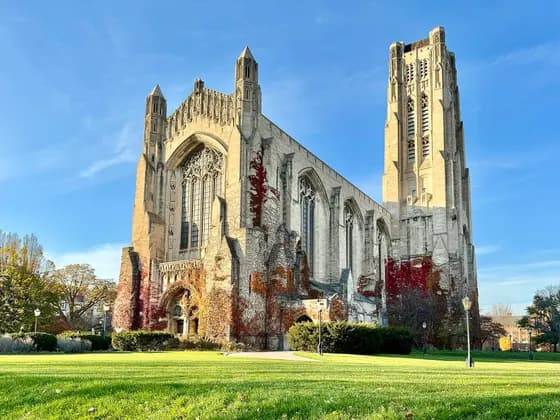
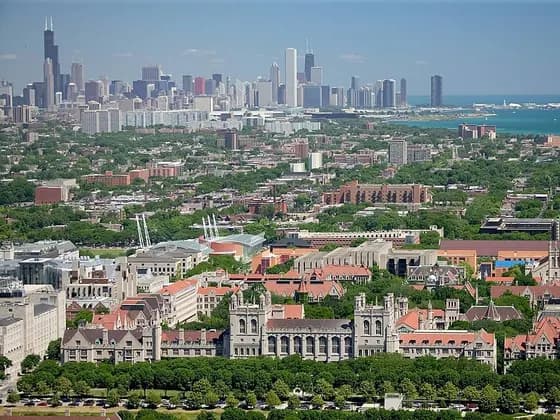
Photo: Warren LeMay from Chicago, IL, United States · CC BY-SA 2.0 · cropped
Photo: w_lemay · CC BY-SA 2.0 · Photo: Ibrahim Old at Arabic Wikipedia · Public domain · Photo: zooey from Chicago, Illinois USA · CC BY 2.0
How to get into Pritzker School of Medicine, UChicago (MD) medicine
Step-by-step: entry requirements, admission tests, personal statement, interview format and the key deadlines.
Open the guide →Pritzker School of Medicine, UChicago (MD) entry requirements
Admission profile, interview format, decision dates and what makes Pritzker School of Medicine, UChicago (MD) different.
See the profile →The Pritzker School of Medicine, UChicago MD program
Integrated + Team-based learning, 4 years, clinical rotations across Hyde Park, Evanston and clinics across the Chicago area.
See the program →The Pritzker School of Medicine, UChicago (MD) medicine interview
Pritzker School of Medicine at the University of Chicago uses a traditional interview format — two sessions (faculty and student) of 30–45 minutes. Pritzker is embedded in one of the world's great research universities with a culture of rigorous intellectual inquiry and a distinctive emphasis on medicine as a scholarly discipline. The University of Chicago is the birthplace of Chicago economics, and the school applies similar analytical rigor to questions of healthcare policy, ethics, and clinical decision-making.
Pritzker's Bucksbaum Institute for Clinical Excellence is unique — it is an endowed institute dedicated to improving the physician-patient relationship, and every Pritzker student is expected to engage with the humanistic dimensions of medicine alongside the scientific.
Pritzker's location on Chicago's South Side means the hospital (University of Chicago Medicine) serves one of the most medically underserved communities in the US — the same community as the prosperous Hyde Park campus. This tension is a live institutional challenge that interviewers engage with directly.
Pritzker School of Medicine, UChicago (MD) interview at a glance (2027 entry)
| Annual MD class size | ~88 |
|---|---|
| Interview format | Traditional — faculty + student sessions |
| Distinctive feature | Bucksbaum Institute for Clinical Excellence |
| Tuition (2025–26) | ~USD 65,000/year |
| Application system | AMCAS + Pritzker secondary |
| Interview window | October–February |
Interview format
- Two one-on-one sessions: faculty (open-file) and student.
- No MMI.
- Interview day includes the Bucksbaum Institute overview and a tour of University of Chicago Medicine.
Working towards the MCAT score Pritzker School of Medicine, UChicago (MD) expects? Build a week-by-week plan from your test date — free for the first two weeks.
Sample interview questions
Pritzker emphasizes medicine as a scholarly discipline. What does that mean to you, and how does your background reflect that orientation?
The University of Chicago culture prizes intellectual rigor. Applicants who see medicine as primarily a trade rather than a scholarly vocation are a poor fit; connect to genuine intellectual engagement.
Why Pritzker specifically, rather than another research-oriented school? What about the University of Chicago's intellectual culture fits you?
Name the scholarly ethos, the Bucksbaum Institute, or the South Side community mission, and connect them to your own way of thinking. Avoid generic prestige answers.
Tell me about a question or idea you pursued simply because it fascinated you, with no external reward attached.
Pritzker prizes intrinsic intellectual curiosity. Show genuine inquiry and follow-through, not a polished achievement designed to impress.
How do you reconcile the analytical, evidence-driven side of medicine with the humanistic side the Bucksbaum Institute champions?
Pritzker expects engagement with both. Show you do not see rigor and compassion as opposed — the best clinicians integrate scientific reasoning with genuine understanding of patients.
University of Chicago Medicine serves one of the most medically underserved communities in the US — the South Side. At the same time, it is an elite academic medical center. How do you think about that tension?
What they are listening for:
- Institutional identity
- community-benefit obligations
- the political economy of academic medical centers
There is no easy resolution — show you can hold the tension honestly.
The South Side has experienced long-term disinvestment in community health infrastructure. What obligation does an academic medical center have to address upstream causes, not just treat disease?
What they are listening for:
- Anchor-institution responsibility
- community partnership
- trauma and violence-prevention programs
Reason rigorously about both the case for and the limits of institutional action.
A patient declines a treatment you are confident would help them, for reasons you find unconvincing. How far does respecting autonomy go?
What they are listening for:
- Capacity assessment
- exploring the reasons behind the refusal
- ensuring genuinely informed consent
Respecting a capacitated patient's choice is not the same as abandoning them — reason it through carefully.
A randomized trial would answer an important question, but enrolling patients means some receive a placebo while sick. When is that ethical?
What they are listening for:
- Clinical equipoise
- informed consent
- the ethics of randomization
A rigorous answer distinguishes genuine uncertainty from withholding known-effective care.
The Bucksbaum Institute focuses on the physician-patient relationship. Describe an interaction — clinical or otherwise — in which you felt you truly understood what someone else needed. What did understanding look like?
What they are listening for:
- Empathy
- active listening
- the difference between diagnosing a problem and understanding a person
Pritzker values the humanistic clinician as much as the rigorous one.
Explain a complex idea you understand well to me as if I had no background in it.
Use plain language and a concrete analogy, check whether you are landing, and avoid jargon. Intellectual depth means little if you cannot translate it for others.
Walk me through a research or scholarly project. What did you actually contribute, and what was its biggest limitation?
Pritzker prizes rigor. Show real methodological understanding and the intellectual honesty to critique your own work and name the next step.
Take a claim you have read about health on the South Side and tell me how you would test whether it is actually true.
Discuss data sources, confounding, comparison groups, and the difference between correlation and causation. Structured scientific reasoning is exactly what the school is probing.
How much evidence does it take before you would change how you practice, and how do you avoid both dogmatism and being whipsawed by every new study?
What they are listening for:
- Evidence hierarchies
- replication
- effect size
- proportioning belief to evidence
This is the analytically rigorous reasoning the University of Chicago culture rewards.
A patient from the South Side is wary of a major academic hospital because of how the community has been treated historically. Talk to them.
Acknowledge the history honestly, listen, and demonstrate respect rather than defensiveness. Trust must be earned, especially where institutions have failed before.
A classmate argues that focusing on community service is a distraction from rigorous science. Respond to them.
Make the intellectual case that the two are complementary — scholarly medicine includes understanding the populations you serve. Engage the argument on its merits, as the U Chicago culture would expect.
You are shown data where life expectancy on the South Side is many years lower than in wealthier Chicago neighborhoods. What questions do you ask before concluding why?
What they are listening for:
- Probe income
- access to care
- violence
- environmental exposures
- food access
- data quality
Connect the gap to structural determinants and reason about it rigorously rather than reaching for a single cause.
Practise the Pritzker School of Medicine, UChicago (MD) interview
Rehearse the real format before the day — on demand with our AI interviewers, or live with a tutor.
Sit a mock with photoreal AI interviewers — any time
A timed MMI or panel interview on video — American & international voices — with interviewers who listen, react and press with follow-ups. Rubric-scored feedback and a replay the moment you finish.






Live mocks with a tutor who’s been in the room
A full Pritzker School of Medicine, UChicago (MD)-style mock with a medic or dentist tutor — honest scoring against real marking criteria, a station-by-station debrief and a written action plan.
Book a mock interviewHow to prepare for the Pritzker School of Medicine, UChicago (MD) interview
Common pitfalls to avoid
Pritzker School of Medicine, UChicago (MD) interview — frequently asked questions
Sources & official admissions information
Ready to nail your Pritzker School of Medicine, UChicago (MD) interview?
Book a mock interview with a tutor who knows the US interview formats, orpractice unlimited stations from our interview question bank.