
Midwestern University CCOM Interview
Format, Questions & Prep Tips
Midwestern University CCOM medicine interviews for 2027 entry are a panel interview, held September 2026 through March 2027. Published figures: Annual DO class size ~208; Tuition (2025–26) ~USD 60,000/year.
- Institution
- Midwestern University Chicago College of Osteopathic Medicine
- Interview (2027 entry)
- September through March
- Decisions (2027 entry)
- Rolling decisions

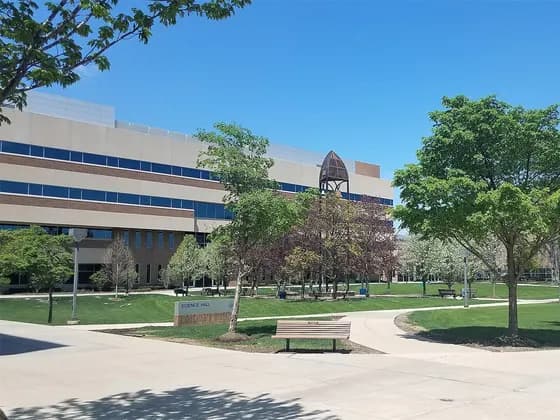
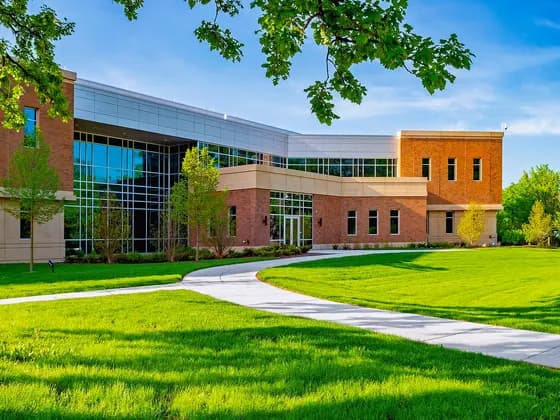
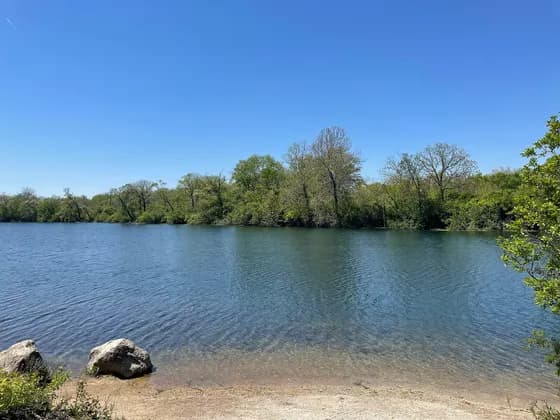
Photo: Rytyho usa · CC BY-SA 4.0 · cropped
Photo: Rytyho usa · CC BY-SA 4.0 · Photo: Mbatmwu · CC BY-SA 4.0 · Photo: SimLibrarian · CC0
How to get into Midwestern University CCOM (DO) medicine
Step-by-step: entry requirements, admission tests, personal statement, interview format and the key deadlines.
Open the guide →Midwestern University CCOM (DO) entry requirements
Admission profile, interview format, decision dates and what makes Midwestern University CCOM (DO) different.
See the profile →The Midwestern University CCOM (DO) medicine interview
Midwestern University Chicago College of Osteopathic Medicine (CCOM) uses a traditional interview format with two sessions (faculty and student) at its Downers Grove, IL campus. CCOM is part of the Midwestern University health sciences system and is one of the larger DO schools in the Midwest, training physicians for Illinois and surrounding states.
Casper is not currently required at Midwestern University CCOM — verify on the official admissions page each cycle, as requirements change. The school has strong interprofessional education with pharmacy, PA, occupational therapy, and dental students sharing the Downers Grove campus. Interviewers probe readiness for team-based, IPE-embedded training.
CCOM's clinical training network covers suburban Chicago and extends into underserved urban and rural communities in Illinois. Interviewers probe genuine awareness of Illinois health disparities, including the stark racial health disparities in Chicago.
Midwestern University CCOM (DO) interview at a glance (2027 entry)
| Annual DO class size | ~208 |
|---|---|
| Interview format | Traditional — faculty + student sessions |
| CASPer required | No |
| Application system | AACOMAS primary + CCOM secondary |
| Tuition (2025–26) | ~USD 60,000/year |
| Interview window | September–March |
Interview format
- Two sessions: faculty and student.
- Strong IPE with multiple health professions.
- No MMI.
Working towards the MCAT score Midwestern University CCOM (DO) expects? Build a week-by-week plan from your test date — free for the first two weeks.
Sample interview questions
Why osteopathic medicine, and what specifically draws you to the DO philosophy rather than an MD route?
Make a positive case: whole-person care, the structure-function relationship, and OMM as a distinct clinical tool. CCOM wants applicants who chose the osteopathic path on its own merits, not as a fallback.
What about Midwestern University CCOM specifically draws you, beyond it being a DO program in the Midwest?
Reference the large class, the strong interprofessional education model, the Downers Grove campus shared with multiple health professions, and the Illinois clinical network spanning suburban, urban, and rural communities.
How do you see osteopathic manipulative treatment fitting into the kind of physician you want to be?
Even if you are unsure of specialty, show genuine interest in OMM and whole-person care. Connect it to patient-centered, hands-on assessment and the osteopathic emphasis on the body's self-regulating capacity.
Tell us about an experience that confirmed medicine, rather than another health profession, is right for you.
Concrete, reflective story. Given CCOM's IPE setting, you can show respect for other professions while explaining what specifically pulls you toward the physician role.
Chicago's South Side has life expectancy rates over 10 years lower than the North Shore suburbs. What drives this disparity and what should physicians do about it?
What they are listening for:
- Structural racism
- disinvestment
- food deserts
- environmental exposures
- incarceration
- the chronic stress of poverty
Discuss physician advocacy roles and community health models without overclaiming what one clinician can fix.
A patient declines a recommended vaccine based on misinformation they read online. How do you handle it?
Respect autonomy while fulfilling your duty to inform. Explore their concerns, correct misinformation with empathy and evidence, and preserve the relationship for future opportunities rather than coercing.
You suspect a colleague on your team is impaired at work. What is your responsibility?
Patient safety is paramount. Discuss escalation through appropriate channels, compassion for a colleague who may be unwell, and the duty not to ignore the situation. Balance loyalty against the obligation to protect patients.
Two patients need an ICU bed and only one is available. How should that decision be made, and who should make it?
Clinical need, likelihood of benefit, and transparent, consistent criteria rather than ad hoc judgment. Reference the role of triage protocols and ethics committees, and avoid implying that ability to pay should factor in.
At CCOM you will train alongside pharmacy, PA, OT, and dental students. Describe a time when collaboration with a non-physician clinician significantly improved an outcome you were responsible for.
A genuine interprofessional story. Show you understand what a pharmacist, PA, or OT brings to the table that a physician does not, and how you communicated across roles.
Describe a time you had to give difficult feedback or bad news to someone. How did you approach it?
What they are listening for:
- Empathy
- clear and honest delivery
- checking understanding
- following up
Reflect on what you would do differently. CCOM values communication that respects the other person's dignity.
CCOM is one of the larger DO classes and the preclinical curriculum is demanding. How will you stay on top of the workload?
Realistic study strategy, time management, and use of support resources. Acknowledge that OMM is woven through the curriculum and that you will sit COMLEX-USA, with USMLE as an option.
Is there anything in your AACOMAS application or MCAT history you would want to explain or put in context?
Address weaknesses proactively and honestly, without excuses, and emphasize growth and trajectory. Self-awareness reassures interviewers more than a flawless record.
Role-play: a classmate asks to copy your answers on a take-home assignment because they are overwhelmed. Respond.
Integrity and empathy together. Decline to enable academic dishonesty, but offer legitimate help such as studying together or pointing them to support services. Show you can be both principled and kind.
Role-play: a patient is upset that their appointment is running 90 minutes late in a busy clinic. How do you respond?
Acknowledge and apologize without defensiveness, explain honestly, and refocus on their needs. De-escalation, empathy, and professionalism are being assessed.
You are shown Chicago community-area data linking ZIP code to life expectancy, with neighboring areas differing by over a decade. What does this tell you and what would you want to know before drawing conclusions?
Interpret cautiously:
- social determinants
- access
- environmental exposures
- the limits of ecological data
Distinguish correlation from causation and identify what individual-level data would clarify.
Practise the Midwestern University CCOM (DO) interview
Rehearse the real format before the day — on demand with our AI interviewers, or live with a tutor.
Sit a mock with photoreal AI interviewers — any time
A timed MMI or panel interview on video — American & international voices — with interviewers who listen, react and press with follow-ups. Rubric-scored feedback and a replay the moment you finish.





Live mocks with a tutor who’s been in the room
A full Midwestern University CCOM (DO)-style mock with a medic or dentist tutor — honest scoring against real marking criteria, a station-by-station debrief and a written action plan.
Book a mock interviewHow to prepare for the Midwestern University CCOM (DO) interview
Common pitfalls to avoid
Midwestern University CCOM (DO) interview — frequently asked questions
Sources & official admissions information
Ready to nail your Midwestern University CCOM (DO) interview?
Book a mock interview with a tutor who knows the US interview formats, orpractice unlimited stations from our interview question bank.