
McGovern Medical School UTHealth Houston Interview
Format, Questions & Prep Tips
McGovern Medical School UTHealth Houston medicine interviews for 2027 entry are a traditional interview. Published figures: Annual MD class size ~240; Interview format Traditional — faculty + student interview, 20–30 min each; In-state preference Strong (~94% Texas residents).
- Institution
- McGovern Medical School at UTHealth Houston
- Interview (2027 entry)
- October through February; rolling invitations after secondary review
- Decisions (2027 entry)
- Rolling decisions; final notifications by March 30
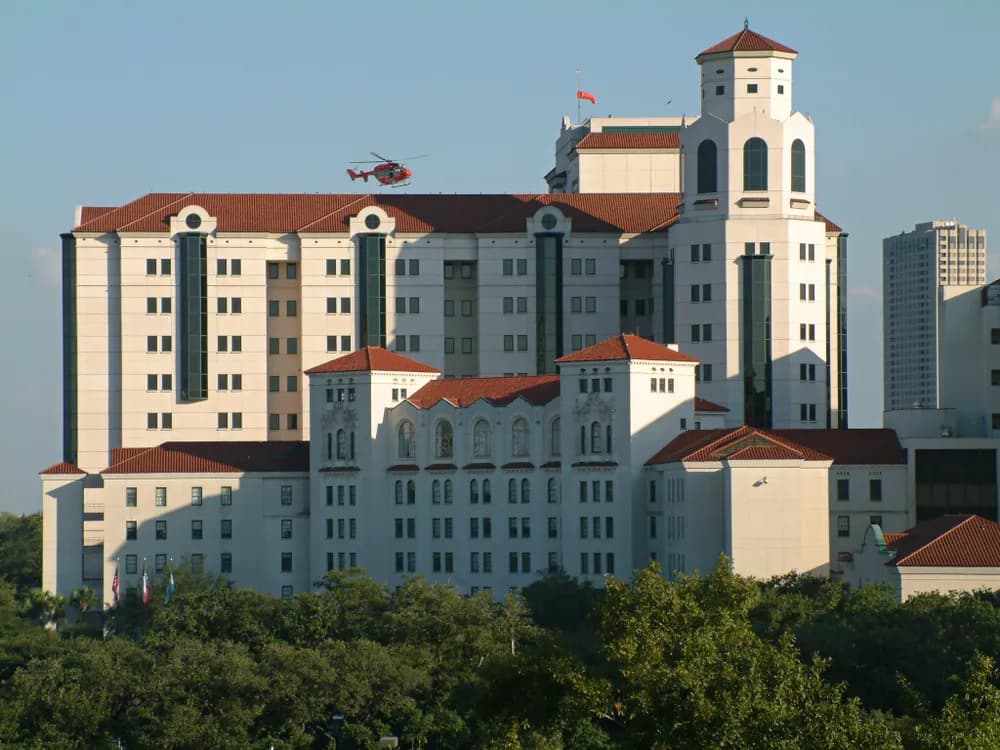
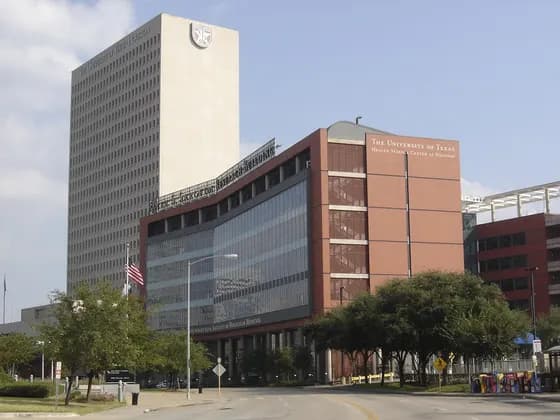


Photo: Rechlin · Public domain · cropped
Photo: Zereshk · CC BY 3.0 · Photo: xiquinhosilva · CC BY 2.0 · Photo: Tony Webster · CC BY 2.0
How to get into McGovern Medical School UTHealth Houston (MD) medicine
Step-by-step: entry requirements, admission tests, personal statement, interview format and the key deadlines.
Open the guide →McGovern Medical School UTHealth Houston (MD) entry requirements
Admission profile, interview format, decision dates and what makes McGovern Medical School UTHealth Houston (MD) different.
See the profile →The McGovern Medical School UTHealth Houston (MD) medicine interview
McGovern Medical School at UTHealth Houston uses a traditional panel interview format — applicants typically meet with two interviewers (a faculty physician and a current medical student) in separate 20–30 minute sessions. The school is embedded in the Texas Medical Center, the largest medical complex in the world, and trains one of the largest MD classes in the US (~240 students per year).
As a public TMDSAS school, McGovern strongly favors Texas residents. Interviewers probe motivation for medicine in Texas, clinical and community experience, and character — academic metrics are already filtered by the pre-interview stage.
The school’s diverse clinical training environment — Memorial Hermann (academic), LBJ Hospital (safety-net), Harris Health System (community), and the Houston VA — is a major draw; applicants who understand and articulate this depth distinguish themselves.
McGovern Medical School UTHealth Houston (MD) interview at a glance (2027 entry)
| Annual MD class size | ~240 |
|---|---|
| Interview format | Traditional — faculty + student interview, 20–30 min each |
| Application system | TMDSAS + secondary |
| In-state preference | Strong (~94% Texas residents) |
| MCAT median | ~512–514 |
| GPA median | ~3.72–3.80 |
| Interview window | October–February |
Interview format
- Two separate traditional interview sessions — faculty physician and current medical student.
- Each session approximately 20–30 minutes; interviewers have reviewed the TMDSAS application.
- Full interview day includes Texas Medical Center campus tour and Memorial Hermann Hospital orientation.
- Informal lunch with current students; admissions information session.
- Some interviews may be conducted virtually (verify current format).
Working towards the MCAT score McGovern Medical School UTHealth Houston (MD) expects? Build a week-by-week plan from your test date — free for the first two weeks.
Sample interview questions
Why do you want to practice medicine in Texas, and what specific patient population do you want to serve?
Be concrete — Texas-specific health challenges (uninsured rates, border health, rural shortages, urban poverty). Connect your clinical experiences to a specific population or geography.
Tell me about a patient or clinical experience that reinforced your decision to pursue medicine.
STAR structure. Reflect on what you learned about yourself as a future clinician — the emotional, ethical, or intellectual dimension — not just the medical facts of the case.
You are a third-year student on a busy inpatient service. Your attending tells you to discharge a patient who you believe is not yet medically stable. What do you do?
Navigate the power differential and patient safety tension carefully. Raise concern appropriately (SBAR format), document your concern, and understand escalation paths — without being reckless or passive.
What is a health issue significantly affecting Houston or Harris County that you think medical schools should train physicians to address?
Show Houston-specific knowledge:
- Harris County uninsured population (~750,000)
- climate-related health risks (Hurricane Harvey aftermath)
- immigrant health access
- diabetes and obesity rates
Connect to McGovern's clinical training settings.
A patient's family wants to continue aggressive treatment for an elderly patient who has a valid DNR. How do you handle this family meeting?
Address advance directives, surrogate decision-making, family grief, and goals-of-care conversation techniques. Show empathy without compromising the patient's expressed wishes.
Harris County has one of the highest rates of uninsured residents in the US. As a physician, what is your responsibility beyond treating individual patients?
Discuss population health, advocacy, FQHC and safety-net systems, political engagement, and community health education. Show awareness that physicians operate in systems, not just exam rooms.
What drew you to McGovern Medical School specifically among Texas TMDSAS schools?
Reference the Texas Medical Center location, specific affiliated hospitals (Memorial Hermann trauma, LBJ Hospital safety-net, Houston VA), and any research or subspecialty interest that aligns with UTHealth Houston's strengths.
Describe a time you worked effectively with someone who had a very different communication style from yours.
Demonstrate adaptability and interpersonal awareness. Connect to clinical team dynamics — physicians work with nurses, social workers, pharmacists, and patients with vastly different communication styles.
You are shadowing in the ED at LBJ Hospital when a young undocumented immigrant is brought in with a severe injury. He is afraid that seeking care will lead to deportation. How do you approach this?
Address confidentiality (HIPAA), hospital policy, federal protections for undocumented patients in emergency settings (EMTALA), and the physician's advocacy role. Show cultural sensitivity and practical knowledge.
Harris County has roughly 750,000 uninsured residents. If you were given county-level data and asked where a new safety-net clinic would do the most good, what would you look at — and what would you be careful not to assume?
Reason with disease burden, uninsured density, transit access, existing FQHC coverage, and language needs. Be cautious about equating high population with highest need, or ignoring where patients can actually reach care. Shows Houston-specific population-health thinking.
Role-play: at the LBJ Hospital clinic, a patient who has been waiting all day for a same-day appointment is told the schedule is full and he must come back. He is frustrated and says he took unpaid time off to be here. Respond to him.
Acknowledge the real cost he's paid, avoid defensiveness about a strained safety-net system, and find a concrete next step (triage, nurse review, soonest slot, transport considerations). Tests humane communication under safety-net resource strain.
How would you explain to an anxious patient with limited health literacy why their 'numbers look fine' but you still want to change their treatment?
Translate clinical reasoning into plain language, use teach-back, and address the disconnect between feeling fine and clinical risk. McGovern's diverse, often underserved patient base makes this an everyday skill.
McGovern trains one of the largest classes in the country. How do you stay grounded and avoid being lost in a big cohort — what's your track record of doing that in large environments?
Show self-direction and proactivity drawn from real experience (large university, big team). Demonstrate you can build mentorship and community without hand-holding. Honest self-awareness over generic confidence.
Hurricane Harvey exposed how climate events drive health crises in Houston. What lasting clinical and public-health lessons should that have taught the city's physicians?
Connect flooding to mold and respiratory illness, chronic-disease medication and dialysis disruption, mental-health aftermath, and the inequitable geography of flood risk. Ground it in Houston, not abstract disaster theory.
You are a student and overhear a team member make a dismissive, stereotyping comment about an undocumented patient. What do you do?
Address professionalism and patient dignity. Consider a respectful in-the-moment redirect, a private follow-up, and escalation if it reflects a pattern affecting care. Balance speaking up with your position as a student.
Practise the McGovern Medical School UTHealth Houston (MD) interview
Rehearse the real format before the day — on demand with our AI interviewers, or live with a tutor.
Sit a mock with photoreal AI interviewers — any time
A timed MMI or panel interview on video — American & international voices — with interviewers who listen, react and press with follow-ups. Rubric-scored feedback and a replay the moment you finish.






Live mocks with a tutor who’s been in the room
A full McGovern Medical School UTHealth Houston (MD)-style mock with a medic or dentist tutor — honest scoring against real marking criteria, a station-by-station debrief and a written action plan.
Book a mock interviewHow to prepare for the McGovern Medical School UTHealth Houston (MD) interview
Common pitfalls to avoid
McGovern Medical School UTHealth Houston (MD) interview — frequently asked questions
Sources & official admissions information
Ready to nail your McGovern Medical School UTHealth Houston (MD) interview?
Book a mock interview with a tutor who knows the US interview formats, orpractice unlimited stations from our interview question bank.