
UIW School of Osteopathic Medicine Interview
Format, Questions & Prep Tips
UIW School of Osteopathic Medicine medicine interviews for 2027 entry are a traditional interview, held September 2026 through March 2027. Published figures: Annual DO class size ~130; Tuition (2025–26) ~USD 61,000/year.
- Institution
- University of the Incarnate Word School of Osteopathic Medicine
- Interview (2027 entry)
- September through March
- Decisions (2027 entry)
- Rolling decisions

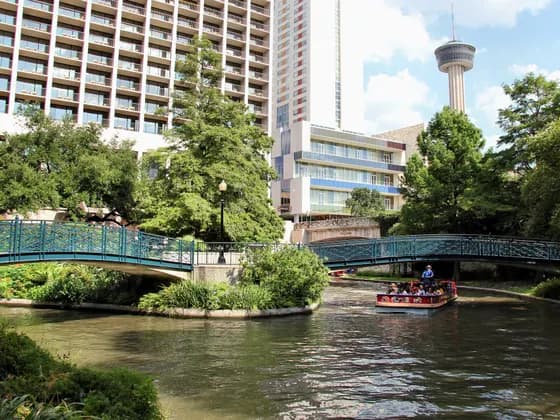
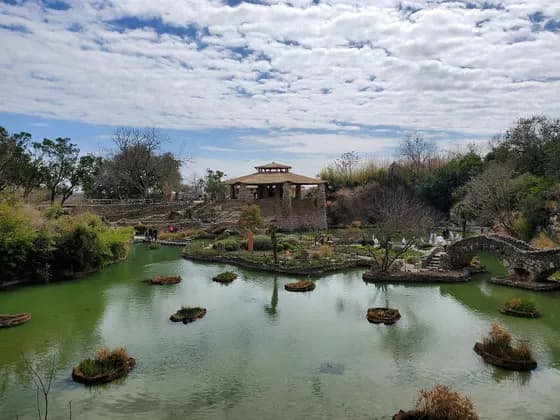
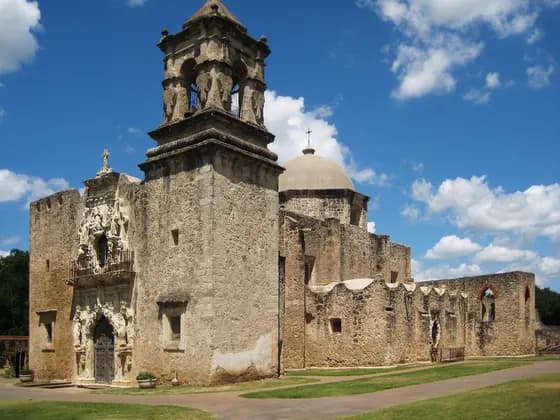
Photo: Leonard Pierce · CC BY-SA 3.0 · cropped
Photo: Larry D. Moore · CC BY 4.0 · Photo: Jouaienttoi · CC BY-SA 4.0 · Photo: Liveon001 ©Travis Witt · CC BY-SA 3.0
How to get into UIW School of Osteopathic Medicine (DO) medicine
Step-by-step: entry requirements, admission tests, personal statement, interview format and the key deadlines.
Open the guide →UIW School of Osteopathic Medicine (DO) entry requirements
Admission profile, interview format, decision dates and what makes UIW School of Osteopathic Medicine (DO) different.
See the profile →The UIW School of Osteopathic Medicine (DO) medicine interview
University of the Incarnate Word School of Osteopathic Medicine (UIWSOM) uses a traditional interview format with two sessions at its San Antonio, TX campus. UIWSOM is a Catholic-sponsored institution founded in 2016 with a mission to serve medically underserved communities, particularly the large Latinx population in South Texas and the US-Mexico border region.
San Antonio's demographics — majority Hispanic, high rates of diabetes and obesity (the 'diabesity belt'), large uninsured population, and proximity to the US-Mexico border — create a distinct training context. Interviewers probe cultural competence and commitment to serving the South Texas and border community.
UIWSOM is a newer DO school and its mission is explicitly tied to the Catholic tradition of service to the poor and the UIW founding Sisters of Charity of the Incarnate Word's legacy.
UIW School of Osteopathic Medicine (DO) interview at a glance (2027 entry)
| Annual DO class size | ~130 |
|---|---|
| Interview format | Traditional — two sessions |
| CASPer required | No |
| Application system | AACOMAS primary + UIWSOM secondary |
| Tuition (2025–26) | ~USD 61,000/year |
| Interview window | September–March |
Interview format
- Two sessions: faculty and student.
- Catholic mission and service to the poor are explicit values.
- No MMI.
Working towards the MCAT score UIW School of Osteopathic Medicine (DO) expects? Build a week-by-week plan from your test date — free for the first two weeks.
Sample interview questions
UIWSOM is mission-driven toward serving the Latinx community in South Texas. How does your background prepare you to serve as a culturally humble physician for this community?
South Texas Latinx health: diabetes, obesity, cardiovascular disease, and barriers to care including undocumented status, poverty, and language. Demonstrate genuine cultural humility rather than claimed expertise, and connect lived or service experience to the border-health mission.
Why osteopathic medicine, and why a DO rather than an MD pathway, for the kind of physician you want to become?
Articulate a positive, affirmative case for the DO philosophy: whole-person care, the body's interrelationship of structure and function, and osteopathic manipulative medicine as an added clinical tool. Avoid framing DO as a fallback to MD; UIWSOM wants applicants who chose osteopathy deliberately.
What specifically draws you to San Antonio and the US-Mexico border region as a place to train and potentially practice?
Connect to the diabesity belt, the large uninsured and immigrant population, and the shortage of bilingual physicians. Show you have researched the region rather than treating it as interchangeable with any other underserved area.
Tell us about a time you worked with a community very different from your own. What did you learn?
Use a concrete story showing growth in cultural humility, listening, and adapting. Reflect on what you got wrong as well as right; UIWSOM values self-aware service over saviourism.
UIWSOM is founded on Catholic principles of service to the poor. How do those values align with your own approach to medicine?
You do not need to be Catholic, but you should articulate genuine alignment with service to the marginalized and the dignity of every patient. UIW welcomes students of all faith backgrounds and none.
An undocumented patient with poorly controlled diabetes avoids the clinic because she fears immigration consequences. How would you approach her care?
What they are listening for:
- Patient trust
- confidentiality
- knowledge of sliding-scale and FQHC resources
- the physician's duty to treat regardless of immigration status
Show awareness that fear itself is a barrier to chronic-disease management on the border.
A patient asks you to omit a stigmatizing diagnosis from a form so an employer cannot see it. How do you respond?
Balance honesty and accuracy of records against patient advocacy and confidentiality. Explore what the patient actually fears, what the form legally requires, and how you protect them within ethical and legal limits rather than simply refusing or agreeing.
Resources at a border clinic are stretched thin. How do you think about allocating limited time and services fairly among patients?
Distributive justice, triage by clinical need rather than ability to pay, and the structural roots of scarcity. Avoid glib answers; show you can hold the tension between individual advocacy and population-level fairness.
You must deliver a new diagnosis of type 2 diabetes to a Spanish-speaking patient through an interpreter. How do you do it well?
Professional interpreter use rather than family members, plain language, teach-back to confirm understanding, and addressing the emotional weight. If you speak Spanish, discuss when professional interpretation is still appropriate.
Describe a time you had to explain something complex to someone with limited health literacy. What worked?
Concrete example, use of analogies and plain language, checking understanding, and patience. Tie to the South Texas patient population where health literacy and access are genuine barriers.
Walk us through a part of your AACOMAS academic record you are not proud of and what it taught you.
Own it honestly, explain context without excuses, and show concrete evidence of upward trajectory or changed study habits. Resilience and self-awareness matter more than a perfect MCAT or GPA.
Osteopathic students sit COMLEX-USA and may also take USMLE. How do you plan to manage the demands of the preclinical curriculum?
Realistic study strategy, use of support resources, and self-knowledge about how you learn. Show you understand COMLEX-USA is the DO licensing sequence and that OMM is integrated throughout the curriculum.
Role-play: a fellow student confides they have been falsifying patient-encounter logs to finish a rotation faster. What do you do?
Professionalism and patient safety first. Explore why, encourage self-report, but recognize your obligation to escalate if they will not. Show empathy without compromising integrity.
Role-play: an elderly patient is angry after waiting two hours in a crowded clinic and is taking it out on you. Respond.
Acknowledge the frustration, apologize for the wait without being defensive, explain realistically, and refocus on their care. De-escalation and genuine empathy are being assessed.
You are shown county-level data: South Texas border counties have far higher diabetes prevalence and amputation rates than the Texas average. What might explain this and what would you want to know?
Interpret cautiously:
- access to care
- food environment
- poverty
- late presentation
- follow-up gaps
Distinguish association from causation and identify what additional data would sharpen the picture.
Practise the UIW School of Osteopathic Medicine (DO) interview
Rehearse the real format before the day — on demand with our AI interviewers, or live with a tutor.
Sit a mock with photoreal AI interviewers — any time
A timed MMI or panel interview on video — American & international voices — with interviewers who listen, react and press with follow-ups. Rubric-scored feedback and a replay the moment you finish.



Live mocks with a tutor who’s been in the room
A full UIW School of Osteopathic Medicine (DO)-style mock with a medic or dentist tutor — honest scoring against real marking criteria, a station-by-station debrief and a written action plan.
Book a mock interviewHow to prepare for the UIW School of Osteopathic Medicine (DO) interview
Common pitfalls to avoid
UIW School of Osteopathic Medicine (DO) interview — frequently asked questions
Sources & official admissions information
Ready to nail your UIW School of Osteopathic Medicine (DO) interview?
Book a mock interview with a tutor who knows the US interview formats, orpractice unlimited stations from our interview question bank.