
University of Texas Southwestern Medical School Interview
Format, Questions & Prep Tips
University of Texas Southwestern Medical School medicine interviews for 2027 entry are a traditional interview. University of Texas Southwestern Medical School describes the format as: Virtual interviews for the 2026–27 cycle (interview structure not described). Published figures: Annual MD class size ~230; Applications received ~5,500–7,000 per cycle; Interview format Traditional — two one-on-one sessions, ~30 min each.
- Institution
- University of Texas Southwestern Medical School
- Interview (2027 entry)
- September through February; rolling invitations issued after secondary review
- Decisions (2027 entry)
- TMDSAS match results typically released late February; school-specific decisions by March 30
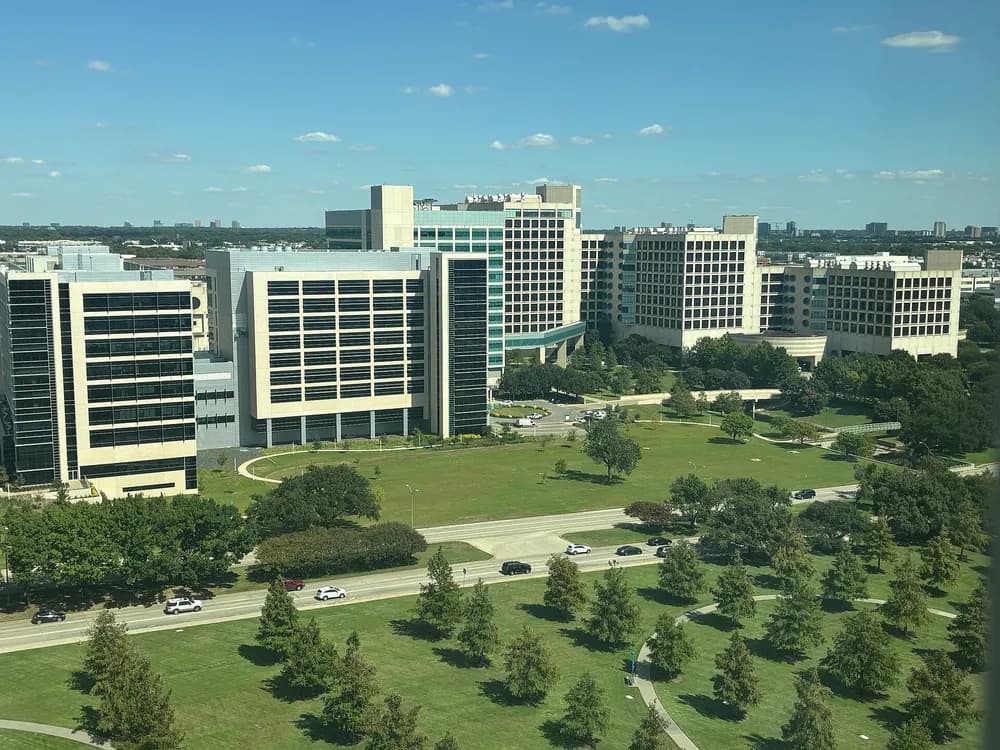
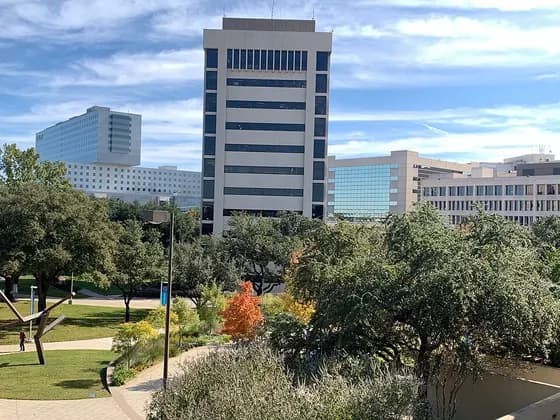
Photo: Nightryder84 · CC0 · cropped
Photo: Nightryder84 · CC BY-SA 4.0 · Photo: IcedCowboyCoffee · CC0 · Photo: Michael Barera · CC BY-SA 4.0
How to get into University of Texas Southwestern Medical School (MD) medicine
Step-by-step: entry requirements, admission tests, personal statement, interview format and the key deadlines.
Open the guide →University of Texas Southwestern Medical School (MD) entry requirements
Admission profile, interview format, decision dates and what makes University of Texas Southwestern Medical School (MD) different.
See the profile →The University of Texas Southwestern Medical School (MD) medicine interview
The University of Texas Southwestern Medical School uses a traditional interview format — typically two one-on-one sessions with faculty, clinicians, or senior medical students. UTSW is one of the most research-intensive public medical schools in the United States, home to multiple Nobel laureates, and the interview process reflects this emphasis on scholarly potential alongside clinical motivation.
Affiliation with Parkland Memorial Hospital — one of the largest safety-net hospitals in the country — means UTSW also values an understanding of health disparities, underserved-community medicine, and high-acuity clinical environments.
Applications are submitted via TMDSAS; the school reserves most seats for Texas residents. Interviewers are interested in candidates who can articulate both a research vision and a genuine commitment to patients.
University of Texas Southwestern Medical School (MD) interview at a glance (2027 entry)
| Annual MD class size | ~230 |
|---|---|
| Applications received | ~5,500–7,000 per cycle |
| Interview format | Traditional — two one-on-one sessions, ~30 min each |
| Curriculum | Integrated organ-system with longitudinal scholarly activity |
| Application system | TMDSAS (Texas residents strongly preferred) |
| Interview window | September–February |
| Established | 1943 |
Interview format
- Two separate traditional interviews with faculty, clinicians, or senior students; each ~30 minutes.
- Interviewers read the full application in advance — expect specific questions about research and clinical experiences.
- Full interview day includes orientation, campus and hospital tour, lunch with current students, and information sessions.
- Both behavioral ("tell me about a time…") and situational ("what would you do if…") questions are common.
- Students and interviewers provide separate evaluations that are scored independently.
- In-person preferred; virtual format available for select candidates.
Working towards the MCAT score University of Texas Southwestern Medical School (MD) expects? Build a week-by-week plan from your test date — free for the first two weeks.
Sample interview questions
Walk me through your most meaningful research experience. What was the scientific question, what did you find, and what would you investigate next?
UTSW is a powerhouse research institution — intellectual ownership matters. Show you understand the broader significance of your work, not just lab tasks. Avoid vague "I ran experiments" answers.
Why UT Southwestern specifically? What about Dallas and this institution aligns with where you want to be in ten years?
Reference Parkland Memorial, the NIH-funded MSTP, specific research departments or faculty, and the Dallas healthcare ecosystem. Generic answers are noticeable in a school with a distinctive research identity.
You are a resident at Parkland Memorial. A patient presents with an emergency but has no insurance and cannot pay. Your attending suggests a less thorough work-up to conserve resources. How do you respond?
Address EMTALA obligations, the standard of care, and the tension between resource stewardship and individual patient duty. Show you can raise concerns professionally without being confrontational.
A pharmaceutical company offers your research lab a large grant that comes with an advisory-board seat and speaking fee. What ethical issues does this raise?
Discuss conflict of interest disclosure requirements, the NIH's COI regulations, institutional policies, and the risk that industry funding shapes research design. Show familiarity with research integrity norms.
A patient from a low-income background is reluctant to follow through with a recommended diagnostic test because of cost concerns. How do you handle this?
Apply shared decision-making principles. Explore the patient's perspective, discuss financial assistance programs (Medicaid, hospital charity care, CHIP), and avoid dismissing cost as "not a medical issue".
Describe a moment when a scientific result surprised you or contradicted your hypothesis. How did you respond intellectually?
Demonstrates intellectual honesty and scientific process. UTSW values curiosity and methodological rigor — show you updated your thinking rather than rationalizing the unexpected result away.
Should the United States adopt a single-payer healthcare system? What evidence informs your view?
Take a position and defend it with data. Reference administrative cost comparisons, outcomes data, coverage gaps, and counterarguments. Intellectual engagement with policy is expected at a school affiliated with Parkland.
Tell me about a clinical experience where you felt out of your depth. What did you do, and what did that experience teach you?
Vulnerability and self-awareness are valued. Show the learning arc — not just that you recovered, but what structural skill or knowledge you sought afterward. Avoid trivializing the challenge.
You disagree with a senior researcher's interpretation of data in a lab meeting. How do you raise your concern?
Show professional assertiveness balanced with intellectual humility. Discuss the norms of scientific debate, the importance of evidence-based challenge, and the distinction between professional disagreement and interpersonal conflict.
A 70-year-old patient with advanced cancer wants aggressive treatment despite low odds of benefit. Her adult children want you to recommend palliative care only. How do you navigate this?
Center patient autonomy. Discuss informed consent, surrogate decision-making limits (family cannot override a competent patient), goals-of-care conversations, and the role of palliative care as complementary rather than competing with treatment.
Role-play: I am an uninsured patient at Parkland. You have recommended a diagnostic test, and I have just told you, embarrassed, that I have been putting off care for a year because I cannot pay for anything. The assessor will play the patient — talk with me.
What they are listening for:
- Respond to the embarrassment without judgment
- frame cost barriers as structural
- concretely connect the patient to Parkland's charity-care
- sliding-scale
- county-health resources
Confirm what is actually affordable before finalizing a plan. UTSW's Parkland affiliation makes this a routine, realistic encounter the assessor is evaluating live.
You are shown data showing Texas has the highest uninsured rate of any US state, with sharp differences by county and ethnicity. What drives this, and what does the data not tell you on its own?
Reference Texas's decision not to expand Medicaid, the resulting coverage gap, employment patterns, and immigration-related exclusions. Note what the aggregate data hides (within-county variation, churn, underinsurance). UTSW and Parkland serve a heavily underinsured population, so policy-literate data interpretation is expected.
UTSW's faculty include Nobel laureates whose basic-science discoveries reshaped clinical medicine. Pick a basic-science advance you find compelling and trace how it moved — or could move — from bench to bedside.
Choose a genuine example and articulate the translational pathway: discovery, mechanism, preclinical work, trials, and clinical application, including where bottlenecks occur. UTSW's physician-scientist identity means interviewers reward intellectual ownership and a real grasp of how science becomes therapy.
A promising clinical trial at UTSW enrolls few Spanish-speaking or uninsured patients, even though they make up much of Parkland's population. Is that an ethical problem, and how would you address it?
Frame underrepresentation as a justice issue — both fairness in access to research and the generalisability of findings to the population served. Discuss language-concordant consent, trial-site and scheduling barriers, and trust. UTSW's research-plus-safety-net duality makes equitable research participation a live tension.
You are a student and you believe a senior physician's plan for a Parkland patient overlooks the patient's inability to afford follow-up. How do you raise this with the attending?
Show professional assertiveness with humility: frame it as advocacy for the patient, present the specific barrier and a possible alternative, and choose an appropriate moment. Demonstrate you can speak up about a care-quality concern without undermining the hierarchy — a skill UTSW's clinical environment demands.
Practise the University of Texas Southwestern Medical School (MD) interview
Rehearse the real format before the day — on demand with our AI interviewers, or live with a tutor.
Sit a mock with photoreal AI interviewers — any time
A timed MMI or panel interview on video — American & international voices — with interviewers who listen, react and press with follow-ups. Rubric-scored feedback and a replay the moment you finish.



Live mocks with a tutor who’s been in the room
A full University of Texas Southwestern Medical School (MD)-style mock with a medic or dentist tutor — honest scoring against real marking criteria, a station-by-station debrief and a written action plan.
Book a mock interviewHow to prepare for the University of Texas Southwestern Medical School (MD) interview
Common pitfalls to avoid
University of Texas Southwestern Medical School (MD) interview — frequently asked questions
Sources & official admissions information
Ready to nail your University of Texas Southwestern Medical School (MD) interview?
Book a mock interview with a tutor who knows the US interview formats, orpractice unlimited stations from our interview question bank.