
UH Fertitta Family College of Medicine Interview
Format, Questions & Prep Tips
UH Fertitta Family College of Medicine medicine interviews for 2027 entry are multiple mini interviews (MMI). Published figures: Annual MD class size 60 (since 2022; plan to reach 120); Interview format MMI — 6–8 stations, ~8 min each; In-state preference Very strong (~95% Texas residents).
- Institution
- University of Houston Tilman J. Fertitta Family College of Medicine
- Interview (2027 entry)
- October through February; rolling invitations
- Decisions (2027 entry)
- Rolling decisions; final notifications by March 30

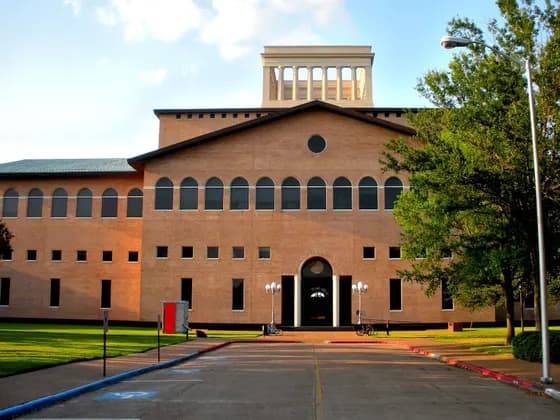
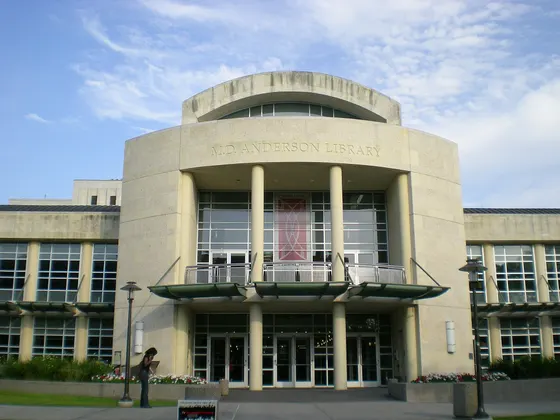

Photo: RJN · CC BY-SA 3.0 · cropped
Photo: RJN2 · CC BY-SA 3.0 · Photo: BrianReading · CC BY-SA 4.0 · Photo: Hequals2henry · CC BY-SA 3.0
How to get into UH Fertitta Family College of Medicine (MD) medicine
Step-by-step: entry requirements, admission tests, personal statement, interview format and the key deadlines.
Open the guide →UH Fertitta Family College of Medicine (MD) entry requirements
Admission profile, interview format, decision dates and what makes UH Fertitta Family College of Medicine (MD) different.
See the profile →The UH Fertitta Family College of Medicine (MD) medicine interview
The University of Houston Fertitta Family College of Medicine uses a **Multiple Mini-Interview (MMI)** format, typically 6–8 stations of ~8 minutes each. The school was founded in 2020 with a specific mission to train physicians for Houston’s historically underserved communities, and the MMI is designed to assess interpersonal skills, health equity awareness, and community orientation.
Houston is the most diverse large city in the US, and UH Fertitta is embedded within the University of Houston system — itself one of the most diverse universities in the country. Interviewers probe genuine commitment to urban underserved medicine, not abstract equity language.
As a very new school, candidates should conduct independent due diligence on board outcomes and match results while recognizing the school’s strong institutional backing.
UH Fertitta Family College of Medicine (MD) interview at a glance (2027 entry)
| Annual MD class size | 60 (since 2022; plan to reach 120) |
|---|---|
| Interview format | MMI — 6–8 stations, ~8 min each |
| Application system | TMDSAS + secondary |
| In-state preference | Very strong (~95% Texas residents) |
| MCAT median | ~510–513 (limited data; estimate) |
| GPA median | ~3.65–3.73 (limited data; estimate) |
| Interview window | October–February |
Interview format
- MMI format: 6–8 stations, each approximately 8 minutes with reading time.
- Stations probe ethical reasoning, communication, collaborative problem-solving, and health equity.
- Interviewers include faculty, community health advocates, and current students.
- Tour of UH main campus medical education facilities.
- Full interview day includes admissions presentation and student Q&A.
Working towards the MCAT score UH Fertitta Family College of Medicine (MD) expects? Build a week-by-week plan from your test date — free for the first two weeks.
Sample interview questions
Houston's Third Ward and Acres Homes have some of the highest poverty and chronic disease rates in the city. What does it mean to be a physician trained specifically to serve these communities?
Be specific about Houston's underserved neighborhoods. Show you understand the social determinants: food insecurity, housing instability, limited public transit, language barriers. Demonstrate genuine community awareness, not just abstract equity commitment.
A patient who is undocumented needs a procedure that your hospital cannot bill for. The administrator is pressuring you to discharge the patient. What do you do?
Address EMTALA, patient rights, hospital charity care obligations, your ethical duty as a physician independent of financial considerations, and appropriate escalation channels.
Role-play: A patient speaks limited English and needs to understand a complex treatment plan. You have a telephone interpreter available. How do you conduct this conversation?
Demonstrate professional interpreter use (speak to patient, not interpreter), plain language, checking for understanding, pacing the conversation, and cultural sensitivity.
Why UH Fertitta rather than Baylor or McGovern, which are already established Houston medical schools?
Reference the community-embedded model, UH's diversity (most diverse research university in the US), the urban underserved mission vs. the Texas Medical Center's more tertiary focus, and the small cohort mentoring environment.
You discover that a clinical protocol at your hospital is systematically undertreating pain in Black patients compared to white patients. What do you do?
Acknowledge implicit bias and structural racism in clinical practice. Discuss documentation, quality improvement processes, reporting to ethics committee or patient safety officer, and medical literature on racial disparities in pain management.
What is a social determinant of health and how does addressing it differ from treating a disease?
Define social determinants (housing, food, income, education, transportation). Distinguish individual clinical treatment from upstream intervention. Reference community health workers, FQHC models, and the limitations of the exam room as the only point of care.
You are a student working in a community health clinic and a patient tells you they stopped taking their medication because they couldn't afford it. How do you respond?
Show practical problem-solving:
- patient assistance programs (NeedyMeds, manufacturer PAPs)
- 340B drug pricing for FQHCs
- generic alternatives
- referral to social work
Avoid blame or dismissal.
University of Houston is one of the most diverse universities in the United States. How does that institutional diversity shape the kind of physician you would become at UH Fertitta?
Reference concrete diversity dimensions: multilingual student body, first-generation students, veterans, diverse socioeconomic backgrounds. Connect to the cross-cultural communication skills, perspective-broadening, and peer learning that a diverse learning community generates — and how these skills translate directly to caring for Houston's diverse patient population.
MMI station: you are shown that a clinic in Houston's Third Ward has high rates of missed appointments. The clinic considers this a 'patient compliance' problem. What alternative explanations would you investigate first?
Reframe 'non-compliance' as access barriers: transport, work hours, childcare, appointment systems, and trust. UH Fertitta's social-determinants mission rewards applicants who interrogate structural causes before blaming patients.
MMI role-play: a patient at a community clinic in Sunnyside tells you, with some hostility, that doctors never stay and never really listen, so why should they trust you. Respond to them.
Acknowledge the legitimacy of distrust rooted in real history and experience, avoid defensiveness, and commit concretely to listening and continuity. Tests humane engagement with underserved patients who have been failed before.
MMI station: explain to a community member, without jargon, why training physicians inside underserved neighborhoods rather than only at the Texas Medical Center could change health outcomes.
Make the community-embedded model tangible: physicians who understand and stay in the communities they serve, continuity, trust, and addressing determinants on the ground. Connects directly to UH Fertitta's distinctive mission.
MMI reflection station: tell me about a time you were the outsider in a community and had to earn trust. What did that teach you?
Show genuine humility and learning rather than a saviour narrative. UH Fertitta, embedded in one of the most diverse universities in the US, values applicants who can build trust across difference authentically.
MMI station: what does the evidence suggest about whether placing clinics and training in underserved communities actually improves access and outcomes — and what are the limits of that approach alone?
Engage the rationale critically: proximity and community trust help, but clinics alone don't fix housing, food, or income. Show you understand both the promise and the limits of the place-based model the school is built on.
MMI station: you notice that patients who speak limited English at your clinic consistently get shorter visits and fewer questions answered than English-speaking patients. What do you do?
Name it as an equity and quality problem, address interpreter use and workflow, and raise it through QI or supervisory channels constructively. Reflects UH Fertitta's focus on equity in a multilingual, diverse patient population.
MMI role-play: a teammate in your small learning group makes a comment that stereotypes a low-income patient population. The group goes quiet. What do you say?
Address it directly but constructively in the moment, center patient dignity, and invite reflection rather than shaming. The school's equity mission and small-cohort model make peer professionalism a tested competency.
Practise the UH Fertitta Family College of Medicine (MD) interview
Rehearse the real format before the day — on demand with our AI interviewers, or live with a tutor.
Sit a mock with photoreal AI interviewers — any time
A timed MMI or panel interview on video — American & international voices — with interviewers who listen, react and press with follow-ups. Rubric-scored feedback and a replay the moment you finish.






Live mocks with a tutor who’s been in the room
A full UH Fertitta Family College of Medicine (MD)-style mock with a medic or dentist tutor — honest scoring against real marking criteria, a station-by-station debrief and a written action plan.
Book a mock interviewHow to prepare for the UH Fertitta Family College of Medicine (MD) interview
Common pitfalls to avoid
UH Fertitta Family College of Medicine (MD) interview — frequently asked questions
Sources & official admissions information
Ready to nail your UH Fertitta Family College of Medicine (MD) interview?
Book a mock interview with a tutor who knows the US interview formats, orpractice unlimited stations from our interview question bank.