
UTMB John Sealy School of Medicine Interview
Format, Questions & Prep Tips
UTMB John Sealy School of Medicine medicine interviews for 2027 entry are multiple mini interviews (MMI). Published figures: Annual MD class size ~230; Interview format Traditional — faculty + student interview, 20–30 min each; In-state preference Strong (~93% Texas residents).
- Institution
- University of Texas Medical Branch John Sealy School of Medicine
- Interview (2027 entry)
- October through February; rolling invitations
- Decisions (2027 entry)
- Rolling decisions; final notifications by March 30

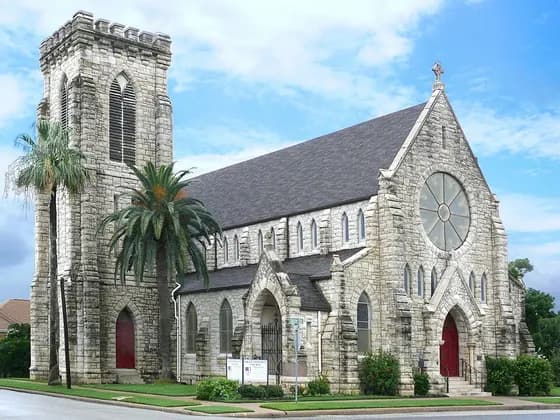

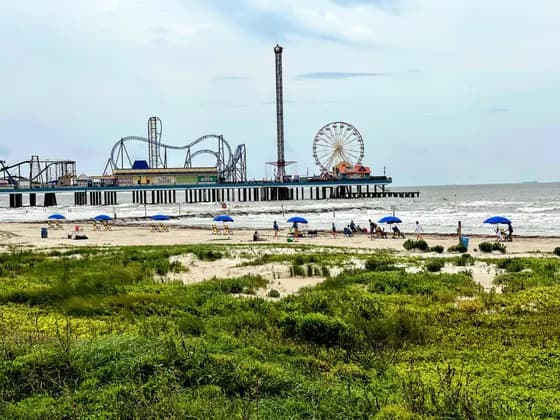
Photo: Jim Evans · CC BY-SA 4.0 · cropped
Photo: Jim Evans · CC BY-SA 3.0 · Photo: Rwminix · CC BY-SA 3.0 · Photo: Devin P Morris · CC BY-SA 4.0
How to get into UTMB John Sealy School of Medicine (MD) medicine
Step-by-step: entry requirements, admission tests, personal statement, interview format and the key deadlines.
Open the guide →UTMB John Sealy School of Medicine (MD) entry requirements
Admission profile, interview format, decision dates and what makes UTMB John Sealy School of Medicine (MD) different.
See the profile →The UTMB John Sealy School of Medicine (MD) medicine interview
UTMB John Sealy School of Medicine uses a traditional panel interview format — applicants meet with a faculty physician and a current student in separate 20–30 minute sessions. Founded in 1891, it is the oldest continuously operating medical school in Texas, located on Galveston Island on the Gulf of Mexico.
UTMB has a distinctive clinical identity: infectious disease and biocontainment research (housing a National Biocontainment Laboratory), disaster medicine shaped by Hurricane Ike, and one of the largest prison healthcare systems in the US through its Correctional Managed Care program.
Interviewers probe Texas community commitment and clinical readiness, but applicants who can articulate a genuine interest in UTMB’s unique mission areas will stand out in a large applicant pool.
UTMB John Sealy School of Medicine (MD) interview at a glance (2027 entry)
| Annual MD class size | ~230 |
|---|---|
| Interview format | Traditional — faculty + student interview, 20–30 min each |
| Application system | TMDSAS + secondary |
| In-state preference | Strong (~93% Texas residents) |
| MCAT median | ~511–513 |
| GPA median | ~3.68–3.76 |
| Interview window | October–February |
Interview format
- Two traditional interview sessions — faculty physician and current student, each 20–30 minutes.
- Interviewers have reviewed full TMDSAS application.
- Tour of Galveston Island campus including the historic Ashbel Smith Building ("Old Red") and John Sealy Hospital.
- Admissions presentation and student lunch.
- The island campus setting creates a distinctive interview day experience.
Working towards the MCAT score UTMB John Sealy School of Medicine (MD) expects? Build a week-by-week plan from your test date — free for the first two weeks.
Sample interview questions
UTMB has a unique role in Texas medicine — from biocontainment research to correctional managed care to disaster medicine. Which aspect of UTMB's mission most resonates with you, and why?
Research UTMB's specific programs. Galveston National Laboratory (biocontainment), Correctional Managed Care (prison healthcare), and UTMB's role in Hurricane Ike disaster response are all genuine differentiators. Be specific.
You are caring for an incarcerated patient who requires expensive long-term treatment. The prison healthcare budget cannot cover it. What are the ethical issues?
Address the constitutional right to healthcare for incarcerated individuals (Estelle v. Gamble), the physician's duty to the patient, institutional constraints, and advocacy channels. UTMB runs one of the largest prison healthcare systems in the US — this is not a hypothetical.
UTMB was severely damaged by Hurricane Ike in 2008. How did the school's response to that disaster shape your view of its mission?
Show you have researched this history: UTMB evacuated patients, faculty stayed on the island, and the school reopened rapidly. This event is central to UTMB's identity around resilience and community commitment.
A new highly contagious and deadly pathogen has emerged. As an infectious disease physician, you are asked to volunteer to treat patients without adequate personal protective equipment. What do you do?
Biocontainment and disaster medicine context. Address physician duty of care, moral obligation, personal risk assessment, institutional responsibility to provide PPE, and advocacy for healthcare worker protection.
Tell me about a time you had to deliver bad news to a patient or family member.
SPIKES protocol (Setting, Perception, Invitation, Knowledge, Emotions, Summary). Demonstrate empathy, clear communication, and the ability to handle emotional responses professionally.
What is the significance of emerging infectious diseases for coastal communities like Galveston County?
Reference vector-borne disease (mosquito populations, Zika, dengue), water-borne illness after flooding events, port-of-entry disease surveillance, and the role of UTMB's National Biocontainment Laboratory in preparing for novel pathogens.
Why Galveston? The campus is on an island with a unique environment. How does the location shape what you would get from UTMB that you couldn't get elsewhere?
Reference coastal medicine, hurricane disaster preparedness training, the historic campus, the concentrated medical community on the island, and the unique learning environment. Avoid making the island sound like a drawback.
A patient in the Correctional Managed Care system tells you their medical records show they have a condition that requires treatment the prison is not providing. What do you do?
Address standard of care obligations, the constitutional framework (Estelle v. Gamble — deliberate indifference to serious medical needs violates the 8th Amendment), documentation, and advocacy within the Correctional Managed Care system.
Coastal Galveston County faces vector-borne disease risk that can shift with climate and flooding. If you were shown a rise in mosquito-borne illness reports over several seasons, how would you investigate whether it reflects a real trend, and what would you want to rule out?
Consider surveillance and reporting changes, vector population and rainfall data, travel-related cases, and testing availability before concluding local transmission is rising. Connects to UTMB's infectious-disease and Gulf-coast identity.
Role-play: an incarcerated patient in the Correctional Managed Care system is convinced his care is being rationed to save money and is angry and distrustful. Talk with him about his treatment.
Treat him with the same dignity as any patient, acknowledge the legitimacy of distrust in a custodial setting, be honest about what you can and cannot control, and advocate within the system. UTMB runs one of the largest prison healthcare programs in the US, so this is real, not hypothetical.
How would you explain to a frightened patient why strict isolation precautions are necessary during a suspected high-consequence infection, without making them feel like a threat rather than a person?
Balance clear infection-control communication with empathy and dignity, explain the purpose plainly, and maintain human connection through barriers. Reflects UTMB's biocontainment and Galveston National Laboratory identity.
UTMB's identity is shaped by resilience — staying and rebuilding after Hurricane Ike. Tell me about a time you had to keep going through a disruptive setback. What did it reveal about you?
Choose a genuine adversity with a real recovery, and connect the reflection to the resilience and community-commitment narrative central to UTMB. Avoid a polished story with no real struggle.
Why is correctional medicine considered a distinct and ethically demanding field, and what would you find most challenging about practicing in it?
Discuss the constitutional right to care (Estelle v. Gamble), dual-loyalty tensions between patient and institution, autonomy in a custodial setting, and resource limits. Show honest engagement with a defining feature of UTMB's clinical program.
During a fast-moving outbreak, public-health authorities ask you to share certain patient information for contact tracing that the patient would prefer to keep private. How do you weigh confidentiality against public health?
Engage the genuine tension: legitimate public-health reporting and the limits of confidentiality versus patient trust and autonomy. Show you understand the legal framework and would communicate transparently with the patient. Fits UTMB's outbreak/biocontainment context.
Role-play: a junior team member is clearly frightened about being assigned to care for a patient with a serious contagious illness and is reluctant to go in. As a peer, how do you respond?
Acknowledge the fear as valid, reinforce proper PPE and protocol, support rather than shame them, and escalate to ensure both safety and patient care. Captures the professional duty-of-care culture UTMB's infectious-disease mission demands.
Practise the UTMB John Sealy School of Medicine (MD) interview
Rehearse the real format before the day — on demand with our AI interviewers, or live with a tutor.
Sit a mock with photoreal AI interviewers — any time
A timed MMI or panel interview on video — American & international voices — with interviewers who listen, react and press with follow-ups. Rubric-scored feedback and a replay the moment you finish.






Live mocks with a tutor who’s been in the room
A full UTMB John Sealy School of Medicine (MD)-style mock with a medic or dentist tutor — honest scoring against real marking criteria, a station-by-station debrief and a written action plan.
Book a mock interviewHow to prepare for the UTMB John Sealy School of Medicine (MD) interview
Common pitfalls to avoid
UTMB John Sealy School of Medicine (MD) interview — frequently asked questions
Sources & official admissions information
Ready to nail your UTMB John Sealy School of Medicine (MD) interview?
Book a mock interview with a tutor who knows the US interview formats, orpractice unlimited stations from our interview question bank.