
Long School of Medicine UT Health San Antonio Interview
Format, Questions & Prep Tips
Long School of Medicine UT Health San Antonio medicine interviews for 2027 entry are a traditional interview. Published figures: Annual MD class size ~230; Interview format Traditional — faculty + student interview, 20–30 min each; In-state preference Strong (~93% Texas residents).
- Institution
- UT San Antonio Joe R. and Teresa Lozano Long School of Medicine
- Interview (2027 entry)
- October through February; rolling invitations
- Decisions (2027 entry)
- Rolling decisions; final notifications by March 30
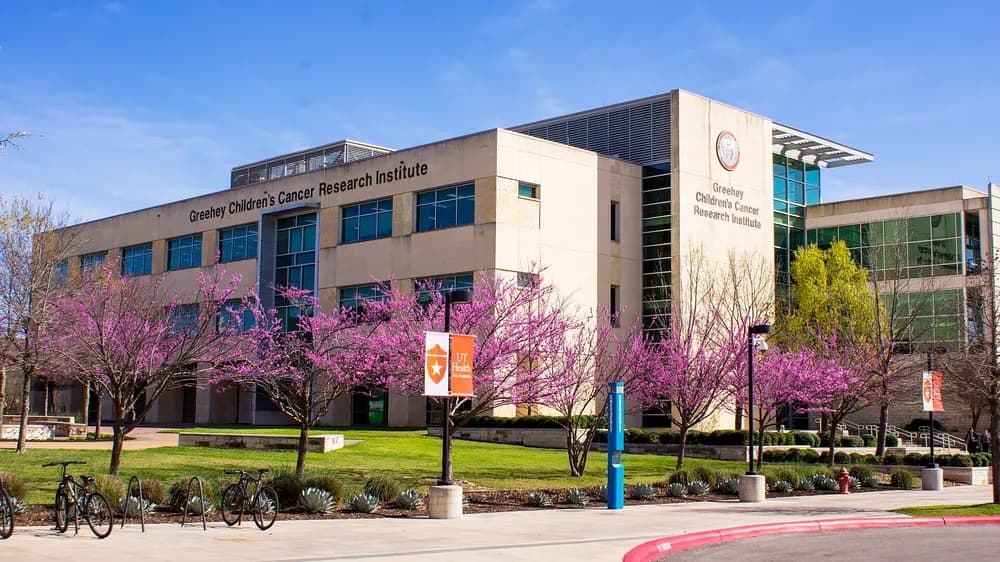

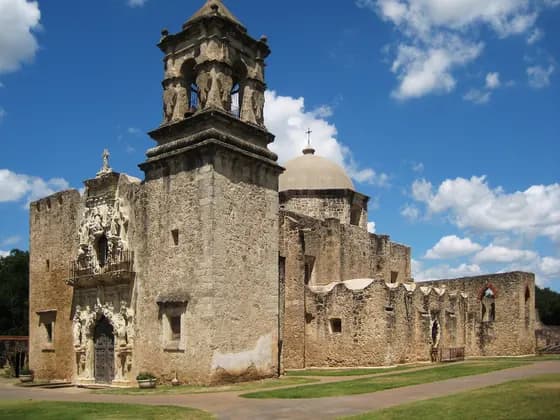
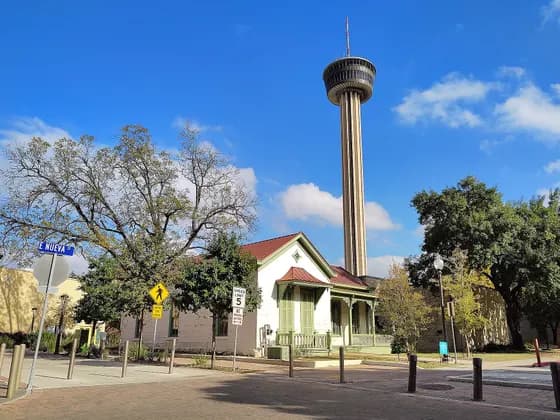
Photo: Brika9231 · CC BY-SA 4.0 · cropped
Photo: Michael Barera · CC BY-SA 4.0 · Photo: Liveon001 ©Travis Witt · CC BY-SA 3.0 · Photo: Adrianna Chavez · CC BY-SA 4.0
How to get into Long School of Medicine UT Health San Antonio (MD) medicine
Step-by-step: entry requirements, admission tests, personal statement, interview format and the key deadlines.
Open the guide →Long School of Medicine UT Health San Antonio (MD) entry requirements
Admission profile, interview format, decision dates and what makes Long School of Medicine UT Health San Antonio (MD) different.
See the profile →The Long School of Medicine UT Health San Antonio (MD) medicine interview
Long School of Medicine at UT Health San Antonio uses a traditional panel interview format — applicants typically meet with a faculty physician and a current medical student in separate 20–30 minute sessions. As one of the largest medical schools in Texas (~230 students/year), it trains physicians for South Texas and beyond.
San Antonio’s health environment is distinctive: a large Hispanic population (approximately 64%), significant military presence (Brooke Army Medical Center, one of the largest military hospitals in the US), and a high diabetes burden make this a uniquely rich clinical training ground.
Interviewers probe Texas community commitment, awareness of South Texas health challenges, and personal character. Academic metrics are filtered before the interview invitation; this stage is largely about fit.
Long School of Medicine UT Health San Antonio (MD) interview at a glance (2027 entry)
| Annual MD class size | ~230 |
|---|---|
| Interview format | Traditional — faculty + student interview, 20–30 min each |
| Application system | TMDSAS + secondary |
| In-state preference | Strong (~93% Texas residents) |
| MCAT median | ~518 (2025–26 average) |
| GPA median | ~3.70–3.78 |
| Interview window | October–February |
Interview format
- Two traditional sessions — faculty physician and current student, each 20–30 minutes.
- Interviewers have reviewed TMDSAS application.
- Campus tour of UT Health San Antonio South Texas Medical Center.
- Overview of clinical training sites: University Health, Brooke Army Medical Center, South Texas VA.
- Informal student lunch and admissions Q&A.
Working towards the MCAT score Long School of Medicine UT Health San Antonio (MD) expects? Build a week-by-week plan from your test date — free for the first two weeks.
Sample interview questions
San Antonio has a large Hispanic population and one of the highest rates of Type 2 diabetes in the US. How does this shape your vision for practicing medicine here?
Show specific knowledge of South Texas health disparities — T2DM rates in Bexar County, Hispanic population health challenges, the role of cultural diet practices, and the social determinants driving these outcomes.
Why Long School of Medicine among Texas TMDSAS schools?
Reference the unique South Texas environment, military medicine affiliation (Brooke Army Medical Center), diabetes research strengths, University Health safety-net training, and the Hispanic-serving mission.
A military veteran presents with severe PTSD and requests a controlled substance prescription for anxiety. How do you proceed?
Address the veteran's unique needs, evidence-based PTSD treatment (EMDR, CPT, SSRIs), the limits of controlled substance prescribing, VA resources, and safe prescribing principles.
A patient's family is distressed about a terminal diagnosis and demands "everything possible" be done. How do you approach this conversation?
Demonstrate goals-of-care communication skill, empathy for family grief, explanation of what "everything possible" involves, and how to align treatment with the patient's own values if known.
What are the specific health disparities affecting San Antonio's Hispanic community, and what systemic factors drive them?
Reference T2DM prevalence, food deserts on the south side, language barriers, lower insurance rates for the Hispanic uninsured population, and historical patterns of underinvestment in South Side San Antonio community health.
You are treating a military patient who discloses that a fellow soldier is struggling with suicidal ideation but does not want to report it. What do you do?
Address duty-to-warn vs. confidentiality in military contexts, mandatory reporting requirements, command notification policies (which differ from civilian practice), and safe messaging around suicide risk.
What does UT Health San Antonio's public mission mean to you in practical terms?
Reference University Health (public safety-net), the South Texas VA, FQHC affiliates, and the school's mandate to train physicians for underserved South Texas populations.
How do you handle a clinical situation where your attending physician makes a decision you disagree with?
Show respect for hierarchy while demonstrating advocacy skills. Address raising concern through appropriate channels (SBAR), patient safety obligations, and the learning relationship with attending physicians.
Bexar County has one of the highest Type 2 diabetes burdens in the US, concentrated on San Antonio's largely Hispanic South Side. If you were given neighborhood-level data and asked where a prevention program would help most, what would you analyze and what would you avoid concluding too quickly?
Examine prevalence, food access, insurance status, and where patients can actually reach care, while resisting the leap from correlation to blaming culture or individual behavior. Shows South-Texas-specific population-health reasoning.
Role-play: a military veteran at the South Texas VA tells you he stopped coming to appointments because he feels the system doesn't listen and he's tired of telling his story to a new face each time. Talk with him.
Acknowledge the legitimacy of his frustration, rebuild trust through continuity and genuine listening, and re-engage him concretely. Long SOM's deep VA/military affiliation makes veteran-centered communication a tested skill.
How would you counsel a Spanish-speaking patient with a new diabetes diagnosis whose family meals are central to their cultural identity, without making them feel their heritage is the problem?
Work within the cuisine and family structure rather than against it, use plain culturally grounded language and teach-back, and frame change as honoring health and family together. Reflects San Antonio's Hispanic-serving mission.
Tell me about a time you cared for or worked closely with someone whose life experience was very different from yours — a veteran, an elder, someone from another culture. What did it change in you?
Show genuine perspective-taking and personal growth, not a checkbox. Long SOM's diverse military and Hispanic patient base rewards authentic cross-experience humility.
What is distinctive about delivering healthcare to a large veteran population — clinically and systemically — compared with civilian care?
Discuss service-connected conditions, PTSD and moral injury, the VA system's structure and continuity challenges, and military culture. Connects directly to Brooke Army Medical Center and the South Texas VA as core Long SOM training sites.
A patient asks you not to document their mental-health history in a way that could be seen by other clinicians or affect their employment. How do you handle the tension between their privacy and complete, safe care?
Balance confidentiality, accurate documentation for safe care, and the patient's legitimate fears about stigma and disclosure. Show you would explain the trade-offs honestly and find an appropriate path rather than simply overriding or capitulating.
Role-play: you are a student and a nurse pulls you aside to say your attending's plan for a patient seems unsafe, but she's hesitant to raise it herself. What do you do and say?
Honor the nurse's clinical insight, encourage and support speaking up, and ensure the concern reaches the attending through appropriate channels (e.g., SBAR) with patient safety central. Tests interprofessional respect and the courage to escalate within a hierarchy.
Practise the Long School of Medicine UT Health San Antonio (MD) interview
Rehearse the real format before the day — on demand with our AI interviewers, or live with a tutor.
Sit a mock with photoreal AI interviewers — any time
A timed MMI or panel interview on video — American & international voices — with interviewers who listen, react and press with follow-ups. Rubric-scored feedback and a replay the moment you finish.






Live mocks with a tutor who’s been in the room
A full Long School of Medicine UT Health San Antonio (MD)-style mock with a medic or dentist tutor — honest scoring against real marking criteria, a station-by-station debrief and a written action plan.
Book a mock interviewHow to prepare for the Long School of Medicine UT Health San Antonio (MD) interview
Common pitfalls to avoid
Long School of Medicine UT Health San Antonio (MD) interview — frequently asked questions
Sources & official admissions information
Ready to nail your Long School of Medicine UT Health San Antonio (MD) interview?
Book a mock interview with a tutor who knows the US interview formats, orpractice unlimited stations from our interview question bank.