
Texas A&M Vashisht College of Medicine Interview
Format, Questions & Prep Tips
Texas A&M Vashisht College of Medicine medicine interviews for 2027 entry are a traditional interview. Texas A&M Vashisht College of Medicine describes the format as: Two individual 30-minute virtual interviews on Zoom. Published figures: Annual MD class size ~180 (across 5 campuses); Interview format Traditional — faculty + student interview, 20–30 min each; In-state preference Strong (~94% Texas residents).
- Institution
- Texas A&M University Naresh K. Vashisht College of Medicine
- Interview (2027 entry)
- October through February; rolling invitations after secondary review
- Decisions (2027 entry)
- Rolling decisions; final notifications by March 30

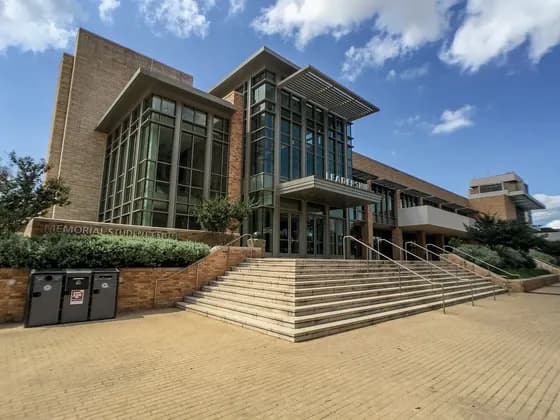
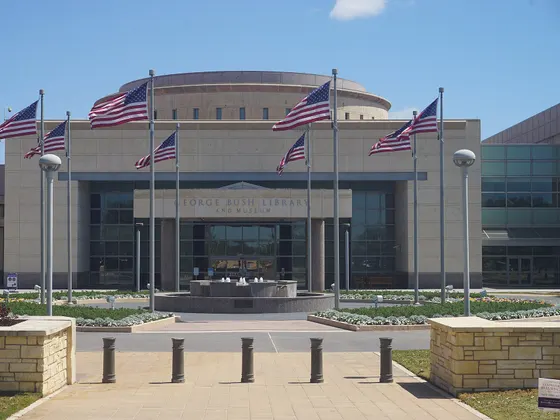
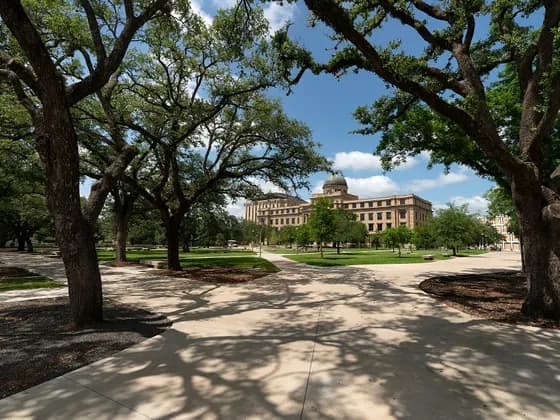
Photo: Texas A&M Health Science Center · CC BY-SA 4.0 · cropped
Photo: Patrick Creighton · CC BY-SA 4.0 · Photo: Michael Barera · CC BY-SA 4.0 · Photo: Kailynn.Nelson · CC BY-SA 4.0
How to get into Texas A&M Vashisht College of Medicine (MD) medicine
Step-by-step: entry requirements, admission tests, personal statement, interview format and the key deadlines.
Open the guide →Texas A&M Vashisht College of Medicine (MD) entry requirements
Admission profile, interview format, decision dates and what makes Texas A&M Vashisht College of Medicine (MD) different.
See the profile →The Texas A&M Vashisht College of Medicine (MD) medicine interview
Texas A&M Vashisht College of Medicine uses a traditional panel interview format — applicants meet with a faculty physician and a current student in separate 20–30 minute sessions. As a public TMDSAS school with ~180 seats distributed across five campuses, the school trains a large proportion of Texas primary care physicians.
Interviewers assess mission alignment with community medicine, clinical experience depth, and personal character — academic metrics are already filtered at the interview invitation stage.
The recently renamed Vashisht College of Medicine maintains a strong primary care and community health identity; applicants with rural or underserved Texas background resonate particularly well.
Texas A&M Vashisht College of Medicine (MD) interview at a glance (2027 entry)
| Annual MD class size | ~180 (across 5 campuses) |
|---|---|
| Interview format | Traditional — faculty + student interview, 20–30 min each |
| Application system | TMDSAS + secondary |
| In-state preference | Strong (~94% Texas residents) |
| MCAT median | ~511–513 |
| GPA median | ~3.68–3.76 |
| Interview window | October–February |
Interview format
- Two traditional interview sessions — faculty physician and current medical student, each 20–30 minutes.
- Interviewers have reviewed the TMDSAS application.
- Campus tour of Bryan-College Station facilities.
- Admissions presentation covering distributed campus model.
- Informal lunch with current students; discussions about campus track preferences.
Working towards the MCAT score Texas A&M Vashisht College of Medicine (MD) expects? Build a week-by-week plan from your test date — free for the first two weeks.
Sample interview questions
Why primary care or community medicine, and why in Texas?
Texas A&M emphasizes training physicians for Texas communities. Connect your answer to specific Texas health challenges (rural shortages, underinsured populations, border communities) and your own background.
Which Texas A&M campus track interests you most, and why?
Research all five campuses: College Station (academic), Dallas (urban), Round Rock (suburban growth), Temple (rural/community), Houston (urban safety-net). Have a genuine, considered preference with rationale.
A patient in a rural Texas community asks you for a controlled substance prescription you believe is inappropriate. How do you handle this?
Address appropriate prescribing, patient-physician relationship, opioid stewardship, prescription drug monitoring (PDMP in Texas), and referral to addiction medicine. Show respect for the patient while maintaining ethical practice.
Tell me about a time you demonstrated leadership in a team setting.
STAR structure. Focus on how you mobilized others toward a goal, navigated disagreement, and reflected on your leadership style. Texas A&M's Aggie values emphasize selfless service and integrity.
What is the role of the Federally Qualified Health Center (FQHC) system in Texas primary care access?
Show knowledge: FQHCs are federally funded, serve medically underserved areas, use sliding-scale fees, and are required to provide care regardless of insurance. Texas has one of the highest uninsured rates in the US — FQHCs are critical to primary care access.
What does it mean to be a physician who serves a community rather than simply treating individual patients?
Address population health, preventive care, community health workers, the social determinants of health, and the physician's role beyond the exam room.
You are a rural family physician and the only doctor within 50 miles. A patient's case is beyond your scope of practice. How do you handle care continuity given the access challenges?
Address telehealth consultation, transport resources, maintaining continuity while arranging appropriate referral, and the ethical tension between scope and access. Rural medicine requires creative problem-solving within ethical limits.
Describe a time a patient or colleague gave you critical feedback. How did you respond?
Show you can receive feedback non-defensively and act on it. Demonstrate self-awareness and growth orientation.
Many Texas counties are designated Health Professional Shortage Areas. If you were given data on where new primary-care physicians are most needed, how would you weigh raw shortage numbers against where physicians can realistically be recruited and retained?
Show nuanced workforce thinking: shortage severity, population health burden, and retention drivers (community ties, loan repayment, professional isolation). TAMU's primary-care mission rewards applicants who think about the pipeline, not just the gap.
Role-play: a patient in a small rural Texas town tells you they have been skipping their blood-pressure medication because the nearest pharmacy is 40 minutes away and they often run out before they can get back. Respond to them.
Treat the access barrier as a real clinical problem: mail-order or 90-day supplies, pharmacy coordination, and adherence support. Reflects the rural-access reality TAMU's distributed-campus, community-medicine model trains for.
How would you explain to a patient why you are referring them for a specialist appointment that is months away and far from home — without leaving them feeling abandoned?
Acknowledge the burden honestly, explain the medical reasoning, set up interim co-management and safety-netting, and reinforce continuity. Shows the relationship-centered generalist communication central to the school's identity.
Texas A&M emphasizes selfless service and integrity. Tell me about a time those values cost you something personally. What did you do?
Connect authentically to the Aggie ethos without sloganeering. Choose an example where doing the right or selfless thing carried a genuine personal cost, and reflect on the choice.
Why is physician retention — not just recruitment — such a hard problem in rural Texas, and what could a medical school actually do about it?
Discuss professional isolation, spouse employment, call burden, and the evidence that training and rural ties predict where physicians practice. TAMU's distributed model is a direct answer, so connect the problem to the school's design.
As a rural physician you learn that a respected long-time patient has been driving despite a medical condition that makes it unsafe, and reporting could cost them their independence and livelihood. What do you do?
Balance patient autonomy and dignity against public safety and any reporting duties. Show you would counsel first, explore alternatives, and act on the safety obligation thoughtfully rather than reflexively. Captures the close-community ethics of rural practice.
Role-play: a colleague on your care team consistently arrives unprepared, and it is affecting patients. You have to raise it with them directly. How do you start that conversation?
Model direct but respectful feedback: specific, behavior-focused, non-accusatory, and solution-oriented. TAMU's team-based, service-oriented culture values constructive accountability over avoidance or escalation.
Practise the Texas A&M Vashisht College of Medicine (MD) interview
Rehearse the real format before the day — on demand with our AI interviewers, or live with a tutor.
Sit a mock with photoreal AI interviewers — any time
A timed MMI or panel interview on video — American & international voices — with interviewers who listen, react and press with follow-ups. Rubric-scored feedback and a replay the moment you finish.






Live mocks with a tutor who’s been in the room
A full Texas A&M Vashisht College of Medicine (MD)-style mock with a medic or dentist tutor — honest scoring against real marking criteria, a station-by-station debrief and a written action plan.
Book a mock interviewHow to prepare for the Texas A&M Vashisht College of Medicine (MD) interview
Common pitfalls to avoid
Texas A&M Vashisht College of Medicine (MD) interview — frequently asked questions
Sources & official admissions information
Ready to nail your Texas A&M Vashisht College of Medicine (MD) interview?
Book a mock interview with a tutor who knows the US interview formats, orpractice unlimited stations from our interview question bank.