
Paul L. Foster School of Medicine TTUHSC El Paso Interview
Format, Questions & Prep Tips
Paul L. Foster School of Medicine TTUHSC El Paso medicine interviews for 2027 entry are a traditional interview. Published figures: Annual MD class size ~130; Interview format Traditional — 2 interviews, 20–30 min each; In-state preference Very strong (~95% Texas residents).
- Institution
- Paul L. Foster School of Medicine Texas Tech at El Paso
- Interview (2027 entry)
- October through February; rolling invitations after secondary review
- Decisions (2027 entry)
- Rolling decisions; final notifications by March 30

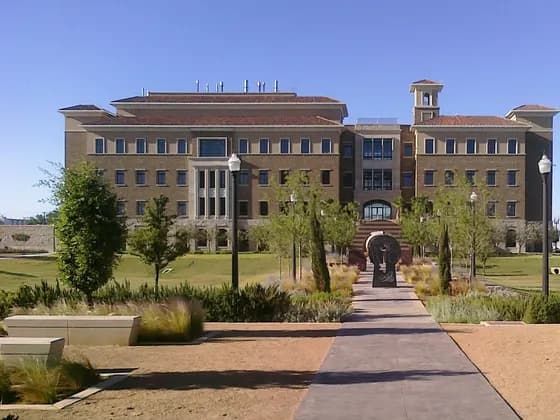
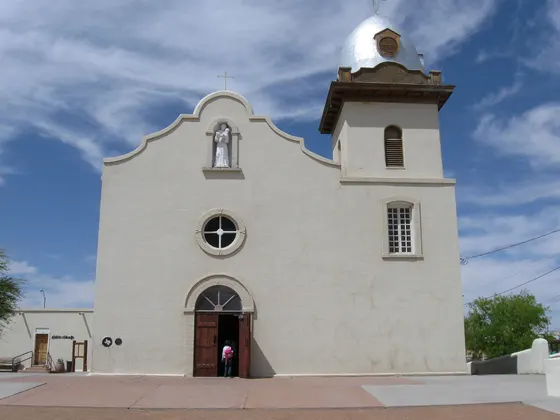
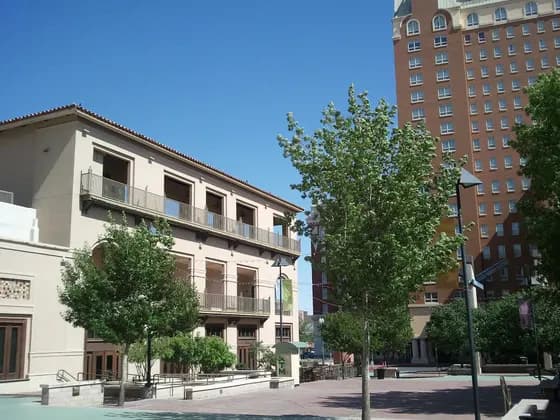
Photo: CDonn3 · Public domain · cropped
Photo: CDonn3 , Dicklyon · Public domain · Photo: David · CC BY-SA 2.0 · Photo: B575 · CC BY-SA 3.0
How to get into Paul L. Foster School of Medicine TTUHSC El Paso (MD) medicine
Step-by-step: entry requirements, admission tests, personal statement, interview format and the key deadlines.
Open the guide →Paul L. Foster School of Medicine TTUHSC El Paso (MD) entry requirements
Admission profile, interview format, decision dates and what makes Paul L. Foster School of Medicine TTUHSC El Paso (MD) different.
See the profile →The Paul L. Foster School of Medicine TTUHSC El Paso (MD) medicine interview
Paul L. Foster School of Medicine uses a traditional panel interview format — applicants meet with two interviewers (typically a faculty physician and a community clinician) in separate 20–30 minute sessions. The school has an explicit mission to serve the US–Mexico border region, and interviewers probe genuine connection to this mission above almost anything else.
El Paso is a majority-Hispanic city (~80%) on the US–Mexico border, and the school trains physicians specifically for this binational health environment. Interviewers assess cultural competency, Spanish language ability, and lived understanding of border health challenges.
With only ~40 seats, Foster TTUHSC El Paso is one of the smallest MD programs in Texas; mission alignment is decisive.
Paul L. Foster School of Medicine TTUHSC El Paso (MD) interview at a glance (2027 entry)
| Annual MD class size | ~130 |
|---|---|
| Interview format | Traditional — 2 interviews, 20–30 min each |
| Application system | TMDSAS + secondary |
| In-state preference | Very strong (~95% Texas residents) |
| MCAT median | ~510–513 |
| GPA median | ~3.65–3.75 |
| Interview window | October–February |
Interview format
- Two traditional interview sessions — faculty physician and community clinician, each 20–30 minutes.
- Interviewers have reviewed full TMDSAS application.
- Campus tour of TTUHSC El Paso and University Medical Center of El Paso.
- Informal interaction with current students; admissions presentation.
- Interviews may be conducted in Spanish for bilingual applicants (non-mandatory).
Working towards the MCAT score Paul L. Foster School of Medicine TTUHSC El Paso (MD) expects? Build a week-by-week plan from your test date — free for the first two weeks.
Sample interview questions
Why do you want to practice medicine on the US–Mexico border specifically, and what do you understand about the health challenges unique to this region?
Name specific border health issues: tuberculosis reactivation, Chagas disease, healthcare access for undocumented patients (EMTALA), binational TB treatment protocols, high rates of diabetes in the Paso del Norte region, and environmental health from maquiladora industry.
A Spanish-speaking patient with limited English proficiency arrives at the clinic without an interpreter. How do you proceed?
Federal law (Title VI) requires interpreter services. Discuss the steps: use a professional medical interpreter (not family members), access telephonic or video interpreter services, avoid relying on children as interpreters. Show cultural sensitivity.
An undocumented patient requires expensive long-term treatment. The hospital is considering denying care due to cost. What are the ethical and legal issues?
Address EMTALA (emergency care obligation), hospital charity care obligations, Medicaid ineligibility for undocumented patients, Texas border healthcare funding, and the physician's advocacy role.
What specific experience in your background has prepared you to care for patients in El Paso's health environment?
Concrete and specific. If you have border ties, name them. If not, be honest about how you developed your commitment. Vague answers to this question at Foster TTUHSC stand out negatively.
What are the specific infectious diseases that are more prevalent in the US–Mexico border region than in the rest of the United States?
Demonstrate knowledge:
- TB (especially MDR-TB)
- Chagas disease
- cysticercosis
- hepatitis A
- typhoid fever
- certain arboviral infections
This question tests whether you have researched the actual clinical environment.
A community health worker tells you that patients are going to Mexico for cheaper medications, including insulin. What should you do with this information?
Address the issue at individual, community, and systems levels. Discuss medication affordability (insulin pricing in the US vs. Mexico), safety concerns, advocacy, and connecting patients to patient assistance programs and FQHC resources.
Describe a time you worked effectively with someone from a very different cultural background.
Cultural humility is central to Foster TTUHSC's identity. Focus on listening, learning from the other person's perspective, and how the interaction changed your approach.
What does serving an underserved community mean to you in practical terms — not as an aspiration but as a day-to-day reality?
Acknowledge the challenges:
- resource constraints
- complex social determinants
- communication barriers
- system navigation
Show you have a realistic understanding, not a romanticized one.
Tuberculosis, including drug-resistant TB, is more common in the Paso del Norte border region than in most of the US. If you were tracking a local rise in TB cases, what data and patterns would you look for to understand it?
Consider binational movement, treatment completion and adherence (DOT programs), housing density, immigration-related care avoidance, and lab confirmation of resistance. Shows you can reason about border-specific epidemiology rather than generic infectious disease.
Role-play: a Spanish-speaking patient at the El Paso clinic, accompanied by her young son, needs to discuss a sensitive diagnosis. The professional interpreter line has a long wait and she gestures for her son to translate. How do you handle it?
What they are listening for:
- Decline using the child as interpreter (clinical, legal, and emotional reasons)
- reassure the patient warmly
- wait for or arrange professional interpretation
Demonstrate Title VI awareness and cultural sensitivity simultaneously.
How would you discuss a new diabetes diagnosis with a patient whose diet centers on traditional Mexican-American foods, without being dismissive of their culture?
Show culturally humble counseling: work within the cuisine (portion, preparation, substitutions) rather than against it, involve family meals, and use plain Spanish-inflected explanation. Reflects Foster's binational, diabetes-heavy patient population.
Caring for an underserved border community can mean confronting suffering you cannot fully fix. Tell me about a time you faced something you couldn't solve. How did you cope and keep going?
Honest emotional self-awareness over a saviour narrative. Show durable, realistic coping and what you learned about your own limits — Foster selects for sustainable commitment to a demanding environment.
An undocumented patient is afraid to give accurate contact information for follow-up, fearing it could be shared with immigration authorities. How do you respond?
What they are listening for:
- Reassure within the bounds of honesty about HIPAA and clinic policy
- build trust
- find workable follow-up arrangements
Address the documented reality of care-avoidance from deportation fear in border communities.
What does the term 'binational health' mean in practice for a physician in El Paso, and how does it complicate ordinary clinical care?
Discuss patients crossing for cheaper medications, fragmented records across two systems, cross-border disease transmission, and continuity challenges. Show you grasp the specific operational reality, not a textbook abstraction.
A patient tells you they trust a local curandero more than physicians and have been using traditional remedies for their condition. How do you build a working relationship?
Approach with respect and curiosity rather than dismissal, find common ground, watch for genuine harm or interactions, and keep the door open. Cultural humility is core to Foster's identity, and folk-healing traditions are common in the region.
Practise the Paul L. Foster School of Medicine TTUHSC El Paso (MD) interview
Rehearse the real format before the day — on demand with our AI interviewers, or live with a tutor.
Sit a mock with photoreal AI interviewers — any time
A timed MMI or panel interview on video — American & international voices — with interviewers who listen, react and press with follow-ups. Rubric-scored feedback and a replay the moment you finish.






Live mocks with a tutor who’s been in the room
A full Paul L. Foster School of Medicine TTUHSC El Paso (MD)-style mock with a medic or dentist tutor — honest scoring against real marking criteria, a station-by-station debrief and a written action plan.
Book a mock interviewHow to prepare for the Paul L. Foster School of Medicine TTUHSC El Paso (MD) interview
Common pitfalls to avoid
Paul L. Foster School of Medicine TTUHSC El Paso (MD) interview — frequently asked questions
Sources & official admissions information
Ready to nail your Paul L. Foster School of Medicine TTUHSC El Paso (MD) interview?
Book a mock interview with a tutor who knows the US interview formats, orpractice unlimited stations from our interview question bank.