
University of Miami Miller School of Medicine Interview
Format, Questions & Prep Tips
University of Miami Miller School of Medicine medicine interviews for 2027 entry are a traditional interview, held October 2026 through February 2027. Published figures: Annual MD class size ~180; Tuition (2025–26) ~USD 61,000/year.
- Institution
- University of Miami Miller School of Medicine
- Interview (2027 entry)
- October through February
- Decisions (2027 entry)
- Regular decisions by late March; waitlist through spring

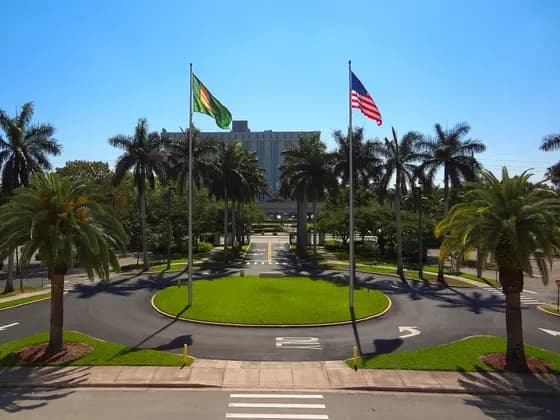
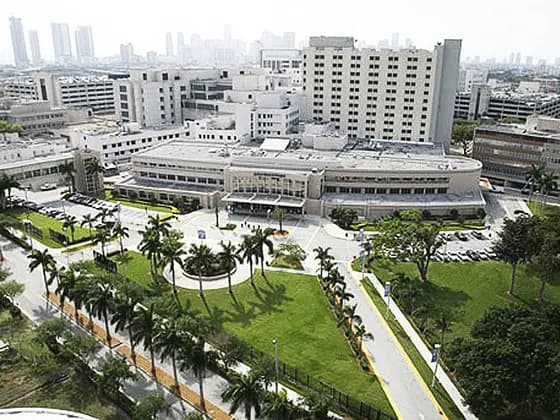
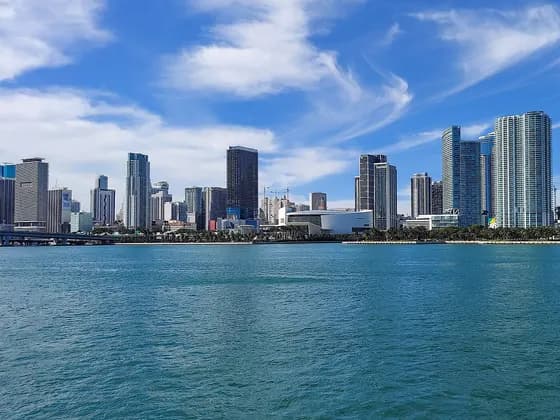
Photo: Darkflowerthree · CC BY-SA 4.0 · cropped
Photo: Chad Cooper · CC BY 2.0 · Photo: Jayzze · CC BY-SA 4.0 · Photo: P. Hughes · CC BY-SA 4.0
How to get into University of Miami Miller School of Medicine (MD) medicine
Step-by-step: entry requirements, admission tests, personal statement, interview format and the key deadlines.
Open the guide →University of Miami Miller School of Medicine (MD) entry requirements
Admission profile, interview format, decision dates and what makes University of Miami Miller School of Medicine (MD) different.
See the profile →The University of Miami Miller School of Medicine MD program
Case-based learning + Integrated, 4 years, clinical rotations across Miami's Civic Center Health District and other Miami-Dade sites.
See the program →The University of Miami Miller School of Medicine (MD) medicine interview
University of Miami Miller School of Medicine uses a traditional interview format with two sessions (faculty and student). Miller is a private research medical school in Miami — one of the most globally diverse cities in the Western Hemisphere — and has a distinctive focus on Latin American and Caribbean health, the unique challenges of healthcare in a bilingual/bicultural environment, and the health needs of Florida's large Cuban, Colombian, Haitian, and Central American communities.
Miller has strong programs in HIV medicine, neurology, and transplant surgery (the largest kidney transplant program in Florida), and is affiliated with Jackson Memorial Hospital — the largest public hospital in Miami-Dade County and a major level-1 trauma center serving predominantly uninsured patients.
A distinctive Miller theme is global health in the Americas — the school has partnerships with universities and health systems in Cuba, Brazil, Peru, and Haiti, and interviewers probe interest in Latin American health equity.
University of Miami Miller School of Medicine (MD) interview at a glance (2027 entry)
| Annual MD class size | ~180 |
|---|---|
| Interview format | Traditional — faculty + student sessions |
| Tuition (2025–26) | ~USD 61,000/year |
| Application system | AMCAS + Miller secondary |
| Key affiliate | Jackson Memorial Hospital (largest public hospital in Miami-Dade) |
| Interview window | October–February |
Interview format
- Two one-on-one sessions: faculty (open-file) and student.
- No MMI.
Working towards the MCAT score University of Miami Miller School of Medicine (MD) expects? Build a week-by-week plan from your test date — free for the first two weeks.
Sample interview questions
Miami is one of the most globally diverse cities in the Western Hemisphere, with large Cuban, Haitian, and Central American communities. How does the bilingual, multicultural context of South Florida shape your vision of practice?
Discuss bilingual care delivery, culturally specific health beliefs, language concordance as a quality measure, and the trust gap between immigrant patients and the US healthcare system.
Why Miller specifically? With its focus on Latin American and Caribbean health and its programs in HIV medicine, neurology, and transplant, what fits your goals?
Connect a distinctive Miller strength to your ambitions and show awareness of Miami's specific population. Avoid generic praise that could apply to any urban school.
Miller has global-health partnerships in Cuba, Brazil, Peru, and Haiti. If you have cross-cultural or international experience, what did it teach you, and how do you avoid the pitfalls of short-term global-health work?
Reflect on sustainability, humility, and local leadership. If you lack international experience, redirect honestly to cross-cultural work, which Miami offers in abundance.
Jackson Memorial serves predominantly uninsured patients as the largest public hospital in Miami-Dade. What draws you to training in a safety-net environment?
Show you understand what Jackson Memorial is — a major level-1 trauma and safety-net hospital — and articulate why clinical and social complexity appeals to you.
A patient you are treating at Jackson Memorial speaks only Haitian Creole and her family declines to call an interpreter. What do you do?
Professional interpretation is legally required under Title VI; explain the clinical risks of ad hoc interpretation; and build trust with a Haitian community that has historical reasons to distrust US medical institutions.
Miami has high HIV rates. A newly diagnosed patient does not want their partner informed. How do you weigh confidentiality against the partner's risk?
What they are listening for:
- Confidentiality
- partner-notification frameworks and public-health reporting
- counseling the patient toward disclosure
- the limited circumstances for breaching confidentiality
Note specifics vary by state law.
An undocumented patient needs ongoing care but fears that seeking it could expose them to immigration consequences. How do you respond?
What they are listening for:
- Professional duties independent of immigration status
- confidentiality
- the chilling effect of immigration fears
- connecting patients to FQHCs and emergency coverage
Central to Miami's immigrant communities.
A patient turns to traditional or folk remedies common in their community instead of a recommended treatment. They have capacity. How do you respond?
What they are listening for:
- Cultural humility
- exploring the belief respectfully
- identifying genuine harms versus harmless practices
- negotiating an integrated plan rather than dismissing the patient's worldview
You are caring for a Spanish-speaking patient and no interpreter is immediately available. The patient's adult son offers to translate. How do you handle it and what do you explain?
Professional interpretation is the standard of care; ad hoc family interpreting risks errors and privacy breaches. Explain respectfully without implying distrust of the family.
Describe a time you built trust with someone who was initially wary of you because of who you are or where you come from. What did you do?
AAMC Interpersonal Skills competency. Trust-building across cultural difference is central to the Miller experience. Show humility and concrete actions, not just good intentions.
Walk us through a research or scholarly project you have done. What was the question and what did you learn about the scientific process?
AAMC thinking-and-reasoning and science competencies. Show genuine ownership and methodological awareness at a research-intensive school.
HIV has moved from a fatal diagnosis to a manageable chronic condition. How would you explain to a layperson how treatment changed both individual prognosis and transmission risk?
What they are listening for:
- Antiretroviral therapy
- viral suppression and 'undetectable equals untransmittable' (U=U)
- pre-exposure prophylaxis
Show command of the science and the ability to teach it, given Miller's HIV focus.
Describe a subject you found genuinely difficult. How did you change your approach to master it?
Show metacognition and resilience — diagnosing the difficulty and adjusting — rather than asserting eventual success.
A patient who speaks limited English seems to be nodding along but you suspect they do not fully understand the plan. How do you check, and what do you change?
Recognize that nodding is not understanding, secure professional interpretation, use teach-back, and slow down. Avoid assuming agreement.
A recently arrived immigrant patient is visibly anxious and distrustful of the hospital. How do you open the encounter to build a little trust?
Warmth, attention to language and comfort, acknowledging that the system can feel intimidating, and small concrete reassurances. Patience over efficiency in the first moments.
You are shown Miami-Dade data showing higher HIV incidence and later diagnosis in certain immigrant communities. How do you interpret this, and what might explain it?
Connect to stigma, access and insurance barriers, language, and distrust driving late presentation — structural factors rather than individual behavior alone. Tie it to outreach and culturally competent care.
Practise the University of Miami Miller School of Medicine (MD) interview
Rehearse the real format before the day — on demand with our AI interviewers, or live with a tutor.
Sit a mock with photoreal AI interviewers — any time
A timed MMI or panel interview on video — American & international voices — with interviewers who listen, react and press with follow-ups. Rubric-scored feedback and a replay the moment you finish.





Live mocks with a tutor who’s been in the room
A full University of Miami Miller School of Medicine (MD)-style mock with a medic or dentist tutor — honest scoring against real marking criteria, a station-by-station debrief and a written action plan.
Book a mock interviewHow to prepare for the University of Miami Miller School of Medicine (MD) interview
Common pitfalls to avoid
University of Miami Miller School of Medicine (MD) interview — frequently asked questions
Sources & official admissions information
Ready to nail your University of Miami Miller School of Medicine (MD) interview?
Book a mock interview with a tutor who knows the US interview formats, orpractice unlimited stations from our interview question bank.