
University of Florida College of Medicine Interview
Format, Questions & Prep Tips
University of Florida College of Medicine medicine interviews for 2027 entry are a traditional interview, held October 2026 through February 2027. Published figures: Annual MD class size ~150; Tuition (2025–26) ~USD 33,000 (in-state) / USD 58,000 (out-of-state).
- Institution
- University of Florida College of Medicine
- Interview (2027 entry)
- October through February
- Decisions (2027 entry)
- Regular decisions by late March; waitlist through spring


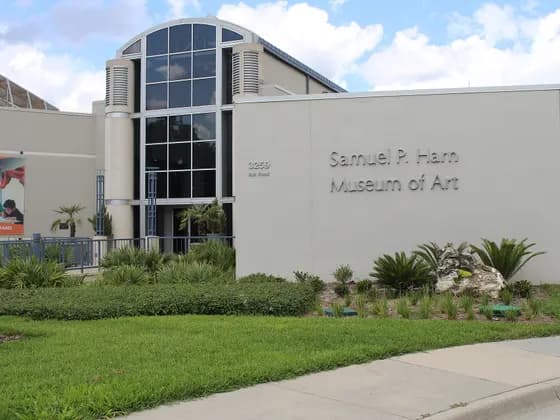
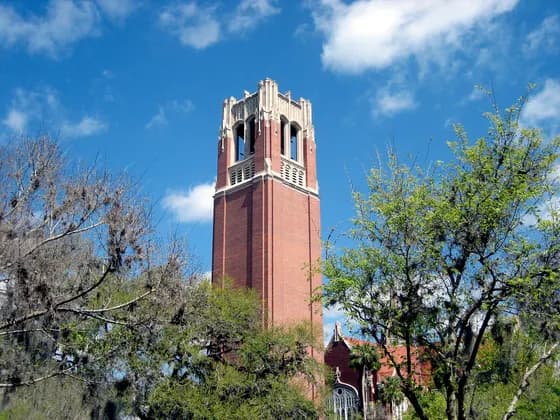
Photo: Unknown · Public domain · cropped
Photo: Ebyabe · CC BY-SA 3.0 · Photo: Michael Rivera · CC BY-SA 4.0 · Photo: Kate Haskell from Gainesville, USA · CC BY 2.0
How to get into University of Florida College of Medicine (MD) medicine
Step-by-step: entry requirements, admission tests, personal statement, interview format and the key deadlines.
Open the guide →University of Florida College of Medicine (MD) entry requirements
Admission profile, interview format, decision dates and what makes University of Florida College of Medicine (MD) different.
See the profile →The University of Florida College of Medicine MD program
Integrated, 4 years, clinical rotations across Gainesville, Jacksonville and community practices in Florida.
See the program →The University of Florida College of Medicine (MD) medicine interview
University of Florida College of Medicine uses a traditional interview format with two sessions (faculty and student). UF is a flagship public research university with a large, diverse medical student body and a strong commitment to serving Florida's complex population — the state has the highest proportion of elderly residents, a large uninsured population, and diverse immigrant communities.
UF's primary teaching hospital, UF Health Shands, is a major tertiary referral center for north central Florida, and the college has regional medical campuses in Jacksonville and across the state. Interviewers probe awareness of Florida-specific health challenges: Hurricane-related health crises, tropical infectious diseases, uninsured immigrant populations, and geriatric care.
UF has a strong Rural Medicine Track — a training pipeline for physicians committed to rural and underserved practice.
University of Florida College of Medicine (MD) interview at a glance (2027 entry)
| Annual MD class size | ~150 |
|---|---|
| Interview format | Traditional — faculty + student sessions |
| Tuition (2025–26) | ~USD 33,000 (in-state) / USD 58,000 (out-of-state) |
| Application system | AMCAS + UF secondary |
| Interview window | October–February |
Interview format
- Two one-on-one sessions: faculty (open-file) and student.
- No MMI.
Working towards the MCAT score University of Florida College of Medicine (MD) expects? Build a week-by-week plan from your test date — free for the first two weeks.
Sample interview questions
Florida has the oldest median-age population of any US state. How does geriatric medicine fit into your vision of practice?
Discuss polypharmacy, end-of-life planning, cognitive-impairment care, Medicare complexity, and the workforce shortage in geriatrics. Show genuine interest rather than treating older patients as an afterthought.
Why the University of Florida specifically? With its statewide footprint and programs like SELECT and the Rural Medicine Track, what fits your goals?
Connect a distinctive UF feature to your ambitions, and show awareness of Florida's specific demographics and health challenges. Avoid generic praise of a 'large public school'.
UF has a strong Rural Medicine Track and the SELECT program for underserved practice. What draws you toward serving Florida's rural or underserved communities?
Show concrete knowledge of north-central Florida's rural health challenges and a credible personal source of motivation rather than a generic wish to help.
Florida is a hurricane-prone state. What does disaster preparedness and public-health resilience mean for a physician practicing here?
What they are listening for:
- Continuity of care during evacuations
- vulnerable populations (elderly, dialysis, ventilator-dependent)
- post-storm infectious and mental-health risks
- the physician's role in preparedness
A patient in the Florida Medicaid coverage gap — too high-income for Medicaid, too low-income for a subsidized ACA plan — cannot afford care. How would you, as a physician trainee, approach this?
Florida has not expanded Medicaid under the ACA (as of 2026), leaving roughly 1.4 million Floridians in the coverage gap. Discuss FQHC sliding-scale care, charity care, 340B pharmacy resources, and the physician's advocacy role.
An elderly patient with early dementia wants to keep making their own medical decisions, but their adult children disagree and want to take over. How do you navigate capacity and family conflict?
Capacity is decision-specific and not all-or-nothing, the patient's autonomy where capacity is retained, surrogate decision-making where it is lost, and managing family dynamics. Highly relevant to Florida's older population.
During hurricane evacuation, a hospital must decide how to allocate scarce transport for critically ill patients. What principles should guide these decisions?
Crisis standards of care, clinical need and likelihood of benefit over social worth, transparency, and protecting the most vulnerable. Acknowledge the moral distress of disaster triage.
An undocumented agricultural worker presents with a serious untreated condition and fears that seeking care could expose them. How do you respond?
Professional duties that do not depend on immigration status, confidentiality, the chilling effect of immigration fears on care-seeking, and connecting to FQHCs and emergency coverage. Relevant to Florida's immigrant communities.
You must explain a new diagnosis of heart failure to an 80-year-old patient and their anxious family. How do you make the information manageable?
What they are listening for:
- Plain language
- chunking
- teach-back
- attending to both patient and family emotion
- respecting the patient as the decision-maker
Adapt pace for an older patient.
Describe a time you communicated with someone whose first language was not English, or who came from a very different background. How did you ensure understanding?
AAMC Interpersonal Skills competency. Discuss professional interpretation, cultural humility, and checking understanding — relevant to Florida's diverse immigrant communities.
Walk us through a research or scholarly project you have done. What was the question and what would you change with hindsight?
AAMC thinking-and-reasoning and science competencies. Show genuine ownership, methodological awareness, and the capacity for self-critique at a research-intensive flagship.
Florida sees tropical and vector-borne diseases that are uncommon elsewhere in the US. How would you explain why climate and geography shape disease patterns to a non-scientist?
Connect vectors, climate, and travel to disease distribution in plain terms (e.g. dengue or Zika risk in warm, mosquito-rich environments). Show command of the science and the ability to teach it.
Describe a subject you found genuinely difficult. How did you change your approach to master it?
Show metacognition and resilience — diagnosing the difficulty and adjusting strategy — rather than simply asserting eventual success.
An elderly patient tells you they have stopped taking several of their many medications because they are confusing and expensive. How do you respond?
Explore which medications and why, address cost (generics, assistance programs) and polypharmacy, simplify the regimen where safe, and involve pharmacy. Avoid scolding.
A frightened patient in a rural clinic says the nearest specialist is hours away and they cannot take time off work to travel. How do you work with them?
Validate the barrier, explore telehealth and local options, prioritize what is truly time-sensitive, and meet the patient where they are rather than insisting on an unworkable referral.
You are shown data showing that Florida counties without Medicaid expansion have higher rates of untreated chronic disease among low-income adults. How do you interpret this link?
Connect the coverage gap to delayed care and worse outcomes, distinguish access from behavior, and discuss the population consequences of insurance policy. Tie it to UF's safety-net role.
Practise the University of Florida College of Medicine (MD) interview
Rehearse the real format before the day — on demand with our AI interviewers, or live with a tutor.
Sit a mock with photoreal AI interviewers — any time
A timed MMI or panel interview on video — American & international voices — with interviewers who listen, react and press with follow-ups. Rubric-scored feedback and a replay the moment you finish.





Live mocks with a tutor who’s been in the room
A full University of Florida College of Medicine (MD)-style mock with a medic or dentist tutor — honest scoring against real marking criteria, a station-by-station debrief and a written action plan.
Book a mock interviewHow to prepare for the University of Florida College of Medicine (MD) interview
Common pitfalls to avoid
University of Florida College of Medicine (MD) interview — frequently asked questions
Sources & official admissions information
Ready to nail your University of Florida College of Medicine (MD) interview?
Book a mock interview with a tutor who knows the US interview formats, orpractice unlimited stations from our interview question bank.