
FSU College of Medicine Interview
Format, Questions & Prep Tips
FSU College of Medicine medicine interviews for 2027 entry are a traditional interview. Published figures: Annual MD class size ~120; Applications received ~4,000–6,000 per cycle; Interview format Traditional — 1–2 sessions, ~30–45 min each.
- Institution
- Florida State University College of Medicine
- Interview (2027 entry)
- October through March; rolling invitations after secondary review
- Decisions (2027 entry)
- Rolling decisions; final by March 30; waitlist movement through summer

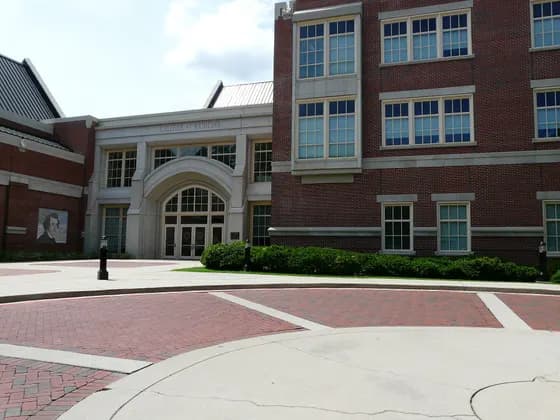
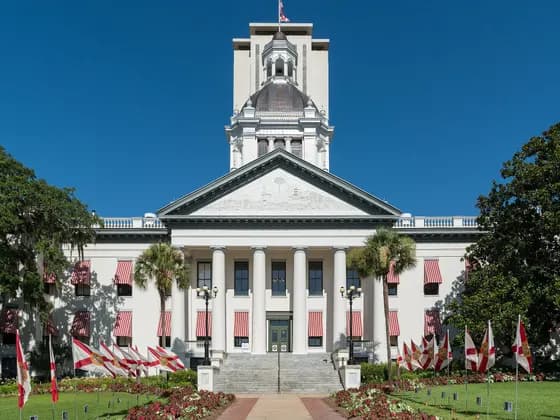

Photo: Ernie Stephens · CC0 · cropped
Photo: The Bushranger · CC BY-SA 4.0 · Photo: DXR · CC BY-SA 4.0 · Photo: (WT-de) Mistoffeles · CC BY-SA 4.0
How to get into FSU College of Medicine (MD) medicine
Step-by-step: entry requirements, admission tests, personal statement, interview format and the key deadlines.
Open the guide →FSU College of Medicine (MD) entry requirements
Admission profile, interview format, decision dates and what makes FSU College of Medicine (MD) different.
See the profile →The FSU College of Medicine MD program
Integrated + Case-based learning, 4 years, clinical rotations across six Florida regional campuses, plus rural Florida and Georgia sites.
See the program →The FSU College of Medicine (MD) medicine interview
FSU College of Medicine uses a traditional interview format — typically one or two one-on-one sessions of approximately 30–45 minutes each with faculty and/or current students. Interviews are non-blind.
FSU Med’s defining structural feature is its six-campus distributed model: students spend Year 1 in Tallahassee, then Years 2–4 at one of six regional campuses across Florida (Daytona Beach, Fort Pierce, Orlando, Pensacola, Sarasota, or Tallahassee). Interviewers assess whether candidates are genuinely prepared for this geographic reality and aligned with FSU’s primary care and community medicine mission.
With one of the highest proportions of Florida residents and underrepresented minority students among Florida medical schools, FSU Med is deeply committed to its state public health mandate.
FSU College of Medicine (MD) interview at a glance (2027 entry)
| Annual MD class size | ~120 |
|---|---|
| Applications received | ~4,000–6,000 per cycle |
| Interview format | Traditional — 1–2 sessions, ~30–45 min each |
| Curriculum | Distributed 6-campus model across Florida |
| Application system | AMCAS + FSU secondary |
| Interview window | October–March |
| Regional campuses | Tallahassee, Daytona Beach, Fort Pierce, Orlando, Pensacola, Sarasota |
Interview format
- Traditional format — one or two separate one-on-one sessions with faculty and/or students.
- Non-blind: interviewers have reviewed your full application.
- Sessions probe primary care orientation, readiness for distributed campus placement, and Florida community ties.
- Student interviewer session focuses on student life at the regional campus model.
- Interview day at the Tallahassee main campus includes campus tour and admissions information session.
- Rolling admission — earlier dates generally receive earlier decisions.
Working towards the MCAT score FSU College of Medicine (MD) expects? Build a week-by-week plan from your test date — free for the first two weeks.
Sample interview questions
Why FSU — and are you genuinely comfortable with the possibility of spending Years 2–4 at a regional campus outside Tallahassee? Which campus interests you most and why?
This is a gatekeeping question — candidates who are not genuinely open to the distributed model are poor fits. Research each campus. If one appeals to you (community, geography, patient population), say so and explain why.
Why primary care — what experiences have shaped your commitment to family medicine, internal medicine, or community practice over other specialties?
FSU’s mission is explicitly primary care oriented. Be specific and grounded in clinical experience. Show genuine appreciation for the longitudinal physician-patient relationship that characterizes primary care.
A rural Florida town has no primary care physician within 30 miles. The nearest urgent care is an hour away. An FSU-trained physician who grew up locally has an offer from a suburban practice in Tampa that pays significantly more. What are the ethical dimensions?
Directly relevant to FSU’s mission. Acknowledge the physician’s autonomy and financial pressures (medical debt, family needs). Explore incentive structures (NHSC scholarship, loan repayment), the tension between individual and community obligations, and why systems should make rural practice more viable rather than relying on individual sacrifice.
You are on your regional campus rotation. A patient in a small community clinic has not seen a doctor in 10 years and presents with multiple untreated chronic conditions. He is embarrassed and defensive. How do you begin the encounter?
Non-judgmental, warm opening. Acknowledge the difficulty of accessing care, express genuine interest in understanding his circumstances, and avoid making him feel blamed for delay. Motivational interviewing principles apply.
Florida recently passed legislation restricting certain reproductive health services. As a physician training in Florida, how do you reconcile professional obligations with the legal landscape?
Reference AMA Code of Ethics: physicians must provide standard of care or refer appropriately, and should not abandon patients. Know the current Florida reproductive health law landscape. Distinguish your personal views from professional obligations. This is a locally relevant and highly sensitive topic.
Florida has one of the highest rates of uninsured adults in the US. It has not expanded Medicaid under the ACA. How does this affect community primary care practices across the state?
Reference the coverage gap (incomes too low for ACA subsidies, too high for traditional Medicaid), the burden on FQHCs and free clinics, uncompensated care, the impact on rural hospital closures, and how primary care physicians navigate the financial realities of seeing uninsured patients.
You are a student doing a home visit with a community health worker as part of a rural health outreach. An elderly patient living alone shows signs of possible self-neglect and poor nutrition. What do you do?
Safety assessment: is this voluntary self-neglect or is there incapacity? Report to Adult Protective Services if there is evidence of neglect. Respect the autonomy of competent elderly adults who make lifestyle choices you disagree with. Connect to meals programs, home health, and community resources.
A pharmaceutical company approaches your regional campus with a proposal to fund a new conference room in exchange for having their sales representative attend a weekly student lunch series. Should the campus accept?
Conflict of interest. Even indirect industry influence shapes prescribing behavior. Reference ACCME policies, LCME student protection standards, and the value of keeping medical education free of commercial bias. Decline or negotiate terms that remove the quid pro quo.
Describe a time you worked in or with a community very different from the one you grew up in. What did it challenge you to reconsider?
FSU serves Florida’s geographic and demographic diversity — from Panhandle rural communities to coastal resort towns to subtropical agricultural areas. Show that you can engage authentically with communities unlike your own.
Should physicians routinely screen for food insecurity and housing instability in primary care visits? Defend your position.
Argue yes — with nuance. Reference SDOH screening tools (PRAPARE, Hunger Vital Sign), evidence that SDOH screening improves outcomes when linked to resource navigation, time constraints in practice, and the importance of physician advocacy for resource investment in community services.
A station shows that several rural Florida counties in FSU's catchment have lost their only hospital or obstetric unit over the past decade, with worsening maternal and infant outcomes. How do you reason about the drivers and the role of physicians like FSU's graduates?
Connect rural hospital and OB-unit closures to Medicaid non-expansion, low reimbursement, uncompensated care, and workforce shortages — and the downstream rise in maternal/infant harm and 'maternity care deserts.' Note data caveats (small numbers, transfer patterns). Tie to FSU's mission of producing physicians who practice in exactly these underserved Florida communities.
Role play: You are a student on a regional-campus rotation in a small Florida town. A patient who hasn't seen a doctor in years is embarrassed and defensive about multiple untreated conditions. (The interviewer plays the patient.)
Open with warmth, not judgment. Acknowledge how hard access can be, express genuine interest in his circumstances, and avoid blaming him for the delay. Use motivational interviewing to build a shared, realistic plan. This mirrors the rural community-practice reality FSU's distributed model trains for.
On a home visit with a community health worker, an elderly patient living alone shows signs of self-neglect and poor nutrition but insists she is 'managing just fine.' How do you handle the conversation?
Balance respect for a competent adult's autonomy with a safety assessment for incapacity or neglect. Explore gently, avoid coercion, and connect her to meals programs, home health, and social work — reporting to Adult Protective Services only if there's evidence of neglect or impaired capacity. FSU's rural-outreach training makes this realistic.
FSU assigns students to one of six regional campuses across Florida for Years 2-4. Which campus appeals to you and why, and what does your answer reveal about the kind of community you want to serve?
Do your homework on the specific campuses (Tallahassee, Daytona Beach, Fort Pierce, Orlando, Pensacola, Sarasota) and their communities. A reasoned preference signals genuine engagement; 'I'm flexible' alone is a documented red flag. Connect the campus's patient population to your service goals while showing you embrace the distributed model.
FSU is built around community-based clinical training with local preceptors rather than a single large academic center. How does learning medicine embedded in community practices shape the physician you'll become, compared with a tertiary-center model?
Show you understand the trade-offs: breadth, continuity, and real-world primary-care exposure versus less in-house subspecialty and research density. Frame community-based education as a deliberate strength aligned with your goals, not a compromise. Reference FSU's documented success placing graduates in underserved Florida practice.
Practise the FSU College of Medicine (MD) interview
Rehearse the real format before the day — on demand with our AI interviewers, or live with a tutor.
Sit a mock with photoreal AI interviewers — any time
A timed MMI or panel interview on video — American & international voices — with interviewers who listen, react and press with follow-ups. Rubric-scored feedback and a replay the moment you finish.






Live mocks with a tutor who’s been in the room
A full FSU College of Medicine (MD)-style mock with a medic or dentist tutor — honest scoring against real marking criteria, a station-by-station debrief and a written action plan.
Book a mock interviewHow to prepare for the FSU College of Medicine (MD) interview
Common pitfalls to avoid
FSU College of Medicine (MD) interview — frequently asked questions
Sources & official admissions information
Ready to nail your FSU College of Medicine (MD) interview?
Book a mock interview with a tutor who knows the US interview formats, orpractice unlimited stations from our interview question bank.