
LECOM at Jacksonville University Interview
Format, Questions & Prep Tips
LECOM at Jacksonville University medicine interviews for 2027 entry are a traditional interview, held September 2026 through March 2027. Published figures: Annual DO class size ~75 (2026–27 inaugural; growing to ~150); Tuition (2025–26) ~USD 44,000/year (same for FL residents and non-residents).
- Institution
- LECOM at Jacksonville University
- Interview (2027 entry)
- September through March
- Decisions (2027 entry)
- Rolling decisions after interview

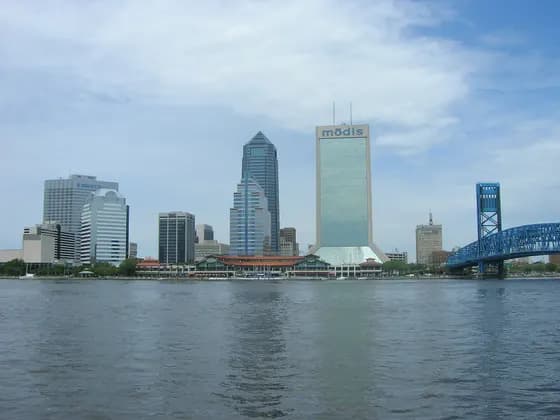

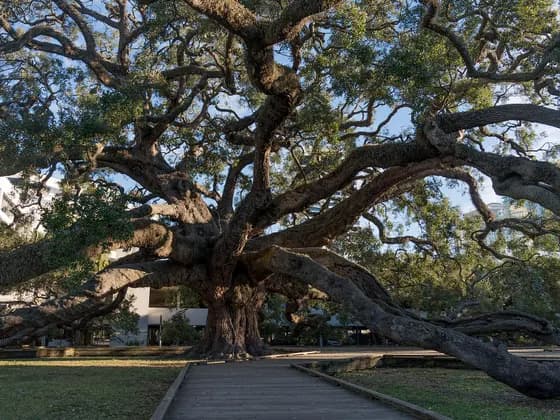
Photo: Excel23 · CC BY-SA 4.0 · cropped
Photo: Original uploader was Jaxfl at en.wikipedia · CC BY-SA 3.0 · Photo: Excel23 · CC BY-SA 3.0 · Photo: Lorie Shaull from Washington, United States · CC BY-SA 2.0
How to get into LECOM at Jacksonville University (DO) medicine
Step-by-step: entry requirements, admission tests, personal statement, interview format and the key deadlines.
Open the guide →LECOM at Jacksonville University (DO) entry requirements
Admission profile, interview format, decision dates and what makes LECOM at Jacksonville University (DO) different.
See the profile →The LECOM at Jacksonville University (DO) medicine interview
Lake Erie College of Osteopathic Medicine at Jacksonville uses a traditional interview format — one-on-one or small panel faculty interviews at its Jacksonville, Florida campus. As part of the LECOM system, the Jacksonville campus shares LECOM’s strong emphasis on professionalism, osteopathic philosophy, and primary care.
The Jacksonville campus offers LECOM’s Didactic (lecture-based) learning pathway, making it distinct from the PBL pathway offered at Seton Hill. Interviewers assess whether applicants understand and are well-suited to the lecture-based curriculum model.
Jacksonville’s large and diverse urban population, combined with proximity to rural North Florida, gives this campus a distinctive community health mission. Rolling admissions rewards early AACOMAS submission.
LECOM at Jacksonville University (DO) interview at a glance (2027 entry)
| Annual DO class size | ~75 (2026–27 inaugural; growing to ~150) |
|---|---|
| Interview format | Traditional — faculty interview |
| CASPer required | No |
| Application system | AACOMAS primary + LECOM secondary |
| Tuition (2025–26) | ~USD 44,000/year (same for FL residents and non-residents) |
| Interview window | September–March |
Interview format
- One-on-one or small panel interview with faculty; approximately 30–45 minutes.
- Interview day includes program overview, campus tour, and financial aid session.
- No MMI format.
Working towards the MCAT score LECOM at Jacksonville University (DO) expects? Build a week-by-week plan from your test date — free for the first two weeks.
Sample interview questions
LECOM Jacksonville offers the Didactic learning pathway. Why do you prefer a lecture-based curriculum over Problem-Based Learning, and how has your academic history prepared you for it?
Contrast PBL vs. Didactic with specific references to your learning style. Highlight structured study approaches, lecture-note mastery, or prior academic performance in traditional lecture courses.
Why osteopathic medicine and why LECOM Jacksonville specifically?
Connect osteopathic philosophy to your personal patient-care vision. Then address Jacksonville specifically: the city's diverse patient population, Florida's healthcare landscape, and the Didactic curriculum format.
You are treating a patient in a Jacksonville community health clinic who cannot afford the medications you want to prescribe. What do you do?
What they are listening for:
- Social determinants of health
- prescription assistance programs
- generic alternatives
- 340B drug pricing
- community health resources in Jacksonville
Show systems-level thinking.
Florida has significant health disparities, particularly in rural North Florida. How would your medical training here prepare you to address those gaps?
Show knowledge of Florida's rural physician shortage. Reference OMM's role in musculoskeletal and primary care, the Didactic curriculum's preparation for boards and rotations, and Jacksonville's proximity to underserved North Florida communities.
Describe a time you had to deliver difficult news to someone. How did you handle it and what would you do differently?
What they are listening for:
- Empathy
- clear communication
- appropriate body language
Show reflection and growth. A healthcare example is strongest.
LECOM has a clear professional code of conduct. What does professionalism mean to you in a medical school context?
LECOM's professional standards are well-known and strictly enforced. Reference reliability, respect for patients and colleagues, academic integrity, and the physician's role as a community trust holder.
Florida has a large elderly population and significant uninsured rates. How do these demographics shape the kind of physician you want to become?
What they are listening for:
- Geriatric medicine
- Medicare/Medicaid navigation
- uninsured patient advocacy
- primary care access
Show awareness of Florida's specific healthcare demographics.
What clinical rotation opportunities in Jacksonville are you most excited about, and why?
What they are listening for:
- Research UF Health Jacksonville
- Baptist Health
- Memorial Hospital
- community health centers
Show you've done real pre-interview research on Jacksonville's clinical ecosystem.
You are a student-doctor at a Jacksonville community health center. A patient you just diagnosed with type 2 diabetes tells you, defeated, that she can't afford the medication or the healthy food you're recommending. Talk with her.
Acknowledge the financial reality without minimizing it, pivot to affordable options (generics, $4 lists, patient-assistance, community resources, FQHC pharmacy), and set achievable goals. Show systems awareness and partnership, not lecture.
Rural North Florida counties just outside Jacksonville have markedly fewer physicians per capita than Duval County. What downstream effects on health outcomes would you predict, and why?
What they are listening for:
- Delayed diagnosis
- reliance on emergency care
- untreated chronic disease
- maternal and mental health gaps
- worse outcomes
Reason from workforce data to population health rather than listing facts.
You chose the Didactic, lecture-based pathway. Tell us about a course where a structured, lecture-driven format helped you excel — and how you'll adapt that approach to the volume of an osteopathic preclinical curriculum.
Concrete example tied to study habits (note systems, spaced review, integration) and scaled to the demands of COMLEX-USA Level 1. Show the choice reflects genuine self-knowledge, not avoidance of PBL.
A patient recovering from a stroke is frustrated and embarrassed that his speech is slow. His wife keeps answering for him. How do you run the conversation so the patient stays at the center?
Address the patient directly, allow time, gently redirect the spouse while honoring her support, use plain language and patience, and preserve the patient's dignity and autonomy.
You're rotating at a busy Jacksonville hospital and an attending asks you to perform a procedure you've only watched once, on a patient who assumes you're experienced. What do you do?
What they are listening for:
- Patient safety and informed consent
- honest disclosure of trainee status
- appropriate supervision
- respectfully declining or requesting oversight
Show you'd protect the patient without simply defying the attending.
Jacksonville is a large, diverse military and port city. What specific population or health challenge here genuinely interests you, and how does osteopathic primary care connect to it?
What they are listening for:
- Veterans' health
- a diverse uninsured population
- maternal health disparities
- urban-rural North Florida divides
Tie it to whole-person, prevention-oriented osteopathic care rather than a generic answer.
Suppose a North Florida clinic finds Black patients are diagnosed with hypertension complications later than white patients. Before concluding anything, what data and context would you want?
What they are listening for:
- Access
- insurance
- screening reach
- trust
- clinic distribution
- historical context — without using race as a biological cause
Frame disparities through socioeconomic, geographic, and lived-experience lenses.
Practise the LECOM at Jacksonville University (DO) interview
Rehearse the real format before the day — on demand with our AI interviewers, or live with a tutor.
Sit a mock with photoreal AI interviewers — any time
A timed MMI or panel interview on video — American & international voices — with interviewers who listen, react and press with follow-ups. Rubric-scored feedback and a replay the moment you finish.





Live mocks with a tutor who’s been in the room
A full LECOM at Jacksonville University (DO)-style mock with a medic or dentist tutor — honest scoring against real marking criteria, a station-by-station debrief and a written action plan.
Book a mock interviewHow to prepare for the LECOM at Jacksonville University (DO) interview
Common pitfalls to avoid
LECOM at Jacksonville University (DO) interview — frequently asked questions
Sources & official admissions information
Ready to nail your LECOM at Jacksonville University (DO) interview?
Book a mock interview with a tutor who knows the US interview formats, orpractice unlimited stations from our interview question bank.