
NSU-COM Interview
Format, Questions & Prep Tips
NSU-COM medicine interviews for 2027 entry are a traditional interview, held September 2026 through February 2027. Published figures: Annual DO class size ~237 (Fort Lauderdale campus); Tuition (2025–26) ~USD 56,000/year.
- Institution
- Nova Southeastern University Dr. Kiran C. Patel College of Osteopathic Medicine
- Interview (2027 entry)
- September through February
- Decisions (2027 entry)
- Rolling decisions after interview

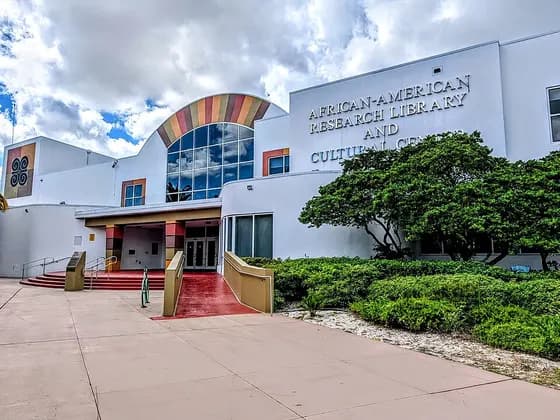


Photo: Dgreco · CC BY-SA 3.0 · cropped
Photo: Cpusf · CC0 · Photo: Daniel Dudek · CC BY 2.0 · Photo: Tamanoeconomico · CC BY-SA 4.0
How to get into NSU-COM (DO) medicine
Step-by-step: entry requirements, admission tests, personal statement, interview format and the key deadlines.
Open the guide →NSU-COM (DO) entry requirements
Admission profile, interview format, decision dates and what makes NSU-COM (DO) different.
See the profile →The NSU-COM (DO) medicine interview
Nova Southeastern University Dr. Kiran C. Patel College of Osteopathic Medicine (NSU-COM) uses a traditional interview format at its Fort Lauderdale (Davie), Florida campus. NSU-COM is one of the largest and most established private DO schools in the US (founded 1979), with over four decades of osteopathic physician graduates.
NSU-COM is embedded within NSU’s comprehensive health sciences campus — the same location as schools of pharmacy, dental medicine, nursing, optometry, and public health. Interviewers probe interprofessional healthcare orientation, South Florida’s health equity landscape, and osteopathic philosophy.
Casper is not currently required — verify on the official admissions page each cycle. South Florida’s extraordinary demographic diversity — Caribbean diaspora, Latin American, Haitian, elderly/Medicare population — is a defining clinical context. Rolling admissions rewards early AACOMAS submission.
NSU-COM (DO) interview at a glance (2027 entry)
| Annual DO class size | ~237 (Fort Lauderdale campus) |
|---|---|
| Interview format | Traditional — faculty interview |
| CASPer required | No |
| Application system | AACOMAS primary + NSU-COM secondary |
| Tuition (2025–26) | ~USD 56,000/year |
| Interview window | September–February |
Interview format
- One-on-one or small panel faculty interview; approximately 30–45 minutes.
- Interview day includes NSU health sciences campus tour, program overview, and student interaction.
- No MMI format.
Working towards the MCAT score NSU-COM (DO) expects? Build a week-by-week plan from your test date — free for the first two weeks.
Sample interview questions
NSU-COM is part of NSU’s multi-college health sciences campus. How do you see interprofessional collaboration shaping your medical education here?
What they are listening for:
- Pharmacy
- dental
- nursing
- optometry
- public health — all on the same campus
Show enthusiasm for team-based care, shared patient cases, and cross-professional learning.
Why osteopathic medicine, and how does South Florida's patient population shape the kind of physician you want to become?
DO philosophy plus South Florida demographic awareness: Caribbean and Latin American diaspora, elderly Medicare population, large uninsured immigrant communities, tropical medicine considerations.
A Haitian patient refuses a recommended surgery due to cultural and spiritual beliefs about surgery. How do you approach this?
What they are listening for:
- Cultural humility
- patient autonomy
- exploring the specific cultural context of the refusal
- ensuring truly informed consent
- interpreter services
- alternative treatments
South Florida has one of the US’s largest and most diverse immigrant populations with significant healthcare access barriers. How would you address these as a physician?
What they are listening for:
- Language barriers
- undocumented patients
- cultural health beliefs
- FQHCs
- community health workers
- navigator programs
Show systems-level thinking.
How do you provide culturally competent care to a patient whose cultural health practices differ significantly from evidence-based recommendations?
What they are listening for:
- Mutual respect
- exploring the practice before dismissing it
- understanding cultural context
- finding common ground with evidence-based care
Describe a time you worked in a team with strong disagreement about the right course of action. How was it resolved?
What they are listening for:
- Team dynamics
- respectful disagreement
- consensus-building
- knowing when to escalate
Interprofessional team example strongest.
Florida has a large uninsured population and did not expand Medicaid until 2023. How does this affect the patients you will treat at NSU-COM affiliated sites?
What they are listening for:
- Florida’s late Medicaid expansion
- remaining coverage gaps
- safety-net hospitals
- FQHCs
- community health center network
Show awareness of Florida’s specific healthcare policy context.
NSU-COM named its college after Dr. Kiran C. Patel. What do you know about Dr. Patel’s philanthropy and what does it represent to you?
Dr. Kiran C. Patel is a physician-philanthropist whose donation supported NSU-COM. Show you researched this before the interview — it demonstrates genuine school-specific engagement.
You're a student-doctor at an NSU-affiliated South Florida clinic. An elderly Cuban-American patient on Medicare is overwhelmed by conflicting advice from several specialists and asks you, in halting English, to just 'tell me what to do.' Talk with her.
Use an interpreter as needed, simplify and reconcile the conflicting plans, act as the trusted coordinating relationship, check understanding with teach-back, and respect her autonomy while reducing her confusion.
South Florida has unusually high concentrations of Caribbean, Haitian, Cuban, Venezuelan, and elderly Medicare populations within the same metro. How would that demographic mix shape the disease burden and the communication skills a physician needs here?
What they are listening for:
- Diverse chronic disease patterns
- tropical and infectious considerations
- geriatric polypharmacy
- the central role of language access and cultural competency
Reason from demographics to clinical and communication priorities.
NSU-COM is a large, established school. With ~237 students, self-direction matters. Describe a time you built and stuck to a rigorous study system, and how you'd adapt it to COMLEX-USA preparation here.
Concrete, disciplined study system (spaced repetition, active recall, integrated review) scaled to a large-class environment and the COMLEX-USA series, with USMLE often added. Show you won't get lost in a big cohort.
On NSU's shared health-sciences campus, you're in an interprofessional case session and a pharmacy student flags a serious interaction you'd missed, somewhat bluntly. How do you respond in the moment and afterward?
What they are listening for:
- Grace under correction
- valuing each profession's expertise
- putting patient safety first
- modeling collaborative humility
Show interprofessional teamwork as a strength of the NSU model.
An undocumented patient confides that they've been skipping care for a serious condition out of fear that seeking treatment will expose them. How do you respond ethically?
What they are listening for:
- Duty to care regardless of immigration status
- confidentiality
- building trust
- connecting to safety-net and FQHC resources
Show patient advocacy and awareness of fear as a structural barrier in South Florida.
Why osteopathic medicine in a setting like South Florida specifically? How do whole-person care and OMT fit a population this diverse and this heavily geriatric?
What they are listening for:
- Whole-person
- culturally attuned care across a diverse population
- OMT for musculoskeletal and chronic pain in the elderly
- a prevention orientation
Ground the DO choice in shadowing and the South Florida context.
If NSU-affiliated clinics found that Haitian patients completed follow-up care at much lower rates than other groups, what would you want to understand before concluding anything?
What they are listening for:
- Language
- trust
- cultural health beliefs
- transport
- cost
- prior experiences — investigated through socioeconomic and lived-experience lenses
- never treating ethnicity as a biological cause
Avoid patient-blame framing.
Practise the NSU-COM (DO) interview
Rehearse the real format before the day — on demand with our AI interviewers, or live with a tutor.
Sit a mock with photoreal AI interviewers — any time
A timed MMI or panel interview on video — American & international voices — with interviewers who listen, react and press with follow-ups. Rubric-scored feedback and a replay the moment you finish.




Live mocks with a tutor who’s been in the room
A full NSU-COM (DO)-style mock with a medic or dentist tutor — honest scoring against real marking criteria, a station-by-station debrief and a written action plan.
Book a mock interviewHow to prepare for the NSU-COM (DO) interview
Common pitfalls to avoid
NSU-COM (DO) interview — frequently asked questions
Sources & official admissions information
Ready to nail your NSU-COM (DO) interview?
Book a mock interview with a tutor who knows the US interview formats, orpractice unlimited stations from our interview question bank.